Dx of commercial waterfowl
 Call Kai
 Learn
Learn Practice Test
 Spaced Repetition
 Match
Match Flashcards
 Knowt Play
1/51

There's no tags or description
Looks like no tags are added yet.
Name | Mastery | Learn | Test | Matching | Spaced | Call with Kai | Chat |
|---|
No analytics yet
Send a link to your students to track their progress
52 Terms
What is the process of duck production?

What are the viruses that can affect ducks?
Duck viral hepatitis(DVH)
Duck viral enteritis (DVE)
Newcastle disease
Avian Influenza
What are the bacterial agents that can affect ducks?
E. coli
Riemerella anatipestifer
Pasteurella multocida
Erysipelas
Salmonella spp
Streptococcus spp
Chlamydia
What is the main fungal agent that can affect ducks?
Aspergillosis
What is the biggest non infectious issue in duck production?
Lameness
What virus causes duck virus hepatitis (DVH)?
Picornavirus
What age ducks does DVH tend to affect?
Highly infectious in ducklings, acute onset
Most affecting ages of 2 days to 3 weeks old
Adults birds are immune to infection, 7+ weeks completely immune
What are the three different types of DVH?
Type 1 - picornavirus (classical disease), widespread and virulent
Type 2- astrovirus
Type 3- picornavirus- no cross protection with 1
Type 1 & 3 most important (resistant & viable for weeks to months in environ)
How is DVH spread?
By ingestion, contaminated people, vehicles, equip & other farm materials
No vertical transmission
High morbidity within suscep birds
What are the clinical signs of DVH?
Type 1 peracute death within 1 hour
Dead birds in good condition
Opisthotonus
Mortality >90% (5-10% in endemic areas because of slow exposure and partial immunity)
Type 3 similar signs but <30% mortality
What are the Ddxs of DVH?
DVE
Bacterial septicaemia
Mycotoxicosis
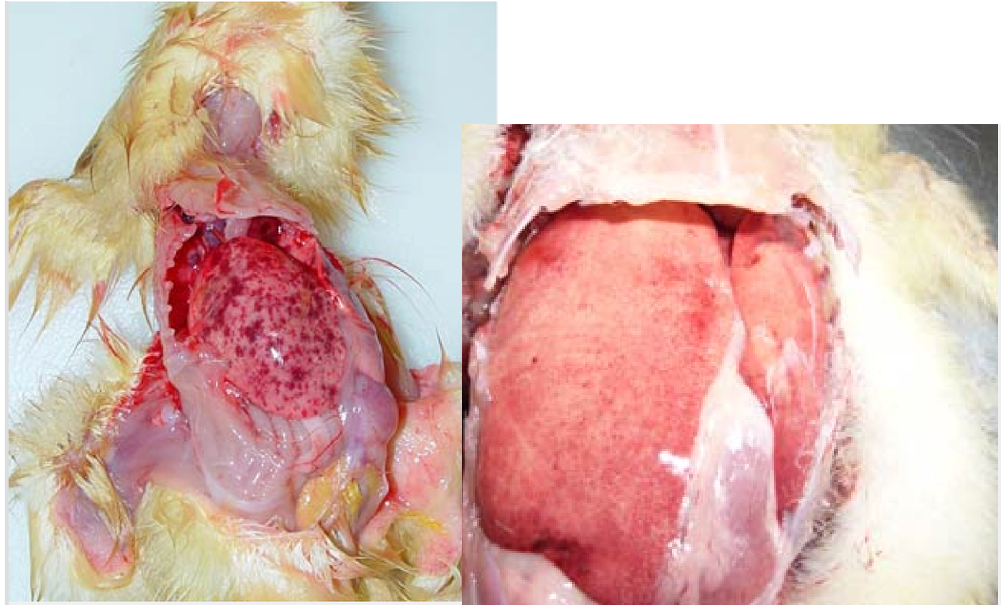
What are the PM lesions associated with DVH?
Liver enlarge, petecchial/ecchymotic haemorrhages
Fatty kidneys
Septicaemic carcasses
How is DVH diagnosed?
Blood/organ for virus isolation in eggs
(No PCR, No commercial serology)
How is DVH controlled?
Breeders – live and inactivated vaccines
Ducklings – live vaccination
Biosecurity
Management measures
What type of virus is duck virus enteritis?
Herpesvirus
What are the hosts of DVE?
Ducks, geese
Breeding birds more susceptible
How is DVE spread?
Presence of water essential
Oral and cloacal routes
Wild waterfowls can spread to domestic ducks
Latency has been reported, virus shed for many years
What are the clinical signs of DVE?
Ataxia
Eye discharge, pasty eyelids
Nasal discharge
Diarrhoea – water with blood, vent blood stained
Photophobia
Normally body condition good
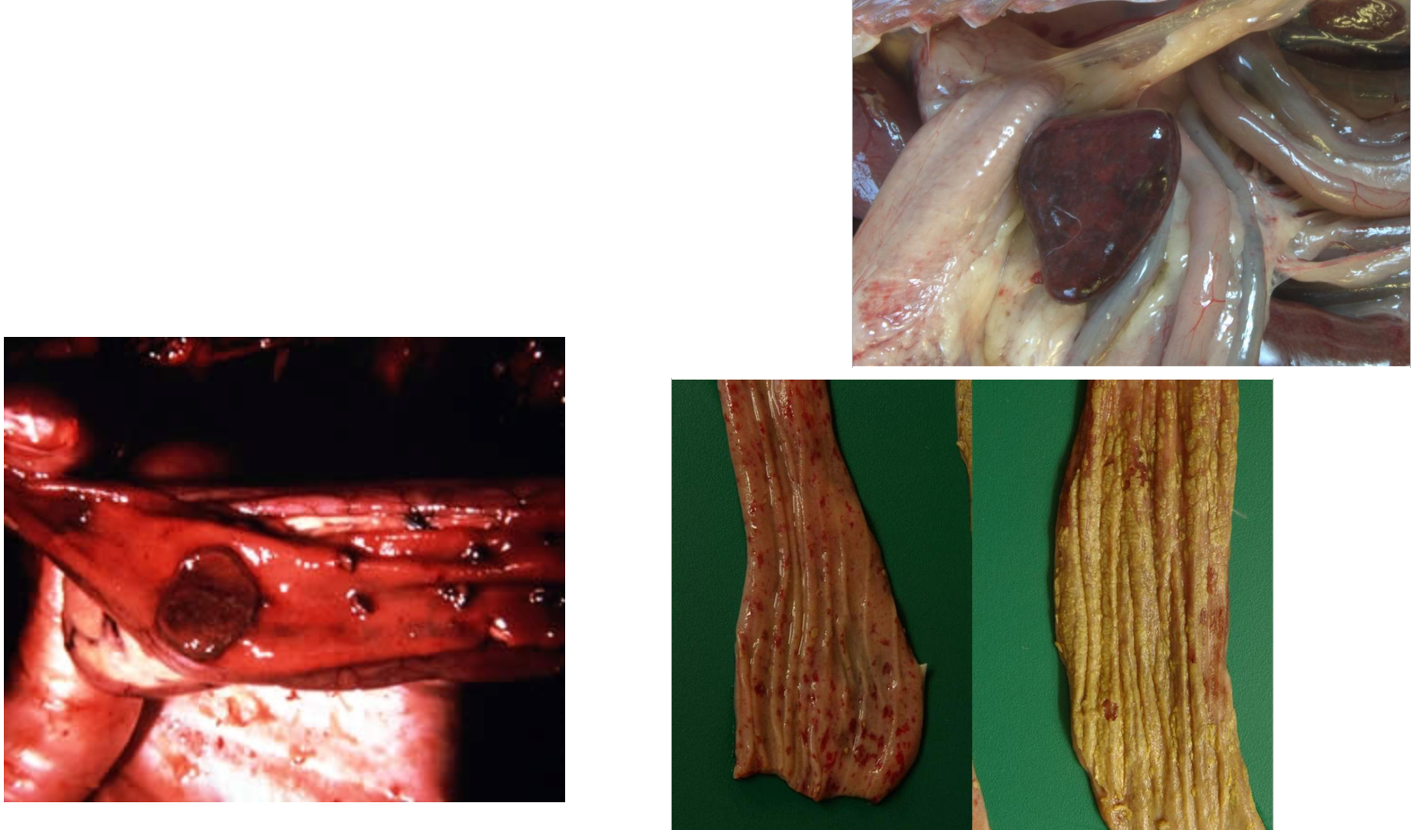
What are the PM lesions associated with DVE?
Multiple haemorrage in tissues
Free blood in body cavity
Petechial haemorrhages on visceral organs
Haemorrhage on oesophageal mucosa, other GIT
Necrotic foci on liver and oesophagus
How is DVE diagnosed?
History, clinical signs and lesions, eg. significant drop in egg production.
Virus isolation confirmatory
PCR
(No routine serology)

How is DVE controllled?
Biosecurity
Avoid contact with wild birds
Live vaccine (risk of reversion to latency possible)
Inactivated vaccine
What are the subdivisions of avian influenza?
(divided by pathogenicity):
LPAI
HPAI (notifiable)
What are the clinical signs of HPAI in ducks?
Ducks naturally more resistant to HPAI
Small increase in mortality
Drop in egg production, slowly to 30%
Decreased in feed and water consumption
Subdued
What are the necropsy findings of avian influenza?
Aspergillosis, airsaculitis, salpingitis, egg peritonitis
How does newcastle dx affect ducks?
Relatively resistent
Major drop in egg production is main sign
No clinical signs in younger birds
How is newcastle disease controlled in ducks?
Live and inactivated vaccines (works well)
In what age birds does E. coli affect?
What does it cause?
Any age but mostly 1-8 week old young birds suscep
Causes egg peritonitis in laying birds
How is E. coli diagnosed?
History
Clinical signs (dull, ruffled feathers, diarrhoea)
Necropsy
Lab support
How is E. coli treated?
ABs
How is E. coli prevented?
Hygiene & sanitation
Management
Vaccinate breeders (autogenous)
What age birds does streptococcus gallolyticus affect? ***
10-21 days old young birds susceptible
What signs does streptococcus gallolyticus show? ***
Acute deaths- body condition good
Causes bacteraemia in intensively reared ducklings
How does streptococcus gallolyticus present on PM? ***
Viscere congested
Cyanosis
Oedematous lungs
Hepatomegaly
Mottled splenomegaly
How is streptococcus gallolyticus treated and prevented? ***
Tx- antibiotics: amoxicillin
Prevention: hygiene, sanitation, management
What PM lesions does Riemerella anatipestifer cause?
Polyserositis, exudates & fibrin covering visceral organs, cavity
Lympoid necrosis of the white pulp of spleen
How is Riemerella anatipestifer diagnosed?
Bacteriology, by culture, isolation and identification
How is Riemerella anatipestifer treated?
Good response to ABs
Autogenous vaccine
What are the two species of Salmonella that affects waterfowl?
S. indiana, S. kedougou
What are the signs of Salmonella infection? How is it transmitted?
Little clinical signs
Infrequent mortality 0-7 days-old
Vertical & horizontal transmission
How is salmonella diagnosed?
c/signs, lesions, bacteriology
How is salmonella treated and prevented?
Live & inactivated vaccines
ABs
Competitive excluson
Hygiene & sanitation, biosecurity at breeding farm and hatchery important
What species of chlamydia causes infection? What ages can be affected?
C. psittaci (zoonotic)
All ages
What are the clinical signs of chlamydia infections?
Conjunctivitis
Anorexia
Ruffled feathers
How is chlmaydia infection diagnosed?
c/signs
lesions
bacteriology
serology
How is chlamydia treated and prevented?
No vaccine available
ABs
Hygiene & sanitation, biosecurity at breeding farm & hatchery important
How is aspergillus fumigatus transmitted?
Contaminated environment – litter, feed
What age birds does aspergillosis affect?
7 days to adult
What are the clinical signs of aspergillosis?
Gasping, weight loss, anorexia, death
Stress exacerbates susceptibility & disease
How is aspergillosis trasnmitted?
Vertical & horizontal transmission
How is aspergillosis diagnosed?
C/ signs
Lesions
Mycology
PCR
How is aspergillosis treated and prevented?
Use of fresh bedding materials
Anti-fungal, in-feed
Hygiene & sanitation, biosecurity at breeding farm and hatchery important
List some common problems causing lameness
Soft tissue injury
Foreign body
Join infection
Osteoarthritis
Fractures
Mycoplasma tenosynovitis
Renal/gonadal neoplasia
Renal coccidiosis
Heavy metal toxicity
Bumble foot
Avian TB