3-4. Ion Channel Diversity and Control
 Call Kai
 Learn
 Practice Test
 Spaced Repetition
 Match
 Flashcards
 Knowt Play
1/24

Earn XP
Description and Tags
Lecture 3 + 4
25 Terms
What are the 3 important properties of ion channels?
Conduct ions across membranes
Recognize & select specific ions
Open/close in response to mechanical, electrical, or chemical signals
What are the phases of an action potential and which channels are involved?
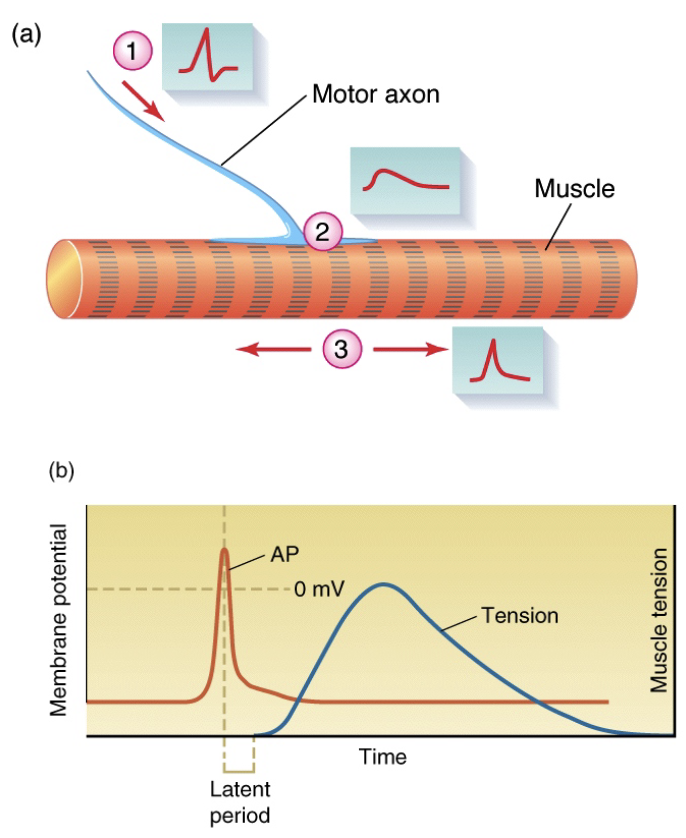
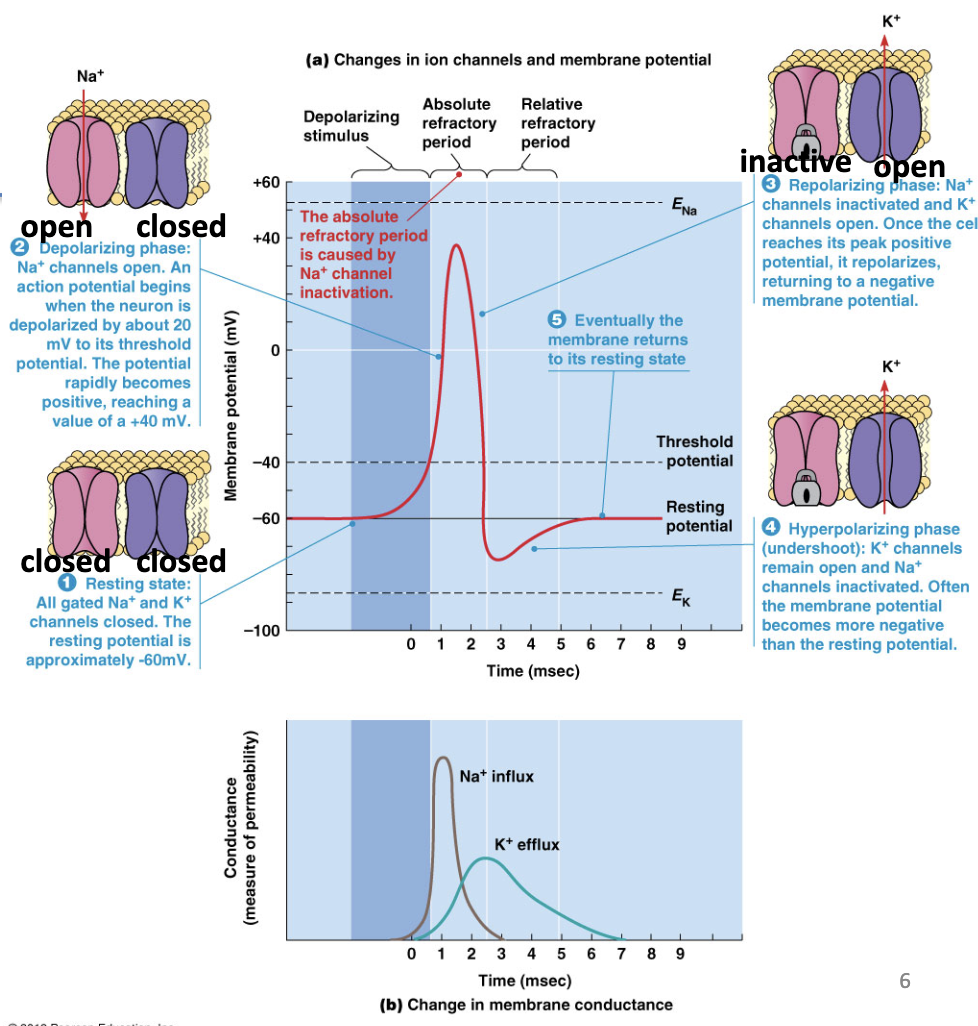
Resting (–60 mV): all Na⁺ & K⁺ gated channels closed
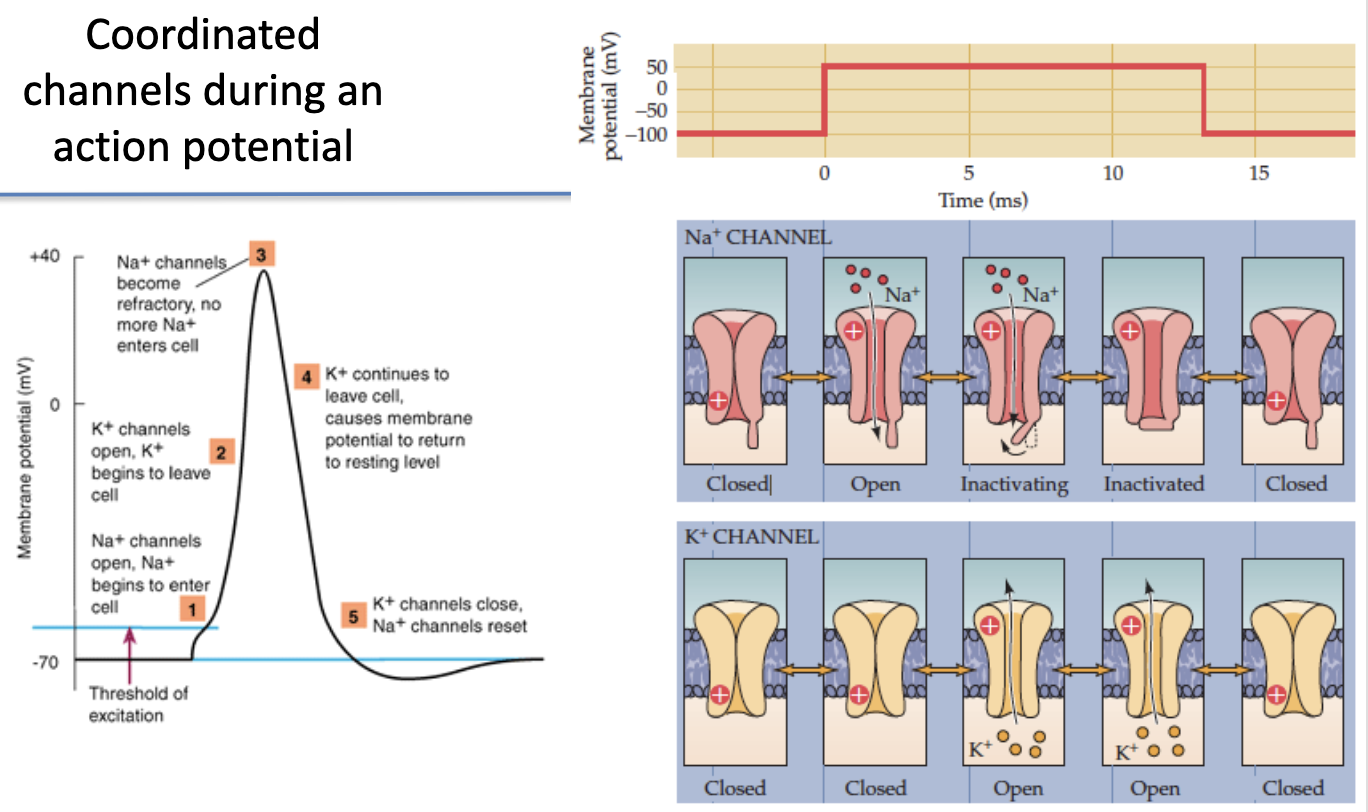
Depolarization: Na⁺ voltage gated channels open and enters cell→ membrane becomes +40 mV
Repolarization: Na⁺ channels inactivate, K⁺ channels open slowly → back to negative potential
Hyperpolarization (undershoot): K⁺ channels stay open → membrane more negative than resting
What makes ion channels so diverse?
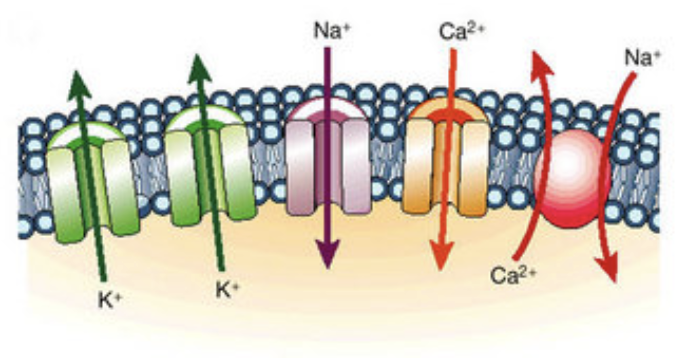
Open by different stimuli (voltage/electrical, ligand, stretch, temp, pH)
Different kinetics: open/close quickly, stay open longer, one-way movement, or always open
What is the structure and function of ion channels?
Function: aqueous pore for ions to cross via diffusion
Structure: large transmembrane proteins with hydrophobic membrane-spanning domains
Can be hetero-oligomers, homo-oligomers, or single polypeptides with repeating motifs
Some have auxiliary subunits that assist gating
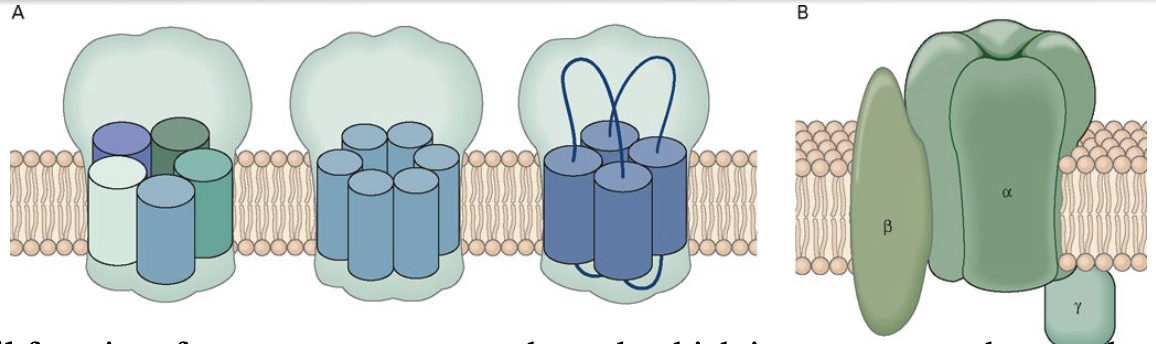
What structural features do ion channels share?
Alpha helices span lipid bilayer
Hydrophobic amino acids face lipids
Hydrophilic amino acids line pore
Q: Which is monomeric? → C) Single polypeptide w/ repeating motifs
Which is not? → A) and B) are individual subunits
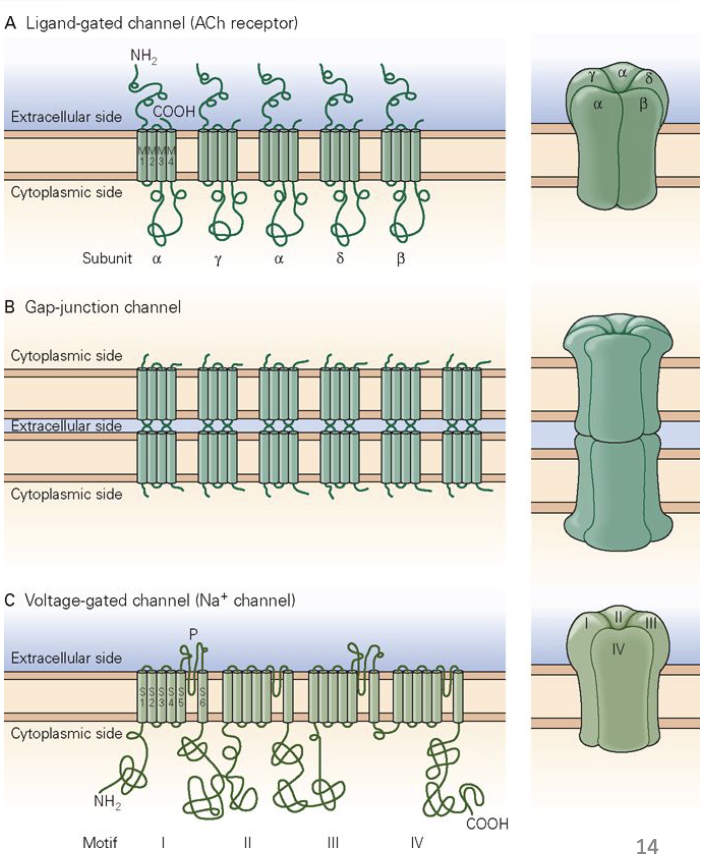
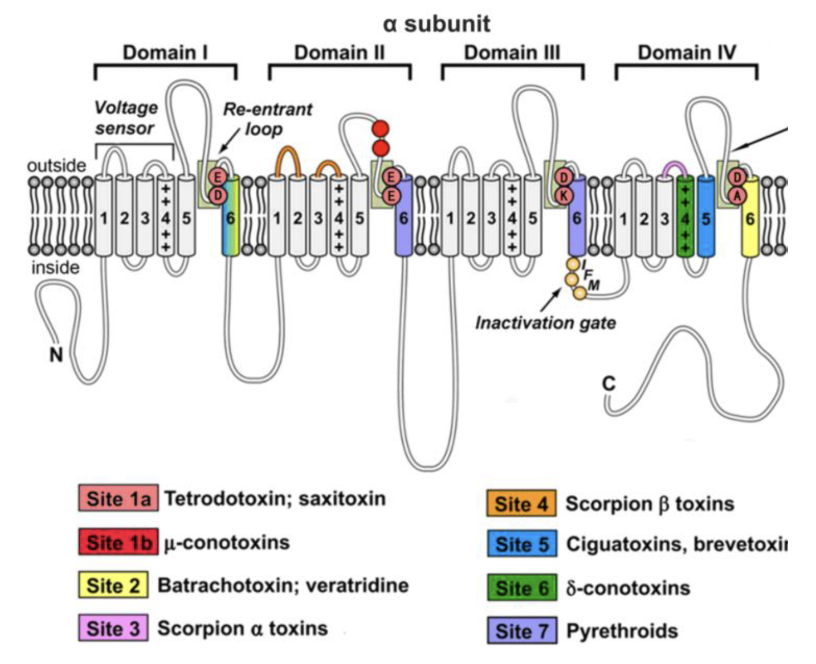
Example: How is a voltage-gated Na⁺ channel structured?
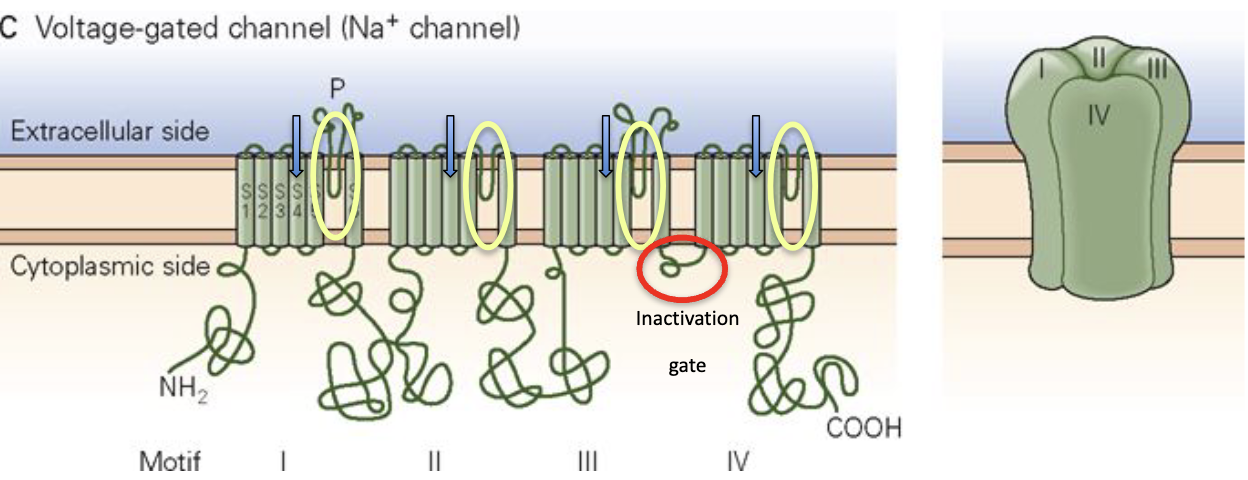
Monomeric protein with 4 homologous transmembrane domains (motifs)
Helix 4 in each domain = voltage sensor
Has more positively charged AA to provide the voltage sensor to open and close the channel
Non-helical P-loops between helices 5 & 6 in each domain = selectivity filter
Makes channel specific to certain ion
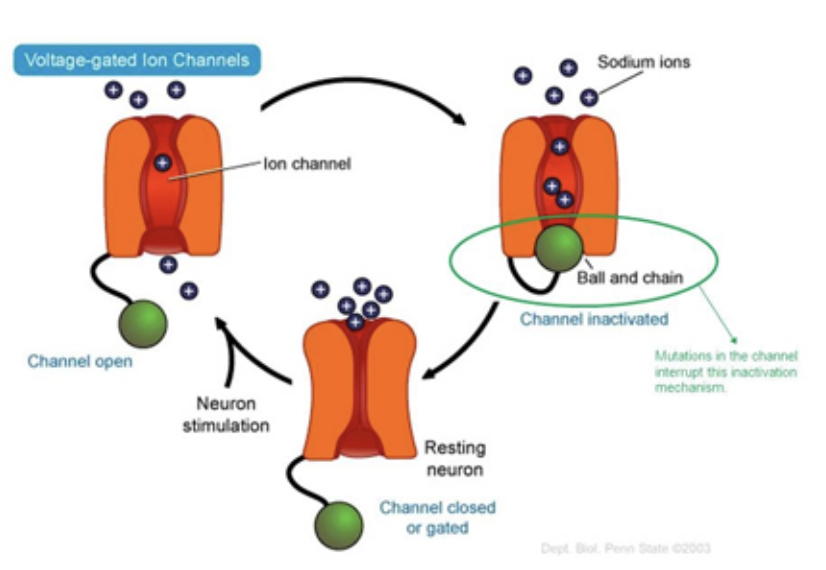
Loop between domains 3 & 4 = inactivation gate
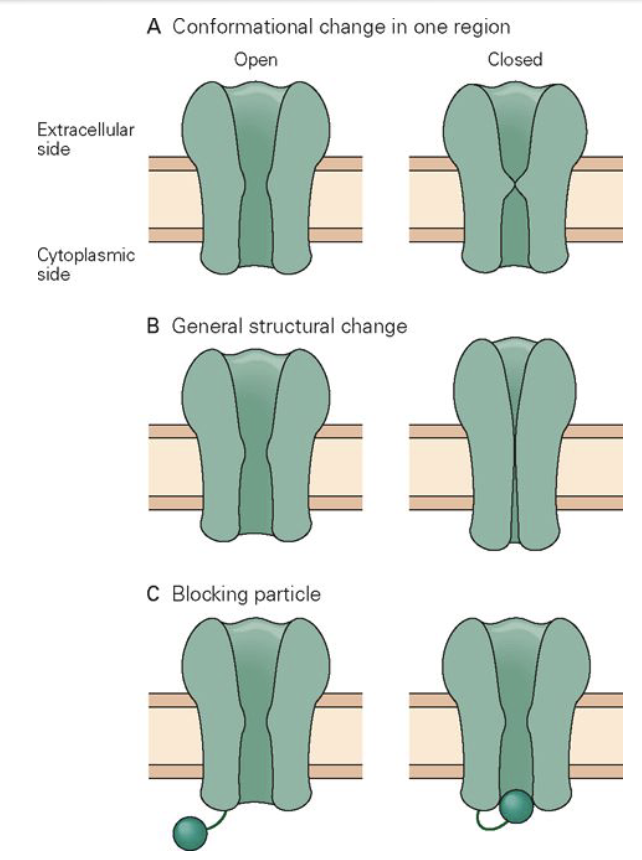
How do conformational changes open ion channels?
Gating involves twisting & bending of alpha helices → enlarges pore, creates hydrophilic surface for ions
A) Conformational change in one region
B) General structural change
C) Blocking particle = inactivation gate
Why do ions need channels to cross membranes?
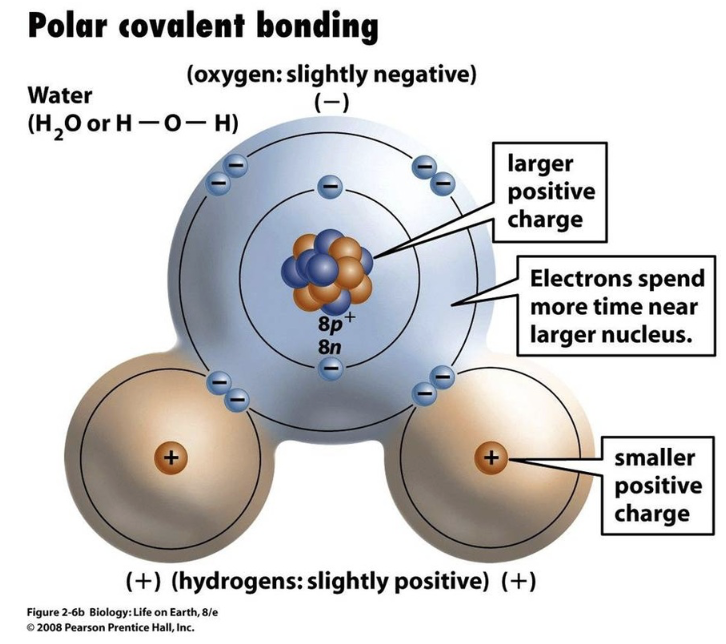
Ions interact with water’s dipoles (O = slightly negative, H = slightly positive)
Oxygen attracts electrons; Hydrogen loses electrons
Forms hydration shell, making lipid bilayer crossing energetically unfavorable
How do ion channels achieve selective passage of ions?
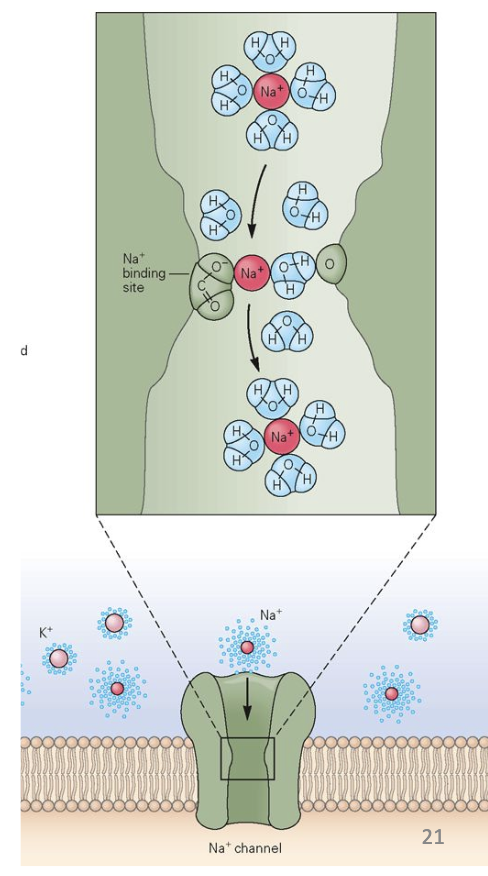
Hydration cloud prevents ions crossing the hydrophobic lipid bilayer
Channels provide aqueous pore with selectivity filter
Filter binds ions briefly (<1 μs), plus pore diameter & electrostatic forces → ensures selectivity
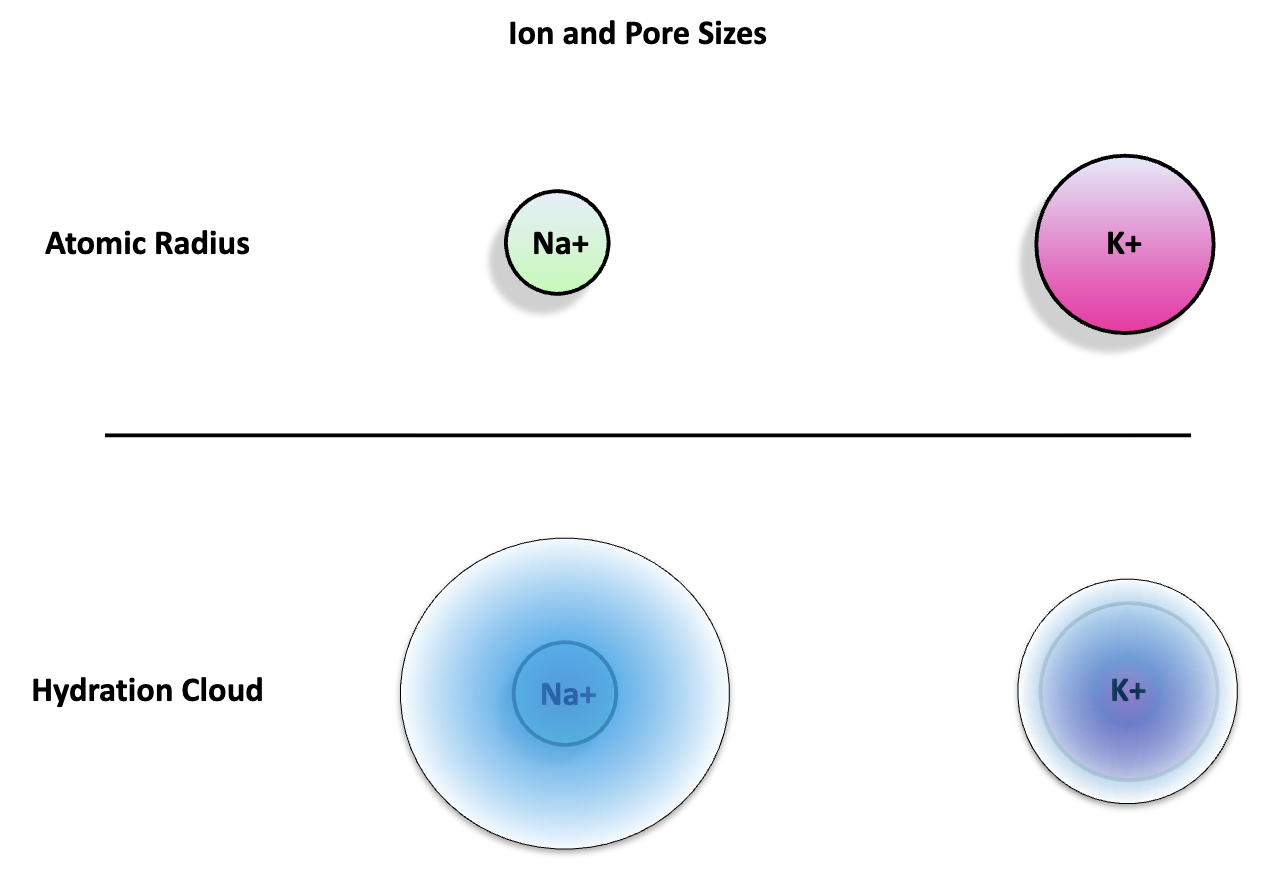
Why does a potassium channel not also allow sodium ions to pass through, even though sodium is smaller?
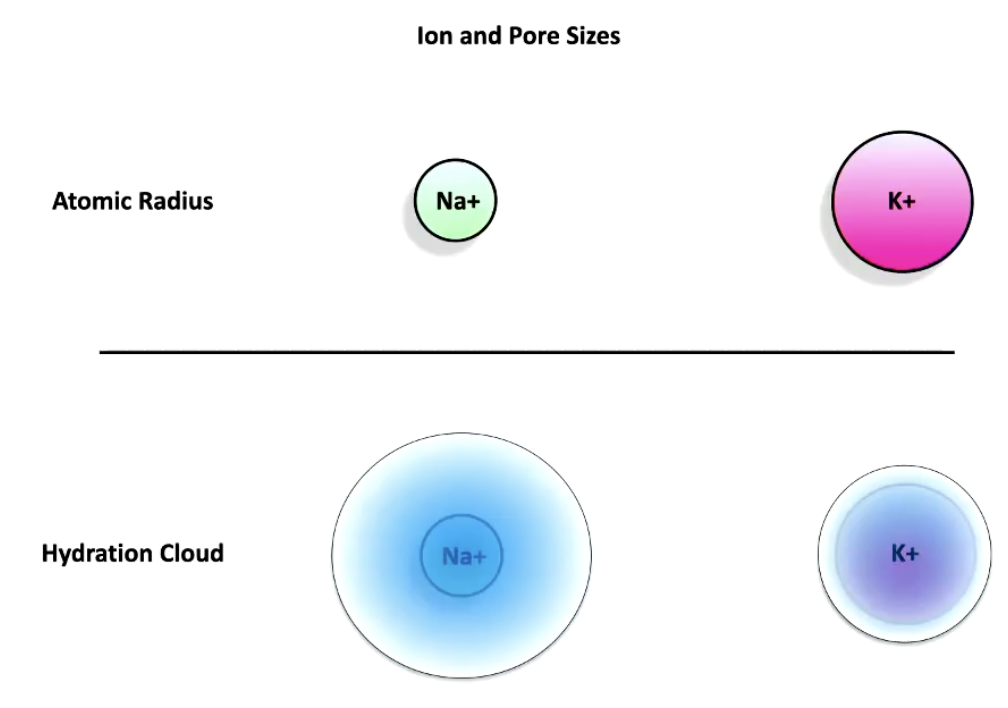
Sodium has a smaller atomic radius → charge more concentrated → forms a larger, stronger hydration cloud
Potassium’s charge is more spread out → weaker interactions with water → smaller hydration cloud
Functionally, sodium acts “larger” than potassium due to its hydration shell
Selectivity filter amino acids favor ions that can shed their hydration cloud → K⁺ passes, Na⁺ blocked
What was revealed by the first crystal structure of an ion channel (K⁺ channel, 1998)?
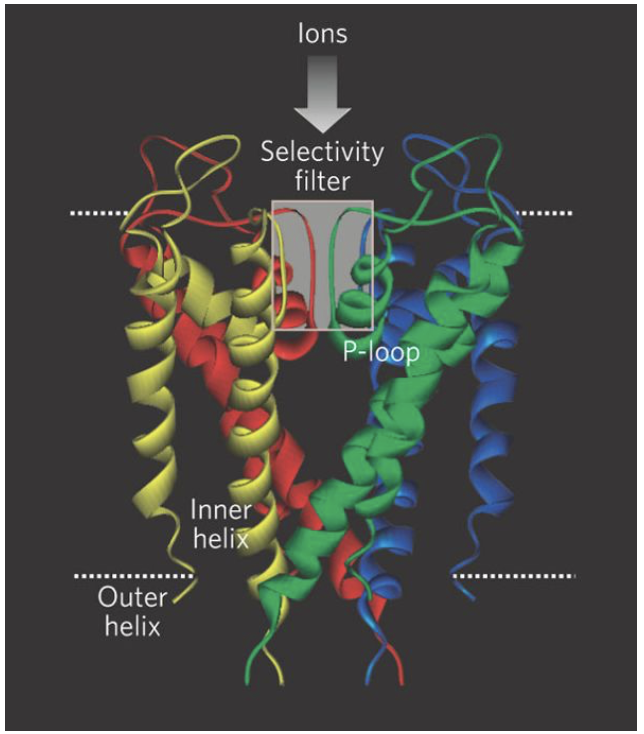
Tetrameric structure (4 subunits around central pore)
P-loops from helices form narrow selectivity filter
*Don’t pay too much attention to this slide
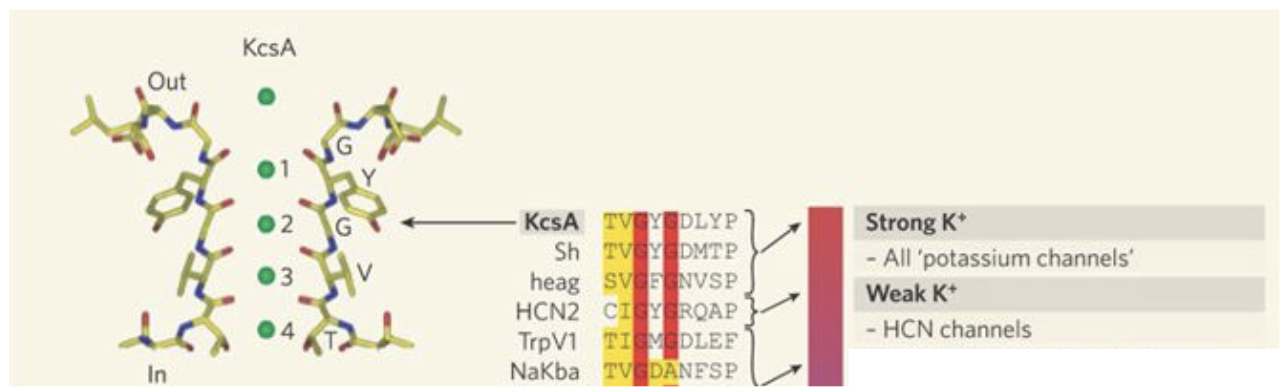
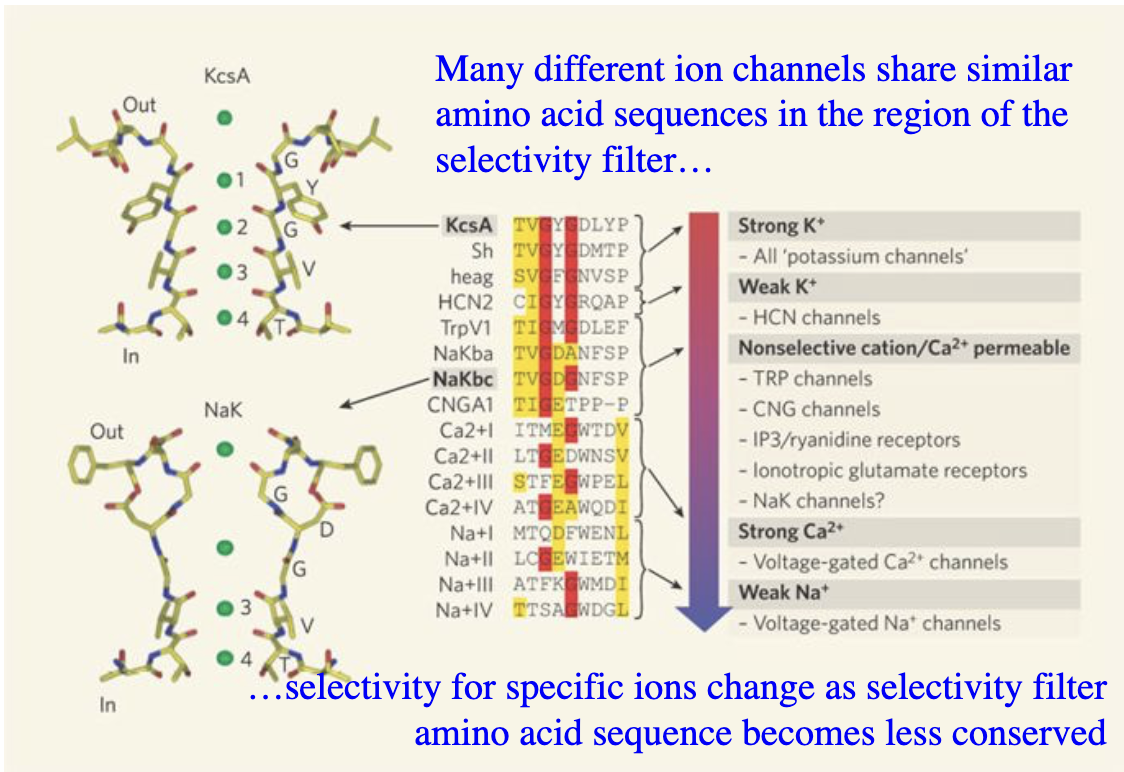
What amino acid sequence enables K⁺ channel selectivity?
Signature sequence = TVGYG in selectivity filter
Hydroxyl of the threonine & carbonyl groups of other AA form 4 K⁺ binding sites
Less conserved sequence → reduced K⁺ selectivity (e.g., nonselective HCN channels allow K⁺ & Na⁺)
How do ion channel selectivity filters vary across channel types?
Many channels share similar amino acid sequences in selectivity filter region
Greater conservation → stronger ion selectivity
Less conservation → broader ion permeability
Why doesn’t sodium (Na⁺) pass through potassium (K⁺) channels even though it’s smaller?
Because Na⁺ has a larger hydration cloud (stronger interaction with water due to higher charge density), making it functionally larger than K⁺.
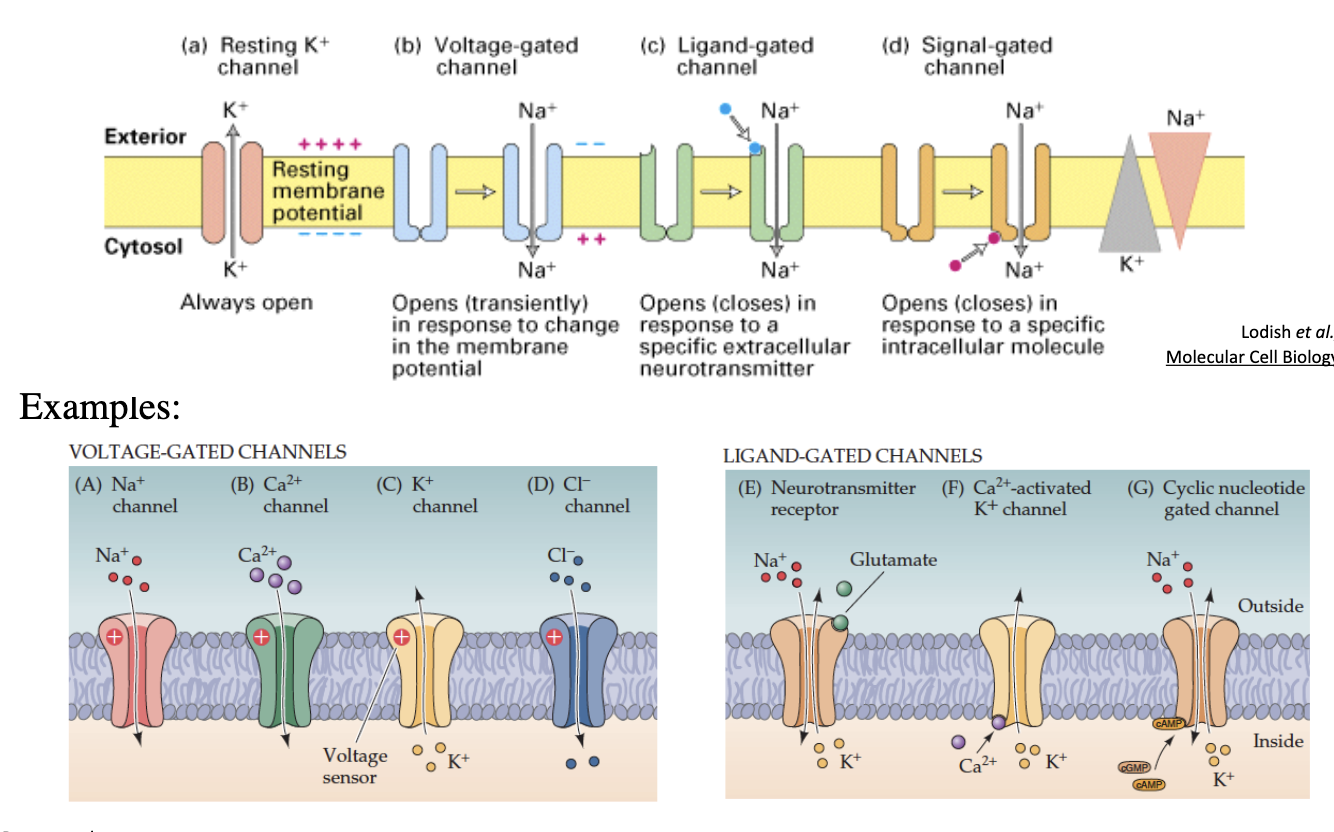
What are the four main types of ion channels and what activates them?
Resting K⁺ channel/leak channel → always open
Voltage-gated → open with change in membrane potential
Ligand-gated → open/close with neurotransmitter binding
Signal-gated → open/close with intracellular molecules
Temperature-gated → open/close based on temperature
How do ion channels open and how is current measured?
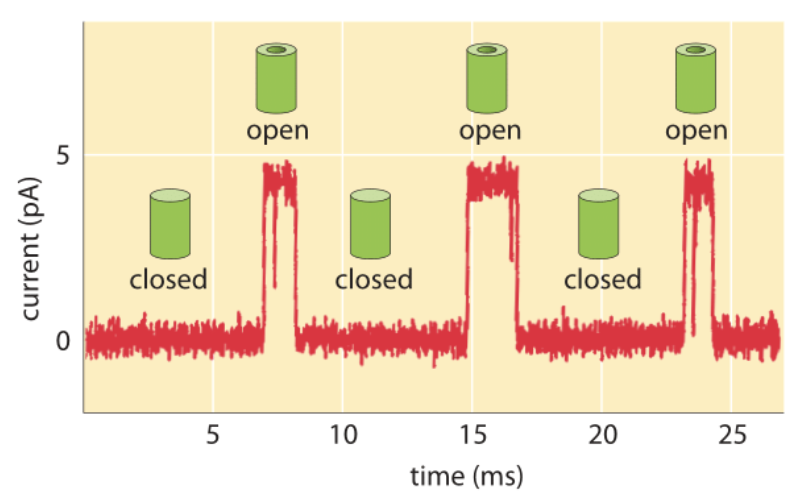
Channels open/close in all-or-none fashion
Opening allows brief ion passage → measurable current
Current size: a few picoamperes (pA)
Channel closed: current is 0
Channel open: 5 pA
What is a gigaseal and why is it important in patch clamp recordings?
Gigaseal = very tight seal (≥10 GΩ resistance) between glass pipette and membrane
Ensures all ion flow enters pipette → higher seal resistance = lower background noise, improves accuracy
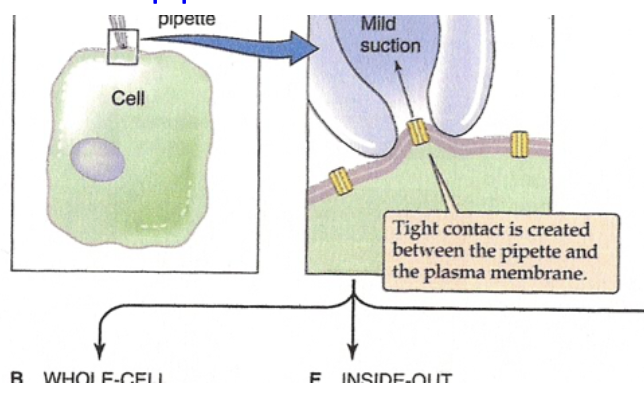
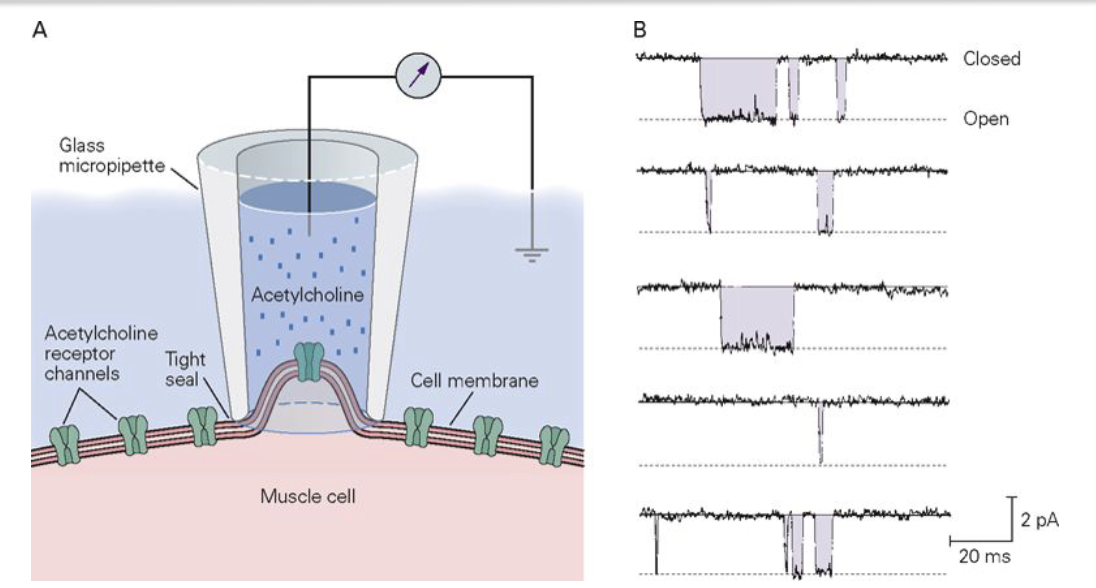
How can patch clamp be used to study ion channels in muscle?
Pipette filled with acetylcholine solution
Records current through a single channel
Can study leak, voltage-gated, ligand-gated, mechanically-gated channels across many cell types
Can measure voltage changes inside and outside the cell
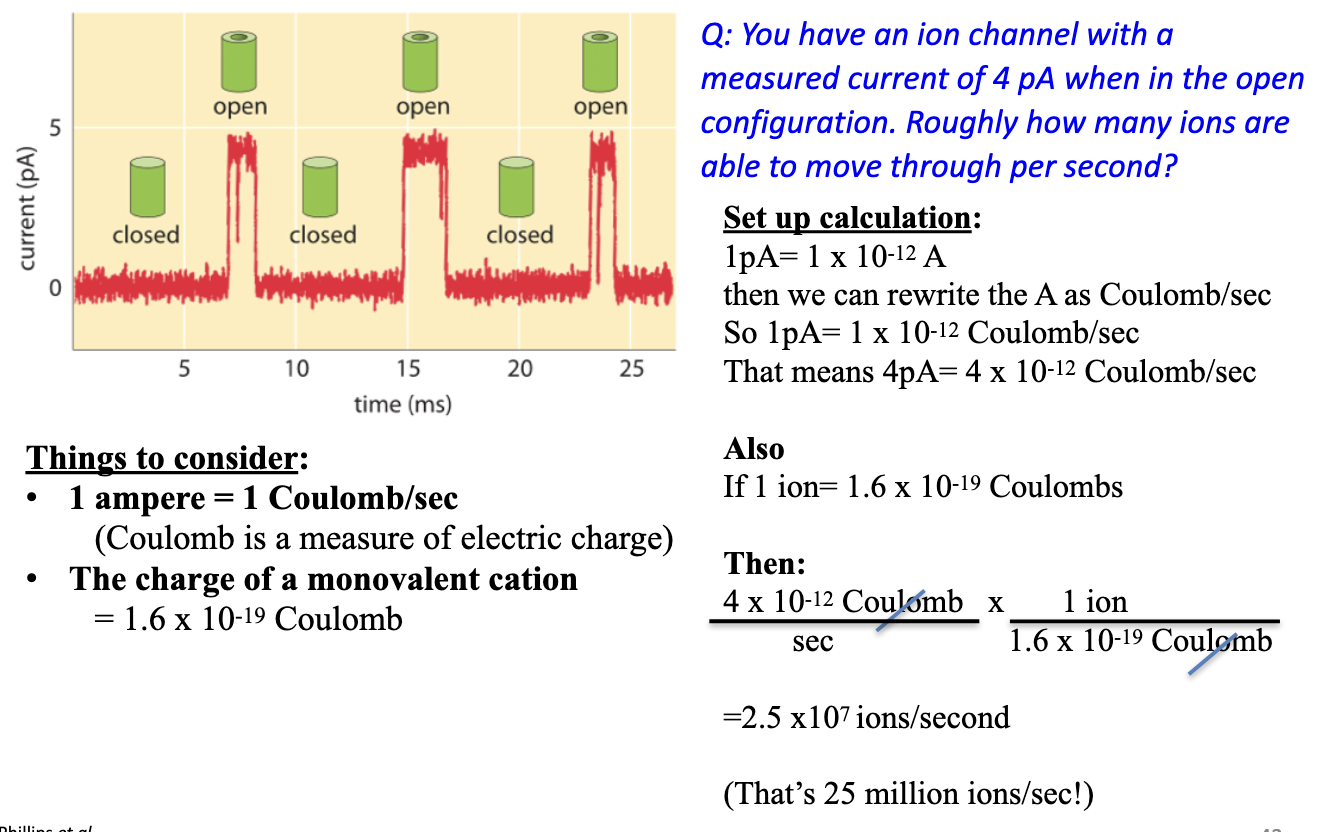
An ion channel has 4 pA current when open. About how many ions pass through per second?
Things to consider:
1 ampere = 1 Coulomb/sec (Coulomb = measure of electric charge)
The charge of a monovalent cation = 1.6 × 10⁻¹⁹ Coulomb
Set up calculation:
1pA = 1 × 10-12 A
Rewrite to: 1pA = 1 × 10-12 Coulomb/sec
So: 4pA = 4 × 10-12 Coulomb/sec
Also:
If 1 ion = 1.6 × 10⁻¹⁹ Coulombs
Then:
4 × 10-12 Coulomb/sec x 1 ion/1.6 × 10-19 Coulombs
= 2.5 × 10⁷ ions/sec (25 million ions/sec)
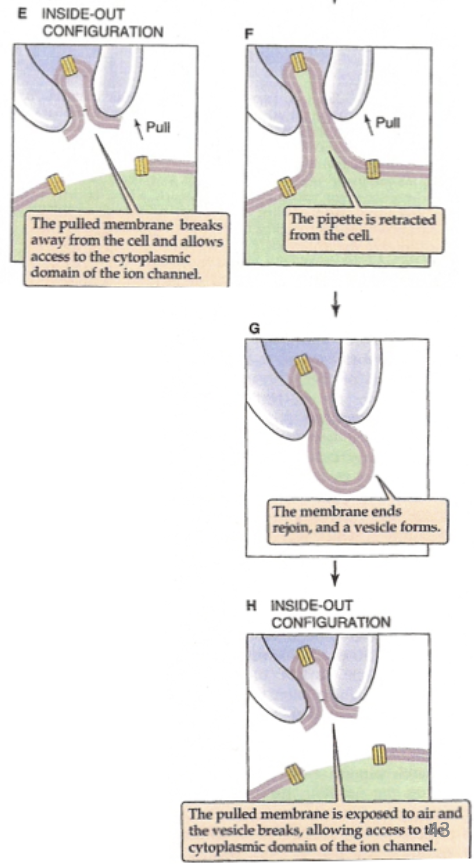
What does inside-out patch clamp allow researchers to study?
Electrode quickly withdrawn from cell
Exposes cytoplasmic (inside) surface to external solution
Useful for testing intracellular factors that regulate channel activity
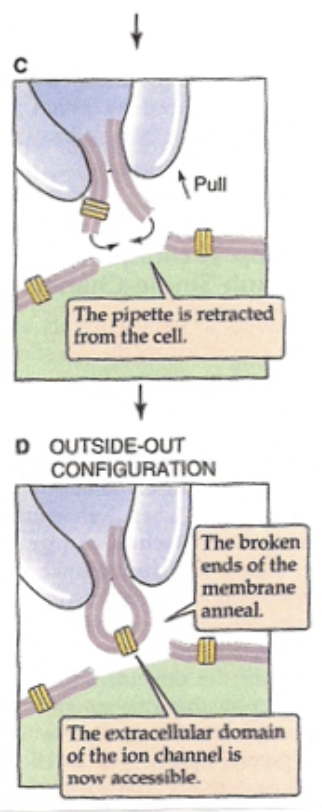
What does outside-out patch clamp allow researchers to study?
Electrode slowly withdrawn from cell
Exposes extracellular surface of membrane
Useful for studying ligand-gated channels (ligands applied to bath solution)
How do voltage-gated Na⁺ and K⁺ channels behave during depolarization?
Rest and hyper-polarized: both voltage gated channels closed
Depolarization activates voltage sensors (+) → Na⁺ channels open first, then K⁺ channels
Na⁺ channels inactivate during depolarization, K⁺ often stay open
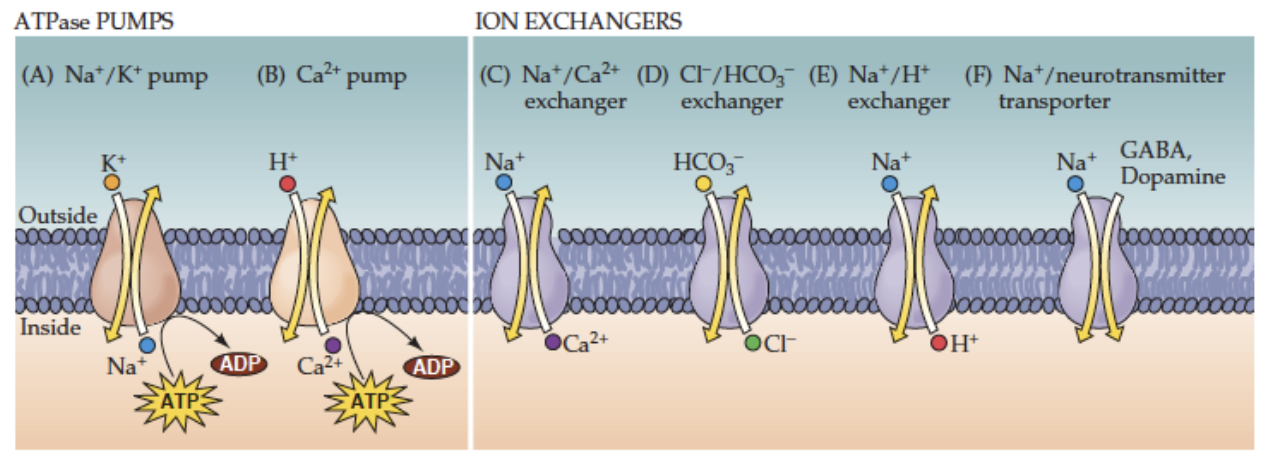
How do pumps/transporters differ from ion channels?
Require energy: ATP (ATPases) or ion gradients (co-transported ions)
Transporters move ions slower than channels
Energy needed to move ions against their electrochemical gradients
How do toxins affect ion channels?
Bind specific sites on voltage-gated sodium channels
Can block/inhibit function → also useful for studying channel mechanisms
Channelopathies - What happens in hyperkalemic periodic paralysis?
Mutation in voltage-gated Na⁺ channels prevents inactivation gate from closing
Triggered by high blood K⁺
Leads to periodic muscle paralysis (muscle cells become inexcitable)