Labor, Birth, Comfort & Cesarean Birth; Chapters 14, 15, & 23
 Call Kai
 Learn
Learn Practice Test
 Spaced Repetition
 Match
Match Flashcards
 Knowt Play
1/23

There's no tags or description
Looks like no tags are added yet.
Name | Mastery | Learn | Test | Matching | Spaced | Call with Kai | Chat |
|---|
No analytics yet
Send a link to your students to track their progress
24 Terms
What are the multiple systems that converge when labor begins?
Labor is a coordinated maternal–fetal process, not one single trigger.
Uterine activation
Coordinated contractions create pressure that promotes cervical effacement and dilation.
Cervical ripening
Collagen remodeling and increased water content soften and thin the cervix.
Hormonal signaling
Oxytocin (also released in breastfeeding), prostaglandins, and maternal–fetal endocrine signals support labor readiness.
Fetal contribution
Presentation, position, attitude, size, and descent influence how effectively the fetus moves through the pelvis.
Teaching pearl: contractions matter because they produce cervical change— not simply because they are painful.
What are the 5 Ps framework for labor progress?
When labor stalls, ask which factor is contributing → before you decide to do section want to see if you can change things to have vaginal
Passenger: Fetal size, lie, presentation, attitude, position
Macrosomia: large baby; Large gestational age- LGA > 4,000 g, Small gestational age- SGA < 2,500 g
Passageway: Pelvis + soft tissues of the birth canal
Powers: Primary uterine contractions + secondary pushing → how strong are contractions & if pushing is not effective
Position: Maternal movement and posture can facilitate descent
Psyche: Fear, stress, support, and sense of control affect coping
NCLEX move: identify the “P” you can modify before escalating to an invasive intervention

What are the terms for fetal position (how to decode)?
L or R; Which side of the maternal pelvis?
L = left
R = right
O; What fetal landmark?
O = occiput (vertex / cephalic presentation)
M= Mentum
S= Sacral
A, P or T; Which direction in the maternal pelvis?
A = anterior; Anterior/pubic symphysis
P = posterior; Posterior/Sacrum
T = transverse; Side of pubic symphasis
LOA
Left Occiput Anterior
ROP
Right Occiput Posterior
LOT
Left Occiput Transverse
OA / OP
Direct anterior / posterior
Think: SIDE → LANDMARK → DIRECTION
Clinical pearl: OA positions usually align well for descent; persistent posterior/transverse positions can make labor progress more difficult.

ROA; Right Occiput Anterior

ROT; Right Occiput Transverse
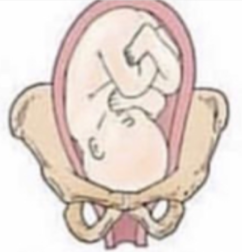
ROP; Right Occiput Posterior

LOA; Left Occiput Anterior

LOT; Left Occiput Transverse

LOP; Left Occiput Posterior
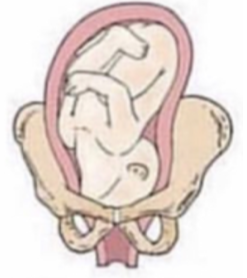
RMA- Right Mentum Anterior

RMP- Right Mentum Posterior

LMA- Left Mentum Anterior

LSA- Left Sacral Anterior

LSP- Left Sacral Posterior
What are the stages of labor; what changes and the sequence?
Cervical change, descent, and placental separation mark the transitions.
Support needs often increase as labor intensifies.
1st stage: Onset of true labor → 10 cm; Latent + active + transion
True labor means there is dilation and efacement of the → active is defined as starting at 6cm
Latent stage: 0-4 cm, contractions q 15-30 mins ~ 30-45 sec; can be long for first time Mom (mild)
Talkative, excited, able to follow conversation
Nursing response: Encourage rest, hydration, mobility, normalizing
Active: 4-7 cm, contractions are q 3-5min; ~60 sec each (moderate-strong)
More focused inward, needs coaching, fewer words
Nursing response: One-step directions, position changes, pain plan, make sure bladder is empy so labor can progress, maybe intiate hyrotherapy at this point
Transition / late active: 7-10 cm, q 2-3 min, 60-90 sec each (strong)
May say “I can’t,” tremble, feel pressure or nausea, may have urge to push (pressure on rectum)
Nursing response: Stay present, calm voice, assess progress, prepare for birth, teach to pant to avoid premature pushing
Do not assume distress = request for medication. Ask what the patient wants and what feels manageable
2nd stage: 10 cm → birth; Pushing + descent
watch for turtle signs
encorage & moniter baby & mom
3rd stage: Birth → placenta; Placental separation
4th stage: Early recovery; Stabilization
Clinical focus shifts across labor
1st: assess progress + coping + fetal response
2nd: support pushing, descent, fetal tolerance
3rd: observe separation and blood loss
4th: fundus, bleeding, pain, recovery, bonding → fundus should be firm, midline & moving down
Blood loss: Vaginal delivery: average 260-350 mL, > 500 is considered hemorrhage
C-section: average 650-800ml, >1000 ml is considered hemorrhage
Avoid rigid clocks. Use progress + clinical condition + current guidelines to guide action.
What is the definition of frequency, duration, intensity, resting tone in regards to contractions?
Frequency: Beginning of one contraction to beginning of the next
Duration: Beginning to end of the same contraction → how long did contraction last
Intensity: Palpated as mild/moderate/strong or measured internally
Resting tone: Uterus should relax between contractions → resting is need for both Mom and baby so baby can be properly perfused
Watch the trend: stronger, longer, and closer contractions usually accompany labor progression.
What is included in admission assessment of labor to establish maternal and fetal baseline?
Maternal
Vital signs
Pain + coping
Contraction pattern
Membrane status / fluid
Meconium means baby's stool is in amniotic sac which usally means baby is in distress → baby can swolly feces & that will cause issues so would either see if delivery is possible or a amnioinfulsion to thin the meconium
Fluid should be clear and it should not have a oder otherwise that can indicate infection
Bleeding
Hydration / bladder
Support person + birth preferences
Fetal
Baseline heart rate
Variability
Accelerations / decelerations
Movement
Presentation / position
Response to contractions
Labor progress
Cervical dilation: widning of the cervix to accommodate for babies head
Effacement: thinning and shortning of cervix
Station: desent of head in relation to pelvid
Presentation: the positioning of baby
Membrane status: intact or ruptures sac
Trend over time:
Red flags: heavy bleeding • severe pain between contractions • abnormal FHR • fever • hypertensive symptoms • cord prolapse concerns
How is fetal heart rate assessed?
Baseline + variability + accelerations + decelerations.
Baseline: What is the average rate over a 10-minute window? (want it at ~110-160)
Variability: How much beat-to-beat fluctuation is present?
Accelerations: Are there reassuring increases in rate?
Decelerations: When do they occur relative to contractions?- Dont want late decel or variable decels
Interpret the tracing in context: contraction pattern + gestational age + medications + maternal condition.
VEAL CHOP
Variable deceleration; Cord compression
Early deceleration; Head compression
Accelerations; Ok
Late deceleration; Placental insufficiency
What are the types of decelerations?
Timing relative to the contraction helps guide the first response.
Early
Mirrors the contraction.
Common interpretation: fetal head compression.
Usually benign when otherwise reassuring.
Variable
Abrupt drop; timing varies.
Common interpretation: umbilical cord compression.
Reposition and assess severity / recurrence. → to all fours or knee to chest to move baby away from cord
Late
Begins after contraction starts; nadir after peak.
Something from Mom affecting baby; like low bp, dehydration, too many contractions etc.
Concern: uteroplacental insufficiency.
Requires prompt intrauterine resuscitative measures and escalation.
Give O2 to Mom, fluids, deal with underlying cause
First nurse move with a concerning pattern: reposition, assess maternal status, reduce reversible stressors, notify/escalate per protocol.
What are the different types of pain in each stage of labor?
The source of pain shifts from visceral to somatic as birth approaches.
First stage: visceral pain
Cervical dilation and uterine ischemia create diffuse pain, often felt in the lower abdomen, back, or thighs.
Second stage: somatic pain
Stretching and pressure on pelvic floor, vagina, and perineum create more localized, intense pain.
Pain ≠ suffering. Coping depends on expectations, support, fear, fatigue, culture, previous experiences, and sense of control
What are some nonpharmacologic comfort measures?
Many strategies increase control and can be combined with medications.
Movement: Walking, upright positions, pelvic rocking
Breathing: Focused breathing, rhythm, vocalization
Touch: Massage, counterpressure, sacral pressure
Water: Shower or tub when clinically appropriate
some reserch says that birthing baby in water can be less shocking for baby
Environment: Dim light, music, fewer interruptions
Support: Continuous presence, partner/doula coaching
Nursing skill: offer options without overwhelming the patient. One strategy at a time, then reassess.
What are some pharmacologic comfort measures?
Consider timing, goals, contraindications, and maternal/fetal effects.
Systemic opioids: IV/IM medication can reduce pain perception.
Watch: sedation, respiratory depression, neonatal effects depending on timing.
Nitrous oxide: Self-administered inhaled analgesia/anxiolysis in some birth settings.
Watch: dizziness, nausea, safe administration.
Neuraxial analgesia: Epidural or combined spinal-epidural provides strong pain relief while patient remains awake.
Watch: hypotension, motor block, urinary retention.
Hypotension is biggest risk of epidural would give fluids or epi if needed
Informed choice matters: discuss benefits, limits, expected sensations, and what monitoring will change.
What is nursing care through process of epidural?
Anticipate hemodynamic changes and protect maternal–fetal perfusion.
Before
Baseline vitals + FHR
IV access / fluids per protocol → if platlet low may not give epidural
Review labs / contraindications
Empty bladder if possible
After
Frequent BP + FHR
Assess sensory/motor block
Fall precautions
Position to avoid aortocaval compression
Can get spinal headache bc of leakage of fluid
If hypotension occurs
Reposition laterally
increase IV fluids per protocol
notify anesthesia/provider
vasopressor per order/protocol
assess fetal response
Key connection: maternal blood pressure directly affects uteroplacental perfusion.