Anatomy Exam 2
 Call Kai
 Learn
Learn Practice Test
 Spaced Repetition
 Match
Match Flashcards
 Knowt Play
1/350

There's no tags or description
Looks like no tags are added yet.
Name | Mastery | Learn | Test | Matching | Spaced | Call with Kai | Chat |
|---|
No analytics yet
Send a link to your students to track their progress
351 Terms
group of structurally and functionally related cells and their external environment that together perform common functions
tissue
what are the two components of tissue
a discrete populations of cells and the ECM
what are the four types of tissues
epithelial, connective, muscle, nervous
what are the two main components in the ECM
ground substance and protein fibers
what are the three types of proteins found in ECM
proteoglycans, glycoproteins, glycosaminoglycans

consist of glycosamionglycans bound to a protein core, structure resembles a bottle brush, helps make the ECM firmer, also acts as a barrier to diffusion
proteoglycans

long, straight polysaccharide chains, these ions can create a concentration gradient within the ECF, draws water out of cells
glycosaminoglycans (GAGs)

responsible for adhering, or “gluing”, the cells both to each and into their places within the ECM.
glycoproteins or cell-adhesion molecules (CAMs)
a material that can withstand a large amount of pulling or stretching without breaking`
high tensile strength
which protein exhibits high tensile strength
collagen fibers
able to stretch to one and a half times their resting length without breaking
detensibility
when stretching is removed they return to their original length
elasticity
which protein exhibits distensibility and elasticity
elastic fibers
which fibers interweave to form a netlike supporting structure
reticular fibers

hold cells tightly together, making the spaces between them impermeable, composed of integral proteins,
tight junctions

composed of integral proteins that link two cells, act like buttons or snaps, and make sure mechanical stress is evenly distributed
desmosomes

small pores in adjacent plasma membranes, formed by protein channels, allow small substances to pass freely
gap junctions

tight junction locations
between the cells of blood vessels

desmosomes location
epithelia of the skin

gap junction locations (prominent in cells that communicate with electrical signals)
cardiac muscle
where are epithelial tissues found
on every internal and external body surface
how does epithelial tissue get oxygen & nutrients
oxygen and nutrients from the blood must diffuse up to the cells
how much ECM is found in epithelial tissue
none the ecm is located beneath the cells
what is the ECM of the epithelial tissue located beneath called
basement membrane
what is the function of the basement membrane
“glue” the epithelial tissue to underlying connective tissue
what are the two components of the basement membrane
basal lamina and reticular lamina
what is the bottom layer of the basement membrane
reticular lamina
____ lamina: ECM of epithelial, synthesized by epithelial cells, consists mostly of collagen fibers and ground substance
basal
_____ lamina: manufactured by connective tissue deep to epithelial tissue, consists of reticular fibers and ground substance
reticular
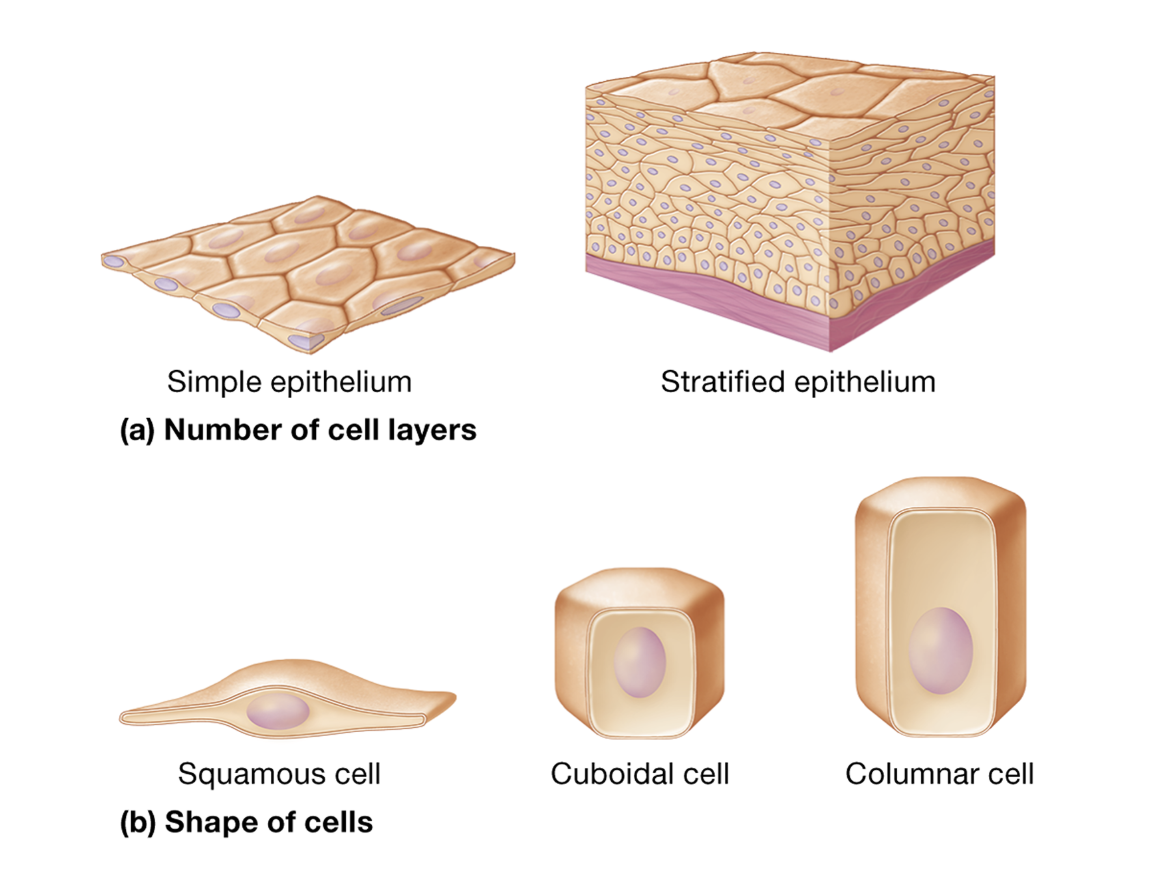
what are the categories based on number of cell layers
simple epithelia and stratified epithelia
what are the basic shapes of epithelial cells (3)
squamous, cuboidal, columnar
only a single layer of cells
simple epithelia
consisting of more than one cell layer
stratified epithelia
how does the structure of simple epithelia aid in their function
their thinness makes them perfect for lining hollow organs and surfaces

simple squamous: function
diffusion, produces serous fluid
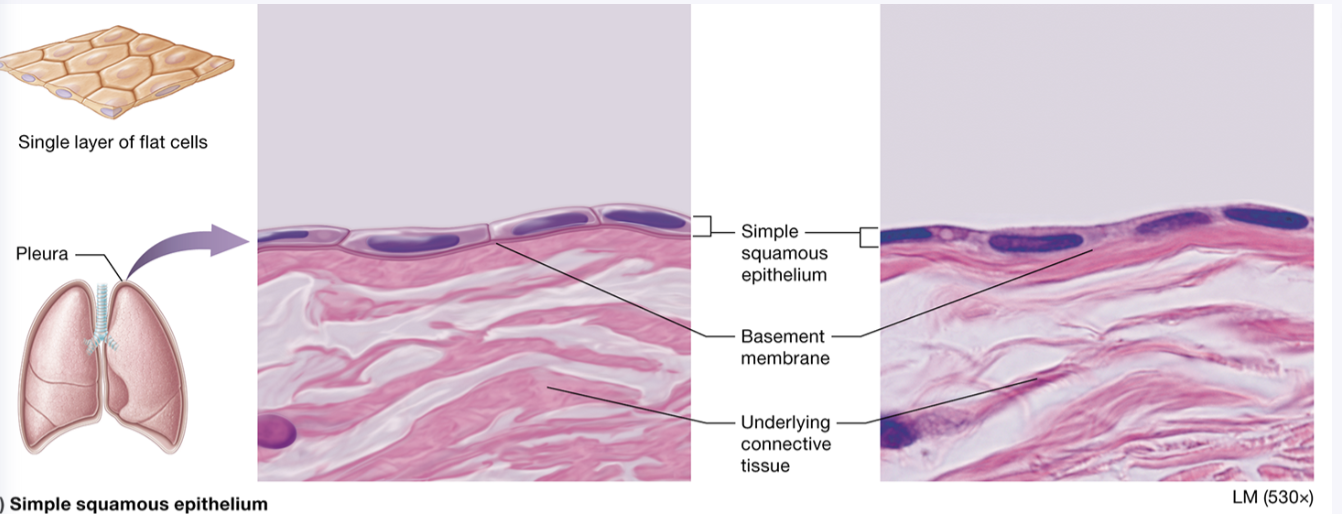
simple squamous: location
air sacs of lungs, lines body cavities
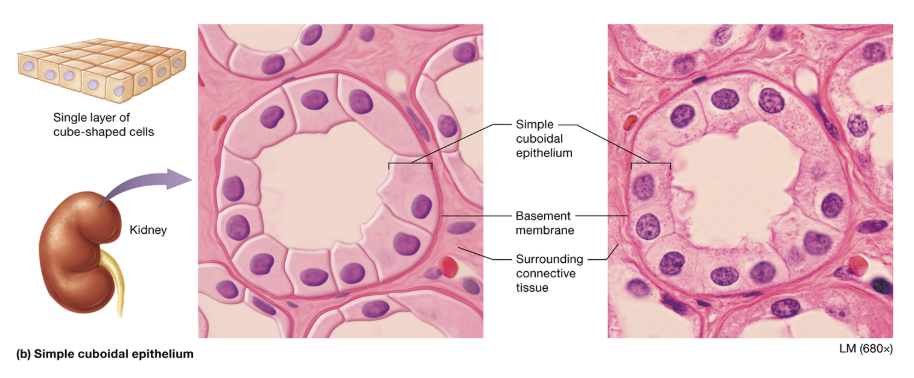
simpel cuboidal: function
absorption and secretion
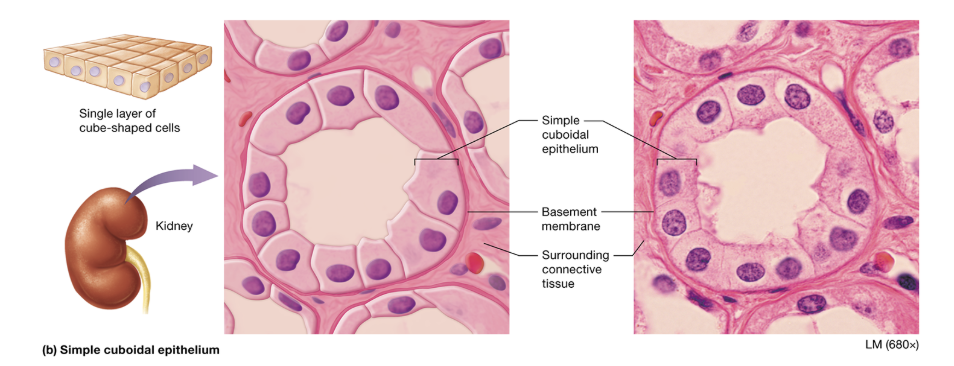
simple cuboidal: location
kidney tubules, glands
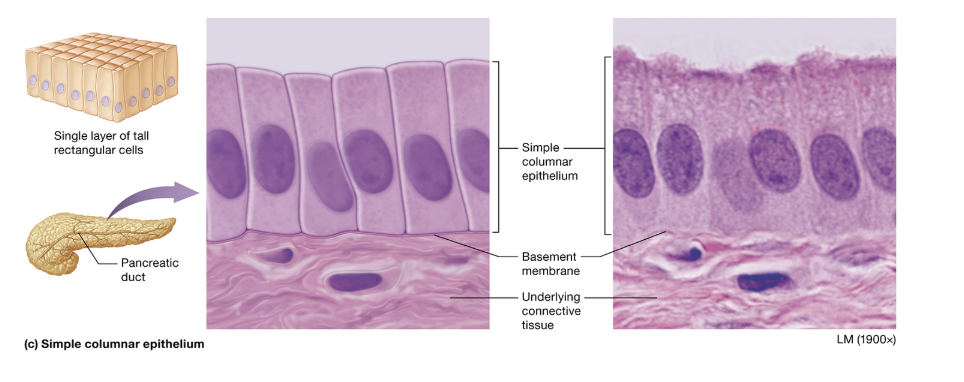
simple columnar: function
with microvili- absorption, with cilia- propulsion of egg

simple columnar: location
small intestine and uterine tube

pseudostratified columar: function
secretes and propels mucus

pseudostratified columar: location
nasal cavity and trachea

what are two ways in which substances are transported across simple epithelia
paracellular and transcellular transport

substances can leak between epithelial cells
paracellular transport

substance enters the cell through phospholipid bilayer, diffuses through cytosol, exits through the other surface of a cell
transcellular transport
primary function of stratified epithelia
protective barriers
where is stratified epithelia commonly found
in areas subject to a high degree of mechanical stress
which surface is used to name the shape of stratified epithelia?
the apical surface (the topmost layer)
what are three types of stratified epithelia
squamous, cuboidal and columnar, transitional

nonkeratinized stratified squamous: function
protection from abrasion

nonkeratinized stratified squamous: location
mouth, vagina

stratified cuboidal: function
secretion
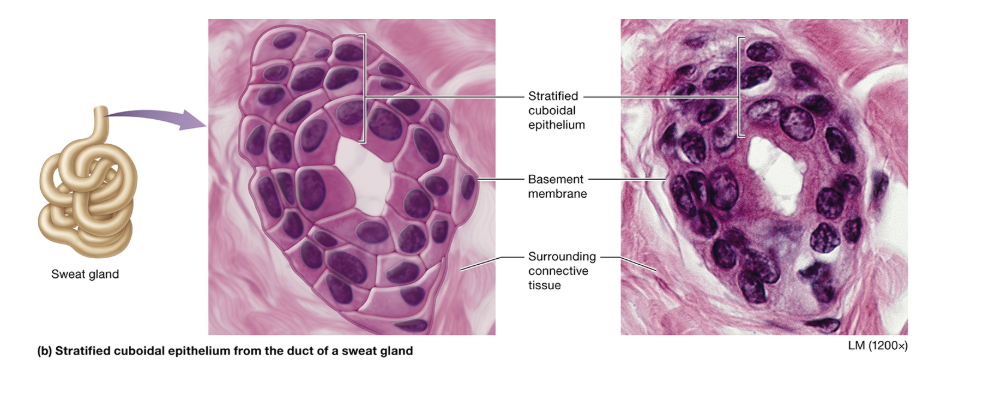
stratified cuboidal: location
sweat glands

stratified columnar: function
protection, some absorption and secretion
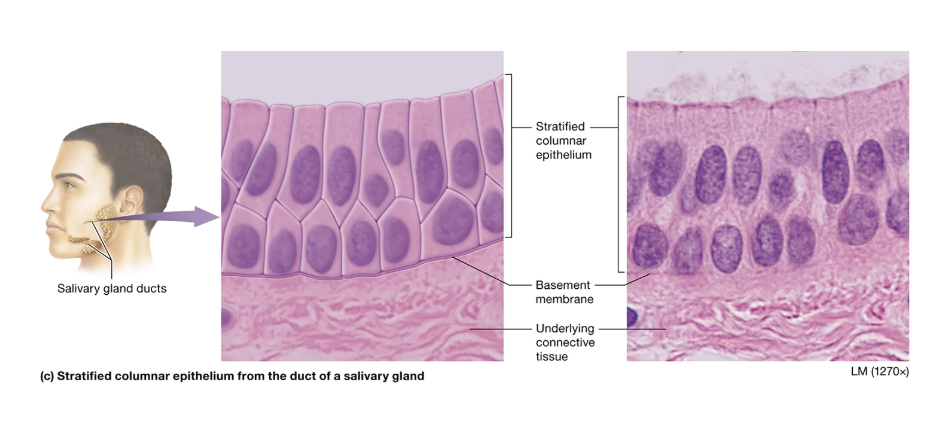
stratified columnar: location
ducts of certain glands, parts of male urethra

transitional: function
stretches

transitional: location
urinary bladder
keratinized stratified squamous: function
protection from abrasion, prevents water loss through the skin
keratinized stratified squamous: location
epidermis
structure that makes and secretes a product
gland
what type of tissue forms glands
epithelial tissue
which cells make the product in a gland
secretory cells
which type of gland secretes its product through a duct, has local actions only, and releases its product to the exterior/hollow organs that open to the outside of the body
exocrine glands
which type of gland lacks ducts, facilitates communication between cells in distant areas of the body, and secretes its product usually hormones, directly into the blood
endocrine glands
the simplest
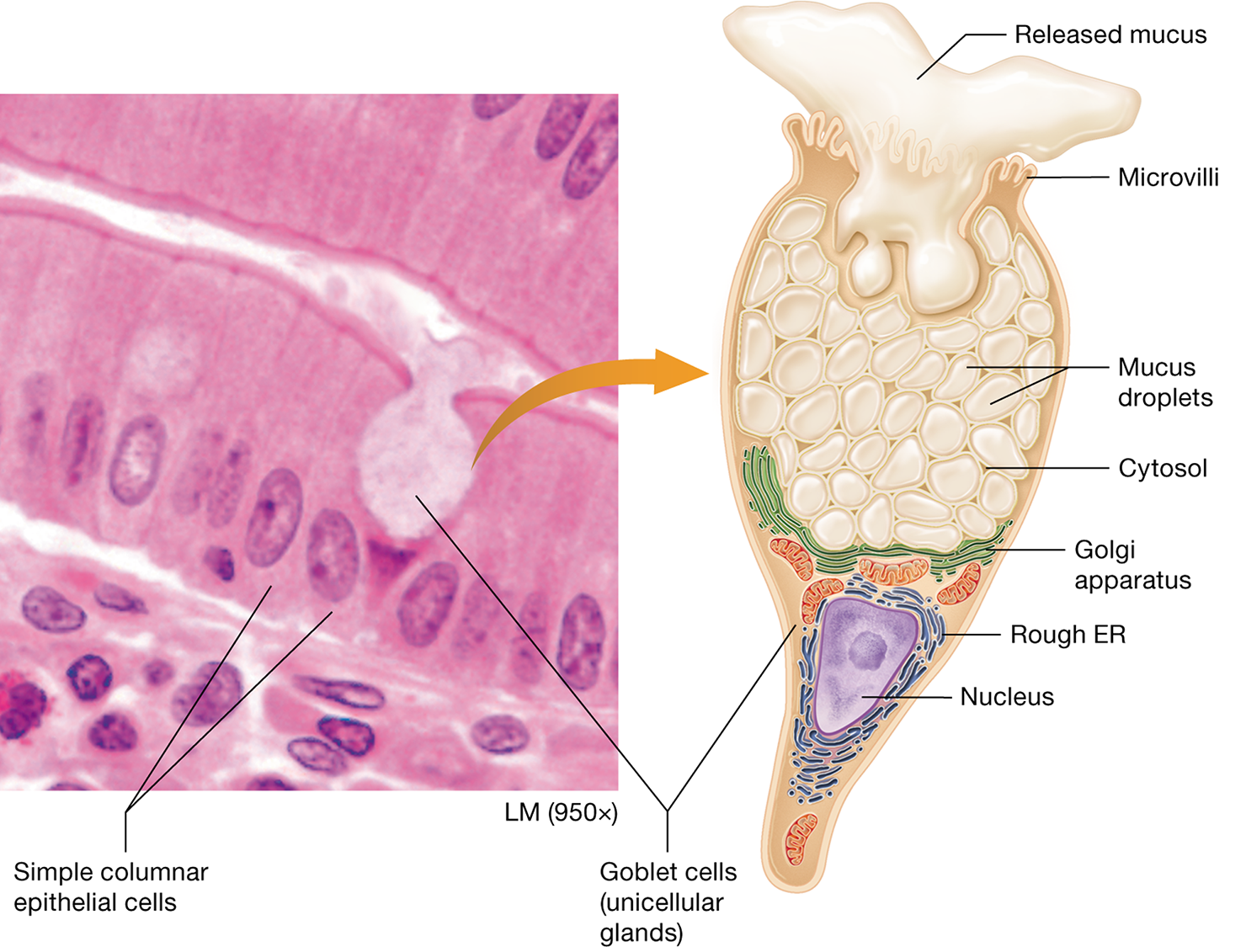
the simplest exocrine glands, composed of a single cell
unicellular glands

what is the most common unicellular gland
goblet cell

goblet cells secrete ___ that protects the underlying epithelium
mucus

epithelium lining in the digestive and respiratory tracts
goblet cell location
made of clusters of secretory cells arranged in different ways
multicellular gland
glands that have ducts that don’t branch
simple glands
glands that have branches
compound glands
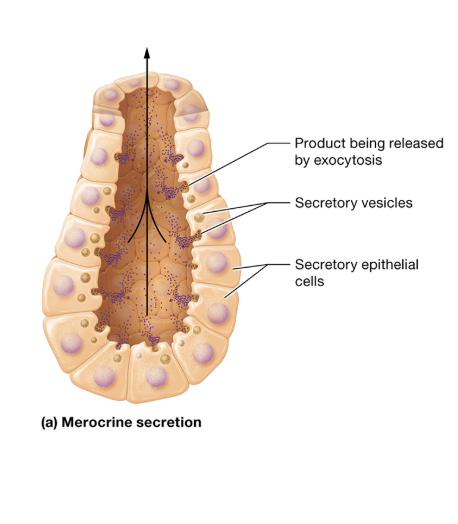
merocrine secretion: location
salivary and sweat glands
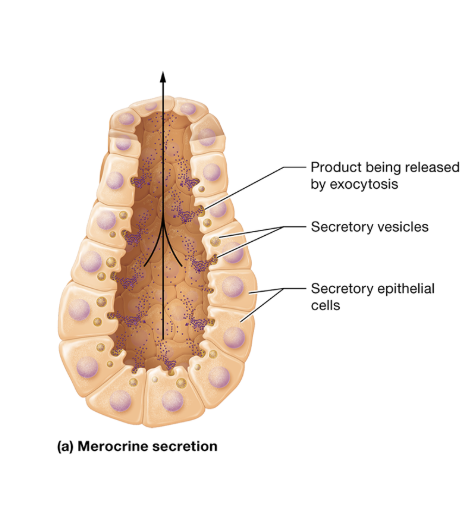
package their products in secretory vesicles for release by exocytosis
merocrine gland mechanism

holocrine gland: location
sebaceous glands of the skin

secretory cells accumulate their product in the cytosol; the product not released until the cell ruptures and dies
dead cells then shed and released with the product
holocrine secretion mechanism
primary function of the pectoral girdle (2)
support the upper limb, sites of attachments of numerous muscles
what bones compose the pectoral girdle (2)
clavicle and scapula
what is the common name for the clavicle
the collar bone

what are the names of the two ends of the clavicle
sternal end and acromial end

the ____ end articulates with the manubrium at the sternum, forming the _____ joint
sternal, sternoclaviuclar
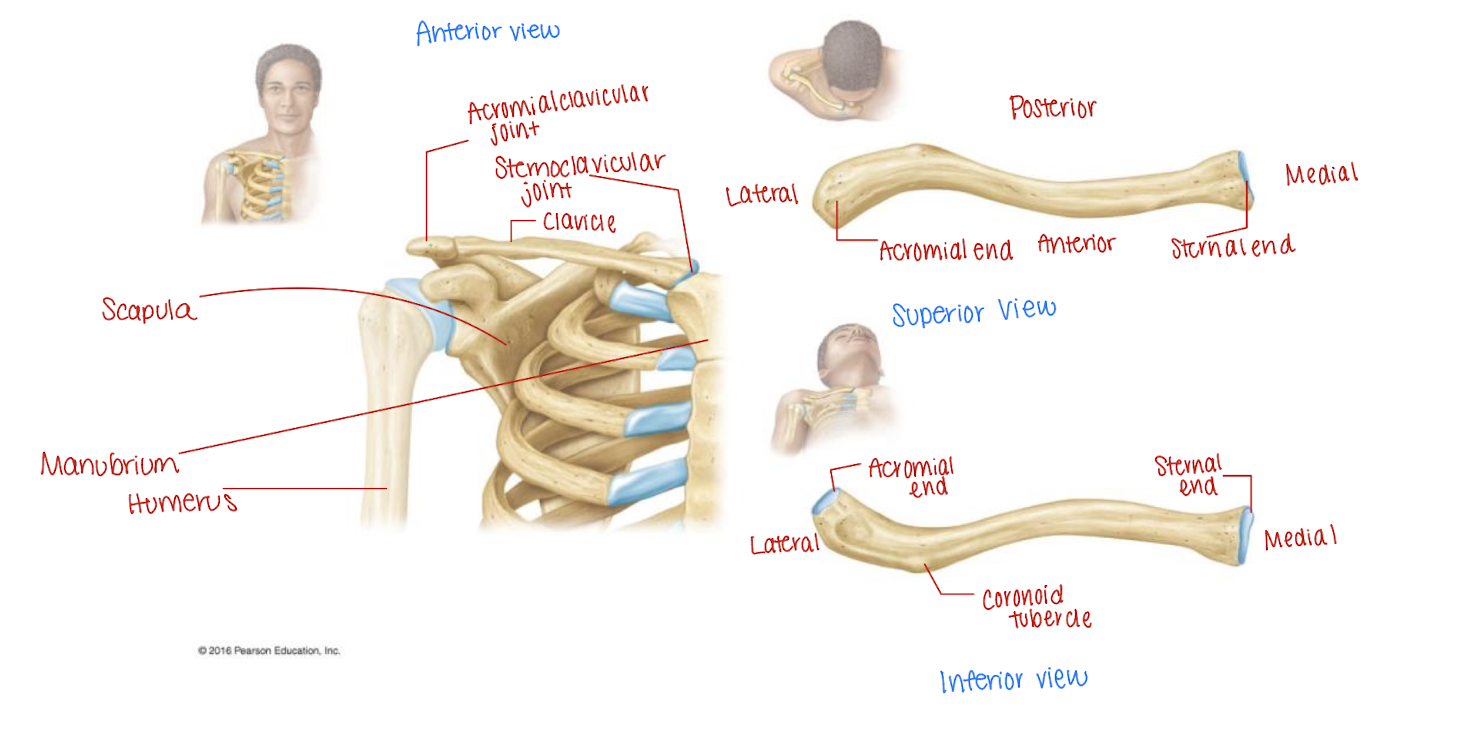
the ____ end articulates with the process of the scapula called the acromion to form the ____ joint
acromial, acromioclavicular

how does the clavicle appear if you look down at it from above
S-shaped
how do most fractures of the clavicle occur
direct trauma or from falling onto an outstretched arm

what is the general shape of this bone
triangular

what are the names for the three edges/borders of the triangle
medial, lateral, superior borders

what are the names for the three points of the triangle
superior, inferior, lateral

the spine of the scapula is a continuation of what structure
“the blade” of shoulder
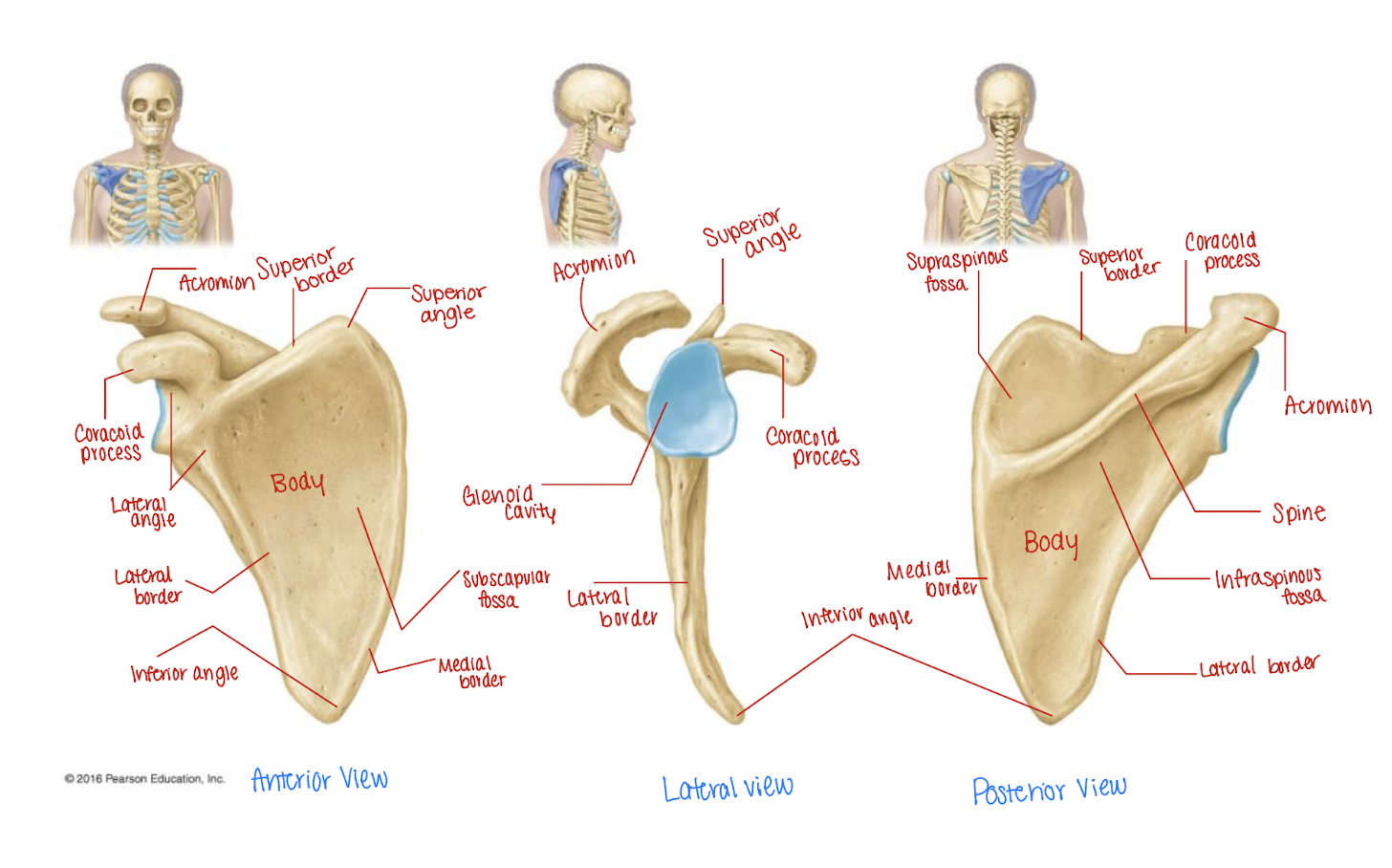
is the spine located on the anterior or the posterior side of the scapula
posterior side

what is the depression located above the spine
supraspinous fossa

what is the depression located below the spine (posterior)
infraspinous fossa
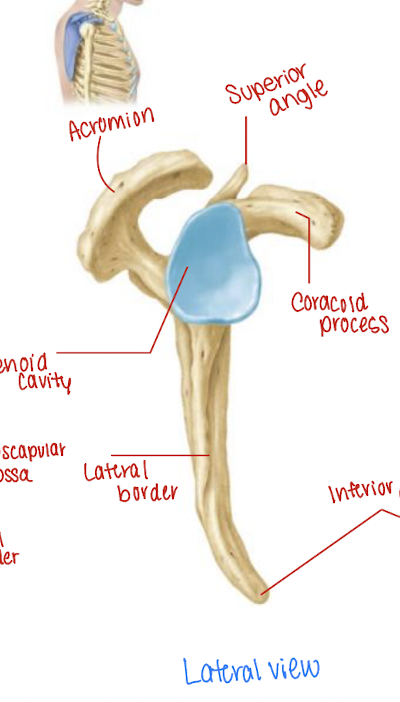
what is the name of the indentation where the humerus articulates? what is the name of this joint
the glenoid cavity (fossa), forms the shoulder joint

what is the structure that protrudes from the anterior side of the scapula and resembles a bent little finger
coracoid process
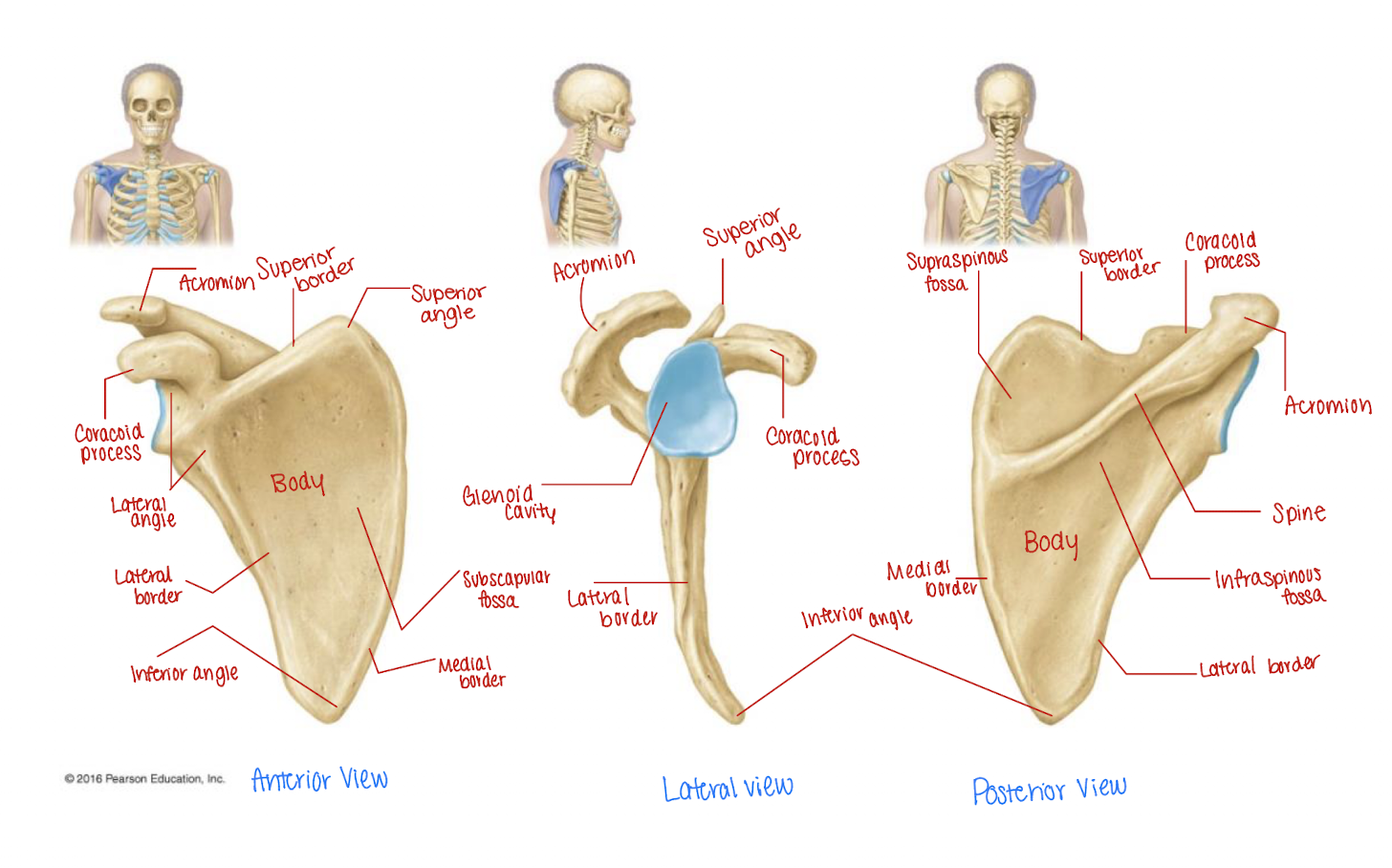
what is the name of the depression on the anterior side of the scapula
subscapular fossa
connecting and binding, support, protection, transport
functions of connective tissue
what does all CT have in common
their ECM plays an extensive role in their functions
where is CT proper located
where it connects tissues and organs together
list the cells found in CT proper (5)
fibroblasts, adipocytes, mast cells, phagocytes, other immune cells
fat cells that store lipids
adipocytes
immune system cells involved in inflammation
mast cells