TI6-clinical uses of antibiotics 3
 Call Kai
 Learn
 Practice Test
 Spaced Repetition
 Match
 Flashcards
 Knowt Play
1/15

There's no tags or description
Looks like no tags are added yet.
16 Terms
what are the beta lactamases sensitive antibiotics ( penicillin’s )
these are the antibiotics that act mainly on the gram positive bacteria e.g benzylpenicillin
what are the beta lactmase resistant antibiotics
these are antibiotics that are narrow spectrum used against gram positve bacteria mostly staphylococcal infections producing b-lactamaseases they can also be given orally e.g. flucloxacillin
what are broad spectrum antibiotics
these are antibiotics that are active against positive and negative bacteria
e.g. amoxicillin which is often inactivated by the beta lactamases by it has its inhibitors there to prevent this
also co-amoxiclav this is amoxicillin and clavulanic acid ( an inhibitor )
what are anti-pseudomonal antibiotics
these are antibiotics that are broad spectrum and can be used to treat pseudomonas infections ( a typical bacteria too )
e.g. piperacillin + tazobactam ( b-lactamases inhibitor ) given by IV
what are the two approaches for selecting an antibacterial for a patient
directed therapy
based on knowing what the pathogen is
+/- sensitivity to antibacterial
through doing tests to find out
empirical therapy
based on guessing what the pathogen is
describe what direct therapy approach is for selecting antibacterial

what are the pro's of using directed therapy for selecting antibacterial

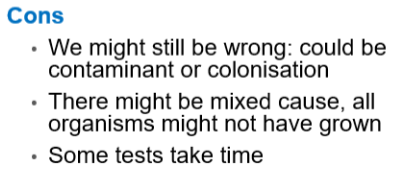
what are the disadvantages of using the directed therapy approach for selecting antibiotics
what are the type of infections commonly found in the GI tract and chest + caused by what bacteria type

what type of infections are found in the mouth, teeth, throat, sinuses , lower bowel + what type of bacteria usually causes them

what type of infections are usually happen in the chest and Genito-urinary + what group of bacteria cause them

what type of infections are usually happening in the skin,bones and chest and what type of bacteria typically cause them

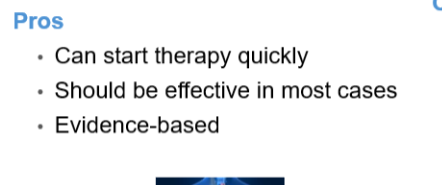
what are the pros of using empirical therapy as a way of selecting the antibiotics used for patients
what are the cons for using empirical therapy for selecting antibiotics used

how can we know if there’s low risk of antibiotic resistance in a patient before culture results
patient- asking them about previous prescriptions and risk factors for resistance e.g. resident in care home
population- known patterns for resistance locally or nationally
local epidemiology- local guidelines can adapt national guidance to local pathogens and resistance patterns
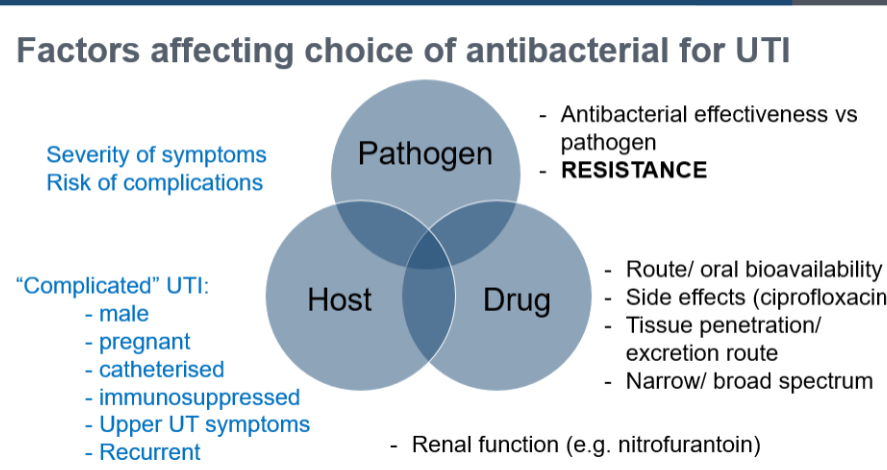
what are the main factors affecting choice of antibacterial for Infections