chem
 Call Kai
 Learn
 Practice Test
 Spaced Repetition
 Match
 Flashcards
 Knowt Play
1/151

There's no tags or description
Looks like no tags are added yet.
152 Terms
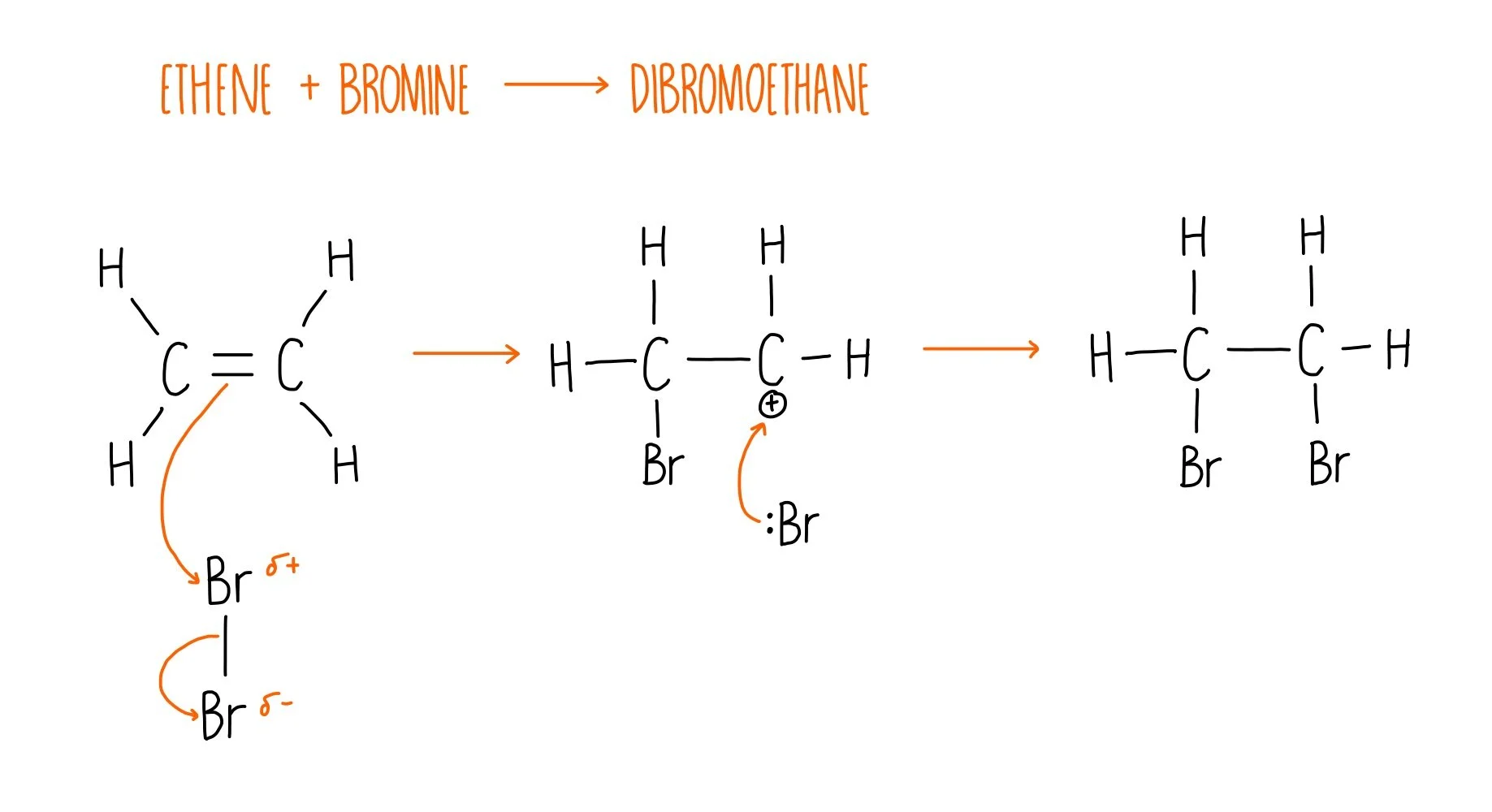
Show the mechanism for Alkene → dihaloalkane.
electrophilic addition.
Show the mechanism for haloalkane → alcohol.
nucleophilic substitution.

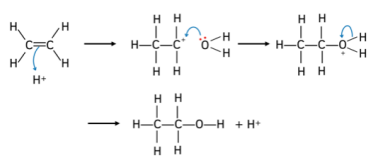
Show the mechanism for Alkene → alcohol.
electrophilic addition and hydrolysis.
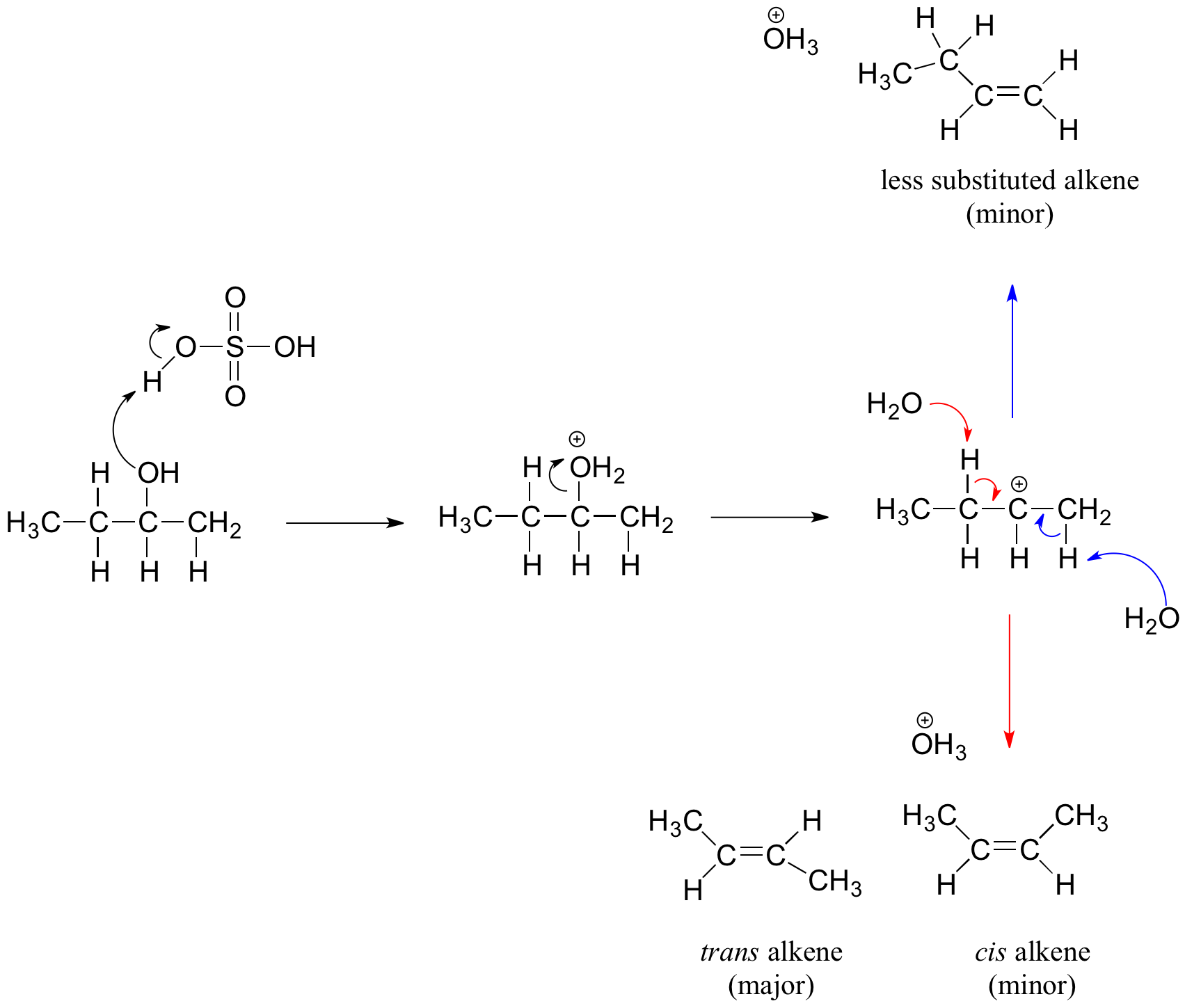
Show the mechanism for Alcohol → alkene.
dehydration
Explain the oxidation of alcohols
primary alcohols oxidise to aldehydes, which can further be oxidised to carboxylic acids with a strong oxidising agent
secondary alcohols are oxidised to ketones
tertiary alcohols cannot be oxidised


Show the mechanism for Ketone/aldehyde → hydroxynitrile.
nucleophilic addition.
Show the mechanism for Ketone/aldehyde → alcohol.
NaBH4, nucleophilic addition.

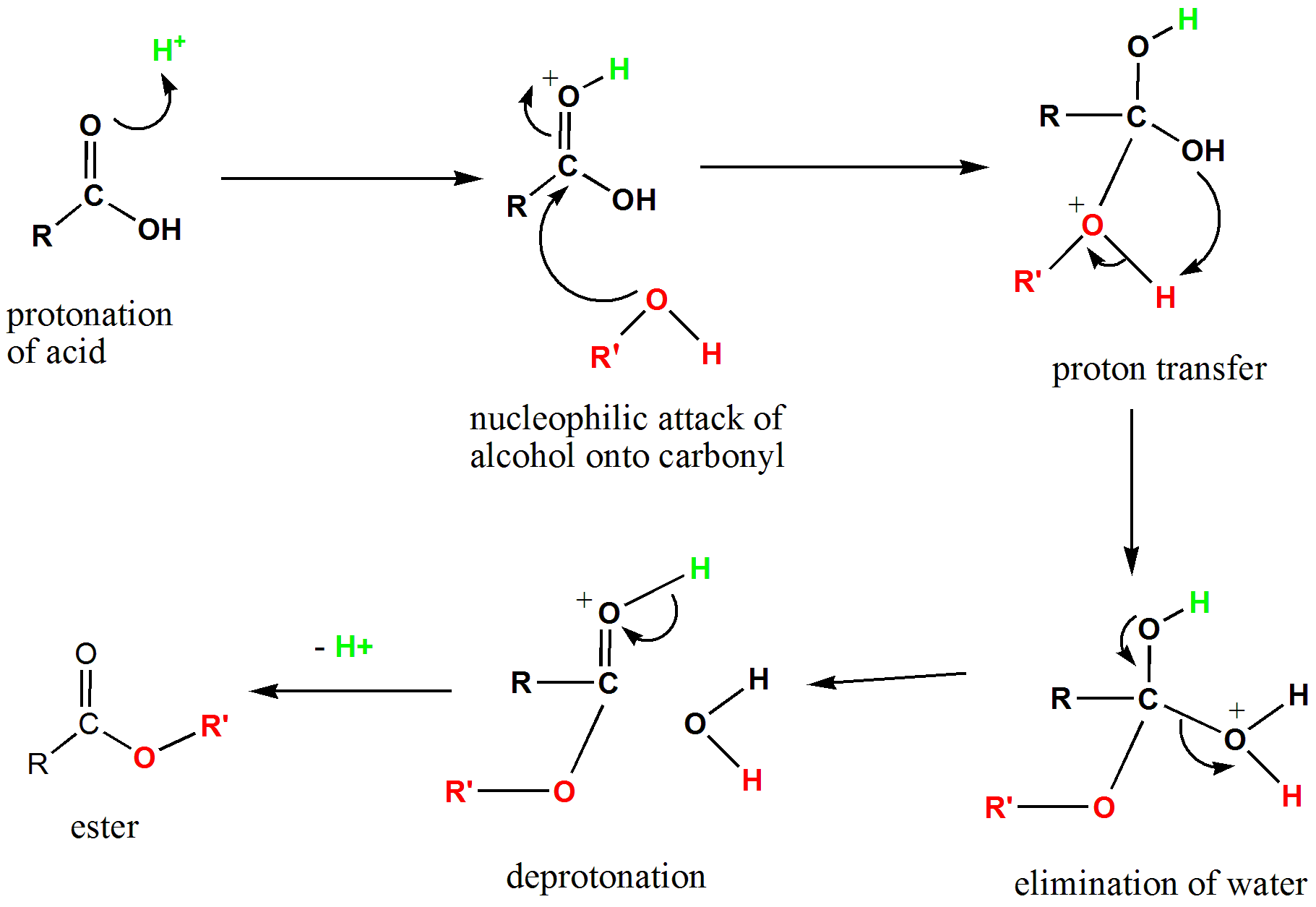
Show the mechanism for Carboxylic acid → ester.
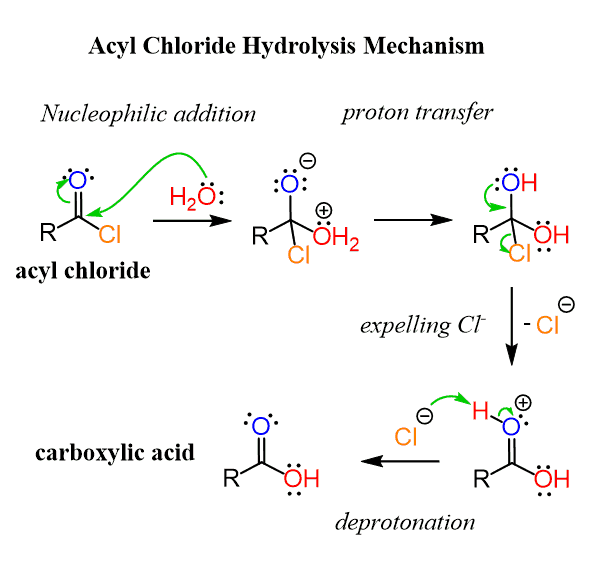
Show the mechanism for Acyl chloride → carboxylic acid.
Show the mechanism for acid anhydride → carboxylic acid.

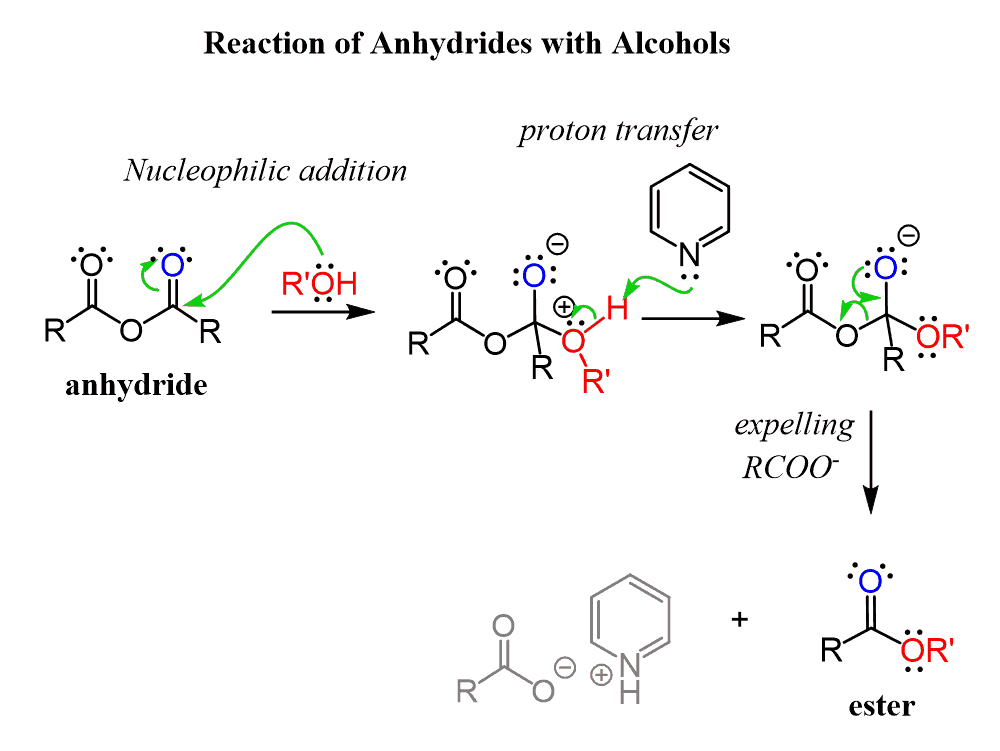
Show the mechanism for acid anhydride → ester.
Show the mechanism for acyl chloride → ester.

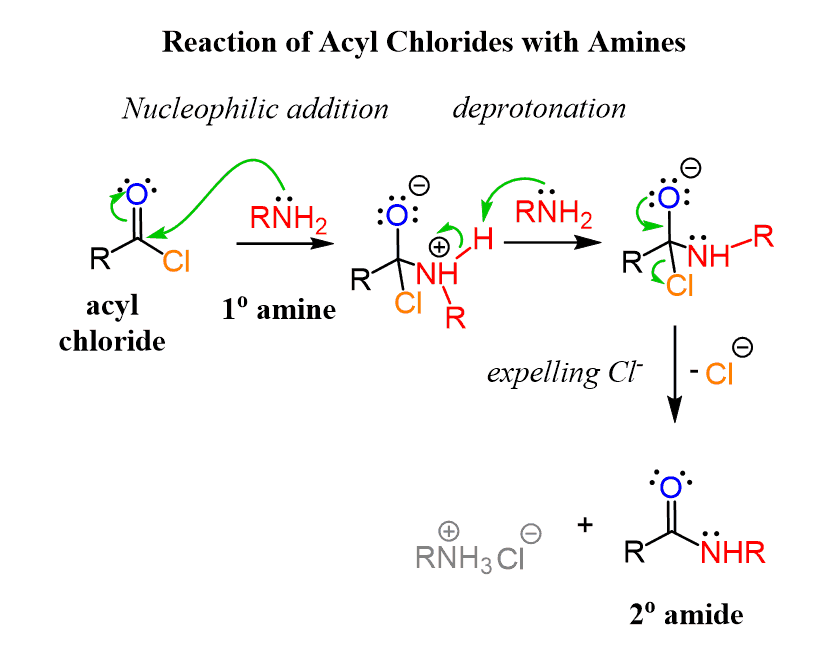
Show the mechanism for Acyl chloride→ secondary amide.
primary amine, nucleophilic addition-elimination.
Show the mechanism for Haloalkane → nitrile.
nucleophilic substitution.

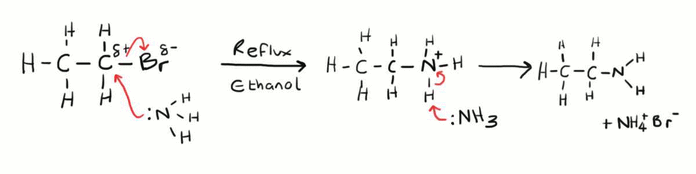
Show the mechanism for Haloalkane → primary amine.
Show the mechanism for Alkane → haloalkane.
free radical substitution.

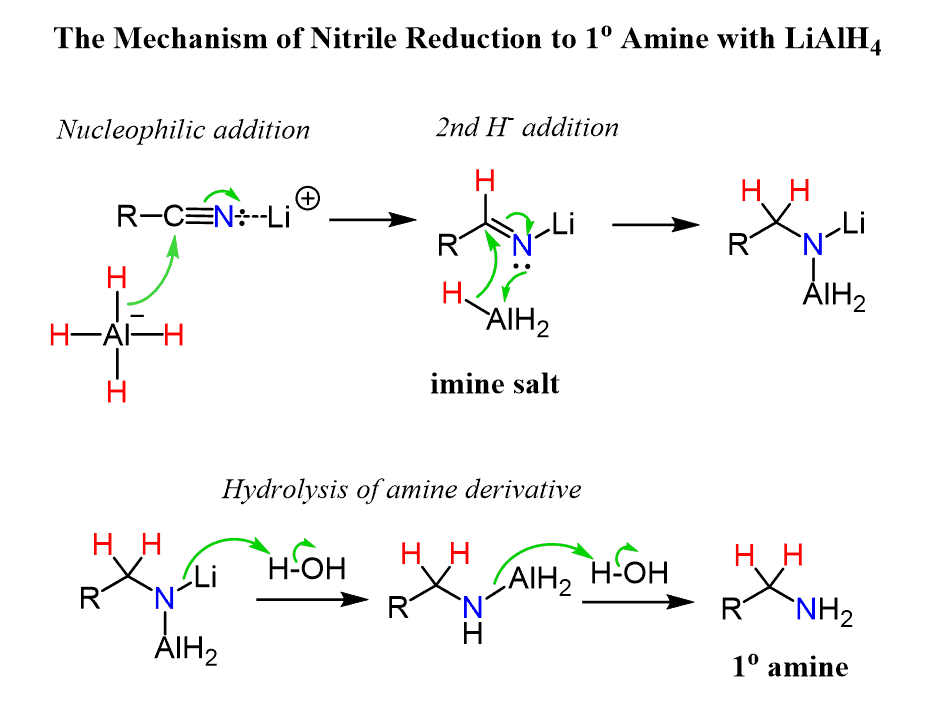
Show the mechanism for Nitrile → primary amine.
LiAlH4, ether reduction.
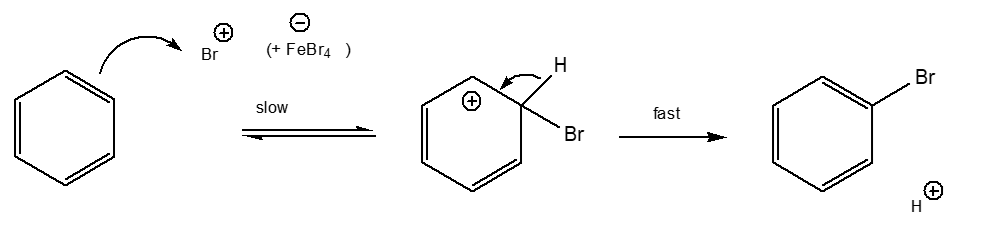
Electrophilic substitution of benzene with bromine.
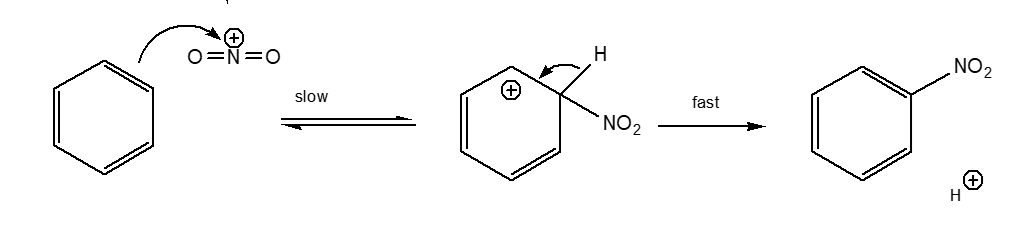
Draw the mechanism for the nitration of benzene.
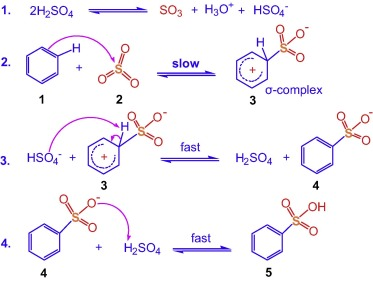
Draw the mechanism for the sulfonation of benzene.
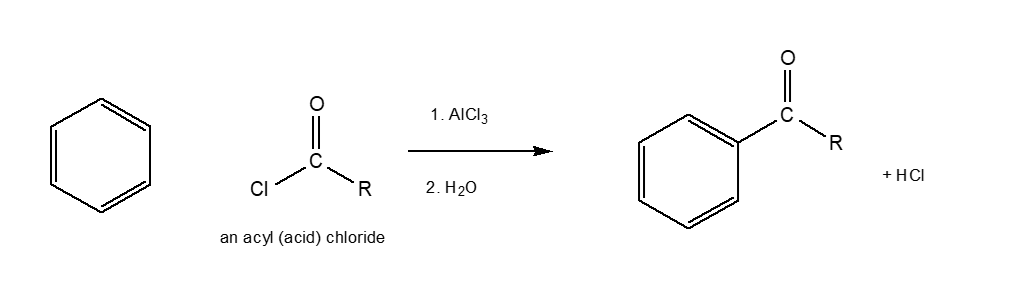
Show the reaction for the Friedel-Crafts acylation of benzene using an acyl chloride.
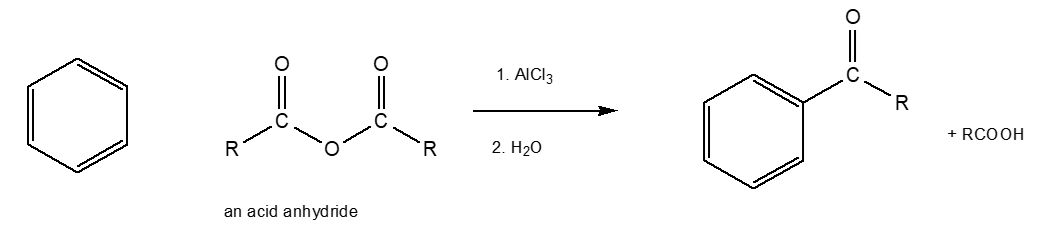
Show the reaction for the Friedel-Crafts acylation of benzene using an acid anhydride.
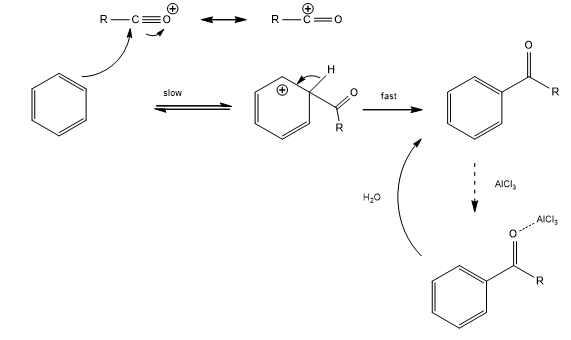
Show the mechanism for Friedel-Crafts acylation of benzene using an acylium ion.
Show the mechanism for the Friedel-Crafts Alkylation of benzene.
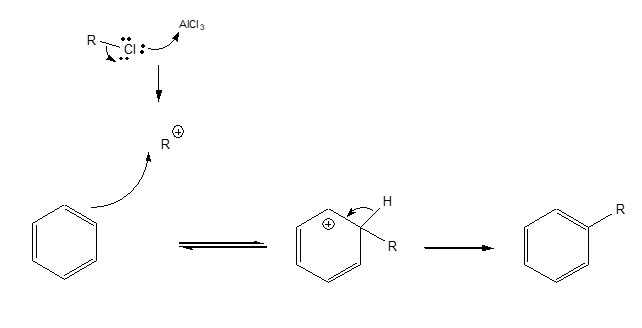
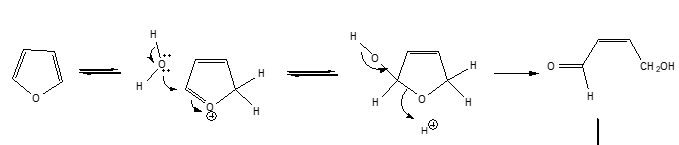
Show the mechanism where the Furan ring is opened by water and an acid.
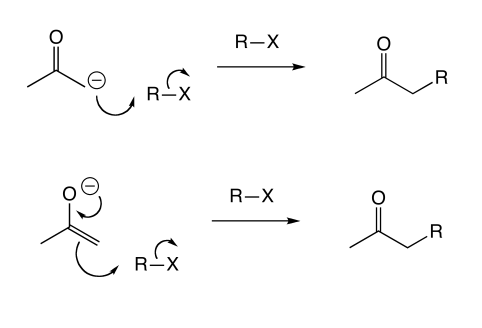
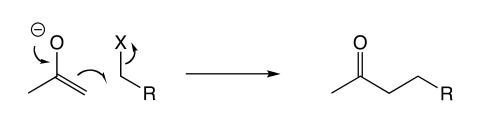
Show the 2 possible mechanisms for enolate alkylation
Give an example of keto-enol tautomerism.
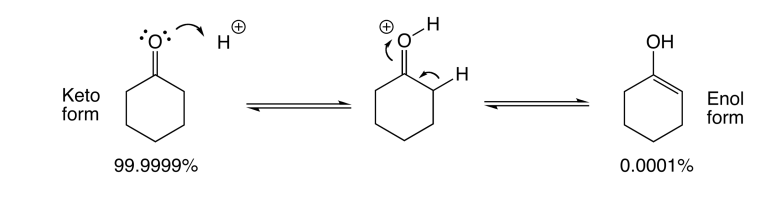
Show the mechanism for a carbonyl compound reacting with an electrophile under acidic conditions (via enol)
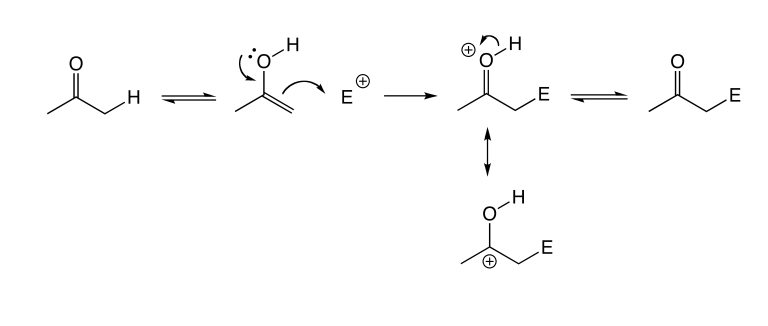
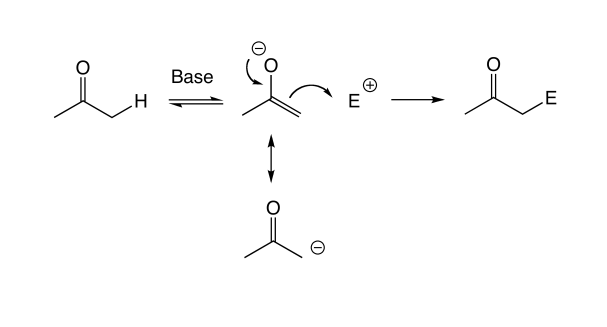
Show the mechanism for a carbonyl compound reacting with an electrophile under basic conditions (via enolate).
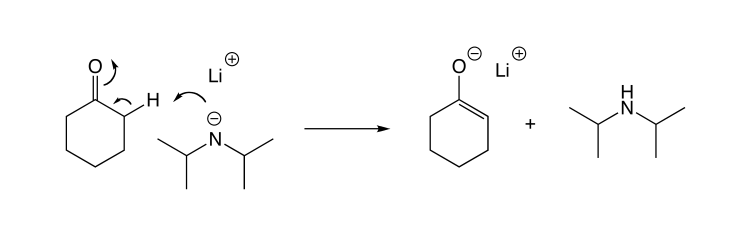
Show the mechanism for deprotonation of a ketone using LDA.
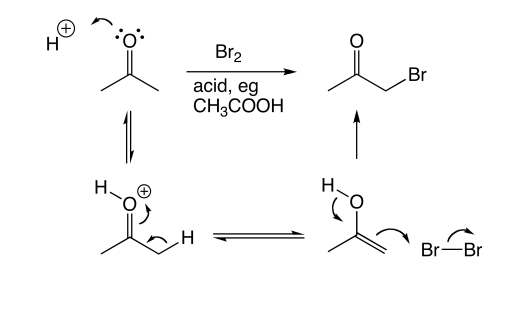
Show the mechanism for acid catalysed halogenation of a carbonyl compound
Show the SN2 reaction resulting in the alkylation of an enolate ion
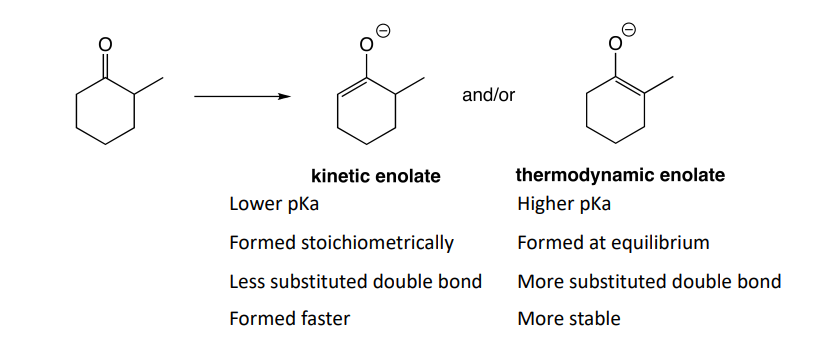
Show the 2 possible enolates formed when 2-methylcyclohexanone is treated with a base, and explain the difference in properties between the two
Show the mechanism and the conditions needed for the alkylation of an ester (via an enolate and alkyl halide)

Show the mechanism and the conditions needed for the alkylation of a nitrile (via a nitrile enolate and alkyl halide).

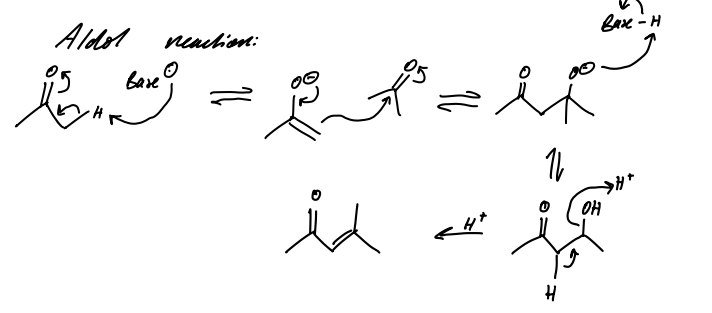
Show the general mechanism for an aldol reaction.

Show the general mechanism for a base-promoted aldol reaction.

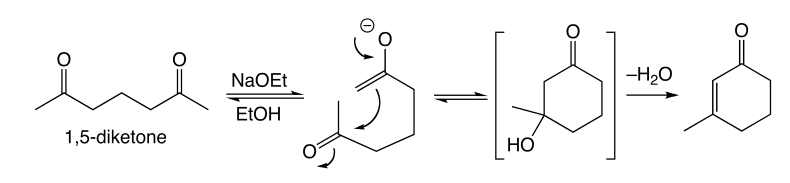
Show the mechanism of an intramolecular aldol reaction of a symmetrical 1,5-diketone.
What is the structure and properties of arginine?
Basic, Polar, Positively charged and protonated at physiological ph
Ionic interactions, salt bridges, amines are h bond donors and acceptors, cation-pi interactions, methylene chain weak hydrophobic interactions

What is the structure and properties of histidine
Basic, polar, aromatic, can be protonated (charged) or unprotonated at physiological pH
N on imidazole are hydrogen bond donors and acceptors, chelation, pi-pi stacking, cation-pi

What is the structure and properties of lysine
Basic, polar, protonated (charged) at physiological pH
Ionic, salt bridges, protonated amino group h bond donor, hydrocarbon chain hydrophobic interactions

What is the structure and properties of aspartic acid
Acidic, polar, negatively charged at physiological pH
Ionic, salt bridges, h bond acceptor on carboxylate, chelation

What is the structure and properties of glutamic acid
Acidic, polar, negatively charged at physiological pH
Ionic, salt bridges, h bond acceptor on carboxylate, chelation

What is the structure and properties of Serine
Polar, uncharged, hydrophilic
OH is h bond acceptor and donor, OH is nucleophile, can be phosphorylated
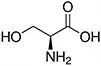
What is the structure and properties of threonine
Polar, uncharged, hydrophilic
OH h bond acceptor and donor, methyl has hydrophobic character, OH is nucleophile and can be phosphorylated

What is the structure and properties of asparagine
Polar, uncharged, hydrophilic
Carbonyl is h bond acceptor, amino is h bond donor

What is the structure and properties of glutamine
Polar, uncharged, hydrophilic
Carbonyl is h acceptor, amino is h donor

What is the structure and properties of cysteine
polar, uncharged, nucleophilic
disulfide bonds under oxidising conditions, chelation, thiol is weak h bond donor, thiolate form is nucleophile

What is the structure and properties of glycine
non-polar

What is the structure and properties of proline
non-polar, cyclic
pyrrolidine hydrophobic interactions, cis-trans isomerisation

What is the structure and properties of alanine
non-polar, hydrophobic
hydrophobic methyl

What is the structure and properties of valine
non-polar, hydrophobic
isopropyl is hydrophobic

What is the structure and properties of isoleucine
non-polar, hydrophobic
sec-butyl is hydrophobic

What is the structure and properties of leucine
non-polar, hydrophobic
isobutyl is hydrophobic

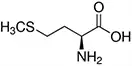
What is the structure and properties of methionine
non-polar, hydrophobic
hydrophobic alkane chain
sulfur-pi interactions, chelation, methyl donor
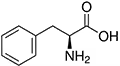
What is the structure and properties of phenylalanine
non-polar, aromatic, hydrophobic
pi-pi stacking, cation-pi, hydrophobic benzyl
What is the structure and properties of tyrosine
polar, aromatic, amphipathic
OH is h bond acceptor and donor, pi-pi stacking, cation-pi, OH can be phosphorylated

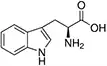
What is the structure and properties of tryptophan
non-polar, aromatic, hydrophobic
pi-pi stacking, indole N is h bond donor
What is a Sn1 reaction? Draw a general mechanism
Sn1 means substitution, nucleophilic, unimolecular rate determining step
Consists of carbocation formation, the nucleophilic attack, and optional deprotonation

What is a Sn2 reaction? Draw a general mechanism.
Sn2 means substitution, nucleophilic, bimolecular rate determining step
A nucleophile attacks an sp3 carbon while leaving group departs simultaneously

What are the reactive properties of alkanes?
non-polar, hydrophobic
can undergo free radical substitution
What are the reactive properties of alkenes
hydrophobic, non polar, nucleophilic; pi bond attacks an electrophile
can be reduced to alkane by adding h2 and pt/pd/ni catalyst
can be dihydroxylated with KMnO4
C=C can be cleaved by ozone to form carbonyl compounds
Free-radical polymerisation
What are the reactive properties of alkynes
Hydrophobic, non-polar, deprotonated alkynes are strong nucleophiles and bases
Reacts with water and H+ vio keto-enol tautomerism to form carbonyls
Can be reduced to alkane with H2 and metal catalyst
What are the reactive properties of alcohols
OH is h bond donor and acceptor, nucleophilic
OH is bad LG, but can be protonated for nucleophilic substitution to make alkyl halides
H+ catalysed dehydration to form alkene
Primary oxidised to aldehyde then carboxylic acid
Secondary oxidised to ketones
H+ catalysed esterification with carboxylic acid
What are the reactive properties of ethers
H bond acceptor
Protonated O is good leaving group, cleaved to alkyl halides and alcohols through reaction with HX
What are the reactive properties of epoxides
H bond acceptors, strong electrophiles
Ring opening nucleophilic substitution from strong nucleophiles
Acid catalysed ring opening - protonated O is good leaving group.
What are the reactive properties of haloalkanes
Hydrophobic, weak h bond acceptor, strong electrophiles, X are good leaving groups
Can undergo nucleophilic substitution
Elimination of beta hydrogen and halide to make alkene
What are the reactive properties of aldehydes
H bond acceptors, carbonyl carbon is strong electrophile, alpha-h is weakly acidic
Nucleophilic addition to carbonyl carbon
Oxidised to carboxylic acids
Reduced to primary alcohols
Aldol addition/condensation
What are the reactive properties of ketones
H bond acceptors, moderate electrophile, alpha-h weakly acidic
Nucleophilic addition to carbonyl carbon
Reduced to secondary alcohols
Aldol addition/condensation
What are the reactive properties of carboxylic acids
Carbonyl oxygen is H acceptor, hydroxyl H is donor, moderate electrophile, acidic
React with alcohol to form ester
Reaction with SOCL2 or PCl3 to make acid chloride
Condense with amine to form amide
Reduced to primary alcohol
What are the reactive properties of acid anhydrides
Polar, h bond acceptors, strong nucleophiles
Nucleophilic acyl substitution - Nu attacks carbonyl carbon
NAS with water makes 2 carboxylic acids
NAS with alcohol forms ester and carboxylic acid
NAS with primary or secondary amine forms amides
Reduced to primary alcohols using LiAlH4
What are the reactive properties of esters
H bond acceptor, moderate electrophile, RO- is a strong base and poor leaving group
Nucleophilic acyl substitution - Nu attacks carbonyl carbon
NAS with base makes alcohol and carboxylate salt
NAS with amine forms amides and alcohol
Reduced to primary alcohols using LiAlH4
Reduced to aldehyde with DIBAL
What are the reactive properties of amides
N-H is H bond donor, carbonyl is h bond acceptor
Hydrolysis with strong acid or base to make carboxylic acid and amine
Reduced to amine by LiAlH4
Primary amides dehydrated with POCL3 to form nitrile
What are the reactive properties of acyl halides
H bond acceptor, extremely strong electrophile, X is good leaving group
Nucleophilic acyl substitution - Nu attacks carbonyl carbon
NAS with water makes carboxylic acid and HX
NAS with alcohol and base forms esters
NAS with primary or secondary amine forms amides
Reduced to primary alcohol with LiAlH4
What are the reactive properties of amines
Hydrophilic, N-H is h bond acceptor and donor, tertiary amine is H bond acceptor, strong nucleophile
Attacks alkyl halides to displace halide ion
NAS with carboxylic acid derivative to form amides
What are the reactive properties of nitriles
hydrophilic, h bond acceptors, strong electrophile, alpha-h weakly acidic
Nu attacks cyano carbon to form ketone or aldehyde
Strong acids or bases forms a carboxylic acid and ammonium salt
Reduced to primary amine with LiAlH4
Reduced to aldehyde using DIBAL
What are the reactive properties of thiols
Hydrophobic, weak h bond acceptor and donor, very strong nucleophile
Can be deprotonated by a base to form RS-
RS- attacks alkyl halides to form thioethers
Mild oxidation forms disulfide bonds between 2 thiols
Strong oxidation forms sulfonic acids R-SO3H
What are the reactive properties of aromatic rings
Hydrophobic, moderate nucleophiles
pi-cloud attacks electrophiles
Explain electronegativity and dipole formations
Electronegativity is the tendency for an atom to attract electrons
Differences in electronegativity between bonded atoms results in an unequal distribution of electron density across the bond
This forms a dipole
Explain hydrogen bonding
H bonds form between X-H, where X is an electronegative atom, and the lone pair of a second electronegative atom
They depend on orbital overlap and are strongly directional, optimal bond angle 180 degrees
What are hydrogen bond donors
Electronegative atoms bonded to a hydrogen atom
What are hydrogen bond acceptors
Atoms that accept a hydrogen bond, usually with a lone pair
What’s the difference between normal and charge-assisted hydrogen bonds
Charge-assisted hydrogen bonds involve a hydrogen atom that is part of a charged group
They are stronger than normal hydrogen bonds because of the additional electrostatic attraction between the groups
They can significantly increase the binding affinity between a drug and its target protein
What’s an induced dipole?
They occur when a non-polar molecule or atom temporarily becomes polarised due to an external electric field or nearby charged species
What is polarisability? What affects it?
It’s a measure of how easily the electron cloud of a molecule or atom can be distorted to form an induced dipole.
Larger atomic radii are more easily polarised
Explain cation-pi interactions.
Cations interact with the electron rich pi-system in aromatic quadrupoles
These are strong interactions
Explain pi-pi interactions
Interactions between the electric quadrupoles of the rings
Face to face stacking is unfavourable, better to be t-shaped or slip stacked
Explain halogen bonds
When halogens are bonded to EWGs, they can have non-covalent interactions with a nucleophile.
The more polarisable the halogen, the stronger the halogen bond
Highly directional due to sigma hole

Explain the solvation of hydrophobic substances. What effect does this have on ligand binding?
Water molecules organise themselves around non polar molecule in a cage like structure
They orient themselves to maximise their hydrogen bonding: 3 h bonds formed per molecule.
This cavity creation restricts the movement of water: large entropic cost
Forming strong hydrogen bonds is favourable enthalpically
The cost of breaking these bonds can affect activation energies for ligand binding.
Explain the hydrophobic effect.
The tendency for non-polar substances to aggregate in aqueous solution
It is driven by the increase in entropy of water molecules when non-polar molecules come together: less water needed to form a cage around one large blob than two smaller ones.
What is an e2 reaction? Draw a general mechanism
A single step reaction where a strong base removes a proton from a beta-carbon while a leaving group departs simultaneously to form an alkene. There are no intermediates.

What is an e1 reaction? Draw a general mechanism
A two step elimination where a substrate loses a leaving group to form a carbocation intermediate. Then a weak base removes a proton to form an alkene.

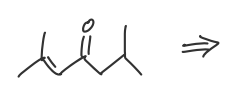
Show the disconnection of an enone using an aldol reaction.

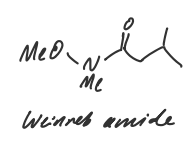
Draw the structure of the Weinreb amide.
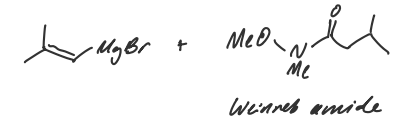
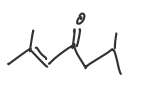
What is formed from these reactants?
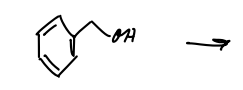
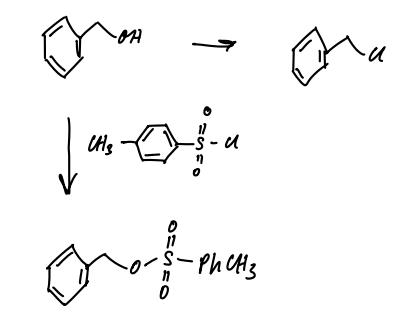
Hydroxyl groups are bad leaving groups. How can you make them better?
By reacting with SOCl2/PCl3 or that other thing.
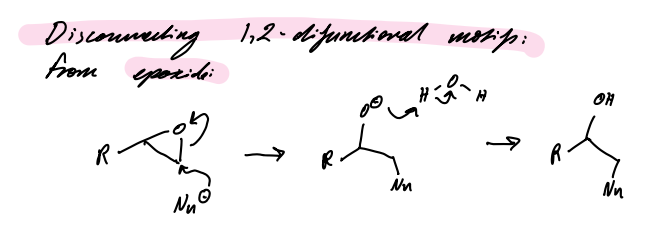
Show how an epoxide ring can be opened using a nucleophile.
Nu typically attacks the least hindered end of the epoxide.
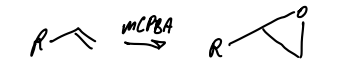
What reagent converts an alkene to an epoxide?
mCPBA
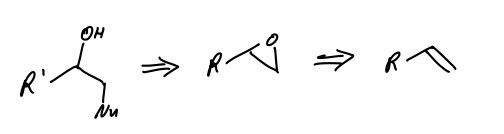
Show the 2 step retrosynthesis from an alcohol to an alkene.
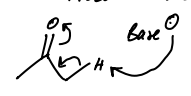
Draw the mechanism for the aldol reaction.