UNIT 3 - Genetic Instructions
 Call Kai
 Learn
 Practice Test
 Spaced Repetition
 Match
 Flashcards
 Knowt Play
1/89

There's no tags or description
Looks like no tags are added yet.
90 Terms
nucleotides
5 carbon sugar (on 2’ carbon)
bases
one or more phosphate groups
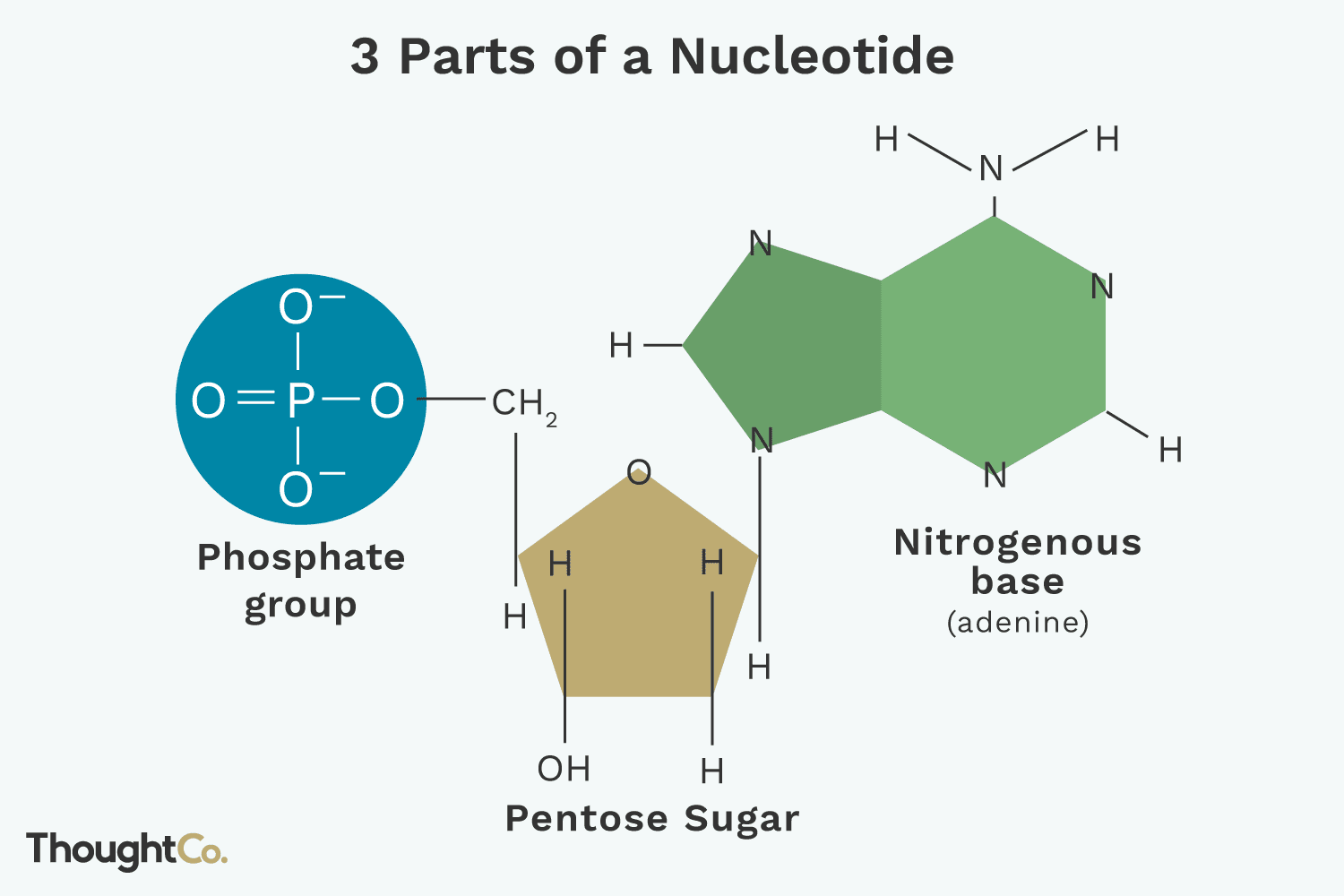
purines
double-ring structures
adenine and guanine

pyrimidines
single-ring structures
thymine and cytosine
uracil for RNA

nucleoside
combination of sugar and base
phosphodiester bond
covalent bond that connects one nucleotide to the next
C - O - P - O - C linkage
parts of a eukaryotic transcription unit (a gene) in order from upstream to downstream
a promoter containing a TATA box
transcription start site
transcribed region
terminator downstream of the coding region
RNA polymerase
unwinds DNA
reads DNA template from 3' to 5'
quaternary protein complex
catalyzes the addition of nucleotide triphosphate to the 3'OH of the growing chain
downstream
towards the 3' end of the RNA/DNA coding strand and 5' end of the DNA template
upstream
towards the 5' end of the RNA/DNA coding strand and 3' end of the DNA template
terminator
part of the gene where RNA Polymerase is released
gene
sequence of DNA including promoter, coding region, and terminator
codes for protein
promoter
sequence of the DNA double helix that binds transcription factors to control gene expression
points out the exact spot and location where RNA polymerase must attach
transcription factor
protein that binds to a regulatory region of DNA to control gene expression
ribosomal RNA (rRNA)
found in all ribosomes and is essential for translation
transfer RNA (tRNA)
carries individual amino acids to the ribosomes in translation
transcription unit
sequences of DNA that produces a RNA transcript
open reading frame
between the start and stop codons
+1 site
transcription start site (bacterial)
transcription in prokaryotes
initiation of transcription happens at the promoter sequence
a sigma factor protein binds to the promoter (-10 and -35 box)
helps recruit RNA polymerase to bind
the first base that serves as the template to transcribe into RNA is called the +1 site
transcription in eukaryotes
initiation of transcription happens at the promoter sequence (TATA box)
TATA binding protein and general transcription factor are proteins that assemble at the promoter
help RNA polymerase bind and promote transcription
basal transcription complex
regulatory transcription factors
activators & repressors bind to DNA sequences and regulate transcription
exons
expressed regions = code for amino acids
introns
intervening sequences = do not code for anything
splicing
introns must be cut out or the resulting RNA will contain extra bases that do not code for amino acids
splice junctions
sequences between exons & introns that are cut sites
splice variants
more than one type of protein can be made from a single gene coding for an mRNA
5’ untranslated region
upstream of start codon

3’ untranslated region
downstream of stop codon

what does it mean by the genetic code is redundant?
more than one codon codes for an amino acid
wobble effect
some tRNAs recognize more than one codon because they tolerate mismatches in the 3rd position of the codon
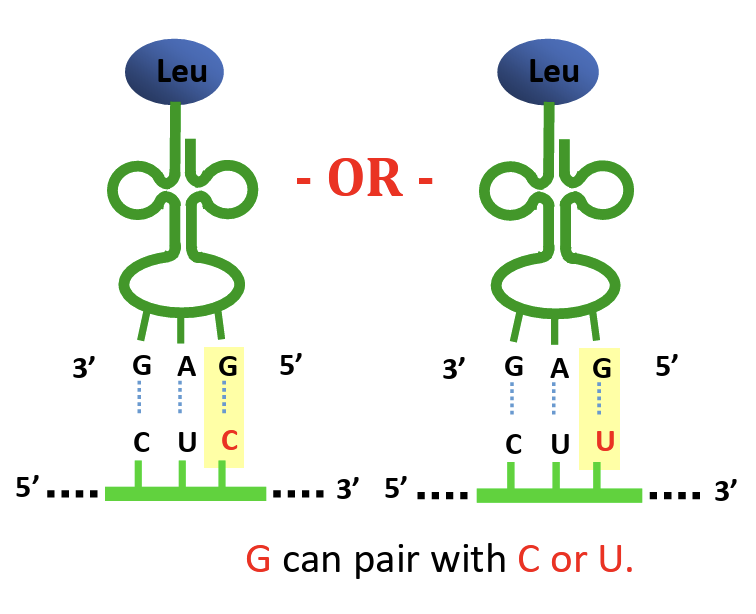
genetic code
describes what codons on mRNA match the anticodons on tRNAs to determine which amino acids get added to the protein sequence
general transcription factors
bind to core promoter regions on DNA to help recruit RNA polymerase and form the pre-initiation complex required to start transcription
environment
the conditons an organism experiences
genotype
the hereditary (genetic) info within an organism’s genome
phenotype
the resulting expression of the genotype within an organism resulting in observable traits
mutation
a change in the genotype relative to the wild-type sequence
wild-type
a reference defined as the “non-mutant” genotype in the gene of interest
mutant
an organism with a changed genotype relative to the wild-type sequence usually in a specific location in the DNA
point mutations
change in a single base in the DNA, resulting in a difference base pair
synonymous (silent) mutation
changes a codon but not the resulting amino acid

nonsynonymous (missense) mutation
changes a codon and results in a different amino acid in the protein

nonsense mutations
creates a new stop codon → truncated protein
insertion/deletion mutations
frameshift mutations → changes the reading frame of mRNA
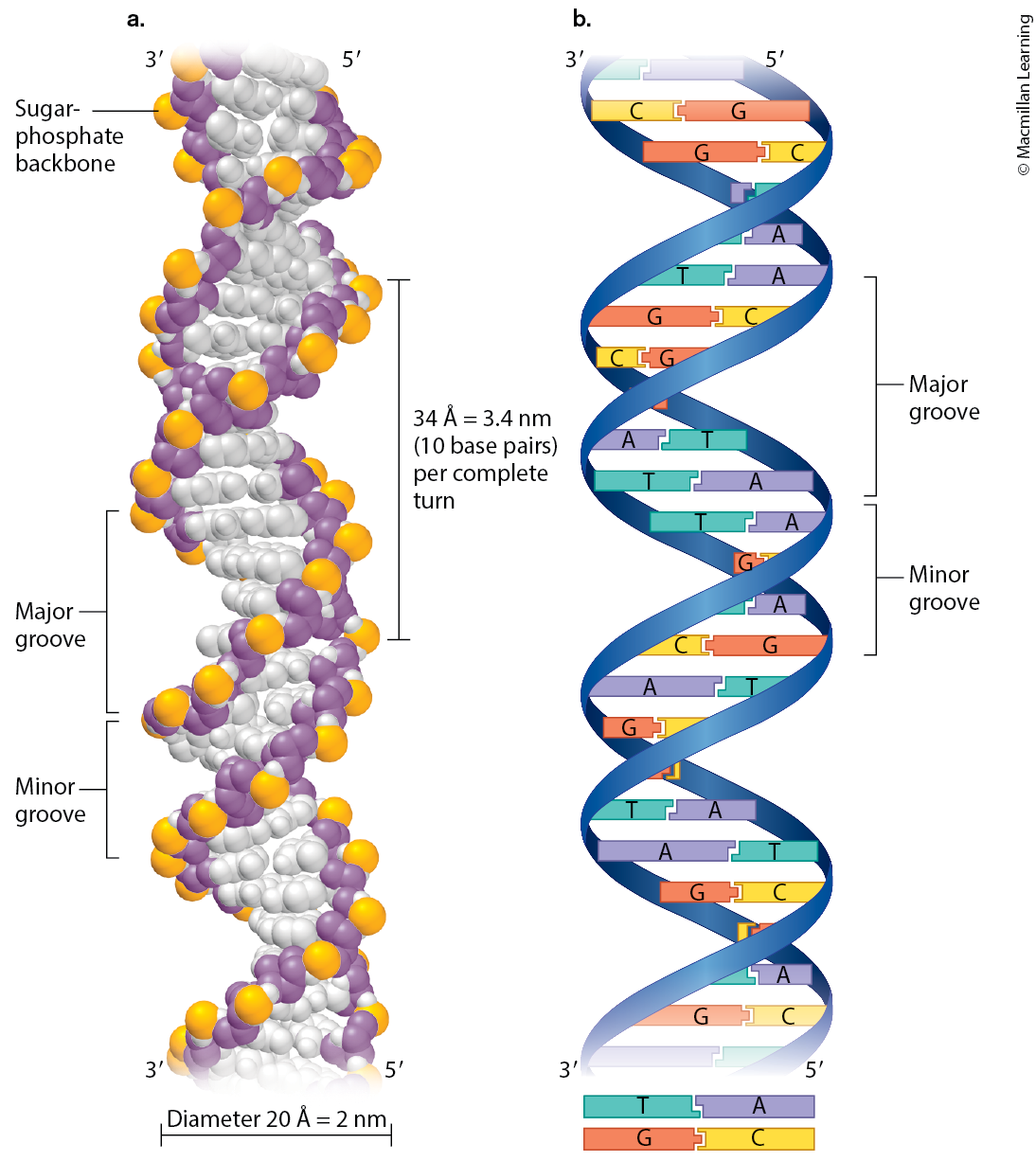
major & minor grooves
uneven outside contours of DNA
important because proteins that interact with DNA often recognize a particular sequence of bases by making contact with the bases by the grooves
base stacking
contributes to the stability of the double helix
interactions between the bases in the same strand
occurs bc of the nonpolar flat surfaces of the base tend to aggregate away from water and stack on top of each other as tightly as possible

sigma factor
promoter recognition in bacteria
transcriptional activator protein
binds to a specific DNA sequence known as an enhancer
elongation

primary transcript
RNA transcript that comes off the template DNA strand and contains the complement of every base that was transcribed from the DNA template
polycistronic mRNA
molecules of mRNA that code for multiple proteins
RNA processing
primary transcript → finished mRNA
additional of the 5’cap
polyadenylation: addition of poly(A) tail at the 3’ end
RNA splicing: joining exons and removing introns
alternative splicing
primary transcripts from the same gene can be spliced in different ways to yield different mRNAs → different protein products
differs in whether a particular exons is or isnt removed from the primary transcript
aminoacyl tRNA synthetases
connect specific amino acids to specific tRNA molecules
therefore directly responsible for actually translating the codon sequence in a nucleic acid to a specific amino acid in a polypeptide chain
reading frames
different ways of parsing the string into codons
gene expression
series of processes by which DNA is transcribed in RNA and RNA is translated into protein
transcriptional gene expression
turn transcription off/on and change how much mRNA is made
translational
control amount of protein made by changing mRNA stability
post-translational
control protein activity by post-translation modifications & degradation (enzyme binding)
zero/no gene expression
due to a mutation, no possiblity of gene expression
basal gene expression
very low “background” level of gene expression from random RNA polyermase binding to a promoter
low expression
detectable above background gene expression, but not abundant
high expression
transcription is occuring rapidly, many transcripts are being made, RNA polymerase recruitment to the promoter is strong
constitutive gene expression
gene expression is always on, but could be high (tRNA or rRNA) or low (Lacl or MalT)
differential gene expression
gene expression is regulated to be up or down depending on the developmental environmental conditions (or both)

label the DNA of a prokaryote
promoter, with -35 and -10 box
transcription start site (+1)
start codon
stop codon
terminator sequence
5’ coding strand 3’
3’ template strand 5’

label the mRNA of a prokaryote
5’ untranslated region:
ribosomal binding site
start codon
stop codon
3’ untranslated region:
hairpin loop

label the DNA of a eukaryote
promoter, TATA box
transcription start site
start codon
exons and introns
stop codon
terminator sequence
coding strand
template strand

label the mRNA of a eukaryote
5’ untranslated region
5’ cap
ribosomal binding site
start codon
exons/introns
3’ untranslated region
poly A tail
hotspots
sites that are especially mutable
germ cells
haploid gametes or the diploid cells that give rise to them
somatic cells
any cell excluding reproductive cell
rate of mutation greater than in germ cells
polymorphism
common genetic differences in a population
single-nucleotide polymorphism
a difference between two sequences at a single nucleotide position
transposable elements/transposons
movable DNA sequences that can insert themselves into a gene
gene regulation
ways in which cells control gene expression
when, where, and how much
gene regulation/expression of constituitve genes
promoter “strength”
how effectively RNA pol & transcription factors bind to the promoter
mRNA half life
affects how quickly the mRNA is degraded after its made, and longer mRNA lasts, the more protein copies can be translated
operon
a set of coding sequences for related proteins all sharing the same promoter and terminator
operator region
region of DNA where a regulatory protein binds
can overlap with promoter, upstream of it, or downstream of it
catabolic operons
produce proteins that are involved in the catabolism (breakdown) of the signal molecule
eg. mal and lac operons
anabolic operons
produce proteins that are involved in the synthesis (anabolism) of the signal molecule
eg. arginine operon
signal molecule
presence determines whether the operons are expressed at high levels
inducers
when present, the lac and mal operons are expressed at high levels (operons turned ON)
lac operon
contains three genes: lacZ, lacY, and lacA
lacZ gene
produces protein beta-glactosidase
lacY gene
transports protein that transport lactose into the cell
negative regulation
repressor protein binds
no RNA polymerase binds
no transcription

postive regulation
activator protein binds
RNA polymerase binds
transcription

mal operon
malP and malQ
weak promoter
malT
regulatory protein
involved in the regulation of the malPQ operon
constitutively expressed
beta-galactosidase
enzyme that breaks down lactose inside E-coli cells
lacI gene
regulatory protein
constitutively expressed
lacI protein is a repressor
can bind to the operator and prevents/blocks RNA polymerase from binding