bio quiz unit 1
 Call Kai
 Learn
Learn Practice Test
 Spaced Repetition
 Match
Match Flashcards
 Knowt Play
1/18

There's no tags or description
Looks like no tags are added yet.
Name | Mastery | Learn | Test | Matching | Spaced | Call with Kai | Chat |
|---|
No analytics yet
Send a link to your students to track their progress
19 Terms
Cell cycle
The regular sequence of growth and reproduction in eukaryotic cells, consisting of interphase, mitosis, and cytokinesis.
Interphase
The primary life stage where a cell grows and replicates its DNA, occupying about 90% of the total cycle time.
G1 phase
The first growth phase of interphase in which the cell performs normal functions, increases in size, and prepares for DNA replication.
S phase
The synthesis phase of interphase during which chromosomal DNA is completely duplicated.
G2 phase
The growth phase of interphase where proteins that form spindle microtubules are synthesized in preparation for nuclear division.
Chromosome
The tightly packaged, condensed structural form of genetic material (DNA and proteins) that typically exhibits an X-shape after replication.
Sister chromatids
The two identical halves of a duplicated chromosome produced during DNA replication.
Centromere
The constricted attachment region located at the center of a duplicated chromosome that binds sister chromatids together.
Mitosis
The process of eukaryotic nuclear division that separates replicated genetic material into two nuclei through four sequential stages.

Prophase
The first phase of mitosis where chromatin condenses into distinct, visible chromosomes.

Metaphase
The mitotic stage in which spindle fibers attach to centromeres and align chromosomes along the cellular equator.
Metaphase plate
The imaginary midline plane across the center of a dividing cell along which chromosomes align.
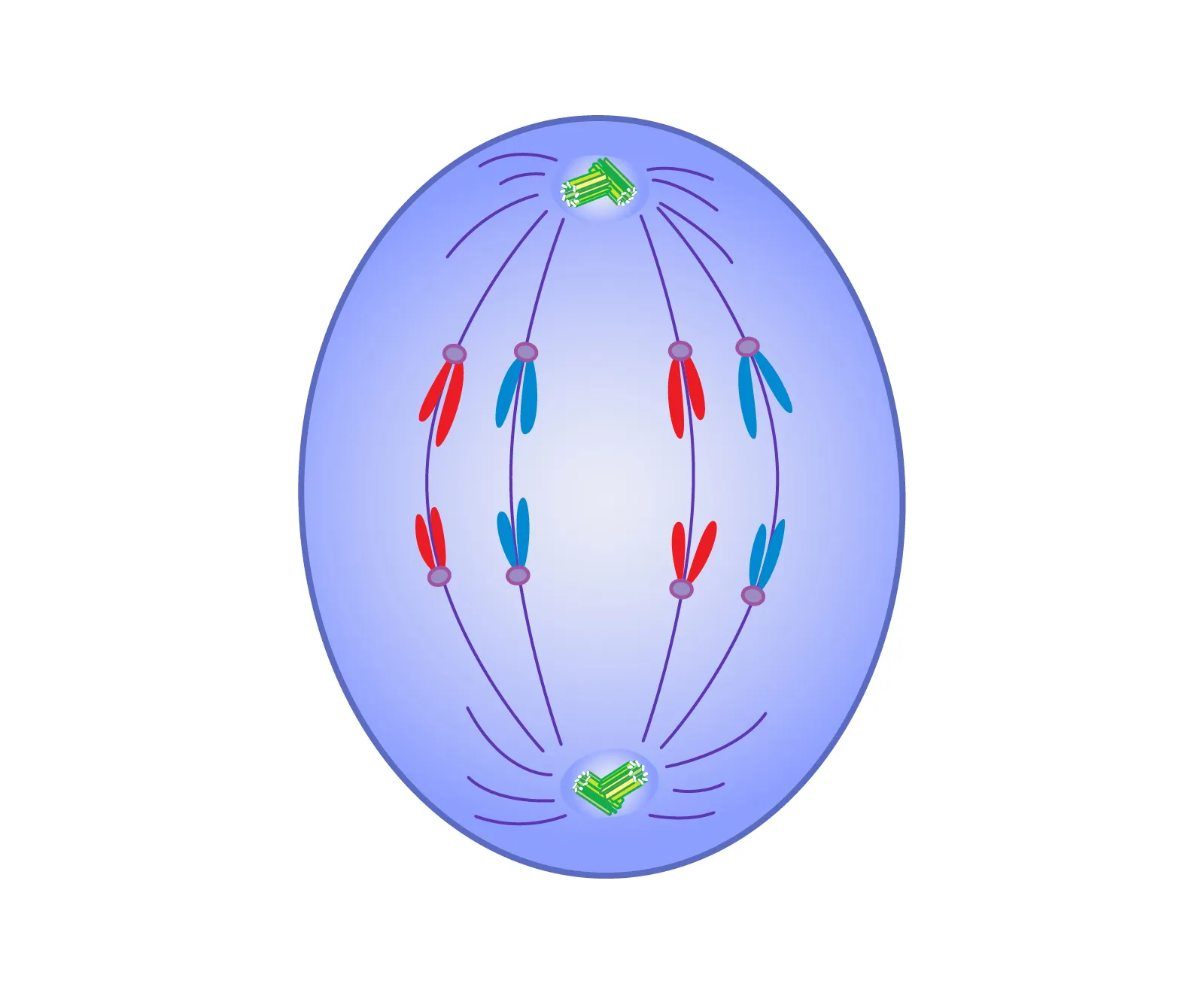
Anaphase
The mitotic phase where spindle fibers shorten, pulling sister chromatids apart to opposite cell poles.
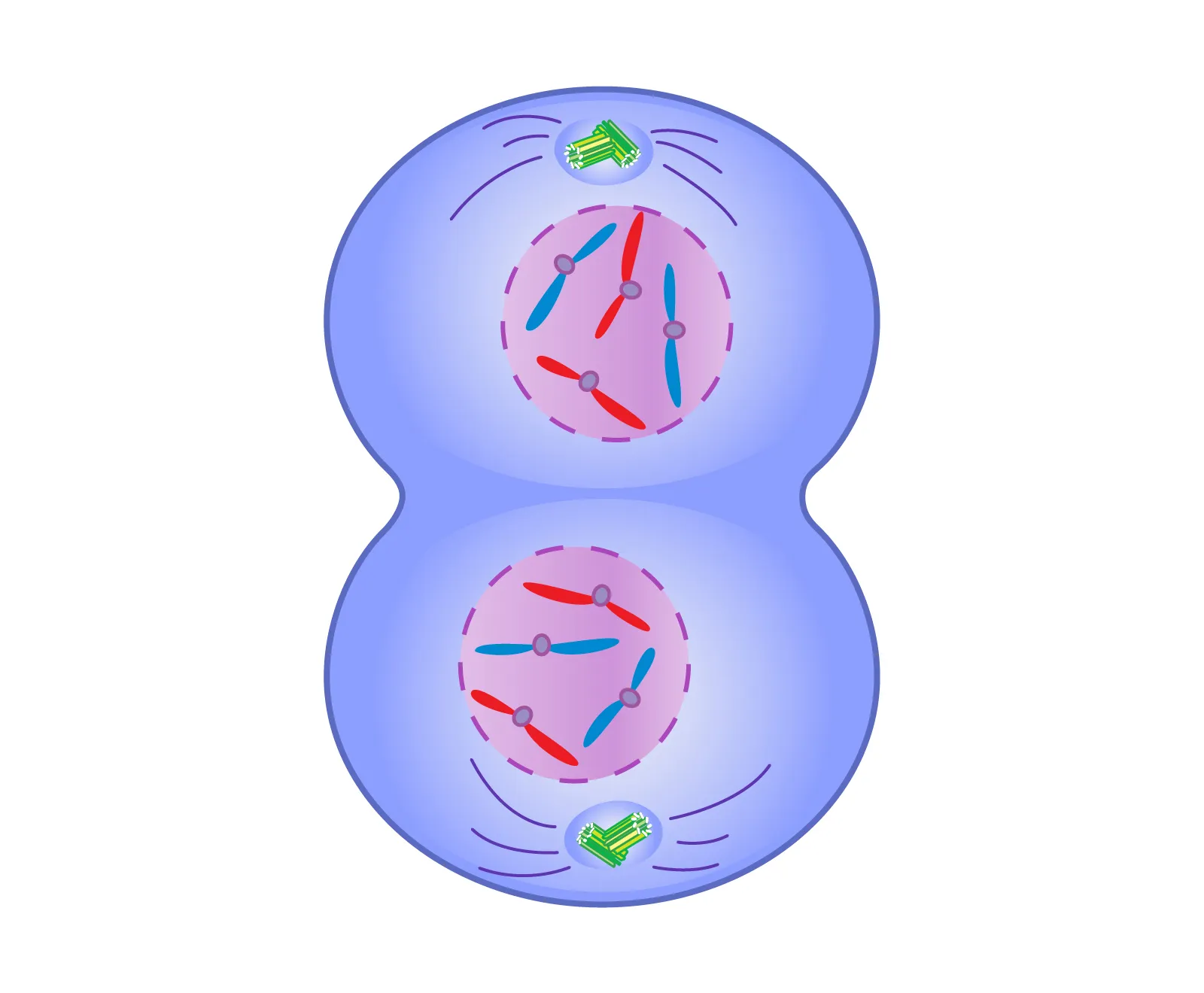
Telophase
The final stage of nuclear division where separated chromosomes reach opposite poles, relax, and the spindle apparatus breaks down.
Cytokinesis
The physical process that divides the cytoplasm of a parental cell into two separate daughter cells.
Cleavage furrow
The shallow groove formed on the cell surface that pinches an animal cell into two distinct units during division.
Products of mitosis
Two daughter cells that are genetically identical to each other and clones of the parent cell.
Asexual reproduction
A form of reproduction requiring only one parent that rapidly produces offspring with no genetic variation.
Sexual reproduction
A reproductive process requiring two partner organisms that results in offspring with complete genetic variation.