psych 1.1-1.4
 Call Kai
 Learn
 Practice Test
 Spaced Repetition
 Match
 Flashcards
 Knowt Play
1/125

There's no tags or description
Looks like no tags are added yet.
126 Terms
nature-nurture issue
an ongoing controversy exploring whether psychological traits and behavior are shaped by genetics or experience.
natural selection
the process by which organisms with traits best suited to their environment will survive, and their traits would most likely be passed onto succeeding generations.
evolutionary psychology
study of the evolution of behavior and mind; uses principles of natural selection.
behavior genetics
study of the relative power and limits of genetic and environmental influences on behavior.
mutation
a random error in gene replication that leads to a change.
environment
every nongenetic influence, from prenatal nutrition to life experiences.
heredity
genetic transfer of characteristics from parents to offspring.
genes
biochemical units of heredity.
genome
the complete instructions for making an organism.
identical (monozygotic) twins
individuals who developed from a single fertilized egg that split in two, creating two genetically identical organisms
fraternal (dizygotic) twins
individuals who developed from separate fertilized eggs-genetically no closer than ordinary siblings, but they shared a prenatal environment
interaction
where two or more objects, people, or forces act upon and affect each other.
epigenetics
study of the molecular mechanisms by which environments can influence genetic expression.
nervous system
the body's electrochemical communication network—consists of all the nerve cells of the peripheral and central nervous systems.

central nervous system
brain and spinal cord.

peripheral nervous system
sensory and motor neurons that connect the central nervous system to the rest of the body.
nerves
bundle axons that form neural cables connecting the central nervous system with muscles, glands, and sensory organs.
sensory (afferent) neurons
neurons that carry incoming sensory information from the body's tissues —> brain and spinal cord (CNS)
motor (efferent) neurons
neurons that carry outgoing information from the brain and spinal cord → muscles and glands.
interneurons
neurons within the brain and spinal cord; communicate internally and process information between the sensory inputs and motor outputs.
somatic nervous system (skeletal nervous system)
division of the peripheral nervous system that controls the body's skeletal muscles; voluntary movement
sympathetic nervous system
division of the autonomic nervous system that arouses the body mobilizing its energy; prepares response for flight or fight mode
reflexes
an automatic response to a sensory stimulus → knee-jerk reflex.
neuron
a nerve cell; basic building block of nervous system.
cell body
part of a neuron that contains the cell's life-support center.

dendrites
branching extensions that receive messages-conducting impulse toward the cell body.

axon
segmented neuron extension that passes messages through its branches to other neurons or to muscles or glands.
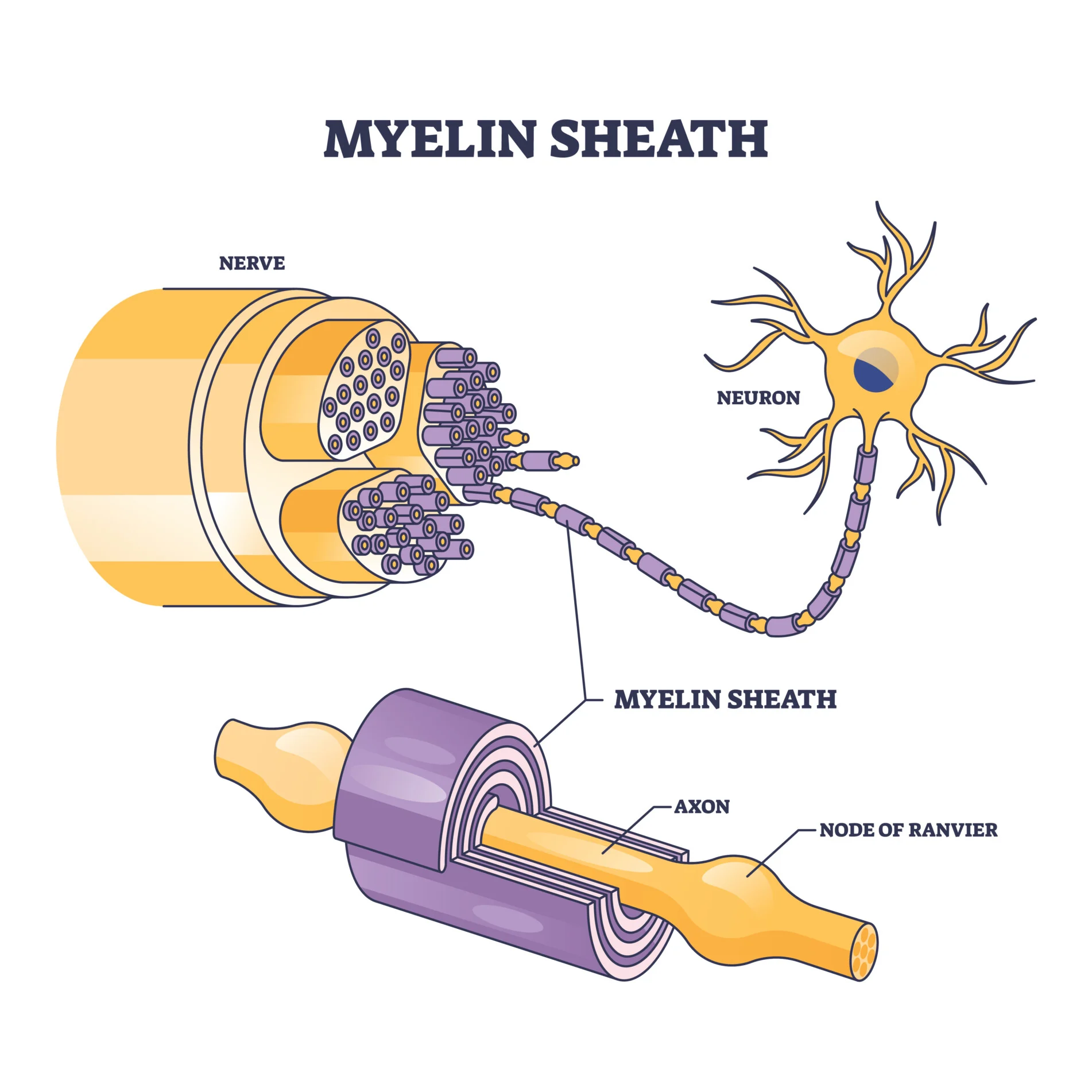
myelin sheath
a fatty tissue layer segmentally encasing the axons of some neurons-enables vastly greater transmission speed as neural impulses hop from one node to the next.
glial cells (glia)
cells in the nervous system that support, nourish and protect neurons-plays a role in learning, thinking and memory.
action potential
neural impulse; brief electrical charge that travels down the axon.
threshold
level of stimulation required to trigger a neural impulse.
refractory period
a brief resting pause that occurs after a neuron has fired-subsequent action potentials cannot occur until the axon returns to its resting state.
all-or-none response
a neuron's reaction of either firing or not.

Synapse
the junction between the axon tip of the sending neuron and the dendrite/or the cell body of the receiving neuron.
Neurotransmitter
chemical messengers that cross the synaptic gap between neurons
Reuptake
a neurotransmitter's reabsorption by the sending neuron
Endorphins
opioid-like neurotransmitters linked to pain control and pleasure
Agonist
a molecule that mimics a neurotransmitter's action
Antagonist
a molecule that inhibits or blocks a neurotransmitter's action
Endocrine system
body's slow chemical communication system; a set of glands and fat tissue that secrete hormones into the bloodstream
Hormones
chemical messengers that are manufactured by the endocrine glands → travels through bloodstream; affecting other tissues
psychoactive drugs
chemical substance that alters the brain, causing changes in perception and mood
Substance use disorder
disorder characterized by continued substance use despite resulting life disruption
depressants
drugs that reduce neural activity and slow body functions
Tolerance
diminishing effect with the regular use of the same dose of a drug → requires user to take larger doses before experiencing effect
Addiction
compulsive substance use that continues despite harmful consequences
Withdrawal
discomfort and distress associated with the discontinuation of a drug/behavior
Barbiturates
depress central nervous system activity; reducing anxiety but impairing memory and judgement
Opioids
depress neural activity, temporarily lessening pain and anxiety
Stimulants
drugs that excite neural activity and speed up body functions
hallucinogens
psychedelic drugs that distort perceptions, and alter awareness and reality; sensory images
Near-death experience
altered state of consciousness reported after a close encounter with death; similar to drug-induced hallucinations
Alcohol
A depressant that slows neural activity, producing relaxation and impaired judgment in the short term, while risking tolerance, addiction, and organ damage with prolonged use.
Heroin
depressant; rush of euphoria, relief from pain; effects- depressed physiology, loss of natural endorphin function
Inhalants
duration 1-2 hrs; short term effects-nausea, headaches, fainting; long-term effects-brain damage
Caffeine
stimulant; can build up addiction & tolerance; increased alertness and wakefulness; anxiety, restlessness, insomnia (high doses), gastric problems
Cocaine
A stimulant producing temporary euphoria, alertness, and increased heart rate, with a high risk of tolerance, addiction, and paranoia
Cocaine effect in body
enters bloodstream → rush of euphoria depletes brain supply of dopamine, serotonin and norepinephrine → cocaine blocks reuptake
Nicotine
arousal and relaxation, sense of well-being; negative effects-heart disease, cancer
Ecstasy
A stimulant and mild hallucinogen producing emotional elevation and disinhibition, with risks of dehydration, overheating, and depressed mood.
LSD
psychedelic; visual "trip"; effects-risk of panic; inexpensive
Marijuana
psychedelic; effects-enhanced sensation, relief of pain, distortion of time, relaxation, impaired learning and memory, increased risk of psychological disorders
Biological psychology
scientific study of the links between biological and psychological processes
Biophysical approach
integrated approach that incorporates biological, psychological, and social cultural levels of analysis
Levels of analysis
differing complementary views from biological to psychological to social cultural, for analyzing any given phenomenon
Neuroplasticity
brain's ability to change, especially during childhood, by reorganizing after damage or by building new pathways based on experience
Lesion
tissue destruction; may occur naturally, during surgery, or experimentally
EEG (electroencephalogram)
an amplified recording of the waves of electrical activity across the brain's surface; measures electrical activity in neurons&electrical impulses; ex. Symptoms of depression & anxiety correlate w/ increased activity in the right frontal lobe
MEG (magnetoencephalography)
a brain-imaging technique that measures magnetic fields from the brain's natural electrical activity; ex. Soldiers w/ PTSD in comparison to those w/o show stronger magnetic fields in the visual cortex when viewing trauma-related images
MRI (magnetic resonance imaging)
detailed images of the brain are processed based upon cells' response to a high intensity magnetic field; shows brain anatomy; ex. Ppl w/ history of violence have smaller frontal lobes
fMRI (functional MRI)
measures blood flow to brain regions by comparing continuous MRI scans; reveals parts of the brain that are most active during mental activities; most developed forms of neuroimaging
CT (computed tomography)
x-rays of the head generate images that may locate brain damage
PET (positron emission tomography)
produces images that shows brain activity; how brain cells consume glucose for energy; —> active cells consume more, damaged cells consume less
CAT scan
provides a 3D picture of the brain
Motor neurons (efferent)
specialized nerve cells that transmits electrical impulses from CNS to muscle & glands
Sensory neurons (afferent)
sensory organs to CNS
Somatic nervous system
controls our voluntary muscle movements; motor cortex of the brain sends impulses to the somatic
Autonomic nervous system
responsible for control of the body functions not consciously directed → breathing, heartbeat, digestive processes
Sympathetic
involuntary; mobilizes our body to respond to stress; carries messages to organs, glands & muscles; controls heart rate, blood pressures, respiration & slows down non-vital functions → digestion, etc.
Parasympathetic nervous system
slows down body after a stress response; "puts on the brakes" to slow down autonomic system
Limbic system
fires messages to frontal lobe (thinking, emotion)
Hindbrain
consists of medulla, pons, cerebellum
Midbrain
consists of reticular formation
Forebrain
consists of thalamus, hypothalamus, amygdala and hippocampus, and cerebral cortex

Medulla oblongata (right above spinal cord)
controls blood pressure, heart rate, and breathing

Pons (located above medulla)
connects the hindbrain w/ midbrain and forebrain; involved in controlling facial expression, involved in sleep & arousal
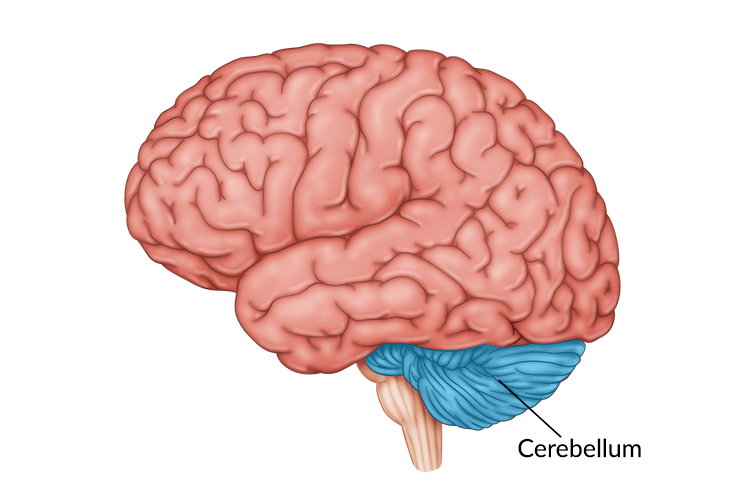
Cerebellum (little brain, behind spinal cord below cerebrum)
coordinates muscle movements, motor & cognitive functions

Reticular formation
controls "arousal" (how awake you feel); electrically stimulating leads to awakeness, lesioning leads to an organism falling into a coma.

Thalamus (located on top of the brainstem)
sensory control center; receives and processes all signals coming from all senses
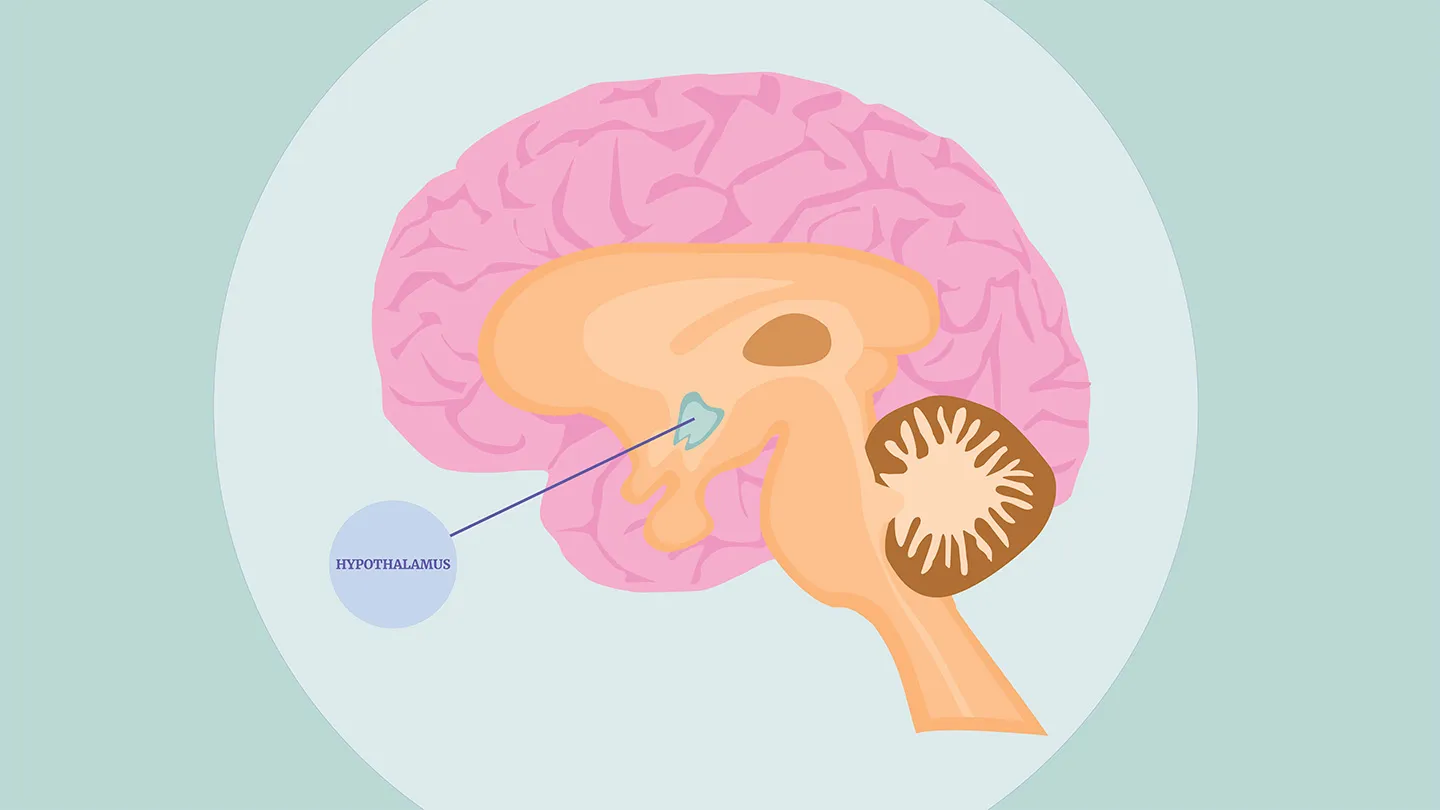
hypothalamus(deep in the bottom of brain)
controls body temperature, sexual arousal, hunger, thirst & biological rhythms

Amygdala
linked to emotions such as fear & aggression, involved in recalling memories

Cerebrum (longest part of the brain)
divided into two hemispheres called the cerebral hemisphere; most developed; responsible for thinking, decision making, voluntary movement, language, memory & sensory processing

Cerebral cortex (top of the cerebrum)
outer layer of the brain's surface; folded surface to increase surface area; body's ultimate control and information-processing center
Contralateral control
left hemisphere receives sensory messages & controls motor function of right half of body; right hemisphere vice versa.
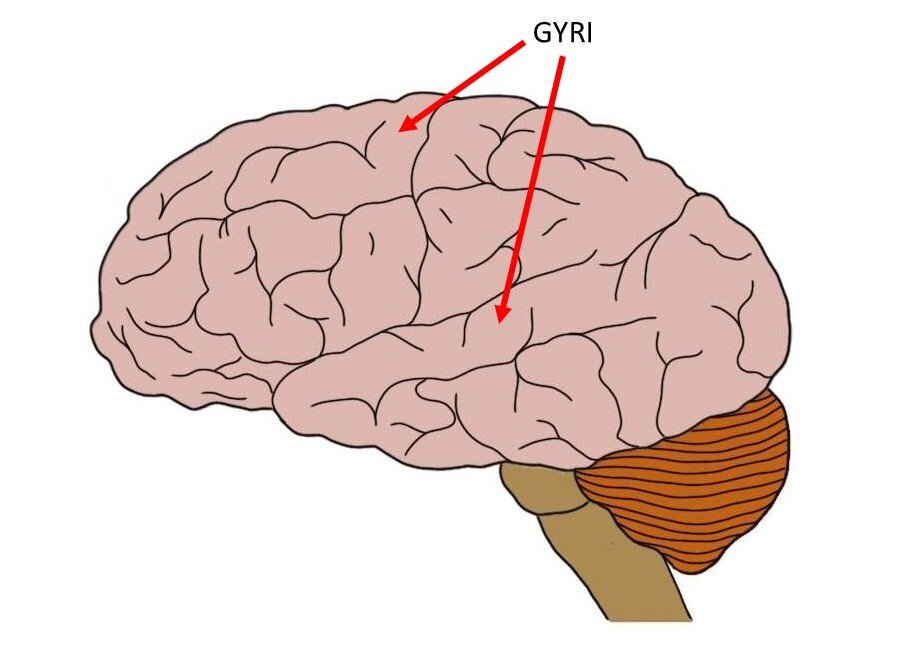
Gyri (outermost layer of the brain)
bumps & ridges on the cerebral cortex

Sulci
depressions or grooves in the cerebral cortex
Gray matter
cell bodies (of neurons); certain amounts are linked to intelligence (more=smart)
White matter
fatty substance (myelin sheath) that surrounds axons

Hippocampus
neural center in limbic system; processes conscious memories—of facts and events—for storage

Corpus callosum
allows information from one hemisphere to be transmitted to the other; connects both sides of brain