Anatomy Unit 4 Review
 Call Kai
 Learn
 Practice Test
 Spaced Repetition
 Match
 Flashcards
 Knowt Play
1/148

Earn XP
Description and Tags
Vocabulary practice flashcards covering combining forms, prefixes, and suffixes from Anatomy and Physiology Chapter 4.
149 Terms
Cutane/o
skin
lip/o
fat
Derm/o
skin
Dermat/o
skin
albin/o
white
Hidr/o
sweat
rhytid/o
wrinkles
Kerat/o
hard tissue
melan/o
black/dark
Onych/o
nail
pedicul/o
lice
Ungu/o
nail
Seb/o
sebum/ oil
capitis
head
Trich/o
hair
aden/o
gland
Aut/o
self
bi/o
life
Coni/o
dust
crypt/o
hidden
Fibr/o
fibrous tissue
heter/o
different
Myc/o
fungus
necr/o
death
Pachy/o
thick
staphyl/o
grape-like cluster
Strept/o
twisted chain
xer/o
dry
Tinea
fungal infection
koil
hollow/concave
follicul/o
follicle
Contus/o
bruise
ecchym
pouring out juice
Ichthy
dry/ scaly
phor
movement
Alopec
baldness
hemangi/o
blood vessel
Cry/o
cold
scler/o
hard
Epi-
above, on top
Intra-
within
Para-
besides/ beyond/ around
Per-
through
Sub-
under/ below
An-
without
-coccus
berry shaped
-ectomy
surgical removal
-itis
inflammation
-malacia
softening
-opsy
to view
-orrhea
flow/ discharge
-osis
condition (usually abnormal)
-esis
abnormal condition
-ion
condition of
-ous
pertaining to
-phagia
eating/ swallowing
-plasty
surgical repair
-tome
instrument used to cur
-suction
removal
3 layers of skin
epidermis
dermis
hypodermis
4 types of cells in the epidermis
keratinocytes: make keratin, most numerous
melanocytes: make melanin, 10-25%
epidermal dendritic cells: phagocytic cells
tactile/merkel cells: touch receptors
another name for epidermis
keratinized stratified squamous epithelium
5 layers of epidermis from top to bottom
Corneum: 20-30 rows thickest
Lucidum: transparent
Granulosum: 3-5 layers, cells begin to flatten
Spinosum: melanin is produced and connects the epithelium to the body
Basale: thinnest, alive cells in mitosis
what are the roles of tactile/merkel cells
as touch receptors: prominent in fingertips
also called mechanoreceptors
functions of stratum corneum
protect from abrasion and penetration
waterproof
physical, biological, and chemical barrier
what can the stratum lucidum show up as
a callous in high traction areas
what are dendritic cells
immune response cells
what are the 2 layers of dermis
papillary; thinner
recticular; thicker, houses blood vessels, nerves, etc.
whats the difference between merkle receptors and meissners carpuscles
meissners is just to detect touch
merkle are to detect vibrations, texture, etc.
what 3 things do papillary contain
capillary loops
meissners corpucles
free nerve endings
what provides strength and elasticity in recticular
Collagen for strength
Elastic fibers for elasticity
where do friction ridges form
in the dermal papillary layer or basale layer in epidermis
what is the purpose of friction ridges
to get grip and traction
to increase touch sensitivity
what is the difference between hair root, follicle, shaft, and cuticle
root: in the skin
follicle: shaft that holds root
cuticle: outermost layer
shaft: hair in the surface
why can hair color vary on each person
different ratios of melanin
horomones during puberty
life stages
environment
3 types of fingerprints
loop, whirl, arch
what type of tissue is dermis made of
nervous
muscle
connective
what type of tissue is the hypodermis made of
connective
functions of hypodermis
insulation, thermoregulation, energy storage, shock absorption, protection
the nervous structures in the skin
sensory nerve fiber
pacinian corpuscle
hair follicle receptor
what is the function of pores
to lubricate the skin, waterproof, and antibacterial barrier with sebum
what are cleavage lines
predetermined lines where the skin should fold
4 pigments that create color in the skin
Eumelanin: darker pigment
pheomelanin: reddish pigments
carotene: orange-yellow pigment
hemoglobin: red/pinkish pigment
6 functions of the skin
protection: chemical, physical, biological
body temperature regulation
cutaneous sensation
metabolic functions
vitamin D synthesis
blood reservoir
excretion
what are epithelean tissue held together by
tight junctions and desmosomes
4 types of simple epithelium
simple squamous
cuboidal
columnar
pseudo-stratified
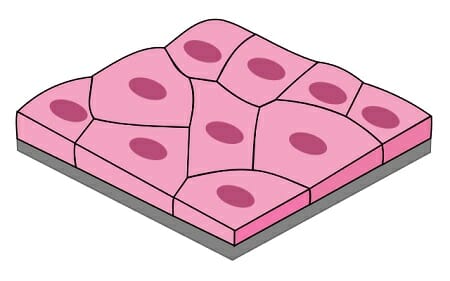
function of simple squamous
diffusion, secretion; protection is not important
where is simple squamous epithelial located
kidney glomeruli, air sacs of lungs, blood vessels

what is function of simple cuboidal
secretion OR absorption
where is simple cuboidal located
kidney tubules: nephrons
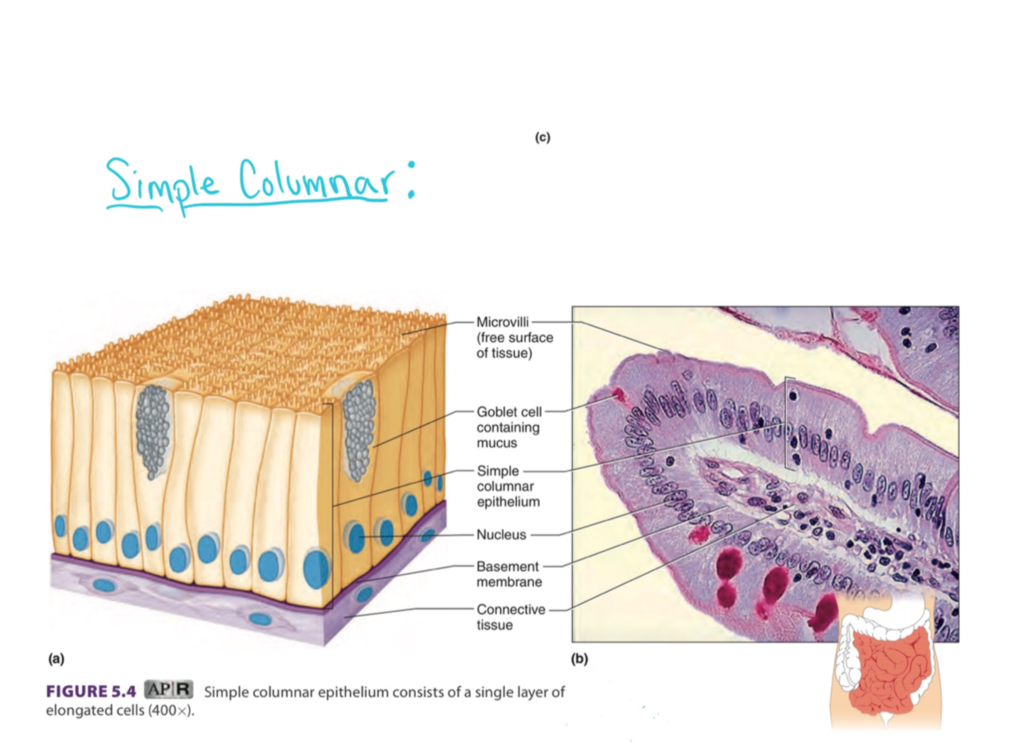
what is function of simple columnar
absorption AND secretion or mucus, enzymes, etc
where is simple columnar located
most of digestive tract, bronchi of trachea

what is function of pseudo-stratified epithelia
secretion of mucus
where is pseudo-stratified epithelia located
alone lines of trachea, large glands, sperm carrying ducts
2 types of stratified epithelium
squamous
transitional

what is the function of stratified squamous
protection from abrasion
where is stratified squamous located
esophagus, mouth, vagina, epidermis of skin
what is function of transitional epitheleal
stretches
where is transitional epithelium located
in ureters, urinary bladder, part of urethra