Project Management UGA: Midterm
 Note
 Call Kai
 Learn
 Practice Test
 Spaced Repetition
 Match
 Flashcards
 Knowt Play
1/52

There's no tags or description
Looks like no tags are added yet.
53 Terms
Site Finding
The process of identifying a location for a project, including specific needs like drainage and accessibility.
Preliminary Work
The initial steps undertaken to gather background information and prepare a site for construction.
Letter of Transmittal
A cover letter giving an overview of submitted documents, including purpose, recipient, and date.
Two Page Memo
A document summarizing background information about a site and relevant properties, formatted in two single-spaced pages.
Industry Sectors
Publicly Funded (36%)
Privately Funded (64%)
Commercial (28%)
Residential (31%)
Industrial (6%)
Heavy Engineering (35%)
Commercial Sector
A construction sector that includes office buildings, malls, and schools, typically funded privately with some public investment.
Includes office buildings,large apartment complexes, shopping malls, theatres, etc
Tend to be privately funded with some public funding for schools and hospitals
Typically designed by architects with support from engineers and constructed by general contractions that manage the project
More technology and larger capital than in the residential sector
Many companies will develop a construction specialty
Accounts for about ¼ of the construction market
Residential Sector
A construction sector focusing on individual homes and small apartments, mostly funded by private owners.
Individual homes small condos and small apartment complexes
Projects are privately funded by individual owners for their own use
Typically designed by an architect (not always) with support from structural/geotechnical
Most components of this constriction are built on-site
Fairly low level of technology
In a good economy, about ½ of construction spending takes place in the residential sector
Industrial Sector
Construction sector dealing with facilities like refineries and power plants, generally privately funded and specialized.
Steel mills, petroleum refineries, chemical processing plants, power plants, and automobile producing facilities
The design and construction depends on the needs of the process or production equipment
Generally privately funded
Lots of specialities, so there are fewer companies working in this area
A lot of repair work from jobsite errors
Heavy Engineering
A construction sector dealing with infrastructure like roads and bridges, primarily publicly funded.
Enables the distribution of goods and people (roadways, bridges, dams, canals)
Designed by civil engineers and built by specialized construction contractors
Much fewer companies (companies tend to be very large)
Most are publicly funded as they serve the public's needs (Taxes)
Currently this area requires more attention
Bridges typically designed for 50 years, Average US bridge age is 43 years
Most cities are relying on water distribution systems built prior to WW1
Construction management (Little m)
The planning, coordination, and control of a project from start to finish.
Construction Management (Big M)
the organizing and directing of in individuals, materials, and equipment to accomplish the purpose of the designer
(Two different types of construction management big M and little m)
More than the act of building. Addresses how resources can be best applied to complete a project
Four M’s of Construction Resources: Manpower, Machines, Materials, Money, as well as timeTypes of Industry
Types of Industry
The construction industry is a service industry that’s success is dependent upon people rather than on its technology or product
The industry is cyclical (abundance of projects and slow periods)
Demand depends on factors such as government funding demographics and market trends —weather dependent
A lot of construction is custom (not mass produced)
Demographic/Trends
Employment is expected to rise 19% in the next 10 years
Demand for commercial construction and increase in road, bridges and other infrastructure related projects
Aging workforce being replaced with younger individuals
Need a diverse workforce
The population is living longer
Leads to more assisted living facilities and health care facilities
Retirement communities needed
Technology
Using information and computing technology to manage projects bridging the office and job-site
Computer Aided Design (CAD) used to design and view two and three dimensional components of buildings
building Information Modeling (BIM)- a three dimensional modeling program that enables visualization of the project
Lidar, scanning
Management Levels
Hierarchical
Organizational- concerned with the legal and business structure
Project
Activity
Operation
Process
Work Task
In the higher up tasks it is more about managing projects and physical components of the project
As you get lower you get closer to the field work and day to day actions, and individual tasks
Opportunities
Domestically one of the greatest opportunities for construction is in infrastructure: bridges, roadways, tunnels, airports
Need rehabilitation and or replacement
US Department of Transportation estimates the need for roads and bridges $64.1 billion
Sustainability
Why do we need an Organization Structure?
Construction and civil engineering are normally project based
Clear accountability
Efficient use of resources and time
Faster decision making
Reduce conflicts
Two types of organizational structures (mix or both)
Centralized
Decentralized
Could be a mix of both
Centralized
When decision making is concentrated at the top level such as the CEO and the President
Typically smaller consulting firms
Pros: reduce conflicts, everyone knows there job under the CEO
Cons: the CEO could get to busy or making the wrong decisions
Decentralized
Decision-making authority is distributed across individual teams
As firm grows bigger it becomes more decentralized (not all decisions made by the president)
Pros: can be faster in decision making, less bureaucratic, big commercial construction
Organizational Chart
Genralist
Departmental
Matric
Generalist
the most basic
People and employees are grouped together in general and broad groups such as managing directors, production manager, plant superintendent, and then foreman shops answering to each other
Departmental
complex
Will have different departments and it will show how everything works (much larger firm)
Matrix
most complex
Will show department to department interactions and who might work with who, shows the interconnections
Will have to answer to the department head, and also the project manager of that project, so if you working on multiple projects you will have to work with multiple project managers
Legal forms of Organization
sole proprietorship
Partnership
Corporation
Sole Proprietorship
Single-person ownership, working for themselves
May have many employees, but only one person that is in control
Can be started and ended without any documentation
Can be high risk
Pay for all equipment
Partnership
Must be at least two people to be legal, percentage of ownership may vary
Have to pay for everything together
All debts by the company are responsible by partners
Will dissolve according to a prior agreement
How to split company if the company dissolves
Corporation
Stockholders are only liable up to the amount they have invested in the company
If it wants to raise capitol it can sell stocks
Construction companies generally only have a few people that have stocks in the company
Decisions on stock are made by people who already own stocks
Slower decision making process in the firm
Delivery Methods
Represent how the projects is designed, engineered and constructed
Determines how stakeholders will work together throughout the project
Design Bid Build
Construction Manager at Risk (CMAR)
Design-Bid-Build
Owner hires a design professional
Developed design and contract documents
Pay a fee that is either a percent of overall cost or lump sum
Owner gets bid or negotiates with a specific contractor
Contractor is then responsible for completing the project according to the contract documents
Contractor may use in house employees or subs to complete work
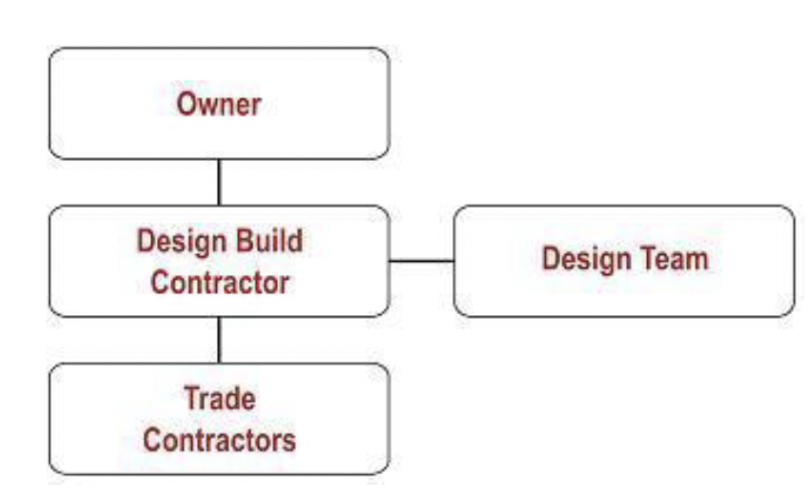
The owner hires a firm to perform the design and construction throughout the life of the project.
Can be a single company that offers both services
Can be a joint venture that come together to perform a single project
In either case, each can hire subcontractors to perform the work in the field
Construction Manager at Risk (CMAR)
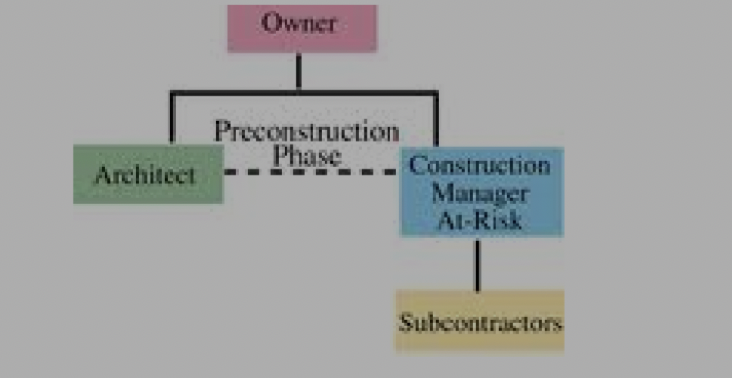
The owner hires a design firm and constructed project management firm in the beginning
Theres is a commitment by th construction manager to deliver the project within a GMP (Maximum Price)
Construction Manager acts as a consultant to the owner in the development and design
Contract Types
Single Fixed Price (Lump Sum)
Unit Price
Cost Plus Fee
Single Fixed Price (Lump Sum)
The contractor agrees to provide a specified amount of work for a specific sum
Both sides to fix the conditions of the project precisely, because after the contract is signed, both parties must live with its terms
Pros:
The owner knows before the work begins what the final cost will be
Typically used with a design bid build method
The designer creates contracts that the owner will bid or negotiate
Cons:
The contract is only as good as the contract documents
If the project changes or errors exist in the control documents then the contract has to be renegotiated
Unit Price
The owner and contractor agree on the price that will be charged per unit for the major elements of the project
The owner estimates quantities for the project. The contract will be a total price based on these quantities.
Contractor overhead, profit, and other project expenses must be included in the unit prices.
Pros:
Sometimes difficult to accurately quantify the work necessary
Designer estimates the quantities and the bidders provide a unit price for each task
Cons:
If actual quantities are significantly different, the owner's financial commitment may be greater than planned
Possible for unbalanced bids (ethical?)
Some quantities measure in the field
Cost Plus Fee
Contractor is reimbursed by the owner for his work costs and receives an additional agreed upon fee or percentage of the costs
The owner must be clear what costs will be reimbursed and which costs will be covered by the fee
Pros:
This type of contract is beneficial when the scope of the project is difficult to define or when fast track construction
Contractor can start work faster because he knows prices will be reimbursed
Cons:
Project begins with unknowns even when contract is stated
The project costs may be capped, but quality and scope may be sacrificed at the expense (work is not as great of quality just so they can make the budget)
Contract Changes
In each contract:
An agreement is established
The contract is entered into after the work to be performed has been estimated and a work plan developed
A bid may be submitted or negotiations may occur If conditions change, the contract may have to change:
The scope of the project increases or decreases because of a change in owner requirements
The work must be performed differently because of conditions unforeseen when the contract was agreed to.
The design must be adjusted because of omissions in the documents or design features can’t be built as specified.
Four M’s of Construction Resources
Manpower, Machines, Materials, and Money utilized in construction projects.
Cyclical Industry
An industry characterized by alternating periods of high and low demand.
Organizational Structure
A system defining the hierarchy and roles within a construction management organization.
Project Life Cycle
Idea: combined with money to create a project
Project: is formed through drawings and specifications
Complete Facility: occupy and maintain a space and repair as it ages
Demolish or Renovate: End of life can no longer be used
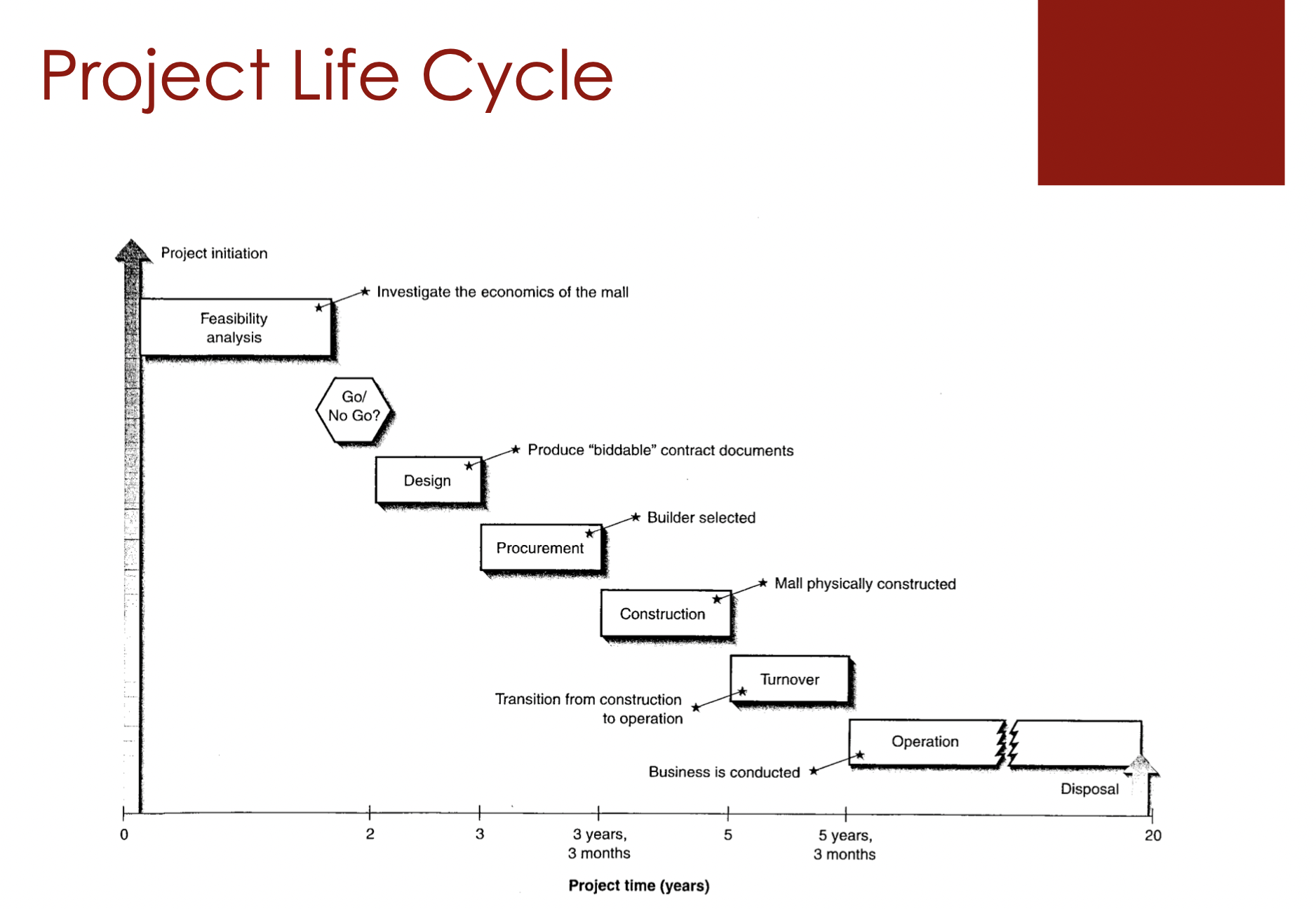
Feasibility Analysis
before deciding to invest an investor wants to be sure that they will have a return on there investment
owner works with the architects and construction to gain advice on the design
Financing
most investors do not fund 100% of the investment
acquires outside funding from other developers and banks
Investors will decide to invest based on what return they want to see
Design of the Project
if the owner decides to proceed they hire a design team and a contractor
the design is divided into stages so the owner can see progress
Programming
Schematics
Design Development
Construction Documents
Programming
a concise written project objective matching the owners budget
Schematic
An investigation of different design alternatives
Design Development
a continuous and refinement of selected design
Construction Documents
The preparation of final documents used to describe work, engineering drawings , work as it will actually be constructed
Procurement
finding and purchasing the materials required
owner finds construction company and subcontractors are found by construction team
Construction
the main element involved in the construction is the task of managing field operations, scheduling crews
controlling changes in scope
accounting for payments
financial control
maintaining work schedules
keeping track of contract documents
monitoring quality control
Turnover and Setup
the project is turned over to the owner for use during the rest of economic life
certificates of warranty need to be collected
changes in construction must be documented
Operation of the Facility
phase is the responsibility of the owner
building is used as owner intended
Disposal of Facility
At the end of its useful life, a project or facility can be:
Closed down or abandoned
Disassembled or removed
Renovated or overhauled