ENGR 240 Formulas

0.0(0)
Studied by 0 people
call kaiCall Kai
learnLearn
examPractice Test
spaced repetitionSpaced Repetition
heart puzzleMatch
flashcardsFlashcards
GameKnowt Play
Card Sorting

1/45

encourage image

There's no tags or description

Looks like no tags are added yet.

46 Terms

1
New cards

voltage

v = voltage (Volts)

w = energy (Joules)

q = charge (Coulombs)

<p>v = voltage (Volts) </p><p>w = energy (Joules) </p><p>q = charge  (Coulombs) </p>
2
New cards

current

i = current (Amperes)

q = charge (Coulombs)

t = time (seconds)
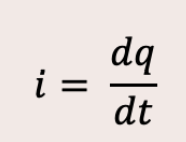
<p>i = current (Amperes) </p><p>q = charge (Coulombs) </p><p>t = time (seconds)</p>
3
New cards

power

p = power (Watts)

w = energy (Joules)

q = charge (Coulomb)

t = time (seconds)

v = voltage (volts)

i = current (Amperes)
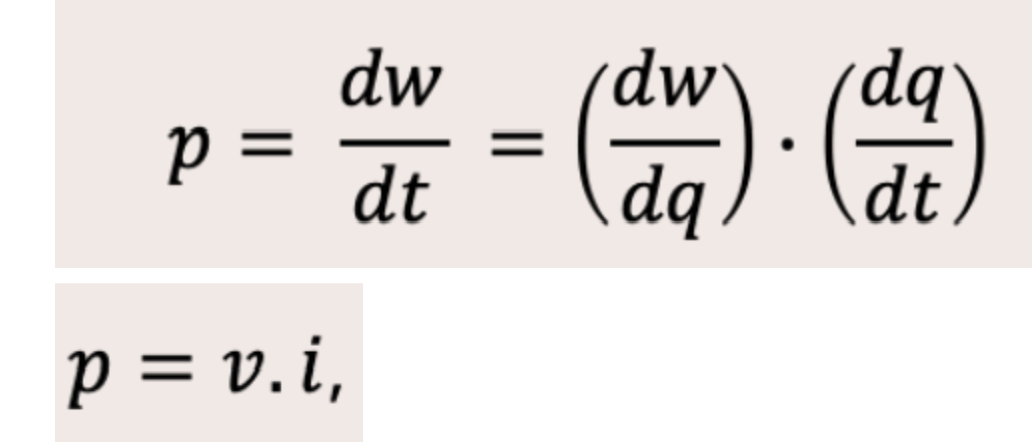
<p>p = power (Watts)</p><p>w = energy (Joules) </p><p>q = charge (Coulomb) </p><p>t = time (seconds)</p><p>v = voltage (volts)</p><p>i = current (Amperes) </p>
4
New cards

Voltage Controlled Voltage Source

vs = supplied voltage (volts)

u = dimensionless multiplier

vx = controlling voltage (volts)

<p>vs = supplied voltage (volts)</p><p>u = dimensionless multiplier</p><p>vx = controlling voltage (volts) </p>
5
New cards

Current Controlled Voltage Source

vs = supplied voltage (volts)

rho = multiplier (volts/ampere)

ix = controlling current (ampere)

<p>vs = supplied voltage (volts)</p><p>rho = multiplier (volts/ampere) </p><p>ix = controlling current (ampere) </p>
6
New cards

Current Controlled Current Source

is = supplied current (ampere)

Beta = multiplier (dimensionless)

ix = controlling current (ampere)

<p>is = supplied current (ampere) </p><p>Beta = multiplier (dimensionless) </p><p>ix = controlling current (ampere) </p>
7
New cards

Voltage controlled Current source

is = supplied current (ampere)

alpha = multiplier (ampere/volt)

vx = controlling voltage (volt)

<p>is = supplied current (ampere) </p><p>alpha = multiplier (ampere/volt)</p><p>vx  = controlling voltage (volt) </p>
8
New cards

Ohm’s Law

v = voltage (volts)

i = current (ampere)

R = resistance (ohm)

<p>v = voltage (volts)</p><p>i = current (ampere) </p><p>R = resistance (ohm) </p>
9
New cards

Conductance

G = conductance (Siemens)

R = Resistance (ohms)

<p>G = conductance (Siemens) </p><p>R = Resistance (ohms) </p>
10
New cards

Current Divider Circuit

i1 = resistor 1 current (ampere)

i2 = resistor 2 current (ampere)

is = source current (ampere)

R1 = resistor 1 (ohm)

R2 = Resistor 2 (ohm)

<p>i1 = resistor 1 current (ampere) </p><p>i2 = resistor 2 current (ampere) </p><p>is = source current (ampere) </p><p>R1 = resistor 1 (ohm) </p><p>R2 = Resistor 2 (ohm) </p>
11
New cards

Voltage Division

vj = voltage of resistor in question (volt)

Rj = resistor in question (ohm)

i = current (ampere)

Req = equivalent resistance (ohm)

vs = voltage source (volt)

<p>vj = voltage of resistor in question (volt) </p><p>Rj = resistor in question (ohm) </p><p>i = current (ampere)</p><p>Req = equivalent resistance (ohm) </p><p>vs = voltage source (volt)</p>
12
New cards

Current Division

ij = current of resistor in question (ampere)

Rj = resistor in question (ohm)

v = voltage (volt)

Req = equivalent Resistance (ohm)

<p>ij = current of resistor in question (ampere) </p><p>Rj = resistor in question (ohm) </p><p>v = voltage (volt) </p><p>Req = equivalent Resistance (ohm)</p>
13
New cards

Wheatstone Bridge

Rx = unknown resistance (ohm)

R1,R2 = resistors of Wheatstone bridge (ohm)

R3 = variable resistor of Wheatstone bridge (ohm)

<p>Rx = unknown resistance (ohm) </p><p>R1,R2 = resistors of Wheatstone bridge (ohm) </p><p>R3 = variable resistor of Wheatstone bridge (ohm) </p>
14
New cards

Delta to Wye Conversion

R1,R2,R3 = Wye Resistors (ohm)

Ra,Rb,Rc = Delta Resistors (ohm)
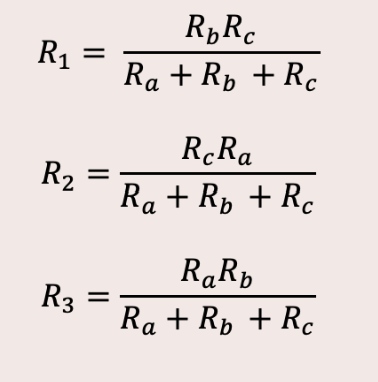
<p>R1,R2,R3 = Wye Resistors (ohm) </p><p>Ra,Rb,Rc = Delta Resistors (ohm) </p>
15
New cards

Wye to Delta Conversion

R1,R2,R3 = Wye Resistors (ohm)

Ra,Rb,Rc = Delta Resistors (ohm)

<p>R1,R2,R3 = Wye Resistors (ohm) </p><p>Ra,Rb,Rc = Delta Resistors (ohm) </p>
16
New cards

Equivalent Resistance (Series)

Req = equivalent resistance

R1,R2,Rk = resistors in series connection (ohm)

<p>Req = equivalent resistance </p><p>R1,R2,Rk = resistors in series connection (ohm) </p>
17
New cards

Equivalent Resistance (Parallel)

Req = equivalent resistance (ohm)

R1,R2,Rk = resistors in parallel connection (ohm)

<p>Req = equivalent resistance (ohm) </p><p>R1,R2,Rk = resistors in parallel connection (ohm) </p>
18
New cards

Two resistors in parallel

Req = equvialent resistance (ohm)

R1, R2 = two resistances connected in parallel (ohm)

<p>Req = equvialent resistance (ohm) </p><p>R1, R2 = two resistances connected in parallel (ohm) </p>
19
New cards

Voltage Divider Circuit

v1 = voltage of resistor 1(volt)

v2 = voltage of resistor 2 (volt)

R1 = resistor 1 (ohm)

R2 = resistor 2 (ohm)

vs = voltage source (ohm)

<p>v1 = voltage of resistor 1(volt)</p><p>v2 = voltage of resistor 2 (volt)</p><p>R1 = resistor 1 (ohm) </p><p>R2 = resistor 2 (ohm) </p><p>vs = voltage source (ohm) </p>
20
New cards

Current Divider Circuit

i1 = current of resistor 1 (ampere)

i2 = current of resistor 2 (ampere)

R1 = resistor 1 (ohm)

R2 = resistor 2 (ohm)

is = current source (ampere)

<p>i1 = current of resistor 1 (ampere) </p><p>i2 = current of resistor 2 (ampere) </p><p>R1 = resistor 1 (ohm)</p><p>R2 = resistor 2 (ohm) </p><p>is = current source (ampere) </p>
21
New cards

Condition of Equivalence

is = current source

vs = voltage source

R = resistor in both circuits

<p>is = current source</p><p>vs = voltage source</p><p>R = resistor in both circuits </p>
22
New cards

Thevenin/Norton Resistance

RTh = Thevenin Resistance (ohms)

VTh = Thevenin Voltage (volt)

isc = short circuit current (ampere)

<p>RTh = Thevenin Resistance (ohms) </p><p>VTh = Thevenin Voltage (volt)</p><p>isc = short circuit current (ampere) </p>
23
New cards

Maximum Power Transfer

pmax = maximum power (watt)

VTh = Thevenin Voltage (volts)

RL = Load Resistance (Ohm)

<p>pmax = maximum power (watt)</p><p>VTh = Thevenin Voltage (volts) </p><p>RL = Load Resistance (Ohm) </p>
24
New cards

Inverting Amplifier Equation

vo = output voltage (volt)

Rf/Rs = scaling factor

vs = input voltage (volt)
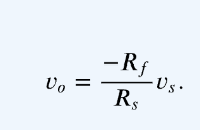
<p>vo = output voltage (volt) </p><p>Rf/Rs = scaling factor </p><p>vs = input voltage (volt)</p>
25
New cards

Inverting Summing-Amplifier Equation

vo = output voltage (volt)

Rf = feedback resistance (ohm)

va,vb,vc = input voltages (volt)

Ra,Rb,Rc = input resistances (ohm)

<p>vo = output voltage (volt)</p><p>Rf = feedback resistance  (ohm)</p><p>va,vb,vc = input voltages  (volt)</p><p>Ra,Rb,Rc = input resistances (ohm) </p>
26
New cards

Non-Inverting Amplifier Equation

vo = output voltage (volt)

Rs = source resistance (ohm)

Rf = feedback resistance (ohm)

vg = source voltage (ohm)
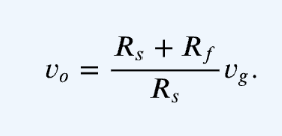
<p>vo = output voltage (volt) </p><p>Rs = source resistance (ohm) </p><p>Rf = feedback resistance (ohm) </p><p>vg = source voltage (ohm) </p>
27
New cards

Difference-Amplifier Equation

vo = output voltage (volt)

Ra,Rb,Rc,Rd = input resistances (ohm)

va,vb = input voltages (volt)

<p>vo = output voltage (volt) </p><p>Ra,Rb,Rc,Rd = input resistances (ohm) </p><p>va,vb = input voltages (volt) </p>
28
New cards

Simplfied Difference-Amplifier Equation

vo = output voltage (volt)

Ra,Rb = input resistances (ohm)

va,vb = input voltages (volt)

<p>vo = output voltage (volt) </p><p>Ra,Rb = input resistances (ohm) </p><p>va,vb = input voltages (volt) </p>
29
New cards

Common Mode Rejection Ratio (CMRR)

CMRR = Common Mode Rejection Ratio

Adm = differential mode gain

Acm = common mode gain

<p>CMRR = Common Mode Rejection Ratio</p><p>Adm = differential mode gain</p><p>Acm = common mode gain </p>
30
New cards

Common Mode Gain

Ra,Rb,Rc,Rd = input resistances (ohm)

<p>Ra,Rb,Rc,Rd = input resistances (ohm)</p>
31
New cards
<p>Differential Mode Gain </p>

Differential Mode Gain

Ra,Rb,Rc,Rd = input resistances (ohm)
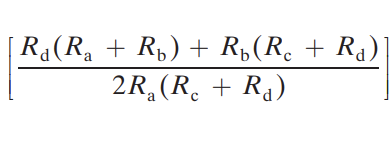
32
New cards

Differential mode input voltage

vdm = differential mode voltage

vb,va = input voltages

<p>vdm = differential mode voltage</p><p>vb,va = input voltages </p>
33
New cards

Common mode input voltage

vcm = common mode voltage

vb,va = input voltages

<p>vcm = common mode voltage</p><p>vb,va = input voltages </p>
34
New cards

input voltages in terms of common mode and differential mode

va,vb = input voltages

vcm = common mode voltage

vdm = differential mode voltage

<p>va,vb = input voltages</p><p>vcm = common mode voltage</p><p>vdm = differential mode voltage </p>
35
New cards

Inductor v-i Equation

v = voltage (volts)

L = inductance (henrys)

di/dt = rate of change of current over time

<p>v = voltage (volts)</p><p>L = inductance (henrys) </p><p>di/dt = rate of change of current over time </p>
36
New cards

inductor i-v equation

i(t) = current

L = inductance (henrys)

t = time

t0 = initial time
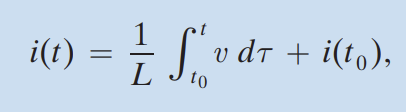
<p>i(t) = current </p><p>L = inductance (henrys) </p><p>t = time </p><p>t0 = initial time </p>
37
New cards

power in an inductor

p = power (watts)

L = inductance (henrys)

i = current (amperes)

di/dt = rate of change of current over time

<p>p = power (watts)</p><p>L = inductance (henrys)</p><p>i = current (amperes) </p><p>di/dt = rate of change of current over time </p>
38
New cards

Energy in an inductor

w = energy (joules)

L = inductance (henrys)

i = current (amperes)
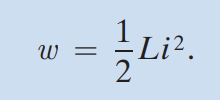
<p>w = energy (joules) </p><p>L = inductance (henrys) </p><p>i = current (amperes) </p>
39
New cards

capacitor i-v equation

i = current (amperes)

C = capacitance (farads)

dv/dt = rate of change of voltage over time

<p>i = current (amperes) </p><p>C = capacitance (farads)</p><p>dv/dt = rate of change of voltage over time </p>
40
New cards

capacitor v-i equation

v(t) = voltage

C = capacitance (farads)

t = time

t0 = initial time

i = current (amperes)

<p>v(t) = voltage </p><p>C = capacitance (farads)</p><p>t = time</p><p>t0 = initial time</p><p>i = current (amperes) </p>
41
New cards

capacitor power equation

p = power (watts)

v = voltages (volts)

i = current (amperes)

C = capacitance (farads)

dv/dt = rate of change of voltage over time

<p>p = power (watts)</p><p>v = voltages (volts)</p><p>i = current (amperes) </p><p>C = capacitance (farads)</p><p>dv/dt = rate of change of voltage over time </p>
42
New cards

capacitor energy equation

w = energy (joules)

C = capacitance (farads)

v = voltage (volts)

<p>w = energy (joules) </p><p>C = capacitance (farads) </p><p>v = voltage (volts) </p>
43
New cards

Combining Inductance in Series

Leq = equvialent Inductance

i = number of inductors in series

<p>Leq = equvialent Inductance </p><p>i = number of inductors in series</p>
44
New cards

COMBINING INDUCTORS AND THEIR INITIAL CURRENTS IN PARALLEL

Leq = equivalent inductance

i = number of inductors in parallel

i(t0) = initial current

<p>Leq = equivalent inductance</p><p>i = number of inductors in parallel</p><p>i(t0) = initial current</p>
45
New cards

COMBINING CAPACITORS AND THEIR INITIAL VOLTAGES IN SERIES

Ceq = equivalent capacitance

i = number of capacitors in series

v(t0) = initial voltage

<p>Ceq = equivalent capacitance </p><p>i = number of capacitors in series</p><p>v(t0) = initial voltage </p>
46
New cards

Combining Capacitors in parallel

Ceq = equivalent capacitance

i = number of capacitors in parallel

<p>Ceq = equivalent capacitance</p><p>i = number of capacitors in parallel</p>



