Learning Quiz 5
 Call Kai
 Learn
 Practice Test
 Spaced Repetition
 Match
 Flashcards
 Knowt Play
1/77

There's no tags or description
Looks like no tags are added yet.
78 Terms
Stimulus Control
explains why behaviors do not occur randomly
rather, behaviors occur in specific situations in which they have been reinforced
behaviors occur when antecedent is present because that is the only time the behavior has been reinforced
occurs when the rate, latency, duration, or amplitude of a response is altered in the presence of an antecedent stimulus
Antecedent’s control operant behavior by…
having been paired with certain consequences in the past
Antecedent
stimulus event that precedes an operant response
present when it occurs or before it occurs
circumstance in which the behavior was reinforced, not reinforced, or punished
Antecedent Stimuli
reinforcement of operant responses increases future responding and influences the stimuli that immediately precede the response
stimuli preceding the response acquire evocative effective on the relevant behavior
Stimulus
an energy change that affects an organism throughout its receptor cells; can be described formally, temporally, or functionally
Stimulus Class
a set of stimuli that exert control over the same operant response class
Discriminative Stimulus
a stimulus positively correlated with the availability of reinforcement for some response
Stimulus Delta
a stimulus negatively correlated with the availability of reinforcement for some response
A stimulus acquires control only when…
responses emitted in the presence of that stimulus produce reinforcement more often than responses in the absence of that stimulus
Stimulus Discrimination Training
responses are reinforced in the presence of one stimulus condition but responses are not reinforced in the absence of that stimulus or presence of other stimuli
An antecedent acquires…
a controlling function through association with a stimulus change that occurs immediately following a behavior - operant conditioning
Conditioned stimuli acquire…
a controlling relation through association with other antecedent stimuli that elicit the behavior - respondent conditioning
Stimulus Discrimination
when antecedent stimuli different from the discriminative stimulus do not exert control over responding
Stimulus Discrimination Training
the process in which a behavior is reinforced when the antecedent is present and extinguished or not reinforced when the S-delta is present. As a result the behavior is most likely going to occur in the presence of the antecedent and is not in its absence
S^P
when present, weakens behavior because it is associated with punishment, in other words the behavior has been punished in its presence
What do you need for discrimination training?
one response and two antecedent stimulus conditions = S^D and S^Delta
Matching to Sample
discriminative stimulus (sample) + array of choices or responses
What are the types of MTS?
identity visual-visual
nonidentity visual-visual
auditory-visual
visual-auditory (oral naming)
nonidentity visual-visual (reading the names)

Identity Visual-Visual MTS
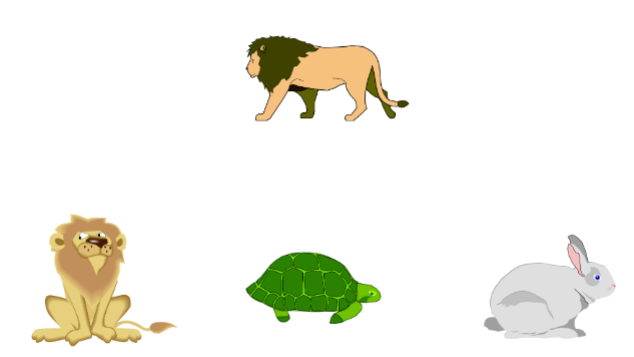
Nonidentity Visual-Visual MTS

Auditory-Visual MTS

Visual-Auditory MTS - oral naming

Nonidentity Visual-Visual (reading the names)
Contextual Control - Setting Events
complex form of stimulus control
the general setting or context may alter the manner in which an individual response to specific stimuli
the setting or context indicates which behaviors will be reinforced in that setting
Learning about our environment
occurs through stimulus discrimination
if learning does not occur naturally, specific training needs to occur
reinforcement is delivered for each correct response at first
each skill is broken down into smaller components
ex. labeling, reading, spelling
Stimulus Generalization
the response that has been conditioned to occur in the presence of one stimulus is emitted in the presence of new and different stimuli (under different stimulus conditions)
can occur with or without additional training
Generalization gradient
the function (graph) that relates stimulus values to a measure of response strength
Strong stimulus control equals…
stimulus discrimination
Weak stimulus control equals…
stimulus generalization
Response Generalization
different responses are emitted in the presence of the same S^d
Stimulus Equivalence
learned connections without being taught
ex. picture of a car, “car” spoken, C-A-R printed, if only taught spoken word connection to image and spoken word connection to printed word, can then learn on own the relation between image and printed word
Self Management
engage in one behavior in order to control behavior at another time
deficits = not enough behavior
excesses = too much behavior
Skinner believed…
a person will engage in a controlling behavior to influence the future occurrence of the controlled behavior
implicit in a functional analysis is the notion of control, when we discover an independent variable which can be controlled, we discover a means of controlling the behavior which is a function of it
How many components of self control are there?
nine
physical restraint
arrange S^d
deprivation/satiation
manipulate emotional state
use aversive contingencies
drugs
operant conditioning
punishment
doing something else
Types of Strategies
consider temporal relationship of reinforcement
goal-setting and self-monitoring
antecedent manipulations
arranging contingencies
establishing rules through rule-governed behavior
The longer the delay between the behavior and the consequence…
the less likely it is to function as a reinforcer or punisher
Behavioral Contracts
a written document in which you identify the target behavior and arrange consequences contingent on a specified level of the target behavior in a specific time period
meant to be self-management though someone else applies consequences
Habits
nervous habits
motor tics
stuttering
frequency/intensity cause problems
behavior is automatically reinforced
Antecedent Manipulations
present SD’s for desired behavior
eliminate SD’s for undesirable behavior
arrange EO’s for desirable behavior
arrange AO’s for undesired behavior
decrease response effort for desirable behavior
increase response effort for undesired behavior
Consequence Manipulations
provide reinforcers for the desired behavior
eliminate reinforcers for undesired behavior
eliminate punishers for the desired bhevaior
provide punishers for the undesired behavior
use skills training to teach desirable behaviors
Antecedent (stimulus) Control
controlled by MOs
Purpose of Antecedent Control Procedures
promote desirable behaviors
make it less likely that they will occur
HOW
manipulating antecedent stimuli
changing some aspect of the physical or social environment
What are the two categories of antecedent stimuli?
contingency dependent - if this behavior then this contingency
contingency independent - changing the MOs
Contingency Dependent
antecedent event that is dependent on the consequences of behavior
referred to as antecedent control
made up of antecedents that have stimulus control (SDs)
Contingency Independent
antecedent event that is independent on the consequences of behavior for developing evocative and abative effects
called antecedent intervention
antecedent itself affects behavior-consequence relations
MOs
SD as an Antecedent
evokes behavior due to past correlation with increased availability of reinforcement
cues
SDP as an Antecedent
prevent behavior because of past pairing with punishing stimuli
MO as an Antecedent
increase current frequency of behavior when an effective reinforcer is not available
Establishing Operation
increase reinforcer value, increase behavior
evocative effect
Abolishing Operation
decrease reinforcer value, decrease behavior
abative effect
Behavioral Momentum
opposite of premack
high probability followed by low probability
Presentation of a series of easy-to-follow requests for which the individual has a history of compliance (i.e. high-p requests)
When individual complies with several high-p requests, provide individual with target request (i.e. low-p)
Provides non-aversive procedure for improving
compliance by diminishing escape-maintained
problem behaviors
may decrease excessive slowness in responding to requests and increase time used for completing tasks
Functional Communication Training
establishes an appropriate communication behavior to compete with problem behaviors evoked by an EO
develops alternative behaviors that are sensitive to the EOs (in contrast to NCR and high probability request sequence)
FCT interventions typically…
involve several behavior change strategies in addition to teaching the appropriate alternative communication response; can avoid
response prompting
time-out
physical restraint
response blocking
redirection
extinction of problem behavior
Competing Behaviors
less frequent desirable and more frequent undesirable or competing behaviors are concurrent operants on concurrent schedules of reinforcement
important to minimize competing behaviors that interfere with desirable behaviors
use procedures that increase the likelihood that desirable behaviors will occur and less likely that undesirable behaviors will occur
Setting Events
antecedent factors that are broader/more complex than SDs
temporally disrant from the behavior
ex. organisms health and fitness
“stimulus that impacts other stimulus-response relations”
Response Effort
make the desirable behavior require less effort than the undesirable behavior
make the competing behavior more effortful
important when replacing maladaptive behavior with a more appropriate behavior
Other procedures to decrease undesirable problem behaviors and increase desirable behaviors
interspersal
embed demands in conversation
avoid “free times”
provide opportunities for choice-making
provide an enriched environment
schedule frequent noncontingent breaks
reduce task demands then gradually reintroduce demands
modify curriculum materials
Selecting effective antecedent control procedures
behaviorally define the behavior
identify:
stimulus conditions that have or would have control over the behavior
resource requirements
factors that might interfere with the procedure
conduct a functional assessment to determine maintaining antecedents and consequences
combine antecedent and consequence-based procedures
Concept Formation
stimulus generalization within a class of stimuli and discrimination between classes of stimuli, a complex example of stimulus control
Discrimination Training
a method of teaching a concept, learn examples of what is concept and what isn’t (SD vs S-Delta)
Concepts may be learned via…
vicarious discrimination and reinforcement or verbal definition
Prompts
supplemental antecedent stimuli that are given before or during the performance of the target behavior
facilitate the occurrence of a response so that reinforcement is delivered
promotes effective and efficient learning
used with errorless learning
ex. glaring at dog after saying lie down when they haven’t lied down yet
Response Prompts
behavior of another person that evokes a desired response in the presence of the SD
verbal, modeling, gestures, physical
more intrusive than the other
Stimulus Prompts
stimuli used in conjunction with the task stimuli or instructional materials
positional cues
redundancy cues
Verbal Response Prompts
the verbal behavior of another person that promotes the desired response in the presence of the SD
Gestural Response Prompts
any physical movement or gesture by another person that promotes the desired response in the presence of the SD
pointing
touching
glancing
Modeling Response Prompts
demonstrating the desired response in the presence of the SD
person observes and imitates the model
most effective when the model is salient/familiar
person MUST be able to imitate
Physical Response Prompts
when another person provides physical assistance to promote desired response
light touch
hand-over-hand
full physical guidance
Within-Stimulus Prompts
changing the SD or making the SD more salient to make a correct response more likely
underhanded slow pitch as a prompt to hit a ball
Extrastimulus Prompts
adding another stimulus or cue to the SD
pictures on an assembly line to help with the assembly
Transfer of Stimulus Control
occurs when the behavior occurs in response to the SD and not the S-Delta - so at the right time without any assistance - under natural conditions
Prompt Fading
gradually removing the response prompt across learning trials until it is no longer provided to evoke a correct response
Prompt Delay
gradually delaying the prompt across learning trials until it is no longer provided
Stimulus Fading
gradually changing the antecedent stimulus to the target stimulus
Fading Response Prompts
most to least prompts
graduated guidance
shadowing
following student movements nearly but not touching
spatial fading
involves gradually changing the location of the physical prompt
time delay
delaying the presenattion of the response prompt in an effort to transfer stimulus control to the natural stimulus
Withing-Stimulus Prompt Fading/Shaping
the alteration in the characteristics of the discriminative stimulus or the S-Delta to make them more noticeable or distinguishable, thereby easier to discriminate
Factors determining the effectiveness of stimulus discrimination training
choose distinct signals
minimized opportunity for error
maximize the number of trials
use rules: describe the contingencies
Factors to consider during training
minimize errors
use errorless learning
select distinctive cues
consistent implementation of different reinforcement in the presence of the SD and not the S-Delta
when relevant use rules that describe the contingencies
rule-governed behavior
contingency shaped behavior
provide many teaching trials
use an appropriate teaching pace
consider motivating operations
plan for continued stimulus control as well as transferring stimulus control
contextual control
attention
salience
inadvertent discrimination training of problem behavior