Hypothalamus + Pituitary Structure, ADH & Oxytocin
 Call Kai
 Learn
 Practice Test
 Spaced Repetition
 Match
 Flashcards
 Knowt Play
1/8

There's no tags or description
Looks like no tags are added yet.
9 Terms
Small anteroinferior portion of the diencephalon of the brain
connects to the pituitary gland (hypophysis) by a stalk called the infundibulum
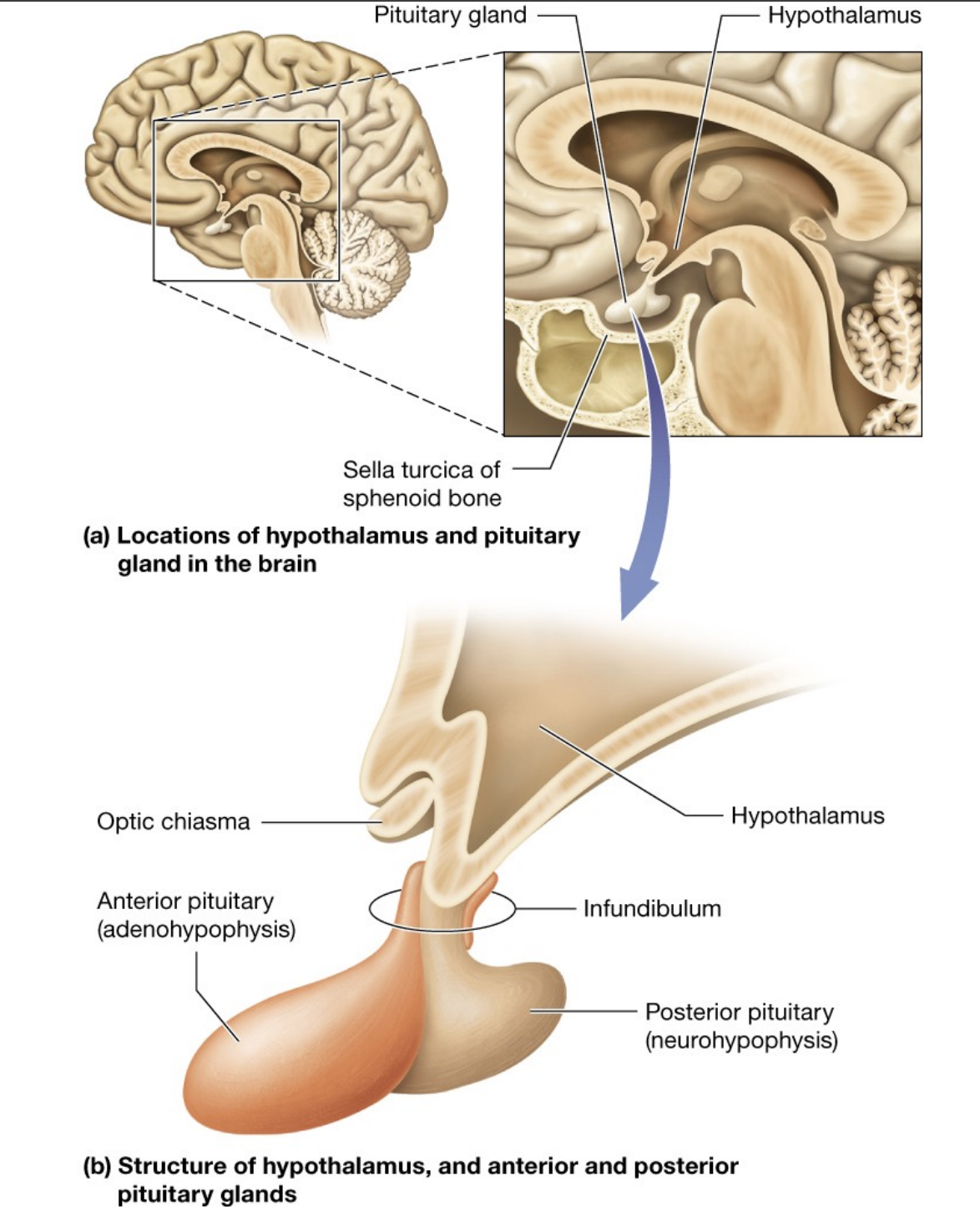

Some capillaries merge in the hypothalamus and form portal veins that travel through the infundibulum to another group of capillaries in the anterior pituitary

Made of nervous tissue
stores neurohormones

Antidiuretic Hormone (ADH or Vasopressin): Water Retention
1) Hypothalamic neurons in the supraoptic and paraventricular nuclei make ADH (vasopressin)
2) ADH travels through the hypothalamic-hypophyseal tract in the infundibulum
3) ADH is stored in the axon terminals in the posterior pituitary
4) ADH is secreted into the capillaries in the posterior pituitary when the hypothalamic neurons fire action potentials
ADH increases the amount of water retained by the kidneys
Diuretic increases urine production, so an antidiuretic decreases urine production

How ADH works
ADH triggers cells in the kidney tubules to insert water channels called Aquaporins into their plasma membranes
Water moves from the tubules into the blood
Osmoreceptors in the hypothalamus monitor solute concentrations in the blood
High solute concentrations trigger ADH release to increase water to dilute the blood
Abnormal lack of ADH secretion or activity
results in extreme thirst, dehydration, and high solute concentration in the blood
synthetic ADH is used to treat the condition
Oxytocin: Supporting Reproduction and Milk Release
oxytocin targets specialized cells of the mammary glands and smooth muscle cells of the uterus, the female organ in which a fetus develops
stimulates contraction of both organs; In the mammary glands, this results in milk ejection, or the Milk Let-Down Reflex, which works through a positive feedback system; The more an infant suckles, the more milk is released
may play a role in emotional bonding in both sexes