Test 3 AP Calc AB
 Call Kai
 Learn
Learn Practice Test
 Spaced Repetition
 Match
Match Flashcards
 Knowt Play
1/61

There's no tags or description
Looks like no tags are added yet.
Name | Mastery | Learn | Test | Matching | Spaced | Call with Kai | Chat |
|---|
No analytics yet
Send a link to your students to track their progress
62 Terms
Derivative of y=sinx
cosx
Derivative of y=cosx
-sinx
Derivative of y=tanx
sec²x
Derivative of y=cscx
-cscxcotx
Derivative of y=secx
secxtanx
Derivative of y=cotx
-csc²x
Chain Rule
y= f(g(x))
y’ = f’(g(x)) = g'(x)
I'm mplicit Differentiation
Derivatives with a mixture of x and y
To solve dy/dx
Move the values without dy/dx to other side
Factor out what does and divide it moving it to other side
What to remember when using product or quotient rule with a - in front
The - goes to all parts of it
If a problem has two y’s, you get two…
y’
For an e^x chain rule, keep the exponent then multiply by…
The derivative of the exponent since that's the inside
Limits
As x gets dealt close to “a”, y gets really close to “L”
When approaching a point in a limit, does it matter if you hit it or not?
No, it does not matter → a hole can have a limit!
Why does a limit not exist?
Because y’s do not match up
Sum Law
lim x→a[f(x)+g(x)] = limf(x) x→a + limg(x) x→a
The limit of a sum is the sum of the limits.
Difference Law
lim x→a[f(x)-g(x)] = limf(x) x→a - limg(x) x→a
The limit of a difference is the difference of limits.
Constant Multiple Law
lim x→a[cf(x)] = climf(x) x→a
The limit of a constant times a function is the constant times the limit of the function.
Product Law
lim x→a[f(x)•g(x)] = limf(x) x→a • limg(x) x→a
The limit of a product is the product of the limits.
Quotient Law
lim x→a[f(x)/g(x)] = limf(x) x→a/limg(x) x→a
The limit of a quotient is the quotient of the limits.
For a VA, to figure out whether it's -/+ infinity, you…
Plug in a number a little higher and a little lower than the bottom number
Make sure when doing limits you continue to…
Write lim x→#
If limf(x)= L x→±∞
Then y=L is a horizontal asymptote
If top heavy in a limit…
Compare the powers with the coefficients involved!
For limits equations…
Always plug in!
#/0 =
VA
0/0 =
Hole
If asking to check whether the limit exists,
set the first and second expression equal + plug in the limit. Then, do the same and say the middle and bottom to each other and plug in next limit. Now you have a system of equations: graph, substitute, or eliminate.
logb(1)=
0
logb(b) =
1
Continuous
Never lift the pencil
A fraction f(x) is continuous at x=a if:
1) f(a) must exist. There is a y value there.
2) limf(x) x→ a must exist.
3) f(a)=limf(x) x→ a must equal each other
3 Types of Discontinuity
Removable = hole
Jump → physical disconnect
Infinite → VA
Derivative also means…
Slope!
Definition of a Derivative
f’(x) = lim h→0 f(x+h)-f(x)/h
Second definition fo derivative
f’(a) = lim x→a f(x)-f(a)/x-a
The derivative does not exist at x=a if…
f(x) is discontinuous at x=a
f(x) has a corner at x=a
f(x) has vertical tangent at x=a
What's something Krausman always tells us
Don't forget to distribute the negative!
Power Rule
y=ax^n
y’=(a)(n)x^(n-1)
Exponent Rule
y=e^x
y=e^x
Log Rule
y=lnx
y’=1/x
A Quadratic has a… derivative
Linear
When do you use chain rule?
When you have a composite function (a function inside another function), and you do not use it when you have a basic, single-layer function.
Common ones:
Power inside a power
Trig without an x on the outside
Exponential or logarithmic functiona
When doing the chain rule, check for…
Any product or quotient rule stuff! If you see something like this…
t(sin(πt)), you're doing t•sin(πt) meaning you are doing product rule and chain rule!
d²y/dx² just means…
Second Derivative
The derivative of position is…
Velocity
The derivative of velocity is…
Acceleration
Acceleration measurement
m/s²
Velocity measurement…
m/s
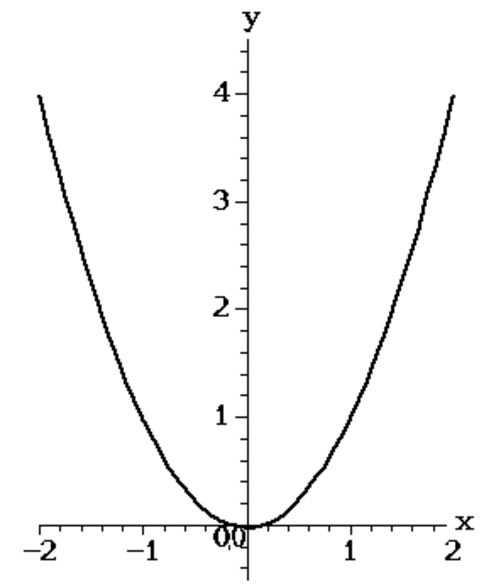
y=x²
y=√x

y=|x|

y=lnx

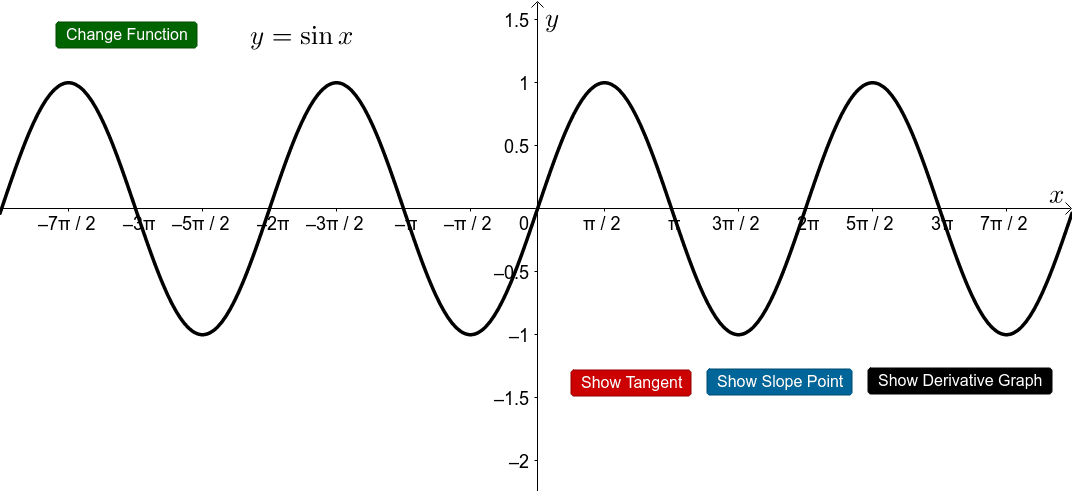
y=sinx
y=x³

y=³√x

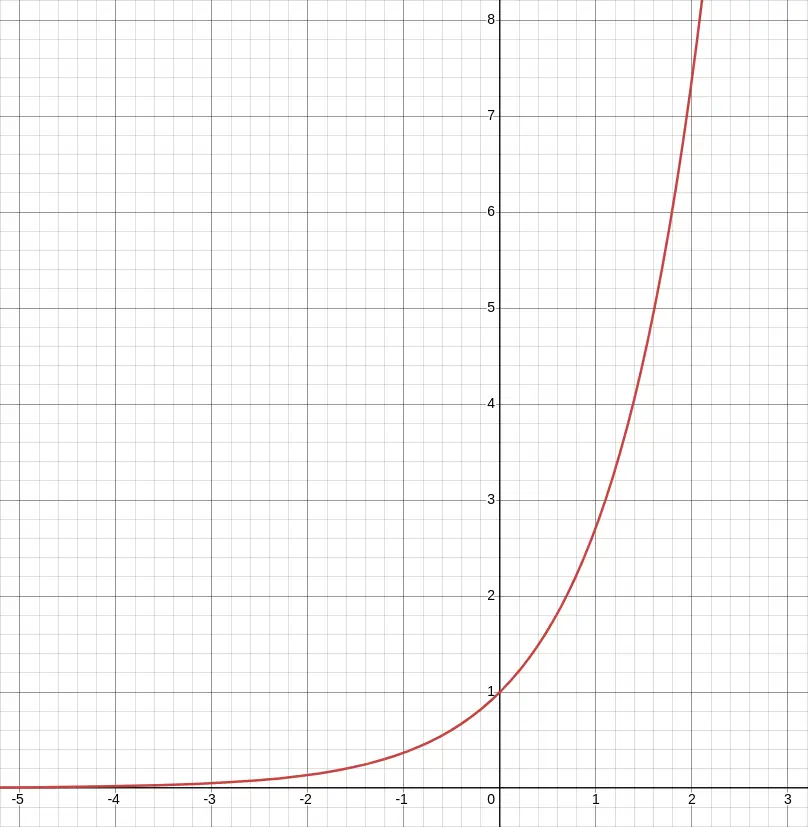
y=e^x
y=1/x

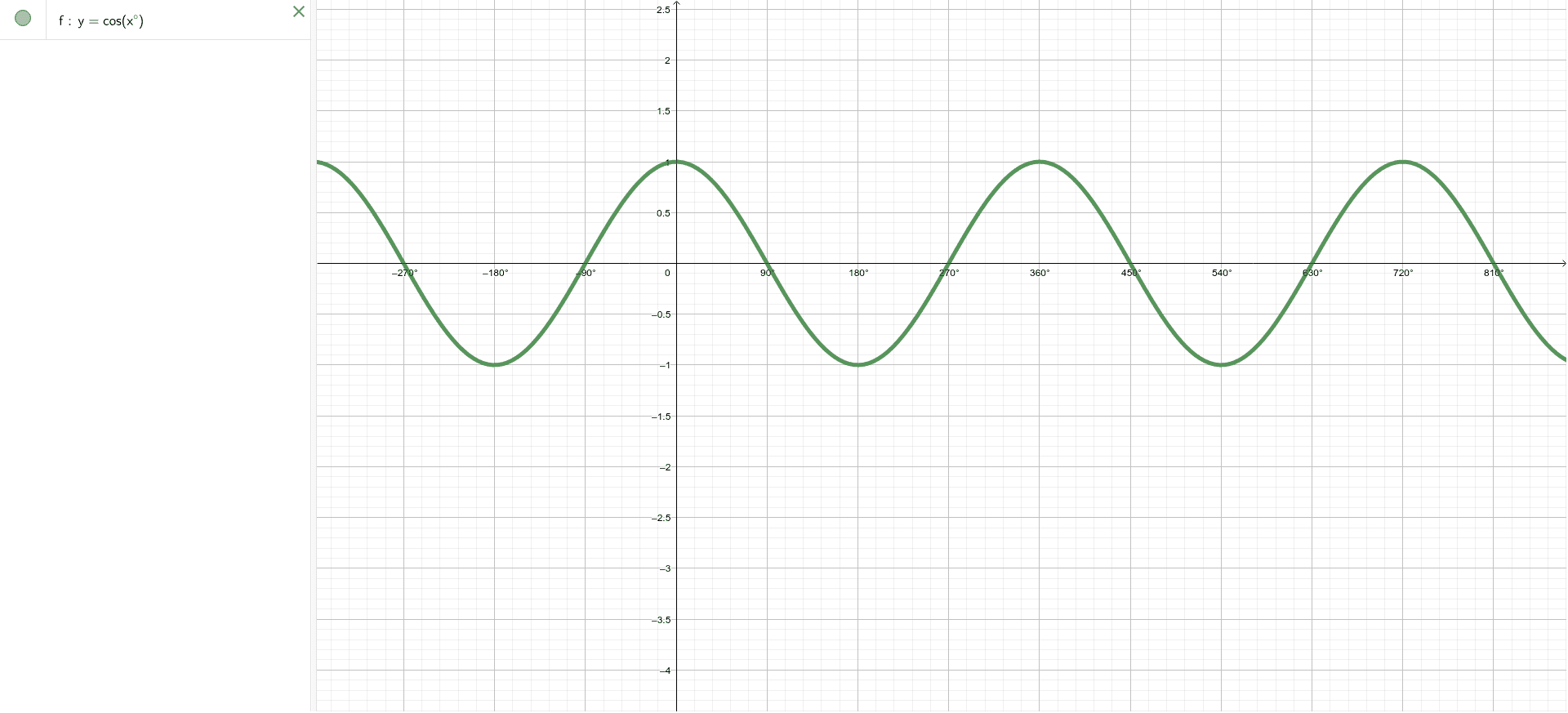
y=cosx
When finding the limit, you only use HA when
Limit is going to infinity or negative infinity
Difference of cubes: SOAP
1st is same sign, 2nd is opposite sign, last is always positive
Limit going to an exponent that is rational…
Divide by the highest degree in exponent, and then find the number to the exponent →
Ex: 2^(3x+4/x+2)
= 2³ = 8