exam 1 global change
 Call Kai
 Learn
Learn Practice Test
 Spaced Repetition
 Match
Match Flashcards
 Knowt Play
1/150

There's no tags or description
Looks like no tags are added yet.
Name | Mastery | Learn | Test | Matching | Spaced | Call with Kai | Chat |
|---|
No analytics yet
Send a link to your students to track their progress
151 Terms
global change biology
any consistent trend in the environment past, present or projected, that affects a substantial part of the globe
examples of global change
acid rain formation
land use change
ozone hole
climate change
drivers of global change
human activities
agriculture
industry
recreation
intl commerce
impacts of global change
land use change
global biogeochemistry
biotic additions and losses
climate change
change in biodiversity
all related
levels of ecological organization - organismal ecology
organisms and how they intrxt with their environment
levels of ecological organization - population ecology
individuals of the same species living together
levels of ecological organization - community ecology
populations of different species living together
levels of ecological organization - ecosystem ecology
intrxns among organisms and their physical environment as an integrated system
levels of ecological organization - biosphere approach
the movement of air, water, nutrients, energy and organisms around the earth
meeting the needs of the present without compromising the ability of future generations to meet their needs depends on
sound science - understanding how the world works and how humans interact with it
stewardship - managing natural resources and human well-being for the common good
structure
“things you can observe with a camera”
one time - how many trees in a given environment, how much of whatever element
function
things that happen over time
ultimate factors
mechanism for why an ecosystem does/doesn’t exist over LONG TIME PERIODS
something that COULD happen
time since last volcanic eruption/ice age
proximate factor
mechanism for why an ecosystem does/doesnt exist RIGHT NOW
what DOES live somewhere
building of housing development removes mangrove forest
state factor model
climate - precipitation and temperature
geology - what rocks/how did they form/what soils form
past disturbance - volcanic eruptions, forest fires, deglaciation
topography - flat/slope/what direction/how steep
+ human activities
controls (in the ultimate sense) the characteristics and properties of ecosystems AKA controls what an ecosystem could be like
ecosystem structure examples
species diversity (# bugs or trees etc)
standing crop biomass (how much biomass is present now
trophic categories of organisms
living organisms are ecologically categorized based on how they get their energy
autotrophs
producers
heterotrophs
consumers
decomposers
autotrophs
make their own energy from inorganic nutrients
producers - generate energy from sunlight and CO2
photosynthetic green plants - use chlorophyll to absorb light
photosynthetic bacteria - use purple pigment to absorb light
chemosynthetic bacteria - use high energy inorganic chemicals such as hydrogen sulfide (H2S)
heterotrophs
feed on organic matter for energy
consumers
first order consumers/herbivores - animals that feed exclusively on plants
omnivores - animals that feed on both plants on animals
second order consumers - animals that feed on primary consumers
higher orders of consumers/carnivores - animals that feed on other carnivores
parasites - plants or animals that become associated with another plant or animal and feed on it over an extended period of time
decomposers
scavengers - eat larger dead things, may also eat living things some of the time
detritus feeders - organisms that feed directly on detritus
chemical decomposers - fungi and bacteria that cause rotting
examples of human activity on proximate structure and function in MA
introduced bobolink and meadowlark (grassland loving birds) into an environment that wasnt supposed to have them, then phased back out cause they werent supposed to be there anyways
ultimately - forest loving birds prevail because climate state factor would predict that forests dominate the landscape
proximately - grassland loving birds dominated in the 1850s since we cut down most of the forests and created open grasslands
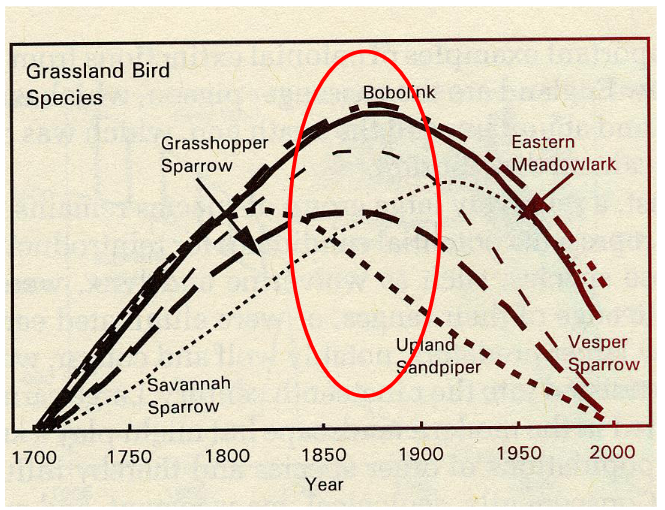
investigate impact of one state factor
keep everything else constant
for example if youre looking at climate in hawai’i you want to keep geology, topography and past disturbances constant
state factor investigation - influence of climate on plant productivity and decomposition
kept other state factors constant (topology, past disturbance, geology)
conclusion:
warmer temps makes forest grow more and decomp goes up

what causes spatial variation in climate?
circulation
differential heating of tropics vs the poles
solar radiation reaching earth most direct at equator, travels farther distance to reach the poles
circulation of temps results in three wind cells across the globe
prevailing winds
source to sink (easterlies come from the east and go to the west)

convection cells
0-30 HADLEY
30-60 FERREL
60-90 POLAR
high/low pressure systems
high - air sinks → contracts → no space for precipitation → warm. high pressure of air on your head
low - air rises → expands → gathers space for precipitation → cools. low pressure of air on your head. rainy
global circulation driven by
latent heat flux (evaporation) and coriolis effect
latent heat flux
how precipitation relates to air temp
solar radiation at equator heats up air, air rises and cools
movement of water - water evaporates at surface and condenses in troposphere
coriolis effect
takes into account the earths spin
air deflected about 45* (CW NH, CCW SH)
trade winds
EWE
polar easterlies
westerlies
easterlies
ITCZ btwn easterlies

thermohaline etymology
thermo- - temperature
-haline - salinity
drivers of surface water currents
prevailing winds
gyres
circulation deflected by the coriolis effect
drivers of deep water currents
temperature and salinity (thermohaline)
ocean water circulation
winds at surface cause evaporative cooling → evaporates out the water so that the molarity of salt increases → makes water denser → cold water sinks to the bottom in antarctica and greenland (1) → reaches the bearing strait (2) and current slows and warms → becomes less dense → flows to surface → repeats
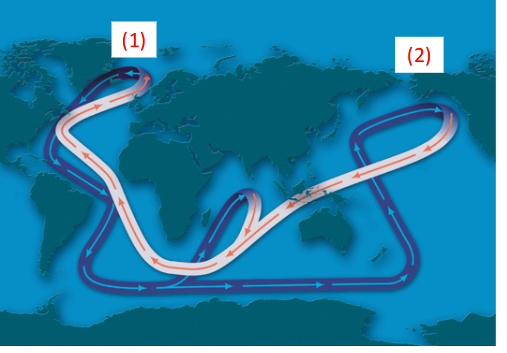
predicted global climate modified by
landmasses (heat faster than oceans)
monsoons
land-sea breeze
ocean (moderates land temperature)
mediterranean climate
mountain ranges (stick out physically and break winds)
deflect trade winds
produce rainfall gradients
mountains effects
orographic (mountainous) lifting of air - mountain is physically in the way, so the wind climbs the mountain then falls on the other side
rain shadow effect - rain hits one side of the mountain and cant get past the peak, so the side facing the rain is forest while the side away from it is desert
microclimate - north vs south facing slopes
northern hemisphere
south facing slopes get more direct sun → dries out more quickly → dry soil so end up with grass instead of trees (FACES THE EQUATOR)
north facing slopes get less sun → soil stays moist → large trees
la nina
strong easterly winds at the equator → pushes the warm surface of the ocean from south america to indonesia → upwelled cold ocean water replaces it in south america

el nino
trade winds at equator get paused/weakened → lack of trade winds means warm water stays at south america → ocean temps at west south america stays warm

greenhouse effect
atmosphere is transparent to visible light → warms the earths surface → warm surface emits infrared radiation → IR light emitted by earth is absorbed in part by the atmosphere which is only partially transparent to IR → gases like CO2, N2O and CH4 increase the absorptive capacity of the atmosphere to IR → more IR trapped in the atmosphere warms earths surface and lower atmosphere
eunice newton foote
discovered greenhouse effect, claimed CO2 in atmosphere is heat trapping and leads to earths climate
compared temps of glass jars filled with dry air/moist air/CO2 all impacted by sunlight
CO2 warmed more and stayed warm for longer
albedo
reflection of IR back into the atmosphere
convergence/convergent evolution
similar dominant traits (or in this case plants/organisms) occur under similar conditions but through an unrelated lineage
biomes
categories that group communities by the dominant plant forms
similar dominant plant forms occur under similar climactic conditions (moisture and temperature)
dictated by climate, topography and soil
why do biomes occur
no single type of plant can endure all climactic conditions
convergence example
same type of plant found both in california and in south africa cape
plant survival curve
optimal range - ideal condition range for a plant to grow
range of tolerance - range of conditions that a plant Can grow in
stress increases on either side of the optimal range

soil horizons/vertical profile of a soil
O - organic horizon
everything that is organic that is now dead (includes animals, plants, roots, fungi, etc)
A - mineral horizon
humus, roots, living creatures, inorganic minerals
B - depositional horizon
iron, aluminum, accumulated compounds, clay leached down from above horizons
C - weathered parent material
partially weathered rock

whittaker’s biome concept
x axis is flipped (high → low temps)
forms a triangle with corners being:
warm and wet
warm and dry
cold and dry
NO cold and wet
whats missing from whittakers biome concept
cold and wet - why?
cant have a wet cold region because itll freeze over
biome cutoffs whittakers biome concept
>30cm rain - forest
what determines type of forest? - temperature (deciduous vs rainforest vs boreal etc)
why no forests at lowest temps like tundra? - permafrost (the soils at the depths end up frozen year round so no roots can properly take hold)
mountain gradient
analogous to biome map AKA increasing latitude from the equator and increasing altitude from sea level
tropical rainforest → temperate deciduous forest → boreal forest → tundra → ice and snow
climate zones
heinrich walter - climactic classification system
focused on temp and precip
9 zones from equatorial (tropical rainforest) to polar (tundra)
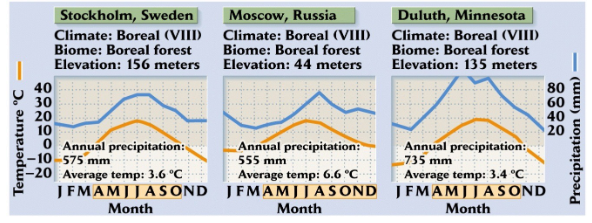
walters climate diagrams
temperature in red, precipitation in blue
temperature line above precipitation line → drought conditions
walter main three climates
tropical (seasonal forests)
mediterranean (woodland/shrubland)
boreal (taiga)
walter tropical climate
tropical seasonal forest
year round warm temp
summer rainfall
SOUTHERN HEMISPHERE

walter mediterranean climate
woodland/shrubland
warm, dry summers
cool, wet winters

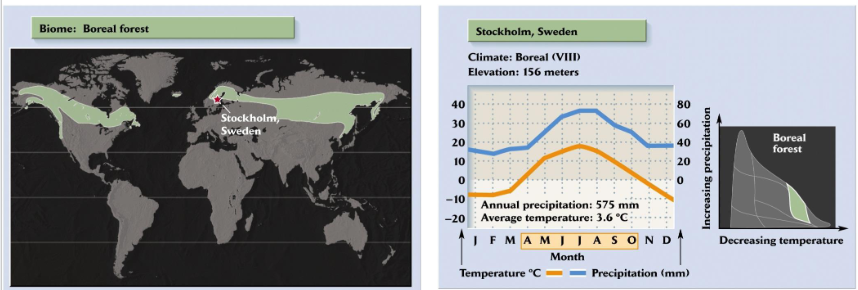
walter boreal climate
taiga
year round cold
wet summer
tundra biome
very cold temps
relatively little precip
short wet summer
low decomposition
permafrost
treeless, many dwarf/woody shrubs
intense growing season during 24-hour summer days

taiga/boreal forest
11% of earths land area
low temps → slow decomposition → accumulation of organic matter
evergreen conifers (spruce and fir)
frost-tolerant vegetation → low plant diversity
TRADE-OFFS - carbon sequestration (trapped in the soil under dead organic matter) and biodiversity
woodlands/shrublands
mediterranean
relatively dry in the summer, wet in the winter
all continents except antarctica
~30-30* latitude
cool and moist winter → hot and dry summer
trees and shrubs typically evergreen
fire-resistant plants due to frequent fires

why do mediterranean climates have hot dry summers
30-40* N/S latitude
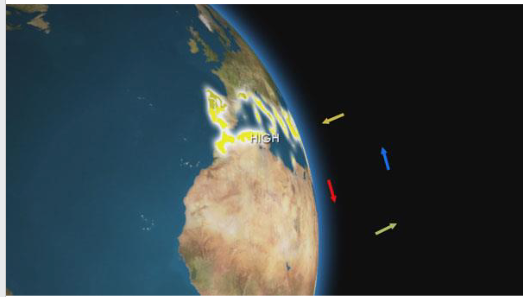
subtropical high pressure systems maintain dry conditions in the summer
cold ocean currents along western coasts help to stabilize summer climate aka ocean currents keep the air dry
WINTER - subtropical high pressure system shrinks and moves towards subpolar regions → low pressure system takes over and rains
LONG STORY SHORT - high pressure summer, low pressure winter
temperate grasslands
annual rainfall 300-1000mm, but mostly <500mm
hot wet summers, cold winters
periodic droughts and fires
soils extremely nutrient rich and deep (fires feed organic matter)
dominated by herbaceous vegetation
large roaming ungulates (bison, cattle)
many converted to deserts

why do grasslands not have trees
recall whittaker triangle corners (hot-wet, hot-dry, cold-dry)
>30cm rain is forest → grasslands usually get under 50cm
also recall roaming grazers → chew and eat saplings before they can establish as trees
desertification of grasslands
<1800s large grazers were brought in - pronghorn antelope, tule elk, mule deer
within 10-15yrs of overgrazing by cattle + sheep - most grasslands were converted into deserts
now dominated by species like cheatgrass which outcompetes native plant species (cheatgrass increases fires and are also more fire resistant than native plants)
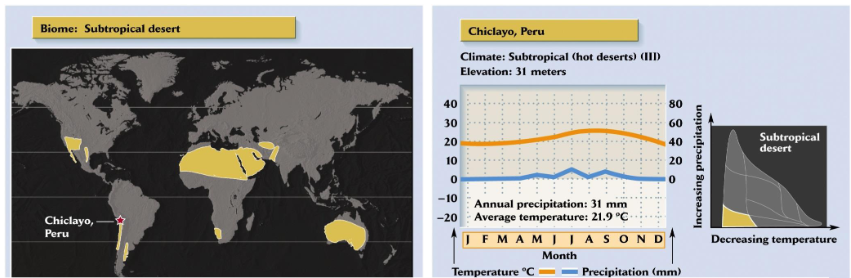
desert
high temps low precip
20-30 N and S latitude
20% of earths land area
soil usually extremely low in organic matter - what organic matter there is just decomposes due to the heat
plant cover - sparse to none
animal abundance low, but biodiversity may be high
convergent evolution in desert plants
cacti vs euphorbs
NA vs africa - evolved without each other but into very similar organisms

a - temperate deciduous forest
boston
moderate climates with winter freezing
dominated by deciduous trees with understory of small trees and shrubs, often abundant herbs
warmer and drier parts dominated by needle-leaves trees, typically pines
fires may be frequent in the desert and species can resist fire damage

b - temperate rainforest
sitka, alaska
mild winters, heavy winter rains, summer fogs
dominated by tall evergreens (douglas fir, coastal redwood)
not as diverse as tropical rainforests
PNW

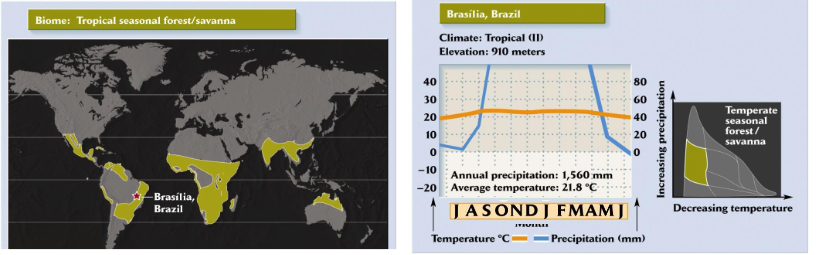
tropical seasonal forest + savanna
relatively warm throughout the year
huge seasonality irt precip (climate alternates between wet/dry seasons)
dry season gets so dry that lightning can cause wildfires
low water permeability soils
grassland with scattered trees
controlled fires lead to conversion into dry forest
why do tropics have wet/dry seasons
ITCZ - intertropical convergence zone
sun rays hit equator most directly
earths tilt - most direct rays vary in summer/winter months
ITCZ moves throughout the year
NH dry season - dec-jan
NH wet season - may-aug
warmest months are the wettest
tropical rainforest
within ITCZ year round (10* lat of equator)
little temp/precip variation between months
very diverse plant communities
mychorrizal fungi

symbiosis
“the living together of unlike organisms” - anton de bary
long term
positive/negative/neutral effects
mychorrizae
nutrient exchange symbiosis
essential for plant growth and survival
assist in uptake of nutrients from soil
10-100s of species on a single plant
mykes - fungus
rhiza - root
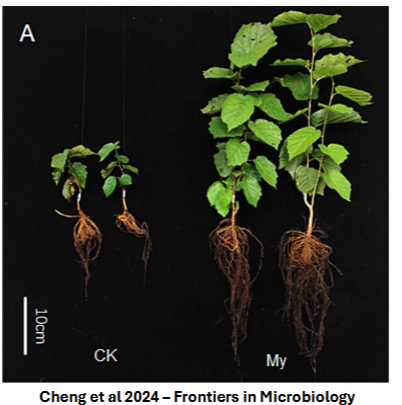
some plants need mycorrhizal fungi to grow
essential but overlooked component of global diversity
movement of nutrients in mycorrhizae
fungus uses its hyphae (roots-ish) to go out into the soil and scavenge for NPK → transfers it to the plant → in return plant provides it with sugars via photosynthesis

ectomycorrhizal morphology
root colonizers
relationship between a fungal symbiont and the roots of various plant species

SPUN
society for the protection of underground networks
a global effort to map the planets fungi and advocate for their protection

biodiversity response to climate change
negative effects of climate change on biodiversity have been well documented in plants/animals
irt mycorrhizal symbiosis?
pines as mycorrhizal models - improves soil aeration and protects against pathogens
ectomycorrhizal fungal diversity predicted to substantially decline due to climate change

invasion biology
study of the introduction of non-native species into ecosystems
invasion biology - pines in australia
pines wouldnt grow no matter how they planted them - dominant plant in AUS is eukalyptus
introduced mycorrhizal fungi to make them grow (invasive)
worked
then pines AND FUNGI escaped the plantations
takeaways mycorrhizal fungi
affected by global changes
exacerbate/increase severity of existing global changes (via invasion)
determine the effects of global change on plants
natural variability in climate
geographically vs temporally
OR:
spatially vs day-and-night/seasonally/annually/over millenium
space vs time
spatial variability examples
climate + biome
temporal variability examples
el nino/la nina, milankovitch cycles, glacial cycles
glacial cycles
every 100,000 years
milankovitch cycles
collective effects of earths movement on its climate
determined by:
eccentricity - how much the earths orbit deviates from a circle, resets 100,000 years
axial tilt - angle of earths rotational axis, 41,000 years
precession - amount of wobble the tilt has, 26,000 years
results in variation in amt of solar radiation reaching the earths surface/how far the earth is from the sun
predicts global heating/cooling cycles
eccentricity
earths orbit around the sun is an ellipse - eccentricity is the departure of this ellipse from being a perfect circle
perfect circle = 0
strong ellipse = 1
no units because its a ratio of distances !!!
earths mean eccentricity = 0.028
earths CURRENT eccentricity = 0.017 and decreasing
higher eccentricity = higher likelihood to enter glacial period
why does eccentricity vary
earth isnt the only planet orbiting the sun
if it was, eccentricity wouldnt vary
earth is also in the gravitational fields of jupiter and saturn as well
eccentricity calculation
distance between two focal points of an ellipse / length of the major axis

axial tilt
cause of seasons
22.1 - 24.5 degree variation
currently 22.4 and decreasing
greater tilt → greater change in seasons
summer vs winter for determining ice ages?
summer
winter can be as cold as it wants, we look at the hottest temperature to determine the maximum
what causes axial tilt to change over time
large land masses/ice sheets make earth top heavy
shifts in these land masses/ice sheets cause variation in tilt (like sticking something on a spinning top)
why doesnt axial tilt change biomes
its hard to move biomes around in the time period of axial tilt change
if earth had no axial tilt - very little seasonal variation across earth
precession
wobble around the axis

what causes precession to change over time
gravitational forces of sun/moon
milankovitch cycle adding everything together
eccentricity + axial tilt + precession → ~100,000 year cycles of ice ages
eccentricity smallest - seasonality most mild
axial tilt smallest - smallest difference btwn winter and summer
precession smallest - summers too cool to melt all accumulated snow from prev winter
recent temperature changes
general increase in global temps since 1880
what caused variability - temp cooling?
1940-1980 - particulates and aerosol pollution counter-acted effects of elevated co2 → industrial revolution into clean air act
1990 - mount pinatubo → high SO2 concentrations

why such focus on CO2 irt greenhouse gases
most of greenhouse gas emissions is CO2
how do we know atmospheric CO2 is rising?
keeling curve

charles keeling
funded to develop analytical equipment to measure atmospheric CO2
mauna loa, hawai’i → very little CO2 due to human activityy
only asked to measure a couple of years to determine global concentration
decided to measure multiple times within first year
discovered within year 1 that CO2 concentration was rising