Earthwork Test 2
 Call Kai
 Learn
 Practice Test
 Spaced Repetition
 Match
 Flashcards
 Knowt Play
1/59

There's no tags or description
Looks like no tags are added yet.
60 Terms
Productivity Factors with Job Conditions when Selecting Equipment:
- Material type (cohesive or noncohesive)
- Water level and moisture content (plasticity and liquid level)
- Job Size (haul route lengths)
- Haul road conditions (due to soil conditions and room for wide roads)
Productivity Factors with Other Conditions when Selecting Equipment:
- Equipment conditions and maintenance practices
- Experience and skills of management and operators
- Coordination of work between cut and fill areas
Factors determining top load or scraper:
-Haul Distance
-Soil Type/Moisture
-Water Table
-Site Layout
-Equipment availability
Typical Equipment Spread for a Top-Loading Operation
-Hydraulic Excavator (Trackhoe)
-Dump Trucks (Highway or Off-road)
-Motor Grader (to maintain haul road, may need small dozer depending on conditions)
-Water Truck
How do you determine the number of dump trucks needed for a top-loading operation?
-hydraulic excavator production rate, truck capacity, and haul distance
-May use scarpers instead of trucks depending on haul distance
What are the four elements of a digging cycle of an excavator?
-Load bucket
-Swing load
-Dump Bucket
-Swing Empty
*Also have to take into account the time it takes to spot trucks
How do you maximize production with a hydraulic excavator?
-Ideal Bench Height and Truck Distance
-Optimum Work Zone and Swing angle
-Best Distance from the edge
Ideal Bench Height and Truck Distance for maximizing hydraulic excavator production:
-Bench height should be equal to stick length (Stable material)
- Lower bench height for unstable materials
- Most efficient truck position is when the inside truck body rail is below the boomstick hinge pin
Optimum Work Zone and Swing Angle for maximizing production with a hydraulic excavator:
-WZ should be limited to 15 degrees either side of the machine (about equal to undercarriage width)
- Trucks should be positioned as close as possible to centerline of machine
Best Distance from the Edge for maximizing production for a hydraulic excavator:
- Machine should be positioned so that the stick is vertical when the bucket reaches full load
-If further back, breakout force is reduced
-If closer, undercutting may occur
How do you select the number of trucks needed for a top loading operation?
- Production rate and number of excavators
- Length of haul
- Speed limit (25 mph good assumption)
- Increase # of trucks by 15 -20% to maximize production
Typical Equipment Spead for a Scraper Earthwork Operation
-Scrapers (work in tandem)
-Dozers to push scrapers for loading (depends on scraper size, digging conditions, etc.
-Motor Grader (to maintain haul road)
-Water Truck
What is the typical dozer used for a scraper operation?
Cat D-8
Hourly Equipment Ownership Costs:
-Equipment Value
-Depreciation (Tire Cost Index, Salvage Value Percentage)
-Facilities Capital Cost of Money
Hourly Equipment Operating Costs:
-Fuel
-Fuel, Oil and Grease
-Repair Cost
-Tire Wear Cost
Is it cheaper to top load or use a scraper?
scraper
Hourly Equipment Standby Costs:
-Idle equipment
-Standby Rate = Depreciation x 0.5 + FCCM
How many dozers do you need to support a scraper operation?
For every four scrapers you need one dozer
Origin of the term rule of thumb
In old England, you could beat your wife with a stick as long as it was smaller than your thumb
Is the cost of the operator including in the hourly equipment operating costs?
No
History of cofferdams
-The Romans erected cofferdams in order to construct piers to support their aqueducts and stone arch bridges
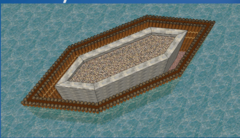
What are the five types of cofferdams?
-Earth Dikes
-Timber Cribs
-Single-Wall (Braced)
-Double-Wall
-Cellular
Earthen Cofferdam
-built with clay or impervious material
-simplest and cheapest type
Primary uses for an earthen cofferdam
-shallow waters and slow current
-creeks for utility or culvert installation
-retention ponds for installing drains or sump pits for pump stations
Crib Cofferdam
-Wood box constructed on land
-Filled with medium, usually rock
-Sunk at desired location until it reaches the surface
-Used in water applications where sheet piles are not suitable
Single Walled Cofferdam
-Constructed of H-Piles also known as guide piles
-Install Z-Type Sheet Pile for water-tight seal
-Wales, struts
-used for smaller enclosures and medium depth up to 18 feet
What are wales?
horizontal bracing attached to pile
What are struts?
installed perpendicular to the wales
Cellular cofferdam
-Constructed of Interlocking Sheet Pile cells
-filled with sand, gravel, or clay
-well suited for large areas and deep water up to 60 feet
-different types
-can provide work platform

What kind of cofferdam is pictured?
Cellular cofferdam

What kind of cofferdam is pictured?
Double-Walled

What kind of cofferdam is pictured?
Single-Walled

What is pictured?
Piling Template/Braced Cofferdam

What is pictured?
H Piles and Lagging
Load Bearing Piling
-key element in deep foundation systems
-shallow foundations: structural load bears on or near the surface of soils
-deep foundations: structural load is transferred to soils or rock strata below the immediate ground surface
Materials of structural piles
-wood
-steel
-concrete
How do end bearing piles support the structural load?
structural load is carried down the length of the pile to the tip which bears on a supporting strata or bedrock
How do friction piles support the structural load?
surface skin of the piles creates friction=resistance=bearing
How is a piles ability to support a load determined?
-very carefully
-by experience
-with the use of test piles and load tests
-observations during pile driving operations

What is pictured?
Marine Piling
How are non-load bearing piles used?
-sheet piles or H-piles
-usually steel
-used with bracing or tiebacks
-fairly watertight
-used extensively for marine and cofferdam work
-vinyl piles popular for light seawall applications

What is pictured?
Pile Cluster
Diesel Pile Hammer Operation
A. Raise the piston to start
B. Injection of diesel fuel and compression
C. Impact and fuel ignition
D. Exhaust ports exposed and gases escape
E. Draws fresh air through the exhaust ports.
F. The process repeats until fuel is shut off

What are the types of dams?
-Earthen Dam
-Concrete Dam
-Inflatable Dam

What is pictured?
Arch Dam

What is pictured?
Dam Monolith Construction
monolith
sections of dams
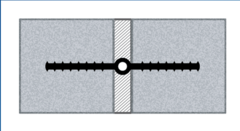
What holds the monoliths of a damn together?
waterstop
What are the components of the mix design for mass concrete?
-low water/cement ratio
-low slump
-requires extensive consolidation
-3-4 inch aggregate
-replace portion of Portland cement with flyash

What is pictured?
Gravity Dam

What is pictured?
Roller compacted concrete dam
Hoover Dam Facts
-5 years to build
-finished 2 years ahead of schedule
-$49 million ($811 million today)
-10,000 people worked on the dam
-100 construction deaths
-726 feet high
-1,244 feet long
->3.2 million CY of concrete
T/F: Concrete in the middle of a dam has bigger aggregate.
True
What kind of plan do you have to have any time you have a cofferdam?
a plan to get people and equipment out
T/F: Normally you fill a cellular cofferdam with sand or gravel, so that if water rises, then water inside rises as to ensure the cofferdam does not become top heavy and tip.
True
What gives sheet wall pile structural stability?
interlocking
What work week are average hourly equipment operating costs based off of?
40/hr work week
What type of soil is typically easier to move?
sand because it is not weather dependent
What is the practical limit of for scrapers?
6000 feet one way
What are the drawbacks of scrapers?
-Cannot take on highway
-Practical limit is 6000 feet one way
-Have to have good haul road for them