MICB 3301 Exam 1
 Call Kai
 Learn
Learn Practice Test
 Spaced Repetition
 Match
Match Flashcards
 Knowt Play
1/307

There's no tags or description
Looks like no tags are added yet.
Name | Mastery | Learn | Test | Matching | Spaced | Call with Kai | Chat |
|---|
No analytics yet
Send a link to your students to track their progress
308 Terms
microbiology
study of organisms too small to be seen by the unaided eye
size range- nano to micrometers
Viruses (nm)
Bacteria (um)
Vruses
Typical size: nm
Use electron microscopy
Not in any domain of life
Bacteria
Typical size: micrometers (0.3-100)
Use light microscope
Domain: Prokaryotic
Reproduction: Asexual (Binary Fission)
Phylogenetic tree
Based on sequence and analysis of rRNA (ribosomal RNA)
Bacteria
Archaea
Eukarya

16s
bacteria and archaea rRNA ~ 1500 nucleotides
18s
Eukarya rRNA ~ 1800 nucleotides
Methanogen
Prokaryotic, Archaea, produce methane
Algae and protozoa
Eukaryotic
protist
Yeasts and molds
Eukaryotic
Fungi
Prokaryotic
No membrane-bound organelles
No compartments
Eukaryotic
Membrane-bound organelles
Nucleus
Virus
Non-living
acellular
neither prokaryotic nor eukaryotic
not in a domain of life
unique categorization criteria
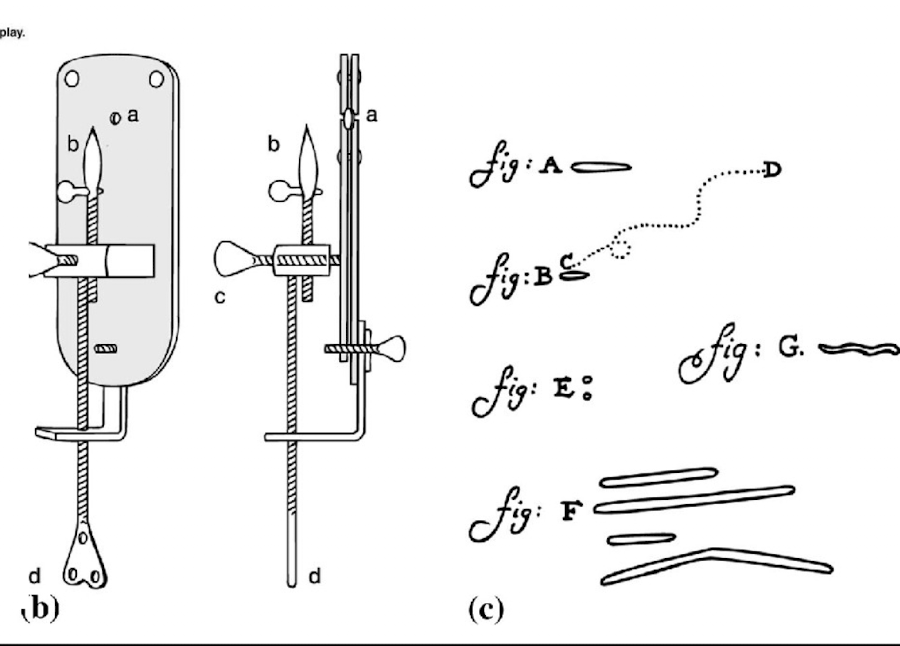
Robert Hooke
1600 ~ first to describe microbes (observed eukaryotic fungi)
Antony van Leeuwenhoek
1600 ~ First to see prokaryotic bacteria
built the first microscopes with grinded lenses
first to illustrate and describe microbial cells
Spontaneous generation
Living organisms could develop from nonliving matter
ex. maggots came from rotting meat
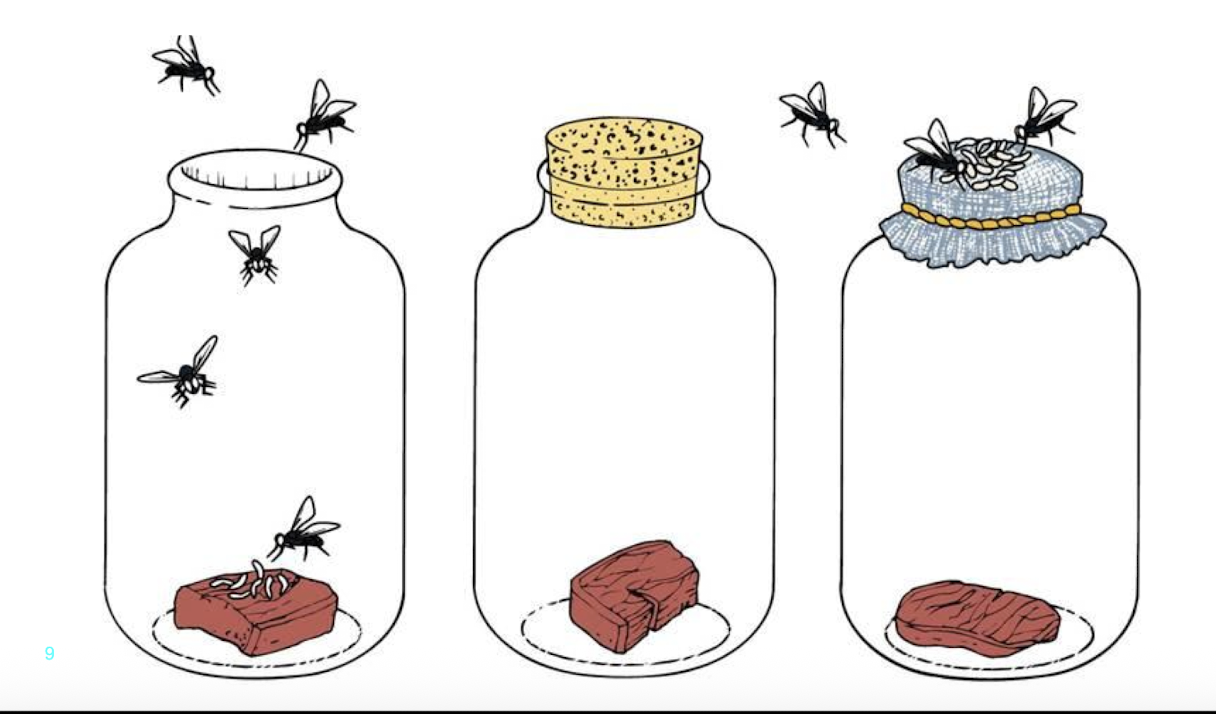
Francisco Redi
Disproved spontaneous generation
Used a meat-and-maggot experiment to show that maggots came from fly eggs, not from rotting meat, when flies had direct access to lay eggs on it.
“Biological life comes from life”
Spallanzani
Boiled two jars of meat broth, sealing one jar immediately while leaving the other open to the air. The sealed jar remained free of microorganisms.
Proposed that the air carried germs
Wasn’t fully able to disprove spontaneous generation → heating air destroyed its ability to support life
Louis Pasteur
(1822-1895) Swan-neck flask experiments. By boiling nutrient broth in open-ended but curved flasks that trapped dust and microbes. Discovered that the air carrying the microbes must reach the broth for growth

Pasteurization
Heat to kill microbes
Came from Louis Pasteur: Studying microbes that cause wine “diseases”
Joseph Lister
Applied Louis Pasteur's germ theory to surgery, creating the principles of antiseptic medicine - Surgical procedures to prevent wound infections
Immunology
the study of host defenses
Robert Koch
First direct evidence that bacteria cause disease
Studied a bacterial pathogen that causes anthrax
Developed Koch’s Postulates
Koch Postulates
A series of four criteria used to establish a causal relationship between a specific microorganism and a specific disease.
Microbe found in all cases of disease, absent from healthy individuals
Microbe must be isolated and grown in pure culture
The same disease must result when the isolated microbe is inoculated into a healthy host
Same microbe must be isolated again from diseased

Pathogen
microbe that causes disease
Bacillus anthracis
pathogen causing anthrax
Gram Negative
Capsuled bacteria - glisten due to capsule

Edward Jenner
Produced the first vaccine (vacca, cow)
material from cowpox lesions protects against smallpox
Matchnikoff
Discovered macrophages, bacteria-engulfing
Macrophages
Human white blood cells that engulf disease-causing bacteria.
Winogradsky
Isolated chemolithotrophs (Organisms that use inorganic molecules as electron donors to power cellular respiration and ATP production)
Chemolithotrophs
bacteria that oxidize inorganic compounds (sulfur and iron) for energy
Snottites
Masses of chemolithotrophs - limy, snot-like clusters of bacteria that hang from the ceilings and walls of caves.

Beijerinck
Isolated nitrogen-fixing bacteria
Nitrogen-fixing bacteria
reduce atmospheric nitrogen (N2) to ammonia (NH3)
Made it easier to use N as N2 is too unstable to use as an N source.
Feeds NH3 to plants
______ of earth's microbes have been cultured
Thiomargarita
Thio: Sulfur
Margarita: Pearl
>100 micrometers (Largest known bacteria)
Bacterium that oxidizes sulfur - contains sulfur globules

E.Coli
Size: 4 micrometers
Domain Bacteria
Prokaryotic
Habitat: Terrestrial and aquatic environments
Asexual reproduction
0.3 micrometers- 100 micrometers
Coccus
Sphere shape
Diplococcus
pair of spheres
Streptococcus
chains of spheres
staphylococcus
grape clusters of spheres
tetrads
4 spheres in a square
bacillus
rod shaped
vibrio
curved rod
spirillum
rigid helix

spirochete
flexible helix

pleomorphic
variable shape - lacks a single characteristic form
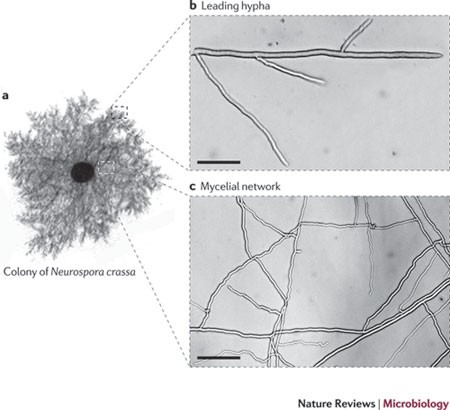
Hyphae
Long filaments

Mycelium: A network of hyphae
A network of hyphae
Cholera
Shape: vibrio

Borrelia burgdorferi
Shape: Spirochete
Causes Lyme disease
Mycoplasma
Shape: pleomorphic
Genus with a plasma membrane but no cell wall (peptidoglycan)

Deinococcus
Shape: tetrads
Resistant to radiation
smaller cells have a higher surface to volume ratio enabling them to…
allow for more nutrient uptake, and have faster groth
Bacterial cell envelope
Complete combination of layers surrounding the cytoplasm.
plasma membrane
cell wall
layers outside the cell wall
Plasma membrane
(Most important part of the cell envelope)
Encompasses the cytoplasm (cytoplasmic membrane)
Acts as a selectively permeable barrier → allows for the movement of molecules in or out of the cell
Main site of energy generation (Electron transport chain)
Signal Transduction system (Sense and respond to the environment)
Made out of a phospholipid bilayer

Fluid Mosaic Model
model for the plasma membrane that is made out of a lipid bilayer with floating proteins
Has flexible ester bonds
Lipids are amiphipathic (Hydrophilic Head) & (Hydrophobic body)

Ester bonds
flexible lipid bonds

Amphipathic
A lipid molecule that has both a hydrophilic region and a hydrophobic region
sterols
eukaryotic plasma membranes are stabilized by
hopanoid
Sterol-like molecule believed to stabilize the plasma membrane of some bacteria

Cell wall
Rigid layer that helps maintain shape and provides protection from toxic substances
Also protects from osmotic lysis (Water constantly moves into the cell through osmosis because the inside has a higher concentration of dissolved solutes than the outside environment, a hypotonic condition): counters high internal water pressure, preventing the delicate cell membrane from stretching and bursting.
Lies just outside the plasma membrane
Made out of peptidoglycan
Also contributes endotoxins → causes septic shock
Peptidoglycan
Sugar chains crossed-linked by peptides of alternating D- and L- Amino Acids
Polysaccharides
N-acetylglucosamine (NAG)
N-acetylmuramic (NAM)


Osmosis
the diffusion of water through a selectively permeable membrane
hypotonic
bacteria are often in ______ solutions
hypotonic
Solute concentration is less than that inside the cell; cell gains water
hypertonic
Solute concentration is greater than that inside the cell; cell loses water
Gram Positive
Has a thick layer of peptidoglycan in its cell wall, allowing it to hold inital purple dye after decolorization
No outermembrane
Stains purple


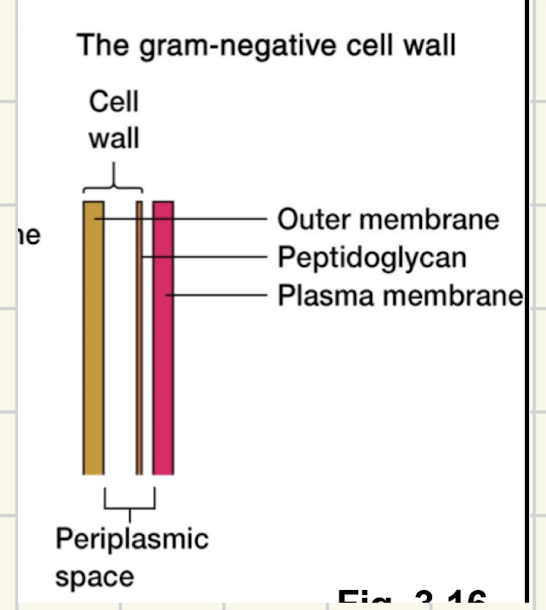
Gram Negative
Thin peptidoglycan cell wall sandwiched between an inner (cytoplasmic) membrane and an outer membrane.
Stains pink
Has Lipopolysaccharides (LPS): protection from host defenses
peptidoglycan
important component of cell wall in gram+ and gram- bacteria
polysaccharide formed from subunits (sugars)
polysaccharide of 2 alternating sugars
NAM and NAG
the alternating sugars in peptidoglycan
N-acetylglucosamine
NAG of peptidoglycan stands for
N-acetylmuramic acid
NAM of peptidoglycan stands for
B 1,4 glycosidic bond
bond holding together NAM and NAG
cross linked
sugar chains _______ by peptides of alternating D & L amino acids
Lysozyme
enzyme found in tears and breast milk that cleaves the B 1,4 glycosidic bond
important antibacterial role
Cytoplasm
NAM, NAG, and the amino acids of peptidoglycan were put together by the bacteria in the _______
decreases
having unique amino acids and amino acid forms _________ degradation
cross linked
peptides are __________ in peptidoglycan to provide most of its strength
transpeptidation
a vital chemical reaction where an amino acid or peptide residue is transferred from one compound to another
→ drives the cross-linking of peptidoglycan to build rigid bacterial cell walls
Penecilin
antibiotic that inhibits transpeptidation
peptide interbridge
short chain of amino acids that link peptides of peptidoglycan
indirect cross link
NAM
in peptidoglycan the peptide chain attaches to which sugar?
gram positive cell wall
thick, multiple layer of peptidoglycan
small periplasmic space
plasma membrane
gram negative cell wall
outer membrane
bigger periplasmic space
thin layer of peptidoglycan
plasma membrane
periplasmic space
the space between the outer and plasma membrane in gram - and between the peptidoglycan and plasma membrane in gram +
teichoic acids
polymers of glycerol or ribitol
provide stability to gram+ cells
gram positive cells
contain primarily peptidoglycan
and teichoic acids
gram negative cells
contain a thin layer of peptidoglycan surrounded by an outer membrane
no teichoic acids
porins
outer membrane
comprised of lipids, proteins, and lipopolysaccharides (LPS)
porins
form channels in the outer membrane
allow small molecules to traverse the outer membrane to eventually diffuse and be transported into cytoplasm
Lipopolysaccharide
part imbedded in the outer membrane, other part extended out into environment
made of 3 parts
lipid A
part of LPS
imbedded in outer membrane lipid bilayer
has fatty acid tails oriented inwards
core polysaccharide
part of LPS
middle section made up of a variety of sugars and phosphate groups
O side chain
Part of LPS
furthest away from outer membrane
made of variable sugars and variable numbers of sugars
aka the O antigen
protection
LPS provides ______ against host immune defenses
ex: the O antigen
O antigen
O153:H7
the O stands for
stabilizes
LPS _____ the outer membrane of a gram- cell
attachment
LPS plays a roll in gram negative cell ________
endotoxin
A toxic component of the cell itself
LPS can act as this
cause fever and septic shock