National Artists of the Philippines - CPAR
 Call Kai
 Learn
 Practice Test
 Spaced Repetition
 Match
 Flashcards
 Knowt Play
1/19

Earn XP
Description and Tags
Part I of the list of National Artists
20 Terms
Fernando C. Amorsolo
First National Artist of the Philippines on April 28, 1972
Grand Old Man of the Philippine Art
Master of light, realism, romanticism
Celebration of Filipino identity
Realism VS Romanticism
Realism: Shows real Filipino life
Romanticim: Makes that life look more beautiful, peaceful, and ideal than ordinary reality.
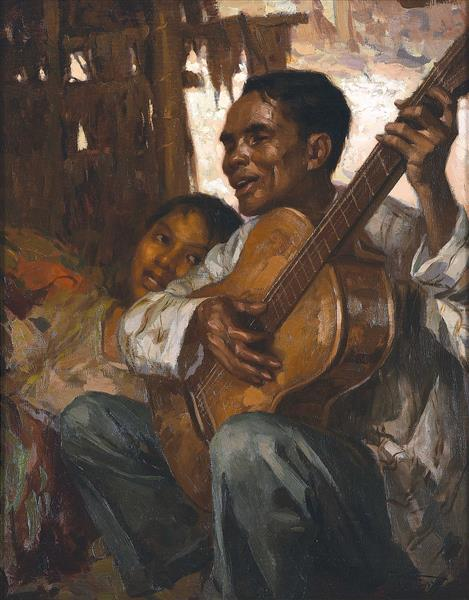
El Ciego (1929)
This artwork reflects Filipino identity because it shows compassion for an ordinary person, values human dignity, and presents everyday life as something worthy of art.
Carlos “Botong” V. Francisco
National Artist of 1973
Filipino struggles through history
One of the pioneers of modernism
Angono Petroglyphs
Modernism
Presenting Filipino history, culture and everyday in a newer, more expressive style rather than copying traditional realistic painting exactly.
Victorio C. Edades
Father of Modern Philippine Painting
His style is raw and rough using bold impasto strokes
Modernist stye
Introduced liberal arts program
Impasto Strokes
The artist applies paint thickly and heavily so the brushstrokes remain visible and surface looks textured.
Vicente S. Manansala
National Artist of 1981
Pioneer of cubism in the Philippines
Combined concepts from rural and urban settings.
Cubism
Breaking images into geometric shapes
Manansala’s transparent cubism
Overlapping shapes in a softer, see-through way.
Cesar T. Legaspi
National Artist of 1990
Promoted modern art
A neorealist
Neorealism
Showing real social life and human experiences using modern, expressive style.
Hernando R. Ocampo
National Artist of 1991
The themes of his work told of the destruction and the harshness of life after World War II
Abstract works
J. Elizalde Navarro
National Artist of 1999
A visual artist
His paintings are made of abstract figures
Known for incision painting technique
Incision Painting Technique
To scratch, cut, or carve lines into the painted surface to create texture, patterns, and stronger visual effects.
Jose Joya
National Artist for Painting in 2003
Created an authentic Filipino abstract
Makiling Interlude
Makiling Interlude is an abstract interpretation of Mount Makiling. Navarro did not copy the mountain exactly. Instead, he used colors, shapes, and textures to express the feeling and character of the place.
It can also connect to Filipino identity because Mount Makiling is strongly associated with Philippine landscape, folklore, and the story of Maria Makiling.
Benedicto R. Cabrera
National Artist in 2006
Also known as “BenCab”
Popular for his series of works that feature a solitary figure scavenger named Sabel
Studies of Sabel
Studies of Sabel shows an ordinary woman transformed into a powerful symbol of Filipino life. Through her clothing, posture, and expression, BenCab presents both vulnerability and strength. ”It also connects to Filipino identity because it focuses on an ordinary Filipino and reminds viewers of resilience, dignity, and the experiences of people who are often overlooked in society.
Madonna with Objects
The women can suggest motherhood, care, or the important role of women. The objects around them may represent everyday life, work, or domestic responsibilities. The large curved shapes make the figures feel connected to one another. The muted earth colors give the painting a serious, calm mood.