MICB 3031 - Lecture 17 Metagenomics, Microbiome and Symbiosis Fall 2026
 Call Kai
 Learn
 Practice Test
 Spaced Repetition
 Match
 Flashcards
 Knowt Play
1/45

Earn XP
Description and Tags
Metagenomics: – Chapter 18 Section 18.3 •Microbiome: – Chapter 33 All Sections •Symbiosis – Chapter 14 Section 14.6 (Quorum Sensing) – Chapter 27 Section 27.2 (Coral Holobiont)
46 Terms
What is metagenomics?
The analysis of genetic material derived from microbial communities.
What can metagenomics reveal?
The diversity and metabolic potential of microbial communities.
Is metagenomics culture-dependent or culture-independent?
Culture-independent; it does not require growing microorganisms in a laboratory.
What is the culture-dependent approach

Take a sample from each environment and plate it.
What is the culture-independent (metagenomic) approach

What is a limitation of the culture-dependent approach?
Colonies that grow on culture plates may not accurately represent the entire microbial community in an environment.
What genetic material is analyzed in a metagenomic approach?
Genomic DNA from a microbial community.
What gene is commonly amplified to study Bacteria and Archaea?
The 16S rRNA gene.
What gene is commonly amplified to study Eukarya?
The 18S rRNA gene.
What happens after SSU rRNA genes are amplified in a metagenomic approach?
The amplified DNA is cloned, sequenced, and compared with databases of known genes.
What is the human microbiome?
The collection of all microorganisms living in association with the human body; also called the microbiota or microflora.
What was the purpose of the Human Microbiome Project?
To better understand the human microbiome and its role in health and disease.
Approximately how many microbial species may live in the human gut?
Approximately 500-1,000 different species, representing all three domains.
Microbiome Crosstalk
Microbes make signaling molecules called neurotransmitters that affect brain development and behavior. A communication network that occurs between resident microorganisms (bacteria, fungi, viruses, and archaea) and their host organism
What are the two dominant (>90%) bacterial phyla in the human colon?
Firmicutes (Gram-positive) and Bacteroidetes (Gram-negative).
Which other bacterial phyla (10%) are found in the human colon?
Proteobacteria and Actinobacteria.
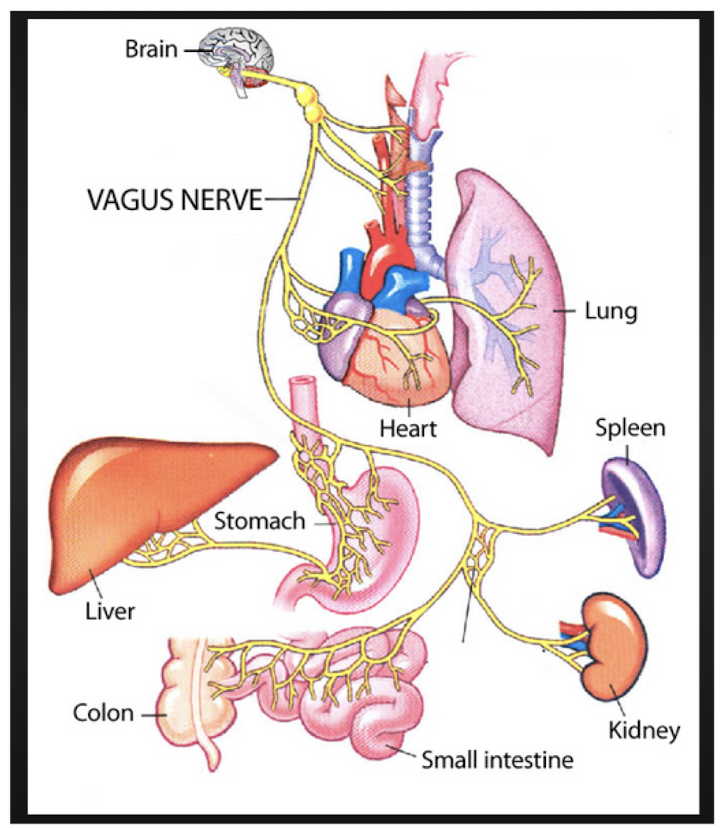
What is the microbiota-gut-brain axis?
The communication pathway through which gut microbiota can influence the brain and behavior.
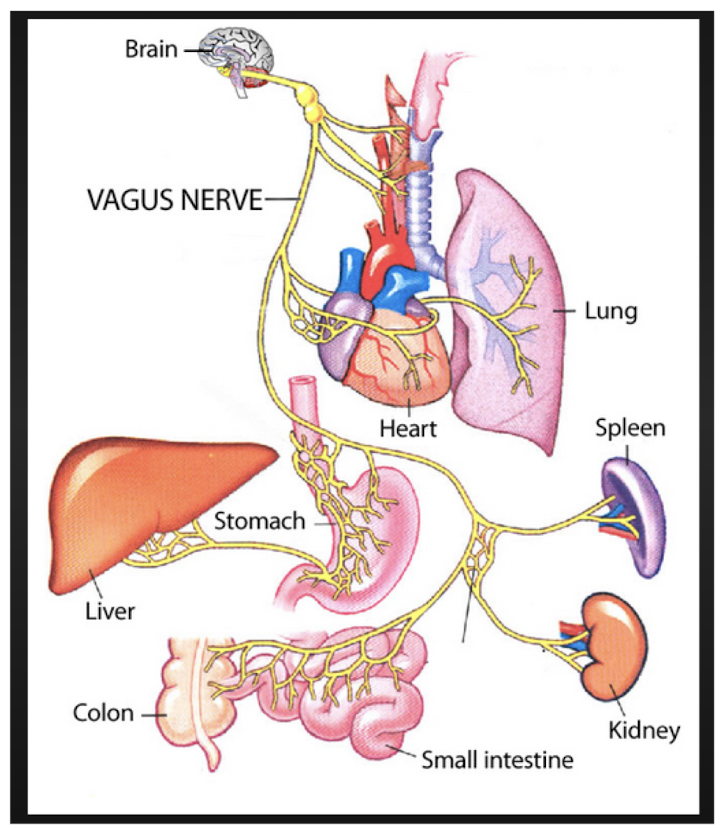
What nerve is an important communication pathway between the gut and brain?
The vagus nerve.
What are short-chain fatty acids (SCFAs) in the context of the lecture?
Neurotransmitters: signaling molecules involved in gut-brain communication.
What is dysbiosis?
A disruption in the microbiome that is associated with disease.
What are two ways dysbiosis can occur?
Gain or loss of microbial community members, or a change in the relative abundance of microbes.
What factors can contribute to dysbiosis?
Antibiotic use and changes in diet and hygiene.
What is symbiosis?
A close relationship between microorganisms and multicellular organisms.
What is mutualism?
A type of symbiotic relationship in which both partners benefit.
What are three examples of mutualistic relationships from the lecture?
Mycorrhizal fungi and plants, squid and bacteria, and coral and zooxanthellae.
Which bacterium lives in the light organ of the Hawaiian bobtail squid?
Vibrio fischeri.

What type of relationship exists between Vibrio fischeri and the Hawaiian bobtail squid?
Mutualism.
What enzyme allows Vibrio fischeri to produce light?
Luciferase.
What is quorum sensing?
Cell-to-cell communication in which bacteria use signaling molecules to detect population density and regulate gene expression.
What signaling molecule is involved in Vibrio fischeri quorum sensing?
An autoinducer.
How does the autoinducer behave at low cell density?
It diffuses out of the cells, so its concentration remains low.
How does the autoinducer behave at high cell density?
It accumulates, allowing its concentration to become high enough to activate genes involved in light production.
When does Vibrio fischeri produce light in the squid?
When the bacteria reach a high cell density in the squid's light organ.
How does the squid benefit from Vibrio fischeri?
The light helps hide the squid's shadow on the ocean floor, reducing its visibility to predators.
How does Vibrio fischeri benefit from the squid?
The squid provides a protected environment and nutrients such as sugars and amino acids.
How does the Hawaiian bobtail squid maintain its Vibrio fischeri population?
It releases approximately 95% of the bacteria and retains the remaining population to restart the cycle.
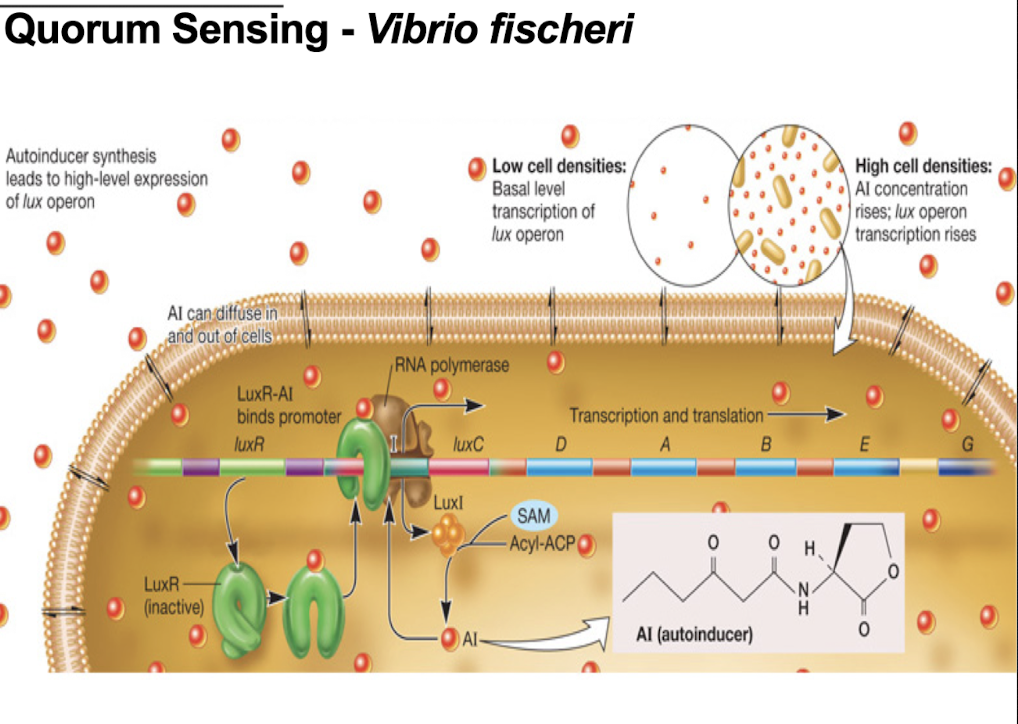
Overall what’s the important details of quorum sensing
Enzyme makes signaling molecule (autoinducer)
At low cell densities (such as free-swimming cells in open seawater), the autoinducer freely diffuses out across the cell membrane and washes away into the environment,
As the bacterial population multiplies—such as when they pack densely inside the squid's specialized light organ—the extracellular concentration of the autoinducer builds up past a critical threshold.
The autoinducer flows back into the cell and binds to the transcriptional activator protein LuxR
LuxR-autoinducer complex → Binds to promoter of the lux operon → bioluminescence
What are zooxanthellae?
Photosynthetic algae, specifically dinoflagellates, that live within coral tissue.
Based off these characteristics name the microorganism: Photosynthetic algae, specifically dinoflagellates, that live within coral tissue.
zooxanthellae
What type of relationship exists between coral and zooxanthellae?
Mutualism.
How do zooxanthellae benefit coral?
They perform photosynthesis and provide carbohydrates to the coral.
How does coral benefit zooxanthellae?
Coral provides nitrogen, phosphate, and carbon dioxide.
Approximately what percentage of zooxanthellae carbohydrates are used by coral?
Approximately 80%.
What happens when the symbiotic relationship between coral and zooxanthellae is disrupted?
Coral bleaching occurs.
What is coral bleaching associated with?
The disruption or loss of the symbiotic relationship between coral and its zooxanthellae.
Are all bioluminescent organisms bacteria?
No. luminescent dinoflagellates and the angler fish's light organ.