history of the modern world test
 Call Kai
 Learn
 Practice Test
 Spaced Repetition
 Match
 Flashcards
 Knowt Play
1/70

There's no tags or description
Looks like no tags are added yet.
71 Terms
King Philip II of Spain
Dedicated his reign to defending Catholicism across Europe.
Spanish Golden Age Wealth
Primary source was silver and gold from New World colonies (or American colonies).
Causes of the Dutch Revolt
High taxes imposed by Spain and Spanish suppression of Protestantism.
17th-Century Dutch Republic
Governed as a merchant-led republic that practiced religious tolerance.
Elizabethan Settlement
Established a moderate Protestant church to avoid religious warfare in England.
Queen Elizabeth I's foreign policy
Angered Philip II by providing secret support to Dutch Protestant rebels.
Spanish Armada Goal (1588)
Launched by Philip II to overthrow Elizabeth I and restore Catholicism in England.
Defeat of the Spanish Armada
Caused by a combination of maneuverable English ships and severe storms.
Huguenots
French Protestants.
King Henry IV's famous quote
"Paris is well worth a mass" (said upon converting to Catholicism to claim the throne).
Edict of Nantes (1598)
Granted religious tolerance and legal rights to the Huguenots.
Divine Right of Kings
Political theory stating that a monarch’s authority comes directly from God.
King Louis XIV
Absolute French monarch famously known as the "Sun King."
Palace of Versailles
Used by Louis XIV to control nobility by forcing them to live at court, keeping them distracted from plotting rebellions.
Structure of the Holy Roman Empire
A loose confederation of semi-independent states (German kingdoms, duchies, free cities).
Defenestration of Prague (1618)
Protestant nobles threw Catholic imperial officials out of a window in Prague, triggering the Thirty Years' War.
Evolution of the Thirty Years' War
Shifted from a religious war into a political effort to curb the power of the Catholic Habsburgs family (Catholic France joined Protestants against Habsburgs).
Peace of Westphalia (1648)
Established the principle of national sovereignty, granted official Dutch independence, and ended major European religious wars.
As a result of the Peace of Westphalia
The Netherlands (or Dutch Republic) gained official independence from Spain.
Primary Role of English Parliament
Approving taxes and passing laws.
English Civil War (1642–1651)
Conflict fought between King Charles I (advocating absolute power) and Parliament over taxation and authority.
Outcome of English Civil War
Execution of Charles I and a brief Commonwealth rule under Oliver Cromwell.
King James II
Removed from power primarily because he promoted the religion of Catholicism and appointed Catholic officials.
Glorious Revolution (1688)
The bloodless transfer of power; Parliament invited William and Mary of Orange to replace James II.
English Bill of Rights (1689)
Established a constitutional monarchy, placing strict legal limits on royal power.
Prohibitions of English Bill of Rights
Monarch could no longer suspend laws, levy taxes, or raise a peacetime army without consent of Parliament.
Absolute Monarchy
Ultimate political power is held by the monarch alone (e.g., France under Louis XIV based on Divine Right).
Constitutional Monarchy
Royal power is limited by laws, charters, and an elected parliament (e.g., England post-1689).
Natural Rights (John Locke)
According to Locke, all humans possess natural rights to life, liberty, and property.
Social Contract Theory (Locke)
States that a government's power comes from the consent of the governed; citizens can alter/overthrow unjust rule.
17th-Century European Political Divergence
France became absolute, while England became constitutional.
Protestant Europe (Geography)
Great Britain (Anglican), Dutch Republic / Netherlands (Calvinist), Northern German states (Lutheran).
Catholic Europe (Geography)
Spain, France, Italy, Austria, Portugal.
Philip II (Detailed Role)
Catholic monarch who sought to spread Catholicism and counter Protestantism.
Henry IV (Detailed Role)
Originally Protestant (Huguenot), converted to Catholicism to unite France; issued Edict of Nantes (1598).
Peace of Augsburg (1555)
Established "cuius regio, eius religio" ("whose realm, his religion"), allowing princes to choose between Catholicism and Lutheranism.
National Sovereignty Definition
Granted rulers complete supreme authority over their own territory without foreign interference.
Modern European State System
Established by the Peace of Westphalia (1648), ending major religious wars.
Scientific Revolution Shift
Shifted worldview away from religious texts/ancient Greeks (Aristotle, Ptolemy) toward empirical observation, math, and experimentation.
Nicolaus Copernicus
Proposed the Heliocentric Model (Sun at the center of the solar system).
Galileo Galilei
Improved the telescope, observed Jupiter's moons/craters, supported heliocentrism, tried by Inquisition in 1633.
Francis Bacon
Developed empiricism and championed the modern Scientific Method through inductive reasoning.
René Descartes
Focused on mathematical logic and rationalism ("Cogito, ergo sum" — "I think, therefore I am").
Isaac Newton
Published Principia Mathematica, detailing laws of motion and universal gravity.
Age of Enlightenment Core Belief
Emphasized using reason, logic, and scientific methods to improve human society, law, and government.
Baron de Montesquieu
Proposed Separation of Powers into executive, legislative, and judicial branches to prevent tyranny.
Voltaire
Championed freedom of speech, freedom of the press, and religious tolerance.
Jean-Jacques Rousseau
Believed legitimate government must be guided by the general will of the people.
Adam Smith
Wrote The Wealth of Nations; promoted free-market capitalism, supply/demand, and laissez-faire economics without government interference.
Mary Wollstonecraft
Wrote A Vindication of the Rights of Woman; advocated for equal educational opportunities for women.
Cesare Beccaria
Demanded judicial reform; argued against judicial torture and cruel or unusual punishments.
Salons
Social gatherings hosted primarily by wealthy women to debate Enlightenment ideas.
Diderot's Encyclopédie
A massive collection of articles spreading Enlightenment philosophy throughout Europe.
Heliocentric vs. Geocentric
Heliocentric = Sun at center; Geocentric = Earth at center (Ptolemy/Aristotle).
Mercantilism vs. Free-Market Capitalism
Mercantilism = state control of trade and gold bullion; Free-Market = laissez-faire, supply/demand (Adam Smith).
Absolute Monarchy vs. Constitutional Monarchy
Absolute = unchecked monarch authority via Divine Right; Constitutional = royal power limited by laws and Parliament.
Divine Right vs. Social Contract
Divine Right = power from God to King; Social Contract = power from Consent of the Governed to Government.

Ireland, Dublin

Great Britain, London
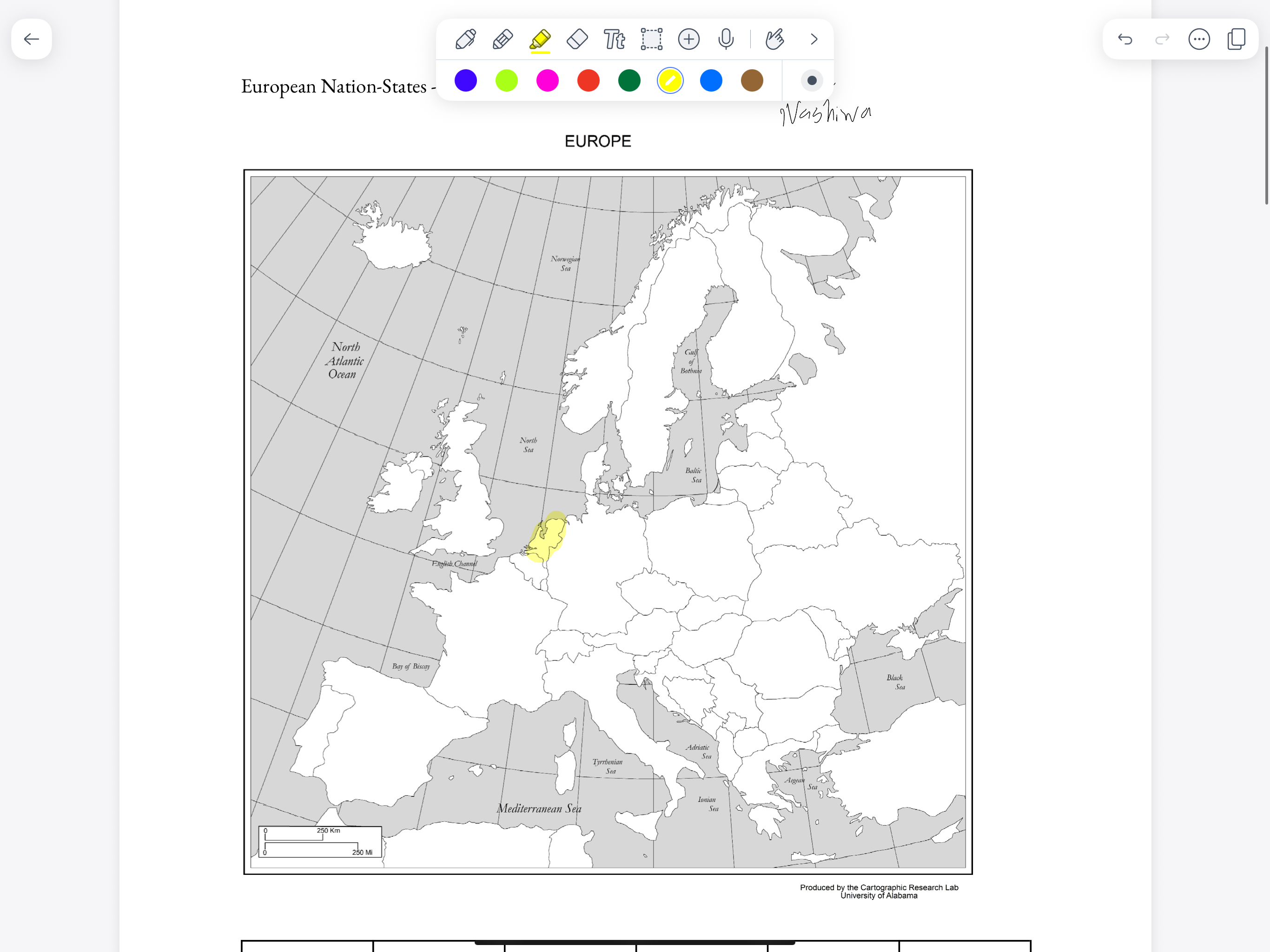
Netherlands, Amsterdam

Germany, Berlin

France, Paris
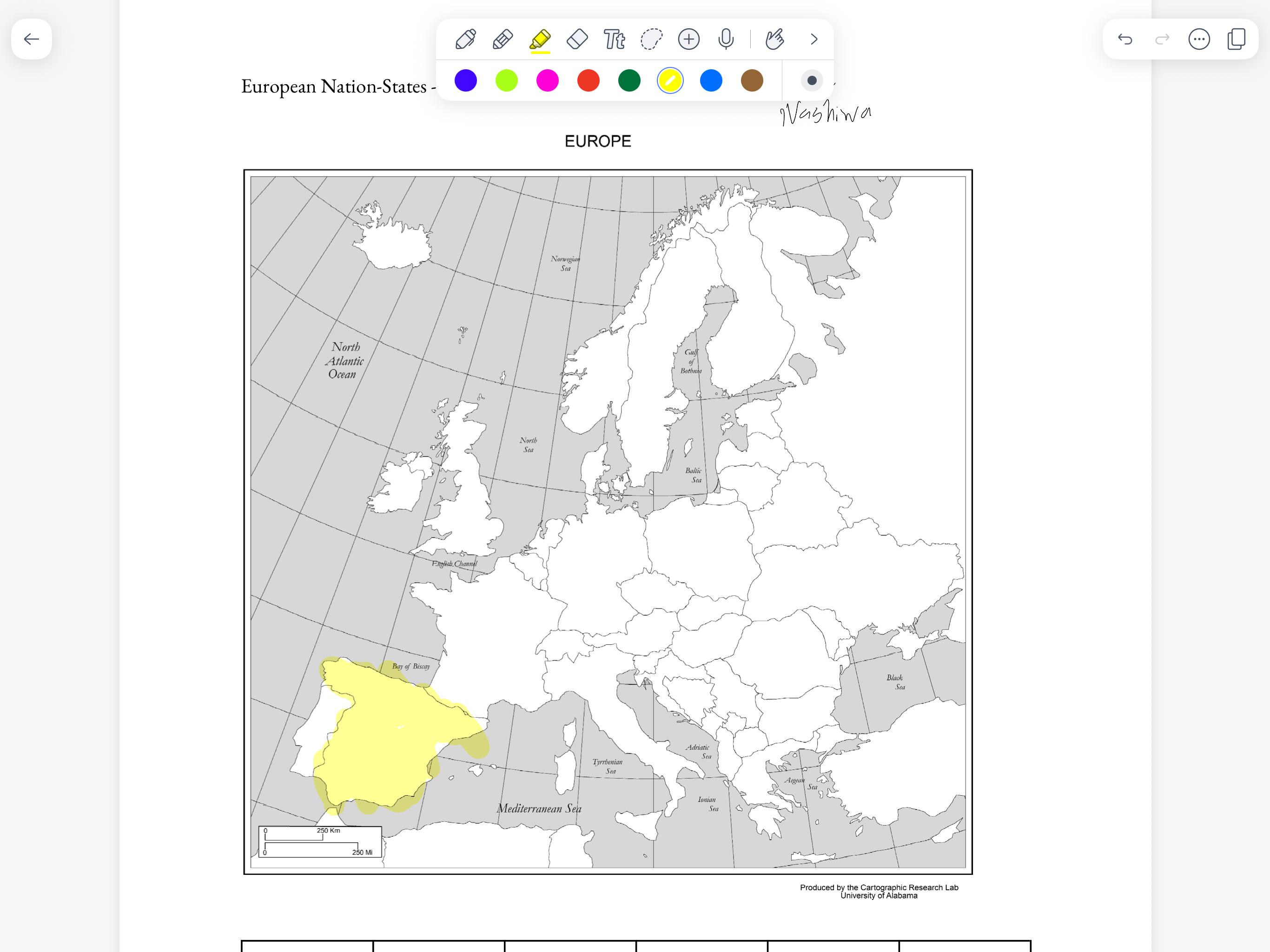
Spain, Madrid

Portugal, Lisbon

Switzerland, Bern
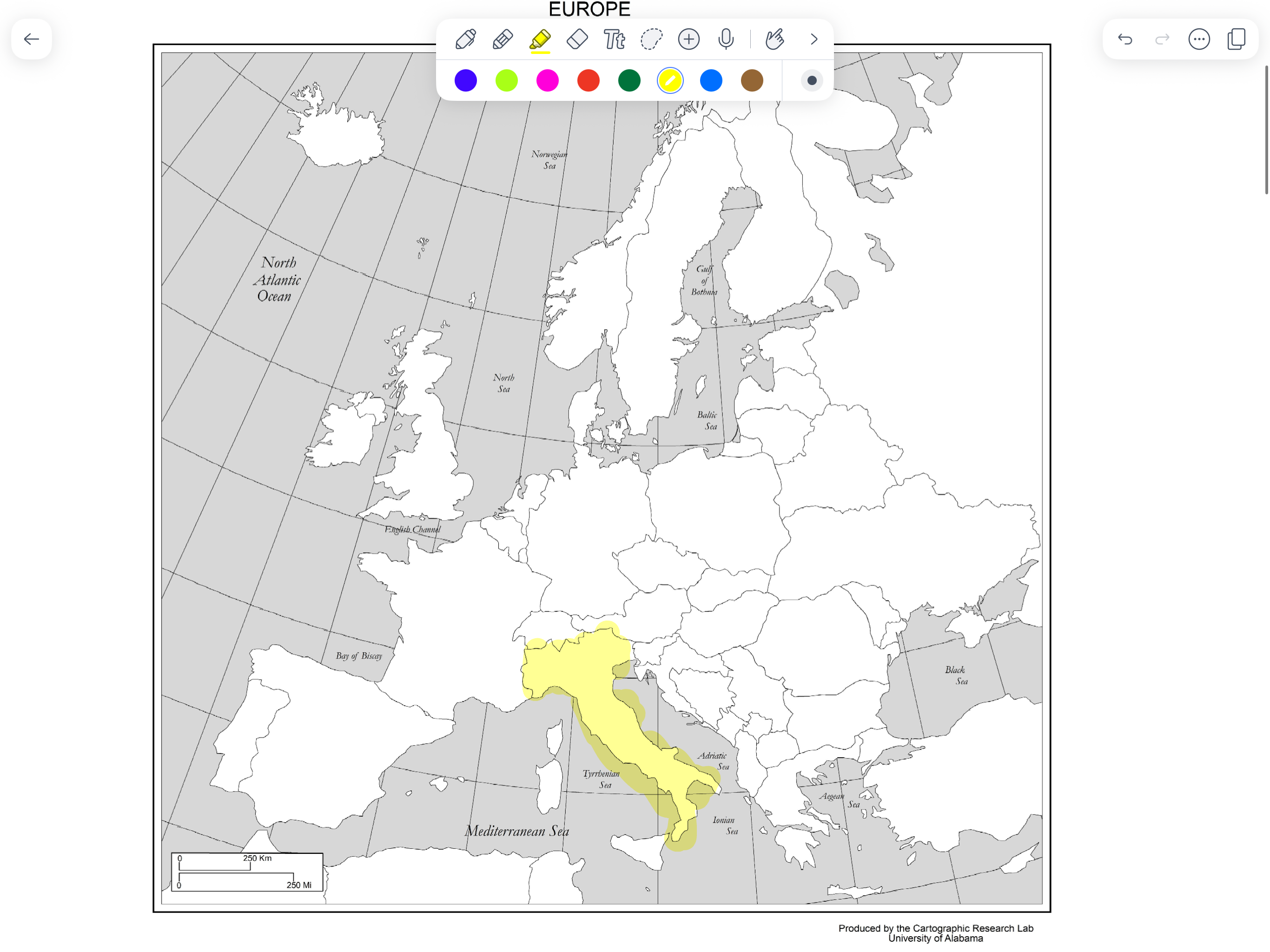
Italy, Rome, Milan

Austria, Vienna
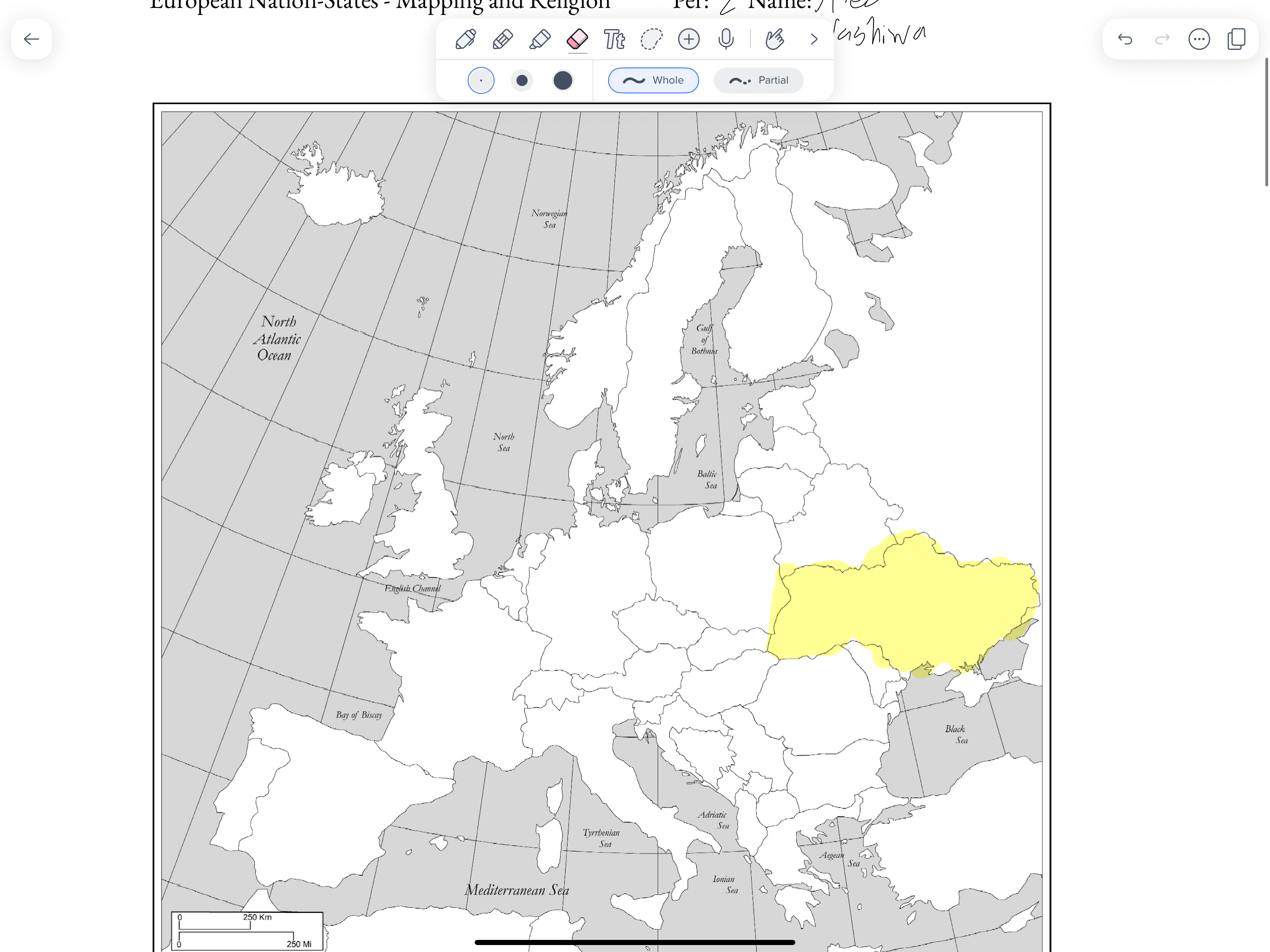
Ukraine, Kyiv

Russia, Moscow

Turkey, Istanbul

Hungary, Budapest