Simple Harmonic Motions
 Call Kai
 Learn
Learn Practice Test
 Spaced Repetition
 Match
Match Flashcards
 Knowt Play
1/9

Earn XP
Name | Mastery | Learn | Test | Matching | Spaced | Call with Kai | Chat |
|---|
No analytics yet
Send a link to your students to track their progress
10 Terms
What are the conditions for SHM
acceleration ∝ displacement
acceleration in the opposite direction of the motion
a ∝ -s
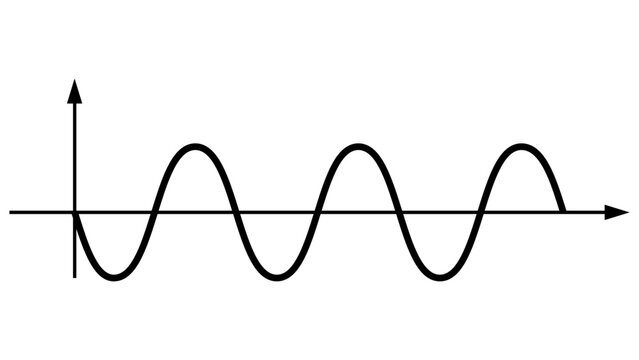
Derive eqns for: x , v , a using Sinusoidal graph
xo = amplitude
x = xosin(ωt)
dx/dt = v = ωxocos(ωt)
dx2/d2t = dv/dt = -ω2[xosin(ωt)] = a = -ω2x
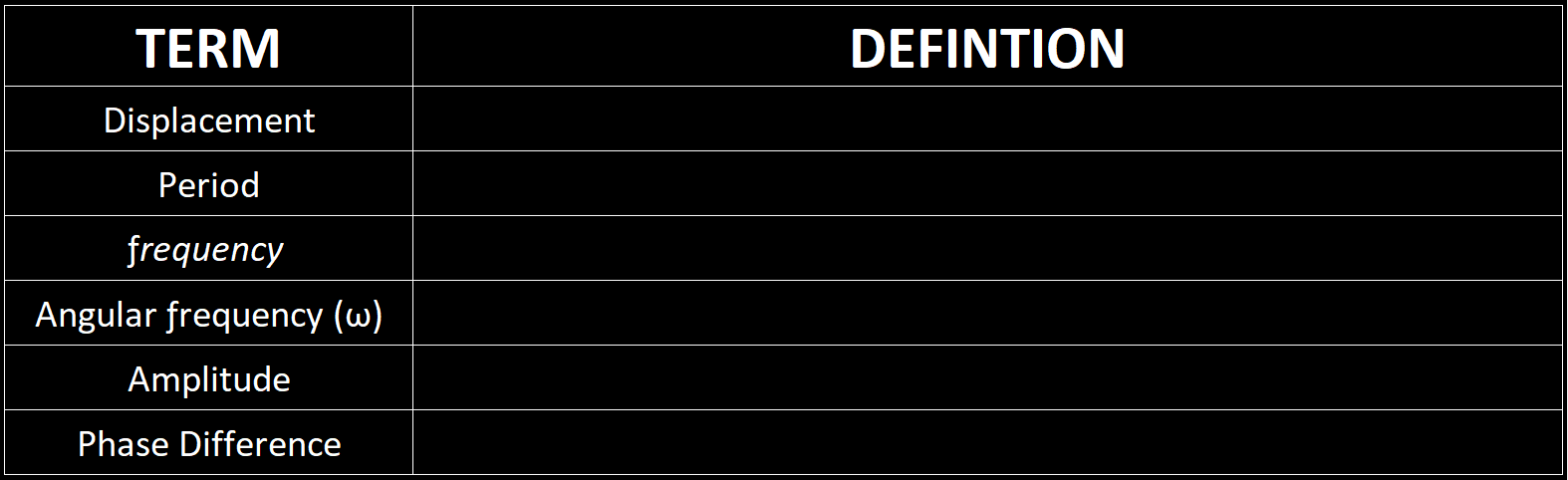
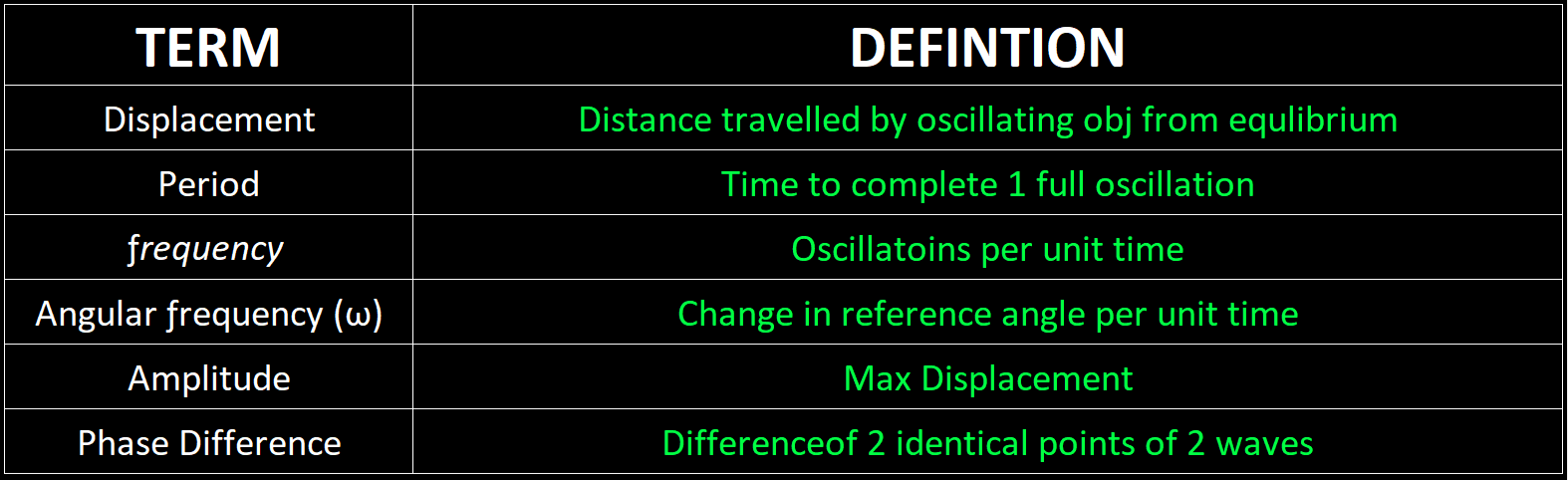
Define these terms in terms of SHM
Rearrange velocity eqn without t
v = ωxocos(ωt)
v2 = ω2(xo2 - xo2sin2(ωt))
x = xosin(ωt)
v2 = ω2(xo2 - x2)
v2 = ω2(x02 - x2)
v = ±ω√(xo2 - x2)
Relate the terms: k (spring constant) , m (mass) , ω (angular ƒrequency)
F = kx , F = ma , a = ω2r
F = mω2r = kx → k = (mω2r)/x
k = mω2
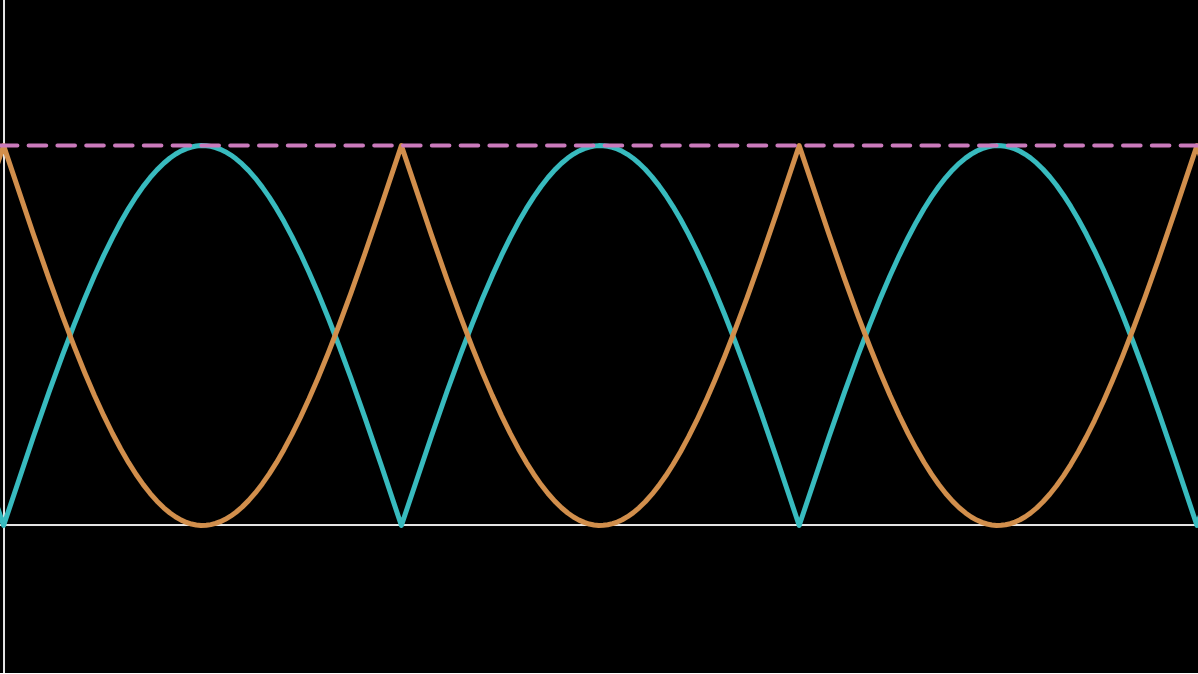
Interpret Interception of EK and EP
ET
EP
EK
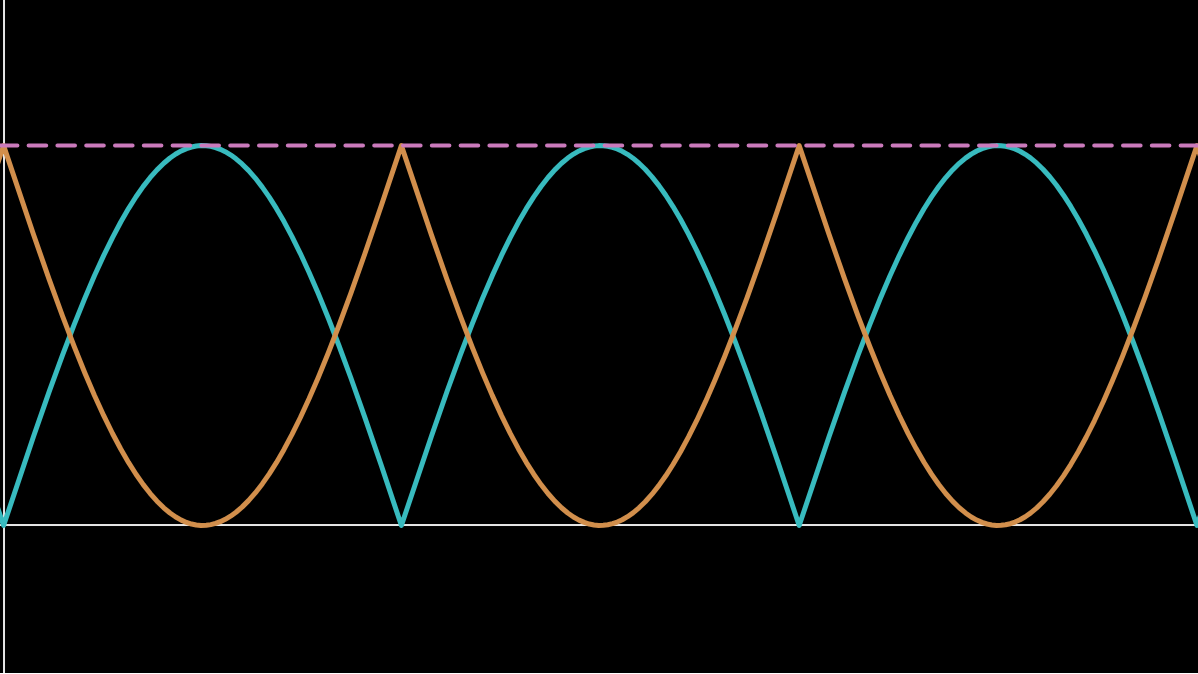
Derive ET eqn
E = Fx/2 = x(mω2x)/2 = ET = mω2xo2/2
Derive the relationship between T (Period) and m (Mass) in SHM
F = kx , FT = -kx → a = (-kx)/m = -ω2r
(-k/m)x = (-ω2)x ——————-①
ω = 2π/T —————————— ②
① & ② ————— T = 2π√(m/k)
Describe Resistance in SHM
The resistance in an oscillating system causes Damping

State the relationship between Resonance and Amplitude
When and Oscillating system is Forced to oscillate at it’s Natural ƒrequency: The Amplitude is reaching it’s Max