chemistry atomic structure and separating techniques
 Call Kai
 Learn
 Practice Test
 Spaced Repetition
 Match
 Flashcards
 Knowt Play
1/24

There's no tags or description
Looks like no tags are added yet.
25 Terms
elements…
consist of only one type of atom
compounds…
are a mixture of two or more elements that are chemically combined
mixtures…
are a mixture of two or more elements that are not chemically combined
what is HOFBrINCl?
diatomic elements that exist in pairs
what elememts are in HOFBrINCl?
hydrogen, oxygen, fluorine, bromine, iodine, nitrogen, chlorine
atoms…
are the smallest particles which substances can be broken down to
solvent…
the liquid where the solute dissolves
solute…
the substance being dissolved
solution…
a mixture of the solvent and solute
how can mixtures be separated?
filtration, crystallisation, simple distillation, fractional distillation, chromatography
explain simply how filtration works (in terms of soluble/insoluble and particles)
the mixture is poured into a funnel with filter paper. insoluble particles cannot pass the small holes. the soluble particles can pass through the holes as they are spread out
filtration…
separates substances that are insoluble in a solute from soluble substances
crystallisation…
separates a soluble substance from a solvent by evaporation
explain simply how crystallisation works (in terms of kinetic energy, soluble/insoluble and particles)
solvent particles gain kinetic energy faster than the solute and escape from the solution as a vapour, the solute particles are left behind, forming crystal structures
how do you calculate Rf (retention) value
Rf=distance moved by substance / distance moved by solvent
what is the radius of an atom?
0.1 nm
most of the mass of an atom is concentrated in…
the positively charged nucleus
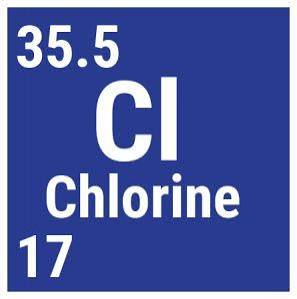
label the element!
35.5 - mass number (protons+neutrons), Cl - atomic symbol, 17 - atomic number (protons)
what do atoms have the same number of?
protons and electrons
what is relative atomic mass (Ar)?
the average mass of the element relative to the mass of an atom of carbon 12
shells…
electrons in energy levels
protons…
determine the type of element the atom isne
neutrons…
determine the isotope of the atom
why is mass number an integer but relative atomic mass isn’t?
mass number is just a count of the number of protons and neutrons in an atom, whereas relative atomic mass is the average mass of all the different isotopes of an element
Dyes in a chromatography experiment might not move because
the dye might be insoluble in that solvent, so try a different one