Exam 1 Japanese Painting
 Call Kai
 Learn
 Practice Test
 Spaced Repetition
 Match
 Flashcards
 Knowt Play
1/19

There's no tags or description
Looks like no tags are added yet.
20 Terms

Dotaku, Fig. 20. Yayoi period (400BCE-300CE), bronze, 16 7/8”, bronze bell shape and geometric shapes within object and scenes. They had pictures on them usually, they can tell that they might have been used in rituals for good harvest as they’re related to hunting, rice harvesting, and water.

Takehara tomb, Fig. 40, 6th-7th century. Takehara Fukuoka, Kyushu, stone paintings with pigment. Discovered in 1956, scene could be showing figure next to water and maybe a horse and a dragon. We don’t know what it is
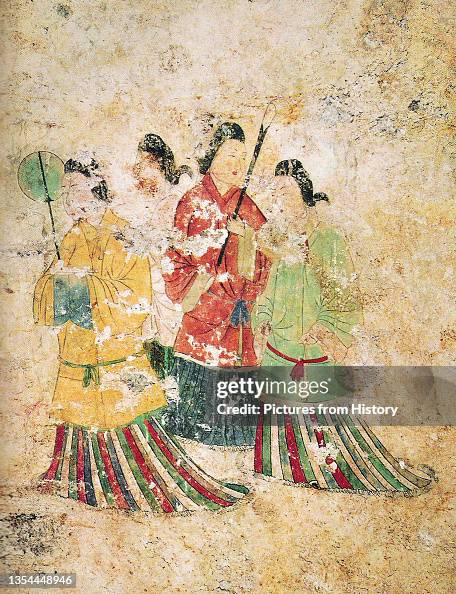
Female Attendants, West Wall, Fig. 43. Takamatsu tomb, 7th-8th century, Asuka area. Able to be excavated because it wasn’t imperial. Thought to be Prince Takechi, Tomb interior imagery is male attendants on east wall, this is a non-Buddhist temple. Mirror dateable to 678. Overlapping and shadowing was sophisticated at the time, similar outfits seen in Korea, painted on stone wall but layer of clay in between, so not quite fresco. Side view of lady, her face was standard for beauty at time.
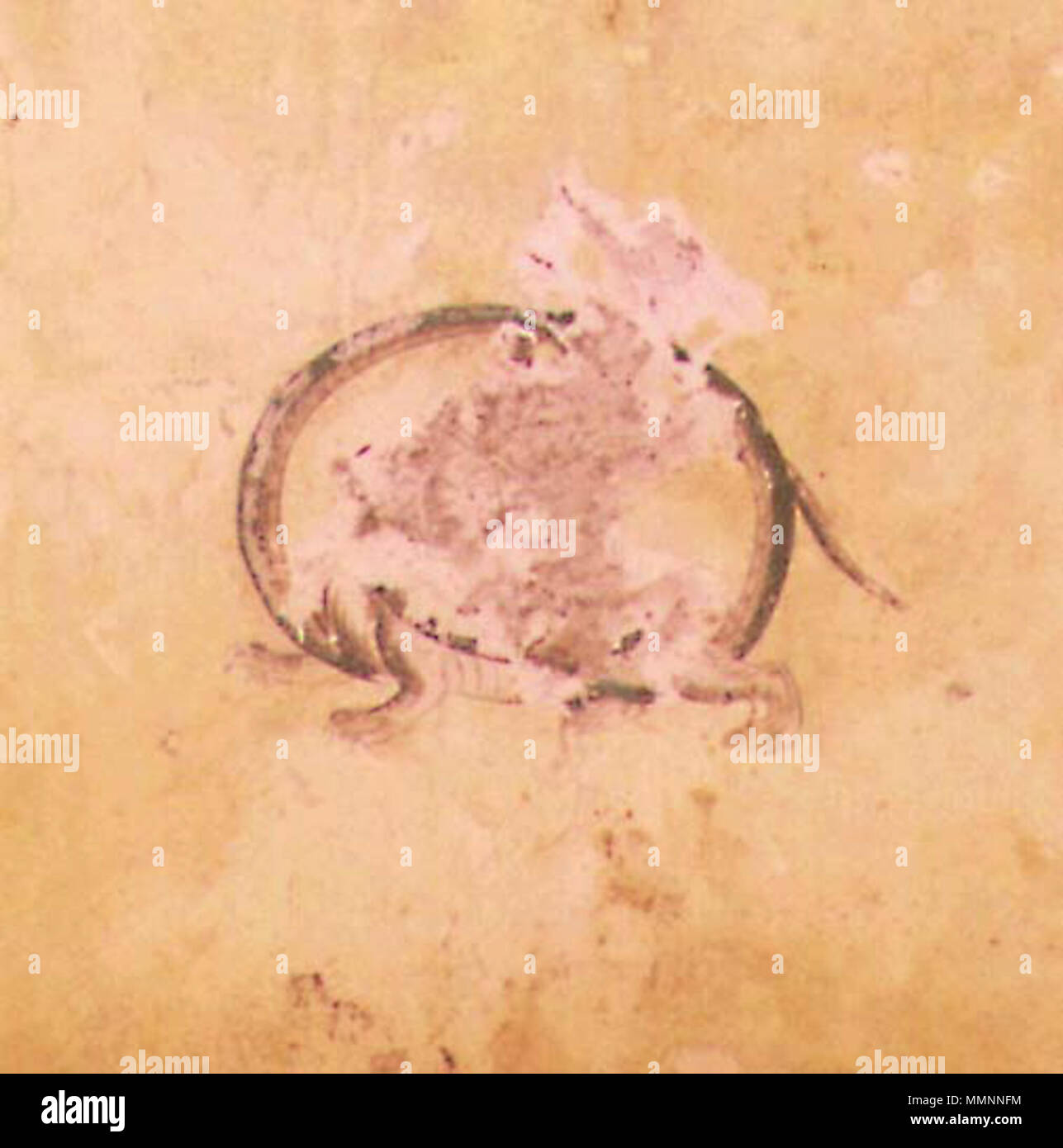
Genbu (Dark Warrior), Fig. 42. North wall of Takamatsu tomb, Asika area, 7th-8th century. North considered most dangerous direction, snake wrapped around tortoise. This imagery seen in other tombs in China.

Tamamushi Shrine, Fig. 90. Asuka period (552-645), this made in 650. 84”, now in the Horyuji Treasure House, in Nara. Made of wood, metal, laquer, beetle wings. Metalwork and sculpture in the top shrine part. For personal worship, openwork metal to see beetle wings inside. Colors are red with some black, lacquer adds sheen. One set of doors has bodhisattvas, one has guardians. Has painting of a Buddha story on front panel.

Hungry Tiger jataka (Mahasattva jataka), Fig. 91, 650. Asuka period, in Horyuji Treasure House in Nara, made of wood, pigment, and lacquer. The painting shows a jataka, a story of Buddha through his lives so he could find karma. This one shows the story of how 3 brothers found a hungry tiger and her cubs, 2 left to get help, one stayed and dove off a cliff to help feed them. So selfless, one of Budha’s lives before he became Buddha.

Paradise of Amida Buddha, West Wall of Horyuji Kondo, Fig. 101. Nara, 690, Hakuho period. Fire damage to temple, most of the copies lost in the fire, but later they copied the paintings again to save them. Made in technique called pouncing; made holes in paper, then slammed bags of powder against wall, helped wall have outline to then color in. Evidence of shadowing; iron-wire lines used to outline Buddha, red color and is consistant length throughout. Amida is Buddha of Pure Land Buddhism, which centered on achieving rebirth in Amida Buddha’s Western Paradise.
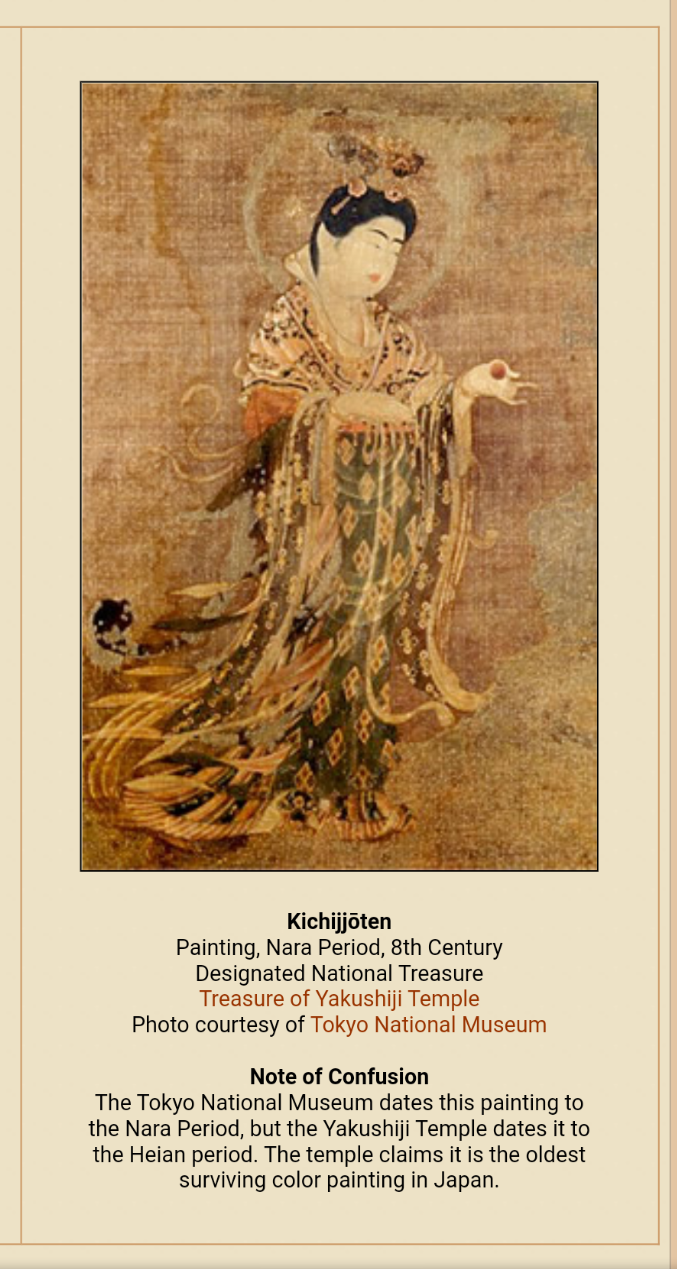
Kichijoten, Fig. 121. Nara period, 760-780, in Nara at Yakushiji temple. Color on hemp, 20”. She is a heavenly being, the third level lower than Buddha on the ranking of hierarchies in Buddhism. Elaborate outfit, round face, flowing outfit and her face come from Tang Dynesty and Chinese influence. Really delicate painting. She’s holding a jewel, jewels are important in Buddhism because they seem to be concentrations of power, can be used to grant wishes. Sh'e’s the goddess of good fortune, a Heavenly Being, elegant court costume. Painted on hemp so rougher, her gown meant to look like she’s walking. Chinese patterns, exchange with Japan and China at this time.

Sutra of Cause and Effect, Temptation by Mara, Fig. 124. Mid 8th century, color on paper, Nara period, handscroll. Columns drawn for words, two daughters on left are in similar dress to Kichijoten. Buddha is meditating, showing moment before he reaches enlightenment, the combo of pictures and text allow for more understanding. What’s happening in story is contained within this one section, Sutra of Cause and Effect is name. Scroll was cut into pieces. This is the moment that Mara is trying to distract Buddha with different evil beings, he touches his hand to the ground and clears his head and reaches enlightenment.
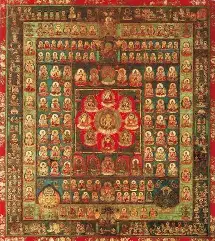
Womb World Mandala, Mandalas of the Two Worlds, Fig. 152. 9th century Toji, color on silk, 72 × 60”. The two mandalas work together in different rituals. Represents the physical body aspects of Dainichi/different manifestations of Buddha nature/the great pantheon of Buddhist dieties. Dainichi in center, he is a Buddha. Red outlines appropriate for the Buddha. Holding a thunderbolt vajra. He’s seen as looking like a bodhisattva. Very rich pigments, rainbow shading, cut gold, Bodhis around him, not just Buddhas habe blue hair, some 3-d shading.
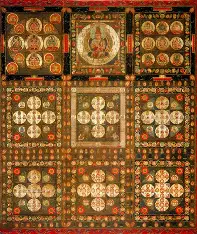
Diamond World Mandala, Fig. 153. 9th century Toji, color on silk. Dainichi Buddha is top middle, secret wisdom fist mudra is hand wrapped around finger. Diff. mudra depending on which mandala he’s in. All beings are fully enlightened, Buddhas or symbols of Buddhas. Diamond world Mandala represents the manhy Buddha fields throughout the universe and their relationship to Dainichi.

Yellow Fudo, Fig. 168. 12th century, color on silk, 70 × 31”, Late Heian period. Copy of Onjoji original, both are secret images. Fudo Myoo was an unmoveable bright king, holding flaming sword and rope for capturing evil beings. Very secret image, they’ll have short times that people can come worship it. This secret image is part of esoteric Buddhism, they are replicated so that they can be used more. Underwent conservation.
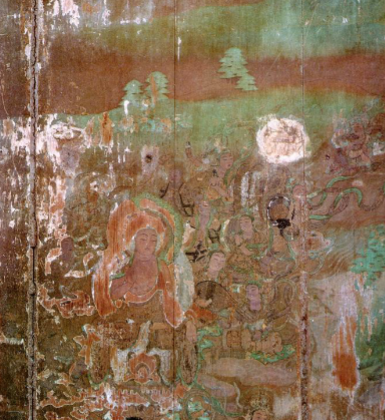
Amida raigo paintings inside the Byodoin temple in Uji, outside Kyoto. Built at a time when people thought it was Mappo, the end of the law. Fig. 176. 1053, raw wood seen at some parts. Some graffiti there, Amids has black outlinrd instead of red, the heavenly entourage that comes with Amida play heavenly music lots of instruments shown here. Has an image of paradise in architecture form. Art if Amida coming to welcoem the dying is called Raio.

Mt. Koya raigo, Fig. 178. Late 11th century color on silk, 81”, triptych, clouds shpwing movement, the procession. Kannon is one on the lower right of middle panel, and since he’s the first one to arrive, he has a lotus petal for the dying to float away on. Seishi is bodhis. of wisdom, also shown next to Kannon. Amida’s body is gold, blue hair, Kannon’s kneeling means he’s urgent. Kannon has fabric of the time.
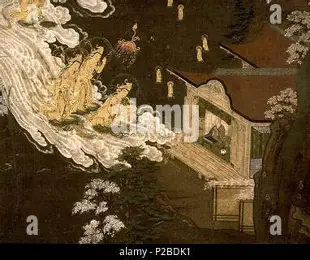
Fast (haya) raigo, Fig. 241. 13th century, 57” gold and color on silk, Paradise is up at the topp, the raigo seems to be faster with clouds, the figures in background are other manifestations of Amida. The man seen in his house is dying and praying before he dies, Kannon is in front.

Kashiwagi (Ch. 36) of Genji monogatari, Fig. 140. 12th century, 8 × 18”. Story created by Lady Murasaki wrote it in early 11th century, painted editions in early 12th century. Late Heian period. Artists worked together in collaborative process, fine black lines created, then calligraphy, outline painter. Line for an eye, hook for a nose style. Genji has affair with his father’s wide, then Genji’s principal wife had an affair with a friend of Yugiri, Genji’s son. Shows karma, as Genji goes through what he did to his father. Genji pretending to be father of a baby, not his own. The folds of the wife’s dress represent the colorful layers of elite at the time, elaborate robes and attendant is also nearby. Blown off roof was new way of expressing the themes and emotions of the story.
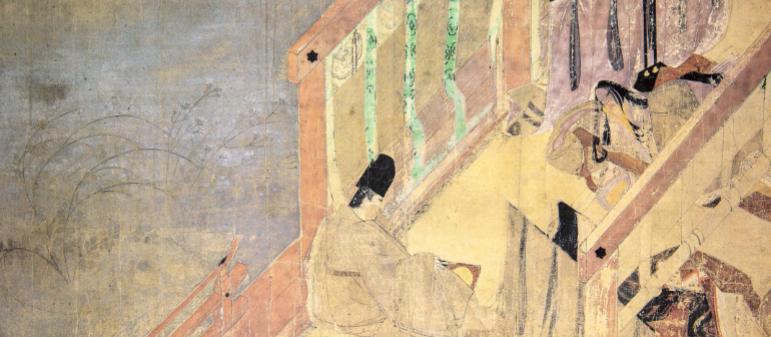
Minori (Ch. 40) of Genji monogatari, 12th century, Fig. 141, ink and color on paper, Murasaki, the lady that wrote the novel, is seen at the upper right. She portrays herself as Genji’s favorite wife in the story, she is seen here dying and covering her face. Genji is saying bye to her, the garden is also dying. Her favorite color was purple, seen here. In style to have her hairstyle, thick eyebrows. Attendant is also seen here beneath the folding screen, blown-off roof.
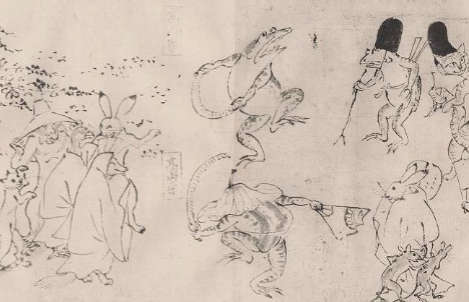
Frolicking animal scrolls, Fig. 142. Mid 12th century, late Heian period, ink on paper. The frog and cat are wearing hats similar to those in Genji, made of horse hair. Cats sometimes seen as devious in Japanese art, they seem to be watching the events going on. Nun wolf on the left.

Frolicking animal scrolls, Fig. 143. Mid 12th century, late Heian period, ink on paper. Theu’re using a lotus flower leaf as target practice. We don’t exactly know what they story is.
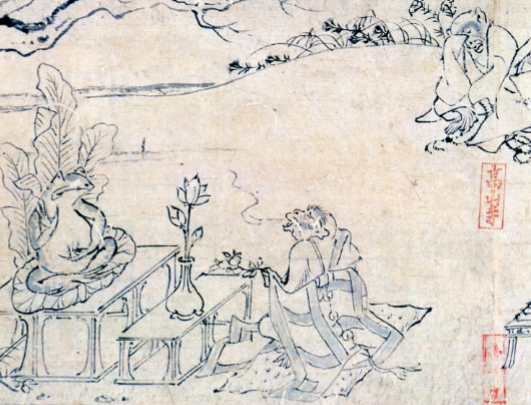
Frolicking animal scrolls, Fig. 144. late Heian period, ink on paper. The frog is Buddha, a monk is in front of him. Upper monk is asleep, could be comment on Buddhism and the practice monks go through, a bit satirical. Whoever made this knew a lot about Buddhism and monk practices.