Cell Bio Exam 2
 Call Kai
 Learn
 Practice Test
 Spaced Repetition
 Match
 Flashcards
 Knowt Play
1/72

There's no tags or description
Looks like no tags are added yet.
73 Terms
protein
ATP Synthase in the inner mitochondrial and chloroplast membranes is a
ii only
High energy phosphate bonds are present in which of the following molecules?
Glucose
ATP
Water
given off as heat
When bonds are broken, energy that is not used by the cell to carry out cellular processes is
chloroplasts and mitochondria
In plants, ATP is synthesized in the
relocation of electrons in redox reactions
How is the energy stored in food molecules released and used to synthesize ATP?
cytoplasm
Anaerobic metabolism of glucose occurs in the
i and ii only
Activation energy consists of 2 ATP for:
aerobic respiration
anaerobic respiration
photosynthesis
both processes share the same oxidizing agent to accept the electrons from food during glycolysis
Which of the following statements is true about respiration and fermentation?
glycolysis
The cytoplasm (cytosol) is the site of which process?
NADH is not oxidized
Glycolysis does not continue if
substrate-level phosphorylation
In anaerobic respiration, ATP is formed through
enzymes catalyze a reaction
During each step of glycolysis
e
Which of the following processes utilizes ATP?
a. fermentation
b. photosynthesis
c. dehydration synthesis
d. glycolysis
e. all of the above
36
How many ATP are produced from 1 molecule of glucose by aerobic respiration?
c
The chemiosmotic gradient is established across

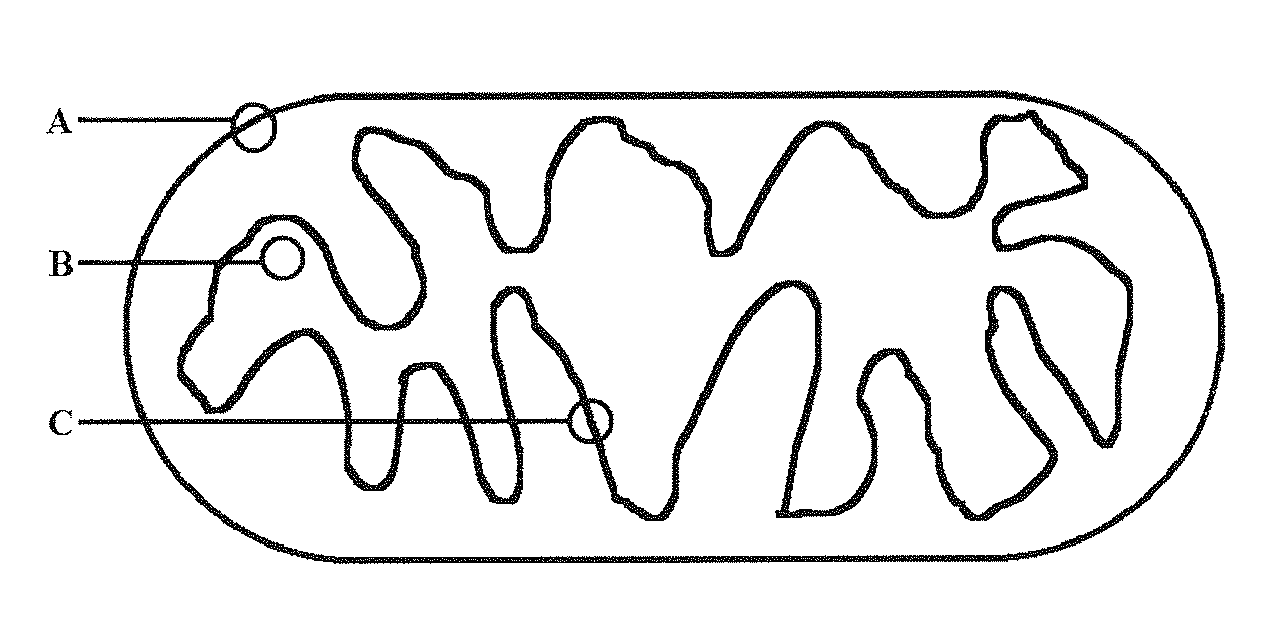
b
Pyruvate is converted to Acetyl-CoA
endosymbiont theory
The similarities between the mitochondria and certain prokaryotes support the
34
If 2 molecules of pyruvate are supplied to an aerobic eukaryotic cell in place of a glucose molecule, the net output of ATP after complete metabolism would be
the direct energy source driving the synthesis of ATP during oxidative phosphorylation
The H+ gradient established on the opposite sides of the mitochondrial matrix is
Oxygen
Which of the following is the final acceptor of electrons in the electron transport chain?
Connexin
Which integral membrane protein organizes into channels that connect cells via gap junctions
Proteoglycan
Which typically consists of a core portein attached to glycosaminoglycans (GAGs)
Active, able to bind ligand
When an integrin’s extracelluylar structure is upright and extended it is:
intermediate filaments
Filaments connected to the dense plaque underlying the membrane in a desmosome are called:
cadherin, actin
Adherens junctions are mediated by the extracellular protein ______ and attach to _____ inside of the cell
intermediate filaments
Which cytoskeletal element is described as tough, stable, fibers composed of a variety of related proteins like keratin
hemidesmosome
what is the specialized ahesive structure that anchors cells to a basement membrane
integrins
this class of integral membrane proteins (involed in ECM attachment) are composed of variable alpha and beta subunits
4
how many carbons from 1 original glycose molecule enter into the TCA (krebs) cycle in the presence of oxygen
ATP synthase
which enzyme couples the potential energy of an electrochemical gradient to the formation of ATP
kinase
What type of enzyme phosphorylate other molecules
Inner membrane space, thylakoid lumen
electron transport causes accumulation of H+ in which specific spaces of the mitochondria and chloroplast (respectively)
Glyceraldhyde-3-phosphate
what is the direct product of 1 turn of the Calvin cycle (light dependent reactions)
acetyl-CoA
which molecule enters into the TCA
pumping H+ agains their electrochemical gradient
as electrons move along the ETC this is accompanied by
NAD+
NAD+ and NADH are important electron carriers. Which version of this molecule is oxdixed?
more ordered
If the entropy of a system is decreased, this suggests" the system becomes
pyruvate
what chemical intermediate is the product of glycolysis
production of NAD+
what is the net result of fermentation
mitochondrial inner membrane
where in the cell do reactions of the respiratory chain (ETC) take place
atmosphere
where do plants get the CO2 needed to build carbohydrates
PDH and TCA
the CO2 we exhale comes from
lower activation energy
how do enzymes work
released free energy
hydrolysis of ATP can be described as a reaction that (G)
couple the reaction with another that has a larger negative G
how do cells perform a reaction with a positive G
endergonic
a positive G indicated that the reaction is
catalyze the removal of phosphate residues from proteins
Protein phosphatases
proteasome
multisubunit protease complex that degrades proteins marked for destruction.
GTP
Monomeric G proteins, such as Ras and several elongation factors, are usually in the active state when a molecule of _______ is bound to them.
protein kinases
Proteins are often regulated by phosphorylation, which is catalyzed by enzymes called
Steroid hormones
Which of the following regulates genes by binding directly to transcription factor proteins?
c
Which of the following is an example of endocrine signaling?
a. Epinephrine release by motor neurons at the neuromuscular junction and binding to receptors on adjacent skeletal muscle cells
b. Antigen stimulation of T lymphocytes, leading to the stimulation and synthesis of a growth factor that drives their own proliferation
c. Insulin release by β cells in the pancreas, mediating an effect of glucose uptake by muscle cells
d. None of the above
b
Which statement regarding heterotrimeric G proteins in a resting state is true?
a. GDP is bound to the β subunit in a complex with both the α and γ subunits.
b. GDP is bound to the α subunit in a complex with both the β and γ subunits.
c. GTP is bound to the α subunit in a complex with both the β and γ subunits.
d. The proteins are in a complex with G protein-coupled receptors.
e
a. G protein-coupled receptors are important molecules involved in signal transduction. Which statement about G protein-coupled receptors is true?
b. They are activated only by steroid hormones.
c. They bind only guanine nucleotides.
d. They bind both adenine and guanine nucleotides.
e. They generally contain seven membrane-spanning α helices.
adenylyl cyclase
Cyclic AMP (cAMP) is synthesized from ATP by the action of
b
Receptor tyrosine kinases represent critical molecules involved in growth and differentiation though phosphorylation of target substrates on tyrosine residues. Which structural feature is not common among all receptor tyrosine kinases?
a. An N-terminal extracellular ligand-binding domain
b. A single polypeptide
c. A cytosolic C-terminal domain with tyrosine kinase activity
d. A single transmembrane α helix
d
Which of the following is not a commonly observed consequence of the binding of a signaling molecule to its cell surface receptor?
a. Receptor dimerization
b. Receptor phosphorylation
c. Conformational changes in the receptor
d. Increased synthesis of the receptor
heterotrimeric G protein that separates into α and βγ subunits
The G protein that activates adenylyl cyclase is a
active α subunts
A mutation that causes a G-protein to lose its ability to hydrolyze bound GTP would be expected to have constitutively
eliminate activation of protein X
Protein X is activated by protein kinase A. A mutation in protein X that replaces the protein's only serine residue with an arginine residue would be expected to
phosphorylation by protein kinase A in the nucleus.
CREB is activated by
mitogen-activated
MAP kinase is an abbreviation for _______ protein kinase.
phosphatidylinositide (PI) 3-kinase
The second messenger, phosphatidylinositol 3,4,5-trisphosphate (PIP3) is generated by the action of the enzyme _______ on phosphatidylinositol 4,5-bisphosphate (PIP2).
receptor dimerization
What is the immediate result once most receptor protein-tyrosine kinases bind to their ligand?
a
Upon their activation, receptor tyrosine kinases phosphorylate cytoplasmic substrate proteins, thereby altering ________
a. All of the choices are correct
b. their actiity
c. their localization
d. their ability to interact with other proteins within the cell
ligand-gated ion channel
Which type of receptor is directly involved in a change of distribution of ions on opposite sides of the membrane?
They have 7 transmembrane α-helices
Why are G-protein coupled receptors often known as 7TM receptors?
isoforms
Receptors for a given ligand can exist in several different versions called _______
a
Which of the following events takes place during cell signaling?
a. all of the choices are correct
b. a response to stimuli
c. biochemical changes
d. intercellular communication