KNPE 335- Midterm 2
 Call Kai
 Learn
 Practice Test
 Spaced Repetition
 Match
 Flashcards
 Knowt Play
1/25

There's no tags or description
Looks like no tags are added yet.
26 Terms
age-related stereotypes
cognitive structures embedding beliefs and expectations that people hold about different age stages
assumptions and generalizations about how people at or over a certain age should behave
stereotypes type
explicit attitudes
learned information
consciously endorse or believe
direct and deliberate
ex: older employees should not be in charge of social media
implicit priming
associations outside of conscious awareness
unconscious and effortless
indirect and automatic
involuntarily active
ex: sad feeling when see older adult eating by themselves
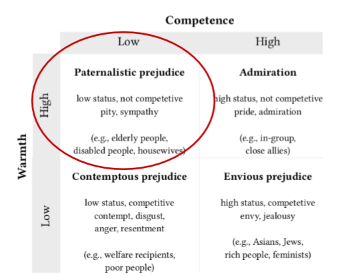
stereotype content model
stereotypes and interpersonal impressions form 2 dimensions (warmth and competence)
based on notion that people are evolutionarily predisposed to first asses a stranger’s intent to either harm or help them and second to judge the stranger’s capacity to act on that perceived intention
ageism
refers to how we think (stereotypes), feel (prejudice) and act (discrimination) towards others or ourselves based on age
everyday ageism + categories
occurs in day-day lives through interpersonal interactions and exposure to ageist beliefs, assumptions and stereotypes to ageist beliefs and assumptions
exposure to ageist messages
ageism in interpersonal interactions
internalized ageism
combatting ageism
policy and law
can address discrimination and inequality based on age and protect human rights
address discrimination in employment, healthcare, access to services
education
can transmit knowledge and skills and enhance empathy
challenge myths
replaces stereotypes with accurate information about older adults
intergeneration
can contribute to the mutual understanding and cooperation of different generations
create space for meaningful interactions
challenge assumptions through genuine relationships
program components and best practices: evidence -based approaches
What works in promoting mobility, mental health, nutrition, social connection, and fall prevention
program components and best practices: design and delivery
In-person vs. virtual programs, rural outreach, accessibility, inclusion of marginalized older adults
program components and best practices: person-centered design
Involve older adults in planning; align activities with their goals, interests, and preferences
program components and best practices: skilled facilitators
Staff and volunteers have appropriate training and create a welcoming environment
types of programs
stress management
mindfulness and meditation: build awareness of stress and reduce reactivity
cognitive behavioral therapy: identify unhelpful thought patterns and developing coping strategies
PA: walking, gentle exercise, tai chi
social support: peer groups, meaningful activities and maintaining relationships
mental health
psychological intervention: cognitive behavioral therapy for depression and anxiety
social connection program: senior activity groups and support networks
lifestyle and wellness intervention: regular PA and group exercise, meditation, sleep hygiene and nutrition education
physical activity
aerobic, muscle-strengthening, balance, flexibility, functional
social prescrption
structured approach that connects individuals with local, non-clinical services and programs that respect their autonomy and independence, strengthen social connections, and help structurally disadvantaged and socially marginalized older adults regain a sense of belonging within their communities
seeks to address people’s social needs through community partnership
5 components: individual/ client, prescriber, navigator, social prescriptions, data pathway

social prescribing: pros and cons
pro
greater connection to community resources
increased social participation and sense of belonging
support for autonomy confidence and meaningful activity
better coordination between health and community service
cons
referral cannot solve shortage of affordable programs
participation may depend on transportation, finances or physical accessibility
community organizations needs capacity to accept and support referrals
outcomes depend on the quality of the program, person’s circumstances and follow-up
social comparison theory
process through which people come to know themselves by evaluating their own attitudes, abilities and beliefs in comparison with others relates to self-evaluations and self-enhancement

types of barriers
physical: age, gender, comorbidities, medical events, sleep est
social: illness and disability, loss of contact with friends/ relatives, lack of supportive community, lack of acceptable social opportunities, transportation, personal responsibilities, physical and cognitive limitation, lack of access to quality relationships
emotional
Social Isolation & Loneliness: Reduced social networks after retirement, loss of friends/partners
Depression & Anxiety: Affects motivation for physical activity, self-care, and social engagement
Loss & Grief: Bereavement, declining independence, or identity loss after retirement
Ageism & Internalized Negative Stereotypes: Feeling undervalued or excluded by society, impacting self-esteem
Lack of Purpose or Meaning: Reduced spiritual environmental
dimensions of wellness
intellectual
recognizing creative abilities and finding ways to expand knowledge and skills
emotional
coping effectively with life and creating satisfying relationship
environmental
good health by occupying pleasant, stimulating environment that supports well-being
occupational
personal satisfaction and enrichment derived from one’s work
financial
satisfaction with current and future financial situations
spiritual
expanding our sense of purpose and meaning in life
social
developing a sense of connection, belonging and well-developed support system
physical
recognizing the need for PA, diet, sleep and nutrition
difficult to sustain lifestyle changes
psychological and cognitive barriers
habit, effect is remote, cognitive dissonance
economic/structure
cost, lack of infrastructure (bike lanes, transportation), misinformation
social and cultural barriers
social norms/ peer pressure, sense of futility, consumer culture
aging well together program
purpose: equip rural older adults with the knowledge and resources to manage their health and wellness effectively
3 integrated strategies
6 in-person interactive workshops over 6-8 months that combine education and lifestyle stages of change model with an opportunity to reflect and apply learning
complementary resource material (social media/ e-newsletter)
peer support network
The Transtheoretical Model (TTM)
helpful framework for making lifestyle changes to improve health and well-being, especially useful for seniors looking to enhance their quality of life
pre-contemplation
contemplation
preparation
action
maintenance

Aging Well Together Program (memory trick)
A- active living
G- good nutrition
E- engaged mind
W- well-connected
E- enabling environment
L- look after your health
L- long restful sleep
P- positive mental health
L- limit fall risk (make home safe)
U- understand finances
S- sensory health
readings week 8
The Blue Zones Solution: Eating and Living Like the World’s Healthiest People
expands on Buettner's research into the world's longest-lived communities, offering practical advice on diet, lifestyle, and community engagement for healthy aging
Successful Aging
delves into the science of aging, offering insights into how to maintain cognitive health and physical vitality as we grow older
how to age
provides a thoughtful exploration of the aging process, blending personal narrative with research to challenge stereotypes and offer a more nuanced view of aging
Aging Brilliantly: How to Eat, Move, Rest, and Socialize Your Way to Long Life
studies of the longest living people in the world, Aging Brilliantly offers specific approaches to exercise, food, relationships, and relaxation that can greatly enhance vitality
delohi hybrid event
supports the development of items through consensus building among a group of “experts” on a given topic
not a single rigid technique but a flexible, evolving method
National Hybrid Event:
• 12 experts across Canada
• Integration of survey and focus group results with four rounds
• Three rounds of anonymous survey to reach 80% agreement
contextual elements that support the definition
• Context-specific aging needs
• Safety, privacy, and trust in the digital environment
• Ongoing and individualized support
• Adaptable learning