7A: genes and chromosomes + biomolecules
 Call Kai
 Learn
 Practice Test
 Spaced Repetition
 Match
 Flashcards
 Knowt Play
1/41

There's no tags or description
Looks like no tags are added yet.
42 Terms
biomolecules
an organic molecule
a molecule that is produced by a living organism and is essential for carrying out biological processes
organic
…means the molecule is made up of carbon atoms (bonded with H)
carbohydrates / lipids / proteins / nucleic acids
what elements are they made of?
what monomer are they made up of?
where are they found in an animal?
examples and what functions they have

function of DNA
primary long-term storage molecule for genetic info in all living organisms
nucleotides
the monomers of DNA → forms polymer
monomers = small, basic molecules that join together
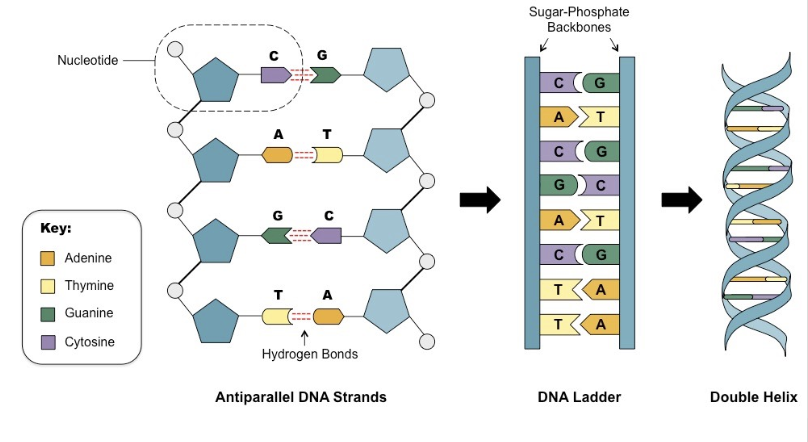
phosphate group, nitrogenous base, pentose sugar

what sugar is DNA made of?
deoxyribose
polymer
substance that composed of many monomers joined / linked / bonded together
DNA is a polymer composed of nucleotide monomers bonded together
DNA structure + how the strands are linked
DNA is made up of two polymer strands
double stranded molecule
strands linked together by complementary base pairing
A, T (2 hydrogen bonds)
C, G (3 hydrogen bonds)
DNA locations
eukaryotic cell
chloroplast / nucleus / mitochondria
prokaryotic cell
chromosome / plasmids

chromatin
makes up the chromosomes inside the nucleus of a eukaryotic cell
consists of DNA and protein
major proteins in chromatin are histones
packages for DNA
gene
basic unit of inheritance by which hereditary characteristics are transmitted from parent to offspring
code for proteins
make up DNA
specified in the sequence of bases
located on locus

alleles
variation of a gene found at a specific loci on a chromosome
an individual inherits two copies of each gene

genome
complete set of DNA contained within an organisms’ chromosomes
chromosomes
a package of DNA containing part of or all of the genetic material of an organism
centromere
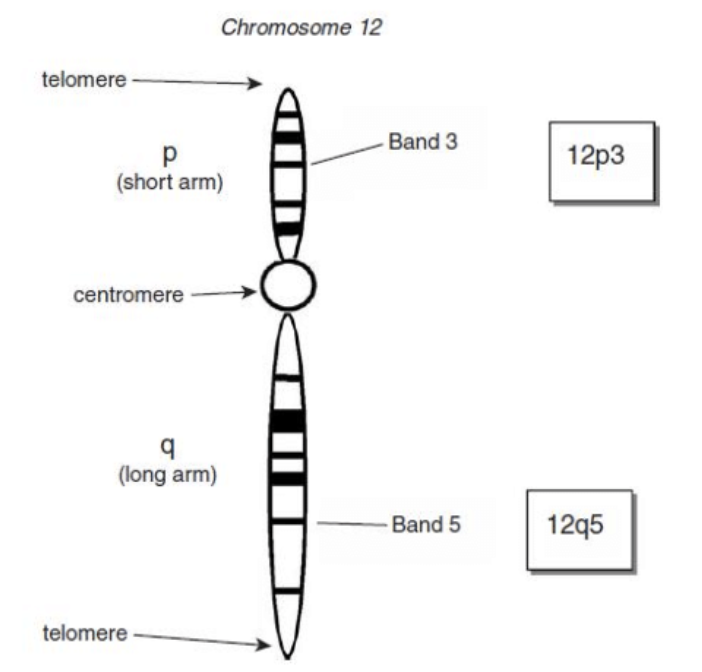
point where spindle fibres can attach to the chromosome during cell division
links sister chromatids together
non-dividing cell
unduplicated
made of 1 DNA molecule
dividing cell
duplicated
made of 2 identical molecules of DNA called sister chromatids
chromosome labelling
p → short arm
q → long arm
telomere
protective cap of repetitive DNA sequences that protects the ends of chromosomes from fusing with other chromosomes in the nucleus

homologous chromosomes
one pair of chromosomes with the same:
length of DNA / size
banding pattern
centromere location
gene loci
pair of chromosomes in a diploid organism that have the same order of genes but different alleles

karyotype
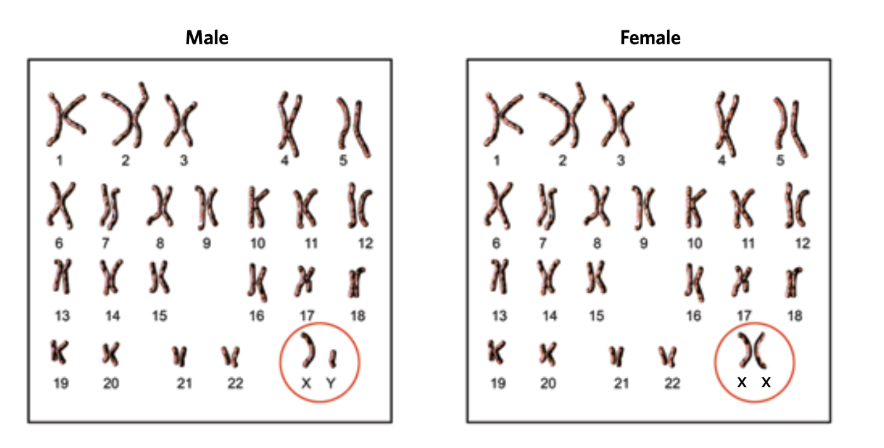
photograph to visualise chromosomes
can check for genetic abnormalities
autosomal chromosomes
non-sex chromosomes
1-22 chromosomes

sex chromosomes
determine the sex / gender of the organism
pair 23
sex chromosomes in other animals
in birds and reptiles they show the opposite pattern for determining gender
e.g. females ZW / male ZZ
in some species there is no designated sex determining chromosomes
e.g. temperature, haploid or diploid, chromosome number
chromosomes abnormalities
numerical
known as aneuploidy or polyploidy caused by non-disjunction of chromosomes
structural
part of an individual chromosome has alterations to its gene nucleotide sequence
leads to:
miscarriages, disorders, disease, issues in growth and development
aneuploidy
chromosomal abnormality in which an organism possesses an incorrect number of chromosomes
caused by addition or loss of chromosome
monosomy
trisomy
tetrasomy
monosomy
one missing chromosme
2n-1
trisomy
one extra chromosome
2n + 1
tetrasomy
two extra chromosomes
2n + 2
polyploidy
chromosomal abnormality in which an organism has more than two sets of each chromosome
e.g. 3n = 69 instead of 2n = 46

structural errors in chromosomes
deletion
duplication
inversion
translocation

deletion
removal of a chromosome segment

duplication
a segment is repeated

inversion
a segment is reversed

translocation
segment is moved to another non-homologous chromosome

hybrids
organism that is created by cross-breeding
belong to the same genetic group
e.g. mule → parents are male horse

trisomy 21
down syndrome
trisomy 18
edwards syndrome
trisomy 13
patau syndrome
X0
turners syndrome
XXY
klinefelter syndrome
linked genes
the genes are closely located on the same chromosome and tends to be inherited together during cell division