BIOLOGICAL PSYCHOLOGY--PSYC 101 TEST #1
 Call Kai
 Learn
Learn Practice Test
 Spaced Repetition
 Match
Match Flashcards
 Knowt Play
1/26

Earn XP
Description and Tags
BIOLOGICAL PSYCH SECTION FOR THE TEST.
Name | Mastery | Learn | Test | Matching | Spaced | Call with Kai | Chat |
|---|
No analytics yet
Send a link to your students to track their progress
27 Terms
EEG
”Electro-ence-phelogram”
is a test that measures electrical activity in the brain by placing electrodes on the scalp.

PET scan?
"Positron Emission Tomography"; a neuroimaging technique that uses radioactive tracers to visualize metabolic processes in the brain.
(f)MRI?
"Functional Magnetic Resonance Imaging"; a neuroimaging technique that uses magnetic fields and radio waves to produce detailed images of the brain and other soft tissues.


neuron
A cell of the nervous system that is specialized to send and receive neural messages.

Glia
Nervous system cells that perform a variety of support functions, including formation of the blood–brain barrier and myelin.
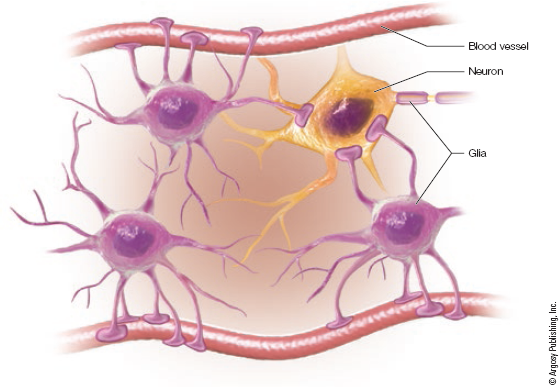
cell body
The large, central mass of a neuron, containing the nucleus

Axon
The branch of a neuron that is usually responsible for transmitting information to other neurons.
neurons can have many dendrites, but usually only ONE axon.

Dendrite
A branch from the neural cell body that usually receives input from other neurons.
neurons can have many dendrites, but usually only ONE axon.

Myelin
The insulating material covering some axons.
formed by glia often
speeds up process of travel of neuron impulse

Neurotransmitter
Chemical messenger that neurons send to jump gaps in the synapse.

Acetylcholine (Ach)
Neurotransmitter impacting
movement
memory
autonomic nervous system function
Dopamine
Neurotransmitter that affects movement, planning, and reward in the brain
Endorphins
Neurotransmitter that affects pain management
C.N.S.
Central Nervous System. The brain and spinal cord.
nerves encased in bone unlike PNS

P.N.S.
Peripheral Nervous System.
The nerves exiting the CNS that carry sensory and motor information to and from the rest of the body.
NOT encased in bone

Brainstem
The part of the brain containing the midbrain, pons, and medulla.
medulla: manages heart rate, breathing, and blood pressure.
pons: part of the brainstem located between the medulla and the midbrain

Cerebellum
A structure attached to the brainstem that participates in skilled movement and, in humans, complex cognitive processing.

Frontal Lobe
The lobe of the cerebral cortex located at the front of the brain, involved in higher cognitive functions, planning, decision-making, and voluntary movement.
Parietal lobe
The lobe of the cerebral cortex located at the top of the head, responsible for processing bodily sensations such as touch, pain, and temperature.
Occipital lobe
The lobe of the cerebral cortex located at the back of the brain, primarily responsible for processing visual information.

Temporal lobe
The lobe of the cerebral cortex located on the sides of the head, responsible for processing auditory information, language comprehension, and memory.

Corpus callosum
A large band of nerve fibers connecting the left and right cerebral hemispheres, facilitating communication between them.
Endocrine system
A network of glands that produces and secretes hormones into the bloodstream to regulate body functions.
hormones are chemical messengers
Cortisol
A hormone released by the adrenal glands during stress that helps regulate metabolism, blood sugar levels, and immune responses.
Epinephrine
A hormone and neurotransmitter (also known as adrenaline) released by the adrenal glands during acute stress that activates the fight-or-flight response.
Oxytocin
A hormone involved in social bonding, trust, childbirth, and lactation.
Melatonin
A hormone released by the pineal gland that helps regulate sleep-wake cycles and circadian rhythms.