Lecture 12: Plants and the conquest of land
 Call Kai
 Learn
Learn Practice Test
 Spaced Repetition
 Match
Match Flashcards
 Knowt Play
1/15

There's no tags or description
Looks like no tags are added yet.
Name | Mastery | Learn | Test | Matching | Spaced | Call with Kai | Chat |
|---|
No analytics yet
Send a link to your students to track their progress
16 Terms
Charophycean
complex streptophyte alage (filament of cells with side branches)
share several derived traits with land plants: cellulose, plasmodesmata, zygotic life cycle
Cellulose
plant cell wall material for support
Plasmodesmata
channel through cell wall that allows substances to move between cells
can allow communication between and specialization of different tissues
Apical meristem
localized regions of cell division (where plants grow)
Embryo
a multicellular diploid eukaryote in its earliest stage of development, from the first cell division until birth, hatching, or germination
Matrotrophy
zygote remains sheltered and fed within gametophyte tissue (embryophytes)
Spores
dry, air-resistant reproductive cell
Sporopollenin walled spores
tough material that comprises most of the cell wall of spores
helps prevent cellular damage during transport through the air
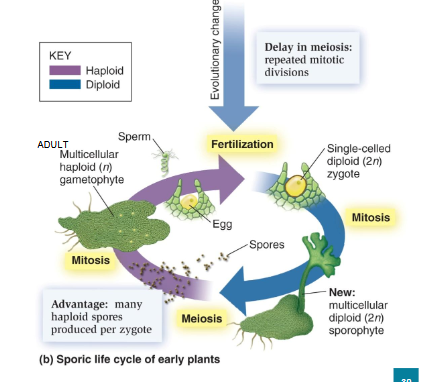
Alternation of generations (sporic life cycle)
multicellular diploid (2n) sporophyte makes haploid spores through meiosis
haploid spores dispersed and undergo mitosis to make multicellular haploid gametophyte
gametophyte makes gametes through mitosis
fertilization → single-celled diploid zygote → sporophyte
Zygotic life cycle
asexual reproduction by mitosis when conditions are favorable
a switch to sexual when conditions are unfavorable: can be switch from summer to winter
diploid zygote goes through meiosis to make 4 haploid spores

Embyrophytes
land plants characterized by the nurturing of young, multicellular embryonic sporophytes within the tissues of the parent gametophyte
Placental tissue transfer
in gametophyte tissue closest to the embryos and in embryos
calls specialized to promote movement of solutes from gametophyte to embryo
finger-like ingrowths to increase surface area (more efficiency for transport proteins)
Cretaceous-Paleogene mass extinction
66 million years ago
6-mile wide asteroid struck earth, 75% of plant and animal life dead
consequences: global cooling, darkness, acid rain
What evidence supports the idea that land plants evolved from Charophycean algae?
Charophycean algae shares derived traits with land plants like cellulose and plasmodesmata
Describe the characteristics found in all land plants
Alternation of generations, sporepollenin, cellulose, and photosynthesis ares some characteristics
Identify the advantages of a sporic life cycle over a zygotic life cycle
An advantage of the sporic life cycle over the zygotic is that it can produce more than 4 zygotes