N1101 exam 2
 Call Kai
 Learn
 Practice Test
 Spaced Repetition
 Match
 Flashcards
 Knowt Play
1/133

There's no tags or description
Looks like no tags are added yet.
134 Terms
Parenteral Medication
Adminstered outside of the digestive system
Types of parenteral medications
Intradermal (ID), Subcutaneous (subcut), Intramuscular (IM), Intravenous (IV), interosseous (IO)
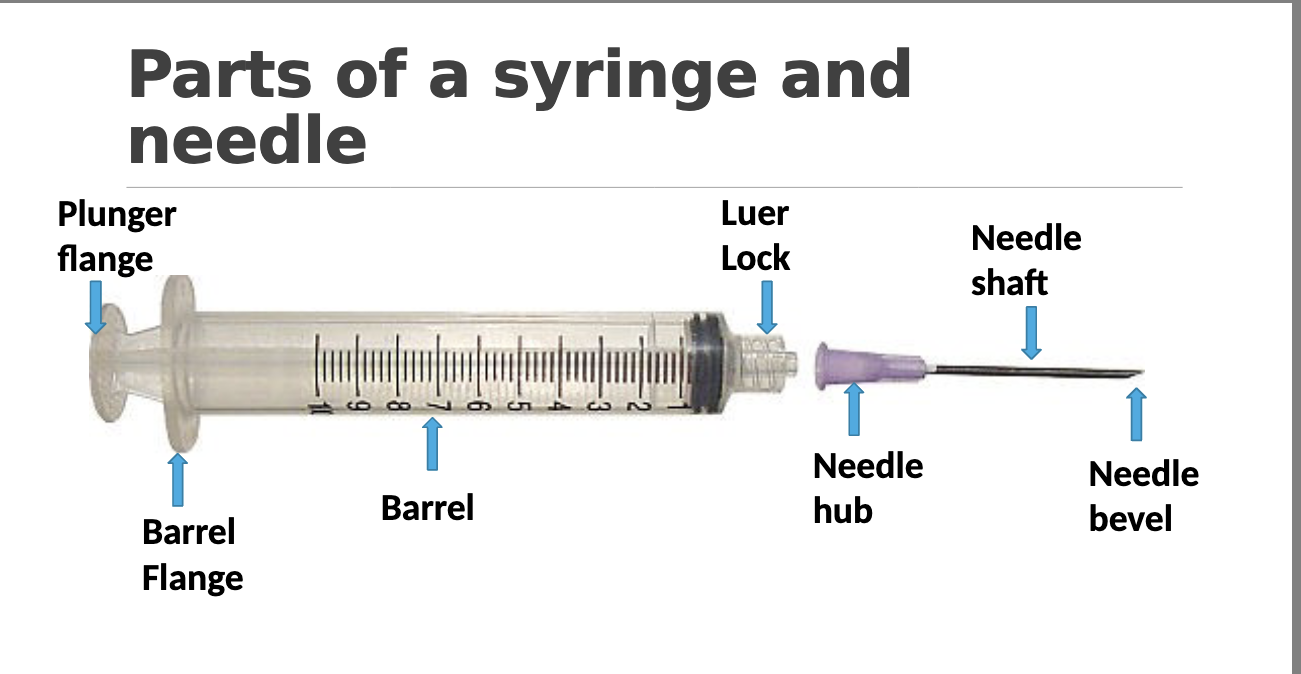
Parts of a needle
Injection angle for IM
90º
Injection angle for Subcutaneous
45º-90º depending on how much fat
Injection angle for IV
25º
Injection angle for intradermal
10-15º
Finding the deltoid injection site
Find the acromion process, place two finger under it, make a v sign using the other hand, injection site is the center of the triangle
Find the ventrogluteal injection site
place heel of palm on greater trochanter, point thumb to stomach, point index finger to anterior superior iliac spine form the V, inject in middle
Subcutaneous Injections
Absorption - slow, sustained rate
•Common sites - outer arm, abdomen, anterior aspects of thigh,
upper back, upper ventral gluteal area
less than 1ml
subcutaneous injections equipment
3/8-1” needle length and 25-30 gauge
Subcutaneous Injections site
upper arm, outer thigh, abdomen, upper buttock, (fatty sites)
Intramuscular Injections
Fast absoprtion
sites: deltiod , vastus lateralis and ventrogluteal
amount:1-3ml
1-2ml in deltoid
infant and children younger than 2
always use vastus lateralis for injections
How pain affects the body
Increases respiratory rate, heart rate and blood pressure
How are bradykinins affect pain
vasodilator : increase capillary permeability, constricts smooth muscle and triggers histamine release
prostagladins
hormone like substance that send additional pain stimuli to the CNS (trigger inflammation and swelling)
Substance P
sensitized receptors on nerves increase rate of firing (amplifies pain)
What can happen with pain
be more sesntive to external stimule
may have gastrointestinal complications
referred pain
Threshold vs Tolerance
threshold is when the patient starts to feel pain, tolerance is how much pain a patient is willing to put up with
factors affecting pain experience
family, age, gender, religous beliefs, enviroment, anxiety, past pain experience
Pain assessment
WILDA
Assessments for pain
patient self-report, report from caregiver, nonverbal behaviors, physiological changes, 1-10, Faces scale for the nonverbal
0-6months pain assessment
CRIES, crying, requires oxygen, increased vital signs, expressions, sleeplessness
2points for each adds up to 10
FLACC scale
2months up to 7 years in nonverbal
face, legs, activity crying, consolability
Patient goal for pain
Patient will identify pain intensity 0-10
patient will experience a reduction in pain
Pain evaluation
did the patient report pain and has the pain decreased
Pain is..
what the patient says, a common reason to some to hospital and costly
Alternative measures for pain relief
Information
Imagery
Relaxation
Breathing
Distraction
Ho much sleep does a newborn need
16hrs
How much sleep for toddlers to preschoolers
11-14hrs
how much sleep for school aged children
10-12hrs
how much sleep for teens
8-10hrs
How much sleep for young adults and elderly
7-9hrs
Braden scale
Measures sensory, moisture, activity, mobility, nutrition and friction
score of 19-23 no risk
Conditions contributing to falls
Lower body weakness,vitamin D deficiencies , balance issues, medications, vision problem, pain and fall hazards
5 P’s
pain, potty, positions, personal items placement, and pumps
Atrophy
decrease in cell size, caused by decreased use, loss of innervation/blood flow, aging. i.e muscle wasting
Hypertrohpy
Increase in size of existing cell, enlargement of tissue or organ caused by increased workload or hormonal stimulation I.e growing muscle
Hyperplasia
increase in number of cells in tissue or organ caused by increased cell division i.e breast tissue
Metaplasia
reversible replacement of one mature cell by another mature cell type that can withstand stress caused by inflammation or irritation i.e replacing columnar epithelium of lung to squamous
Dysplasia (pre-cancer)
disorder growth of mature cells with abnormal size, shape, organization i.e cervical dysplasia due to HPV
Apoptosis
programmed cell death which cells self-destruct in controlled manner, i.e eliminating damaged cells
Function of the immune system
protect body from foreign antigens , destroy harmful cells, remove cellular debris
Neutrophils
first responders to infection, engulf/eat bacteria through phagocytosis
Basophils
release histamines
eosinophil
Target and destroy parasites and neutralize foreign proteins
T cells
can directly destroy forgein cells or mark cells to be destroyed
Helper T cells
stimulate the activity of B cells and T cells to become more aggressive
Suppressor T cells
monitor chemical activity and suppress B and T cell when foreign antigens ar under control
B cells
identify specific protein or antigen, humoral immunity, produces antibodies/immunoglobulins, takes several days
Once activated, they form memory cells that can quickly respond the next time the antigen is encountered.
Antibodies/ immunoglobulins
igA, igD, IgE, IgG, igM
IgA
concentrated in body secretions , chemical barrier from sticking to tissue surfaces
IgM
first line defense, shows up first in a new infection
IgG
Long-lasting immunity against pathogens that infected body before
IgD
site on B cell membranes to trigger activty
IgE
binds to mast cells and basohils prompts histamine release
Passive immunity
Occurs without the body undergoing an immune response
passed down, through DNA , mom to child
Active immunity
When body produced a response to antigen that has or is infecting the body
Acquired immunity
Active immunity that happens after you’ve been infected protects from the same infection
Chain of infection
pathogen → source→ transmission → entry → host
1st line of defense
KEEPS OUT
skin, mucus membrane, tears, stomach acids , saliva, cilia
2nd line of defense
Innate immunity, basophils, eosinophils, neurtrophils, macrophages
3rd line of defense
specific immunity B cells, T cells and helper T cells
Inflammatory response
1 mast cells and macrophages recognize pathogen
2 release inflammatory cytokines and histamines to blood stream
3 inflmatory come over neutrophils and eosinophils
local bacterial infection
redness, warmth, pain, swelling loss of function
systemic bacterial infection
Malaise (tiredness)
increased heart rate and respirations
fever
Nausea
acute inflammation
Short-acting causes swelling, redness, heat, pain, and loss of function
Long-acting inflammation
long acting = pathogen has persisted
Fevers
100.4ºF or 38º C is fever less than 102.2º F or 39º C is untreated in children
immune system life span considerations :Newborns
low immonouglobulin levels
immature immune system
decreased response
killed vacancies vs live attenuated vaccines
killed vaccines: pathogen is killed live attenuated vaccines : pathogen is weakend
Whole vs fractioned vaccine
whole: full pathogen fractioned: fraction or piece of pathogen
toxoid vaccine
bacterial toxin changed to non toxic form to help body recognize and destroy it
Allergen inflammation
first exposure
Body produces IgE antibodies
second exposure: IgE-primed mast cells trigger immediate release of histamine
allergic response
types of prevention
primary, secondary and tertiary
prevention and early detection
preconception, fetal, pediatric, young adult and adult
asessment of lymph nodes
physical exam inculde lymph nodes, swollen lymph nodes are signs of infection
neurocognition
Higher mental functions and behavior
intercranial regulations
Physiologic brain homeostasis and protection
sensory perception
understanding and responding to input
Infant 1month -1 year EBCD
used to promote brain development
explore home enviroment, build relationships, cultivate development , develop confidence
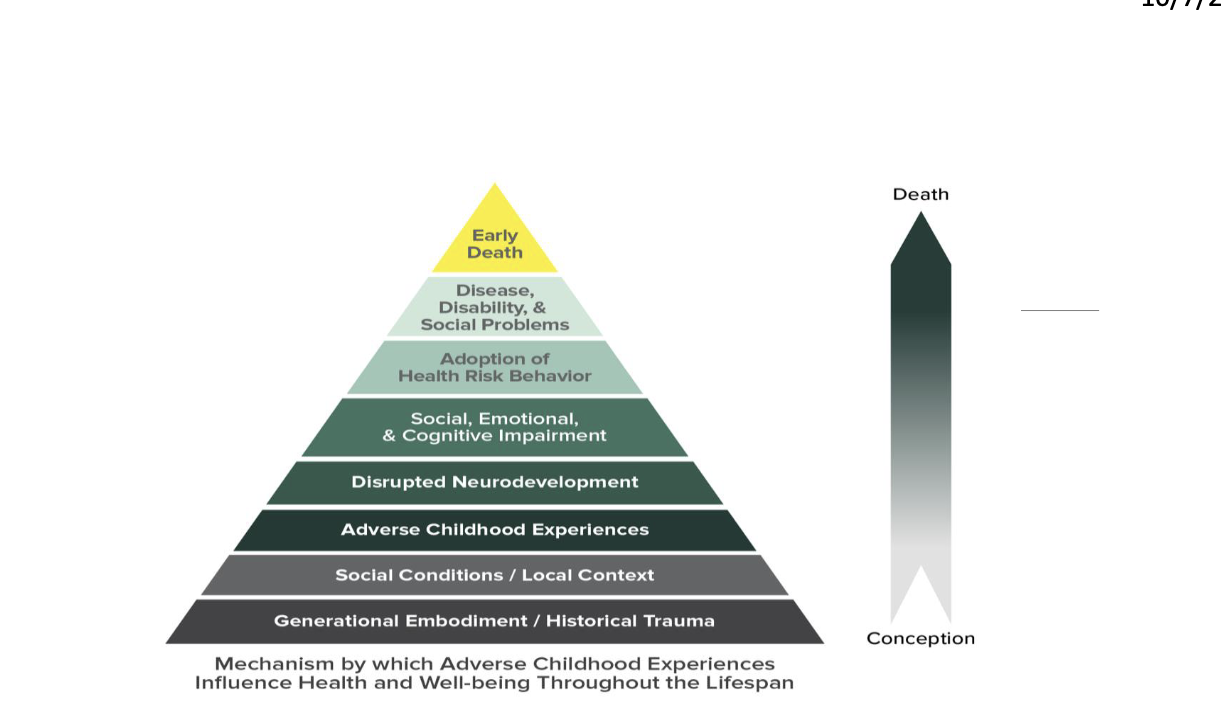
adverse childhood experiences
toddlers 1-3 years development screening
ages and stages 2nd and 3rd editons
school aged 6-12 years old screening
Batelle developmental inventory
adolscent and young adult screenings
HEADS-ed screening
Home,
Education,
Activities and peers,
Drugs and alcohol
Suicidality,
-
Emotions and behaviors
Discharge resources,
0-no action needed 3- immediate action
Homeostenosis
narrowing of reserve capacity that contributes to decreased ability yo maintain homeostasis under stress
The Aging Client
Slow steady decrease in brain mass.
▪Decreased cerebral blood flow.
▪Increased levels of cerebrospinal fluid.
▪Process information at a slower rate.
▪Difficulty following multiple task
▪Short term memory declines
▪Long term memory usually stays
intact
▪Difficulty finding words.
▪Difficulty with abstract thought.
Neurocognition physical assessment
Inflammation/infection
Oxygenation
Perfusion/Volume/Fluid/Electrolytes
Medication
Blood sugar
CBC
anemia or infection causes fatigue brain fog confusion
electrolytes
Causes: Fluctuations in sodium (hyponatremia), potassium, or calcium directly disrupt the brain's electrical signaling.
Acute confusion, memory gaps, hallucinations, seizures, or coma.
BUN, Creatinine
causes : kidney failure causing a buildup of toxins crosses to the blood
effect : lethargy severe confusion loc issues
Thyroid Stimulating Hormone
Mimics dementia with severe forgetfulness, depression mania, and TSH imbalance affecting brain metabolism
B12
Subacute cognitive decline, memory loss, depression, or psychosis , B12 defiecncy breaksdown myelin sheath
RPR
untreated syphilis infections, symptoms include hallucinations. progressive dementia, mood swings
HIV
HIV crossing into the brain memory loss, slow motor function, executive dysfunction
Heavy metals
Irritability, severe memory impairment, tremors, or cognitive decline heavy metal poisons brain and diruspts neurotransmiters
delirium vs dementia
delirium is s disturbance in consiousness due to a identifiable disease, illness ,intoxication or withdrawal. Dementia is a progressive cognitive impairment affecting memory/executive function
Thermoregulation
regulated by hypothalamus to balance heat production and heatloss to maintain body temp
Conditions that decrease heat los
Obesity.
◦ Dehydration.
◦ Impaired circulation