Genital System
 Call Kai
 Learn
 Practice Test
 Spaced Repetition
 Match
 Flashcards
 Knowt Play
1/49

There's no tags or description
Looks like no tags are added yet.
50 Terms
define homologous
same embryonic starting point

name
genital tubercle

name
urethral fold
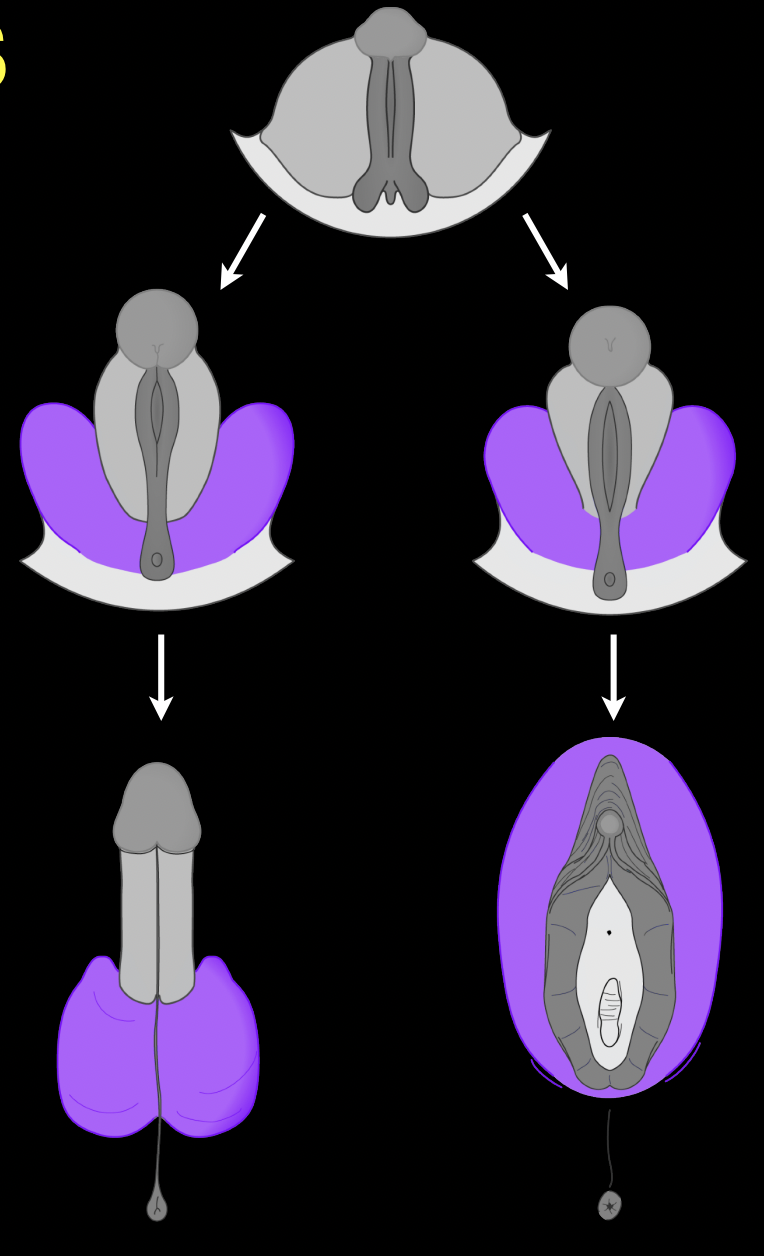
name
urogenital swelling
—this is homologous (ex. male urogenital swelling develops into scrotum)

orient female internal genitalia and surrounding structures
then find the external genitalia structures
lumbar vertebrae
sacrum
rectum (along sacrum)
ureter
urinary bladder — urethra following
pubis bone — rectus abdominis attaching
INTERNAL GENITALIA
ovary (production site for female gamete-oocyte)
uterine tube (attaches to avary)
uterus (thick walled tube that leads to the vagina)
vagina (leads to the external environment)
EXTERNAL GENITALIA
labia majora (2 lateral folds - large lips)
labia minora (2 thinner folds)
clitoris (erectile tissue)

what is this an image of
name and describe structures of it
this is the vulva which is what the external genitalia is called
labia majora
—larger, thicker, more lateral “2 lips”
—contains normal integumentary properties (this means vaasularization and glands)
labia minora
—no hypodermis, no hair follicles, no sweat glands, still has a sebaceous gland
prepuce of clitoris
—above the clitoris and protects it
what is the fat pad over the pubic bone called
mons pubis
what is erectile tissue
erectile tissue is a variation of loose connective tissue that is the most vascular
erectile tissue is an increase in blood flow to that specific area
cavernous vs spongy erectile tissue
cavernous erectile tissue is the most highly vasculated tissue in the human body
—will become the most rigid (highest increase in blood flow)
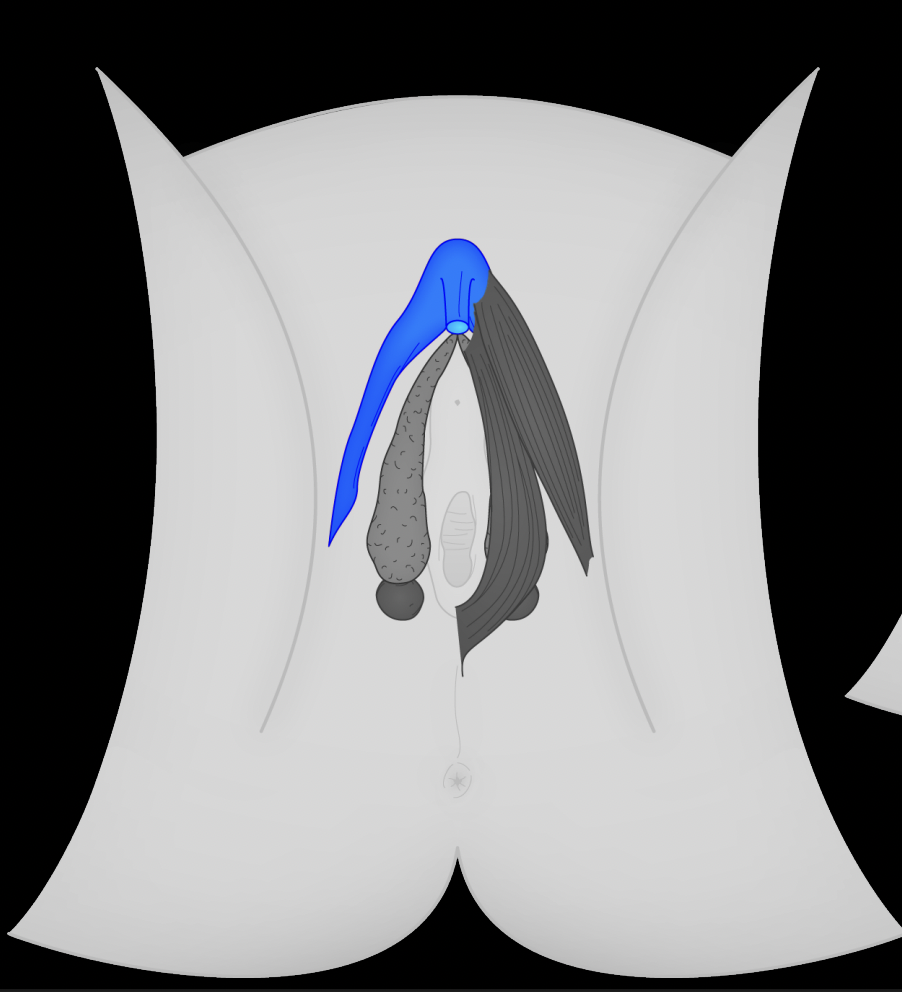
what is this an image of
name pieces and describe design
clitoris
—crus of clitoris (entire thing, there is another side - cura is pleural for both sides, crus means one side of the clitoris) made of cavernous erectile tissue
—body of clitoris (facing downwards, not the circle on the bottom of the body) made of two columns of cavernous erectile tissue
—glans of clitoris (most superficial, covered by a thin layer of skin) made of spongy erectile tissue

name and describe structure
vestibule of vagina
—imagine a small room entrance to a larger building
—sits inside of the labia minora

name and describe
bulb of the vestibule
—made of spongy erectile tissue
—comes off of the glans clitoris (this makes sense because the glans clitoris and the bulb of the vestilbule are both made of spongy erectile tissue)

name and describe
greater vestibular gland
—these are the ducts that enter the vestibule
—they secrete lubricant to reduce friction for sex
—the lubricant that they secrete comes out through the labia minora

what is this and what does it mean for most of the female internal genitalia
this is the peritoneal coelom of the abdomen, this means that from the end of this line and up, these female genital structures are in the abdomen

name and describe
ovary
—site of oogenesis (production of oocytes)
uterine tube
—fimbriae of uterine tube (“fringe”) composed of smooth muscle (attracts the oocyte towards the abdominal ostium of the uterine tube)
—abdominal ostium of the uterine tube (this is a hole in the peritoneal coelom/mesothelium that allows the oocyte to enter the uterine tube) it is in the middle the fimbriae of the uterine tube

name and describe parts of this structure
name and describe the tubular design of this structure **what should you remember basic tubular design structure
uterus
—fundus of uterus (still in abdominal cavity)
—body of uterus (still in abdominal cavity)
—cervix of uterus (very terminal portion of the uterus) (this is the only part of the uterus in the pelvis)
uterine wall (**basic tubular design always has 3 layers)
—perimetrium (surrounding the uterus)
—myometrium (smooth muscle)
—endometrium (can shed through the vagina - menestration) (thick & vascular when fertilized)
What is an ectopic pregnancy? What is endometriosis?
eptopic pregnancy: when the fertilized egg implants in the wrong place, most commonly implanting in the uterine tube (can even implant in the abdominal cavity)
endometriosis: when not all of the endometrium drains through the vagina (the tissue gets stuck somewhere and causes pain or damage to another organ)

name, function
vaginal fornix
—this is where the vagina forms a cup at the base of the cervix of the uterus
—func: this is where the sperm post ejaculation congregate and are protected, they also prepare to enter the uterus
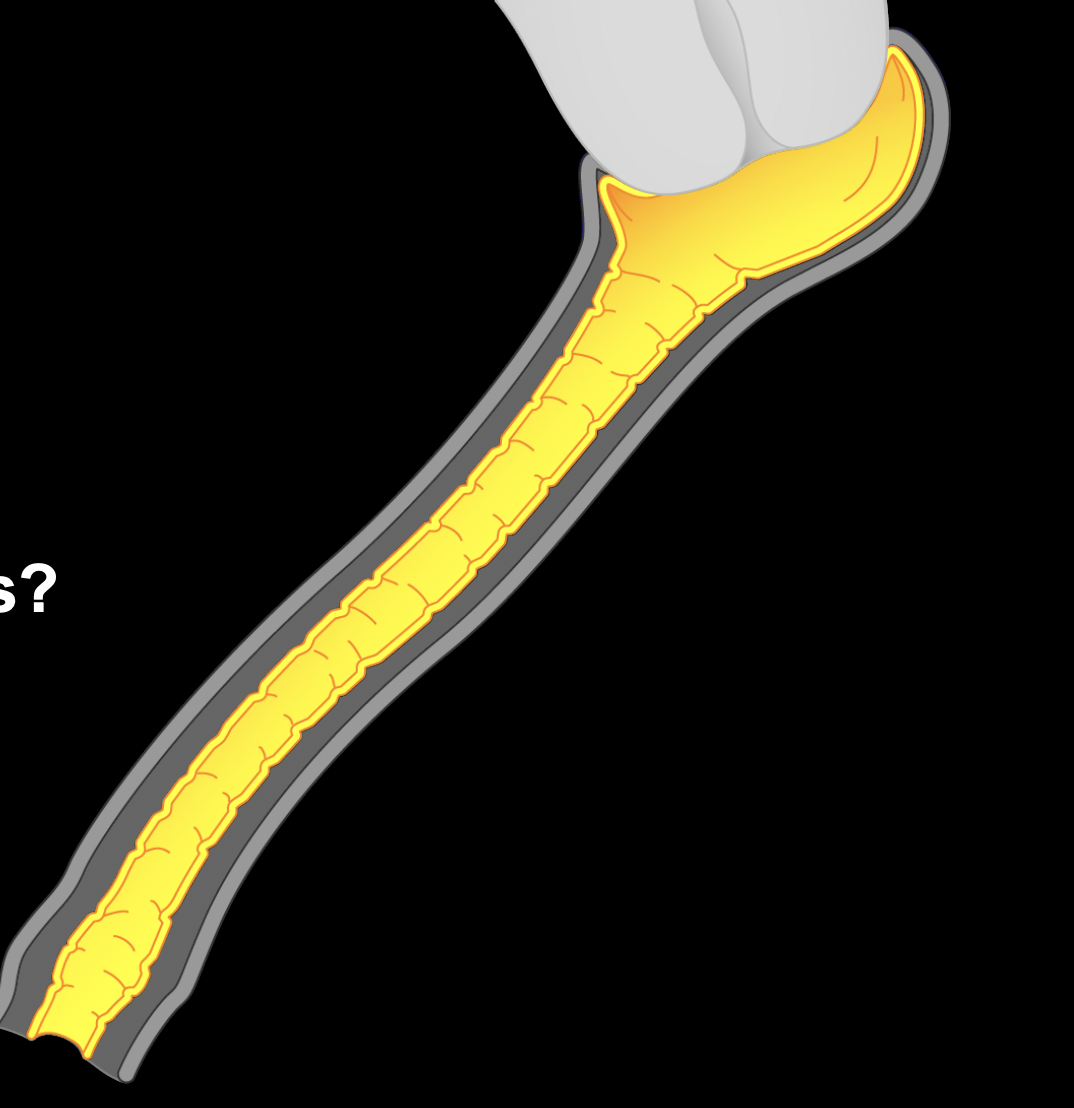
name, func
what are we getting into here
**the vagina is also a tube
this is the mucosa of the vagina
—made of nonkeratinized stratified squamous epithelium (help with friction) (protection)
rugae=fold or wrinkles in the mucosa, func: stretch the vagina

name
spongy layer (submucosa)
—spongy erectile tissue (which is a highly vascular loose connective tissue)
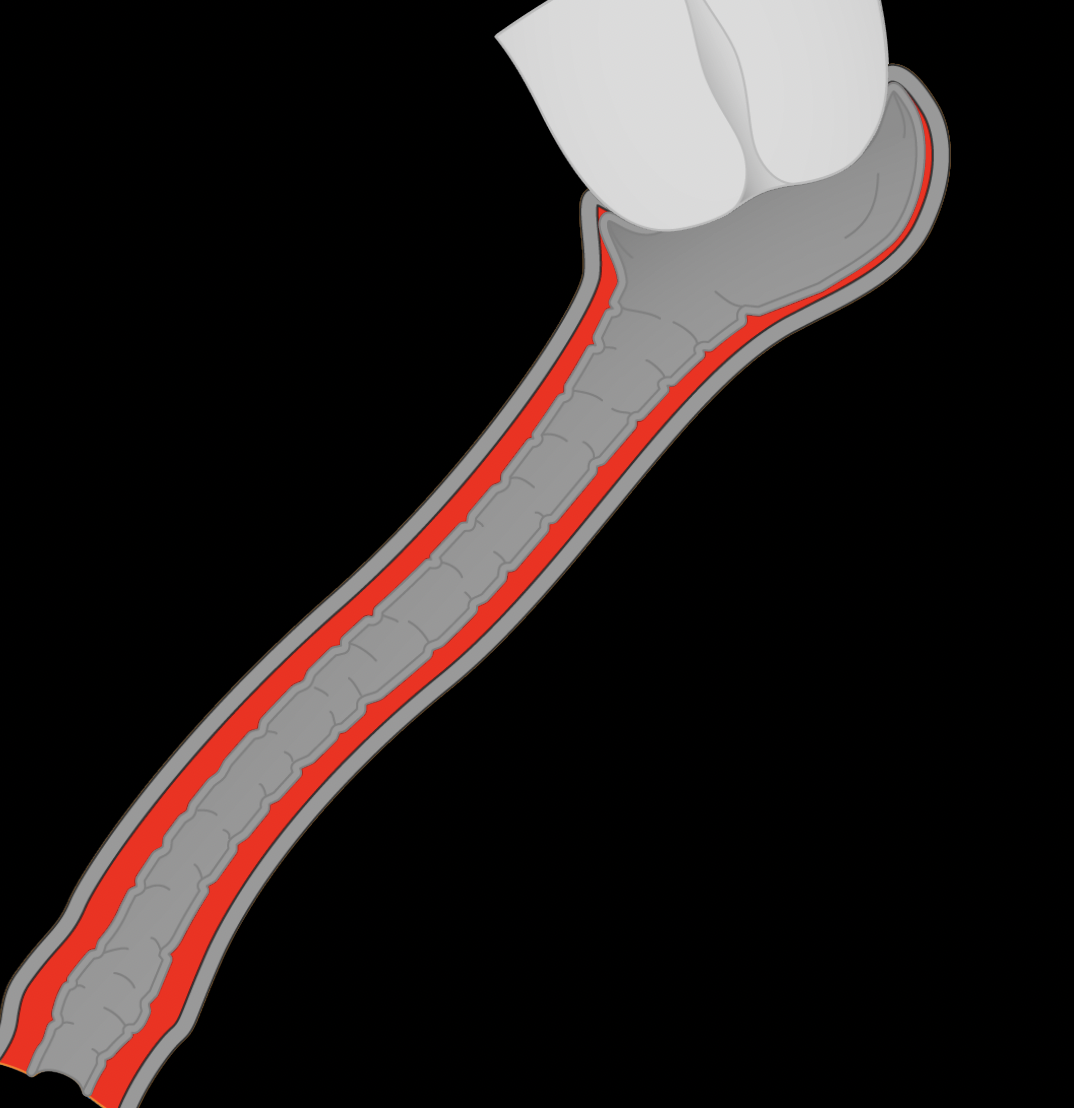
name
muscular layer of vagina
—smooth muscle and connective tissue
—until the end portion most terminally is skeletal muscle and connective tissue

name
adventital layer
—dense irregular connective tissue
What are the 3 biological functions of the vagina
drain the endometrium during the menstrual cycle
penal receptacle during intercourse
birth canal

name and describe
scrotum
—skin structure (very thin hypodermis)
—this means it has hair follicles and glands

name and describe
testis
—homologs of ovaries (they produce the male gamete-sperm)
—a bunch of tubes packages together
—herniate externally from development

name and describe
spermatic chord
—contains ductus deferens (heads towards the prostate) (a vasectomy removes a portion of this structure)
—contains testicular vessels (come from the abdomen) and nerves

name
seminal glands
—there is a left and right seminal gland

name
prostate gland

name
blulbourethral glands
—embedded in muscle
What is the end result of female vs male meiosis
female meiosis=ends w/ one high quality egg
male meiosis= ends w/ 4 lower quality sperm
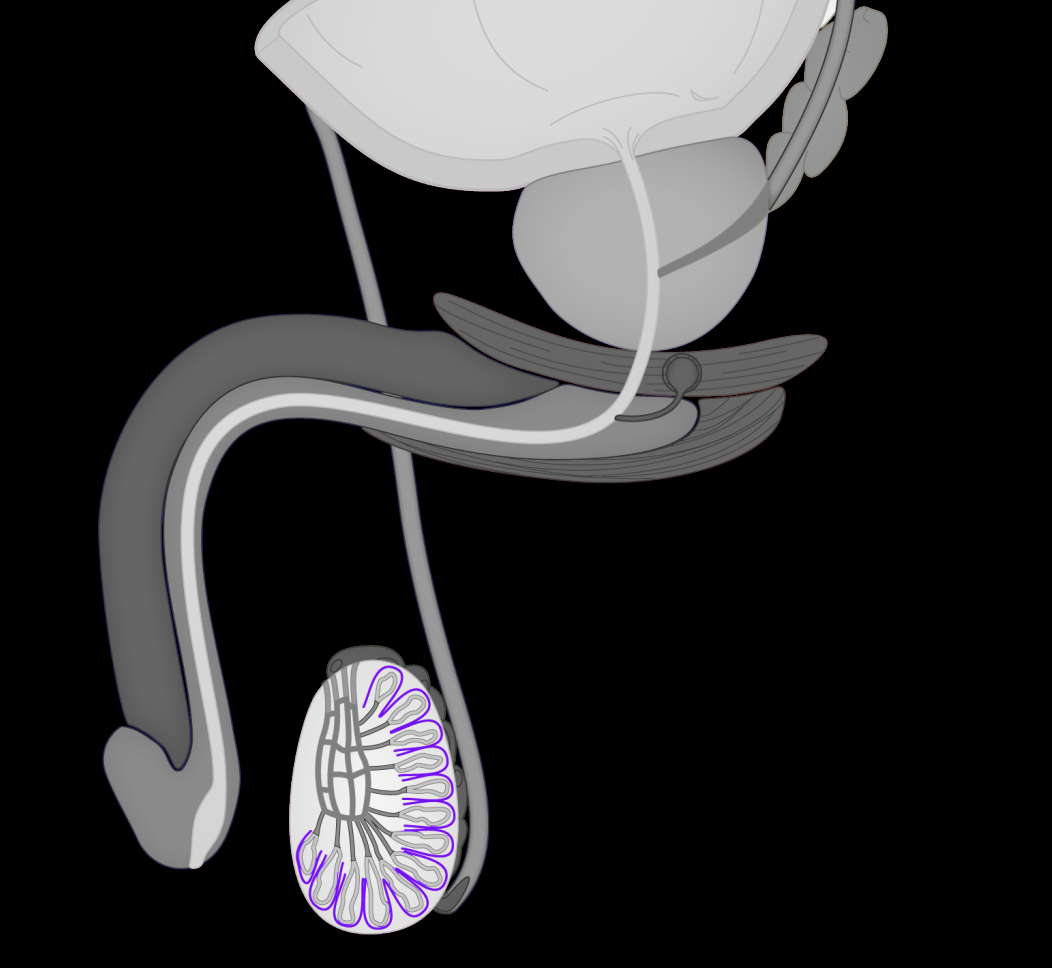
name
compartments of the testis (also called lobules)

name
convoluted seminiferous tubules
—produce 100’s of millions of sperm per day
convoluted=messy, seminiferous=semen (sperm)

name
straight tubules

name
rete testis

name
efferent ductules

name
epididymis
—upon the testis (5-6ft of tube)
—this is where the sperm matures

name
ductus deferens

name
ejaculatory ducts
—once the ductus deferens enters the prostate, it becomes the ejaculatory duct
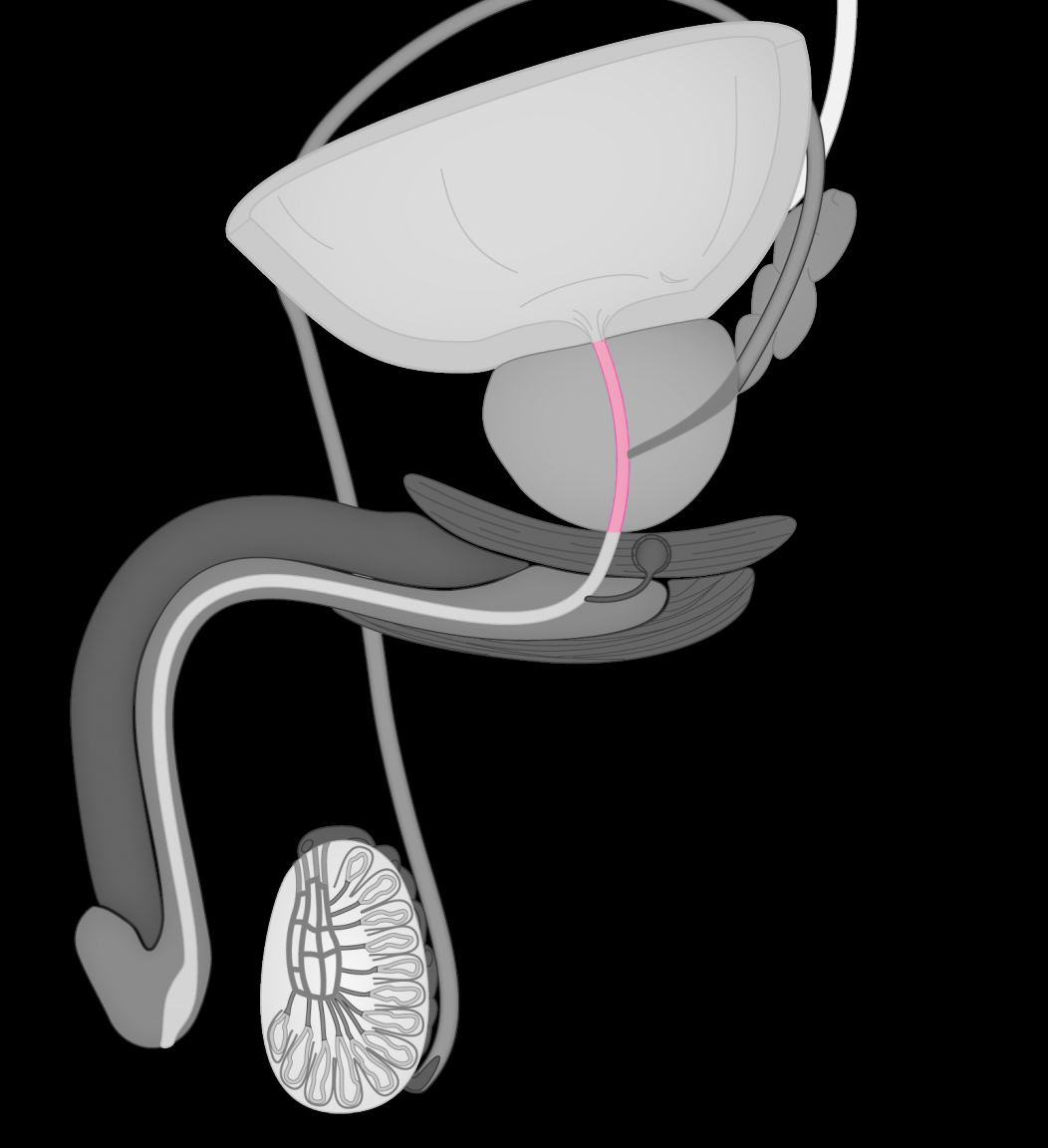
name
prostatic urethra
—passes through the prostate gland

name
membranous urethra
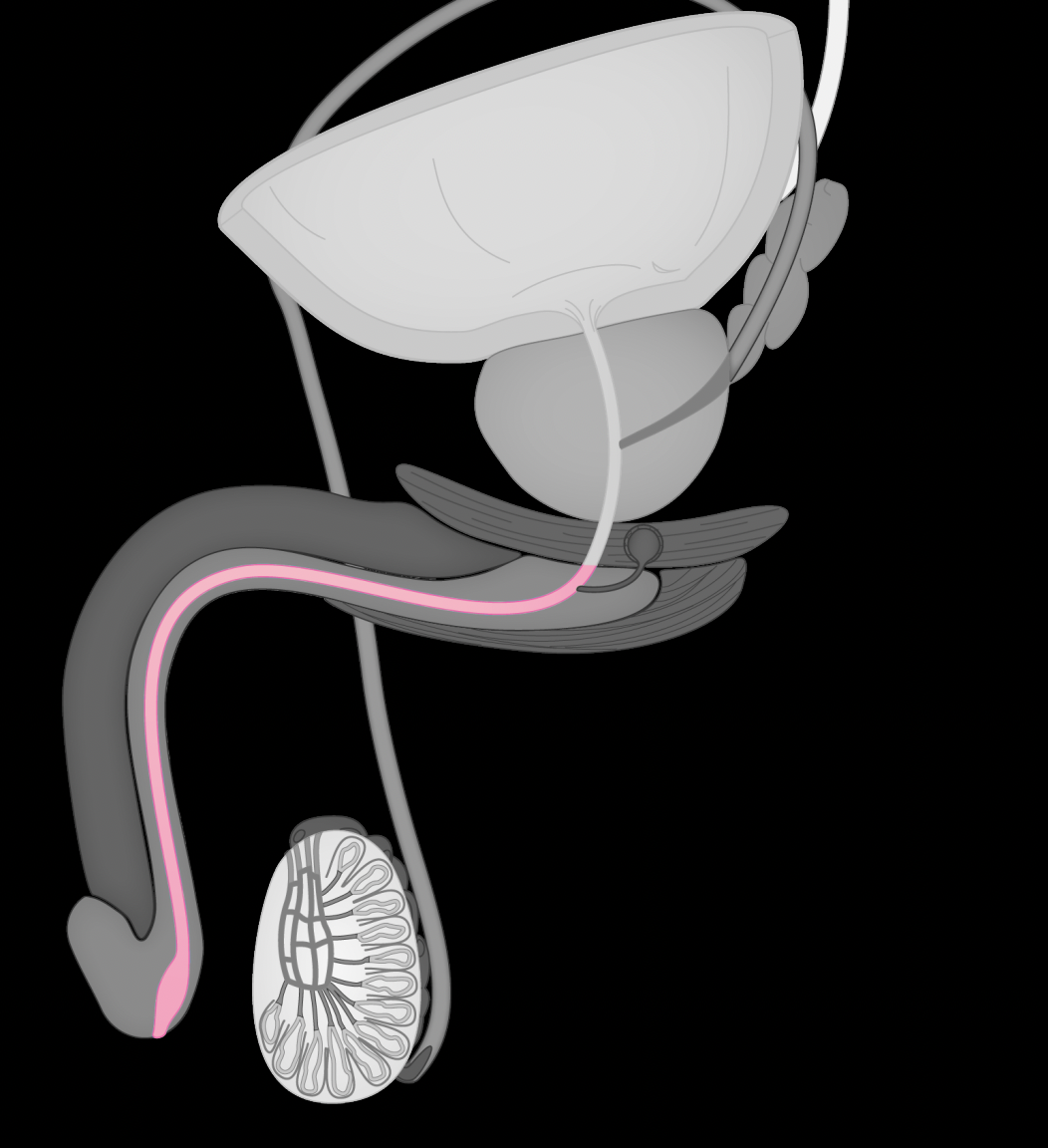
name
spongy utethra
—inside of the penis
—in the spongy erectile tissue of the penis
all of the glands of the male genital system main function is producing what and what is its function
they are all sources of seminal fluid
—sperm needs seminal fluid to survive

name
seminal glands
—paired glands that secrete mucous that is rich in fructose
—this mucous rich in fructose is fuel for the sperm and helps it stick in the female reproductive system)

name
prostate gland
—go into the ejaculatory ducts
secretes protective substances
secretes enzymes that break down the mucous of the seminal glands

name
bulbourethral gland
—enter into the spongy urethra
secrete lubricant (lubricates the spongy urethra for ejaculation) (this is the pre-ejaculation)

name all structures in the gross anatomy of the penis
anterior
—foreskin/prepuce (integumentary structure—thin hypodermis)
—glans penis (homologous to clitoris)
—body of penis (2 columns of cavernous erectile tissue)
posterior
—prostate gland
—glans penis
—bulb of penis (homologous w/ bulbs of vestibule) crus of penis (attach to bones) also crura (pleura)
—body of penis=3 columns of erectile tissue

name all structures
segments — glans penis, body of penis, root of penis
cavernous erectile tissue (more vascular)
spongy erectile tissue (less vascular)
—spongy urethra (sits inside spongy erectile tissue) ducts of bulbourethral gland branches into the spongy urethra)

name all structures
—corpus cavernous penis (located in 1. the body and 2. the crura of the penis)
deep arteries of the penis are also in the corpus cavernous (primary vascular supply that fills/engorges the erectile tissues)
—corpus sponginosum penis (located in 1. glans penis 2. body of penis 3. bulb of penis)
spongy urethra is inside
surrounding connective tissues
—1. wrapping around the erectile tissues 2. separating the erectile tissues
—deep veins of the penis are inside the surrounding connective tissues
explain the mechanics of penile erection
deep arteries vasodialate (become at the highest pressure) so the columns of cavernous erectile tissue expand
the veins inside the surrounding connective tissue get compressed (which reduced blood flow out of the penis) so the penis elongates (better delivery of sperm into vagina)
then ejaculation occurs
name all homologies
female structures
-labia majora
-labia minora
-crus of clitoris
-body of clitoris
-bulb of vestibule
-greater vestibular glands
labia majora—scrotum
labia minora—spongy urethra
crus of clitoris—crus of penis
body of clitoris—body of penis
bulb of vestibule—bulb of penis
greater vestibular glands—bulbourethral glands