orgo mem
 Call Kai
 Learn
 Practice Test
 Spaced Repetition
 Match
 Flashcards
 Knowt Play
1/24

There's no tags or description
Looks like no tags are added yet.
25 Terms
Williamson

Substitution of alc

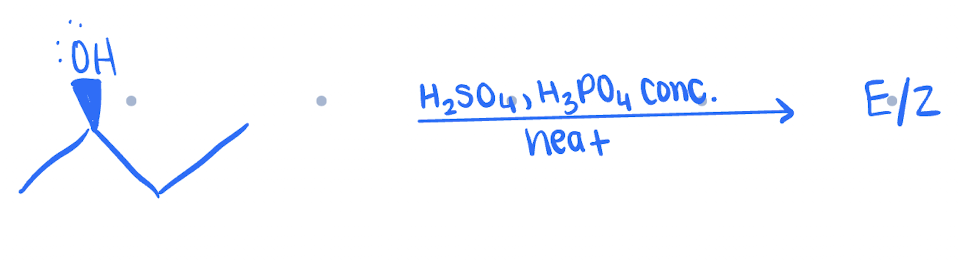
Elimination of alc
Mineral acid cleavage

epoxide formation

epoxide opening (acid)

epoxide opening (base)

dihalide elimination (E2 × 2)

alkyene synthesis via acetylides

electrophillic addition: mineral acid

electrophillic addition: halogen

electrophillic addition: halohydrin

oxymercurization

williamson mechanism
H takes H
O2 by grabs bond on Br
substitution of alc mechanism
O takes H
water leaves, leaving +
Electrophile attacks +
elimination of alc mechanism
O takes H
Water leaves, leaving +
H from original molecule is taken by nucleophile leaving a double bond behind
Make E/Z
mineral acid cleavage mechanism
O takes H
More stable bond broken leaving it with a +
Nucleophile attacks + leaving you with first product
the O in alc takes H
Water leaves, leaving +
Nucleophile attacks +
epoxide formation mechanism
nucleophile H takes H
LG leaves, leaving +
Nucleophile oxygen on own molecule attacks +
Stereochem flipped
epoxide opening mechanism (acid)
O grabs H+
More stable bond broken and put on O (to put + on more stable)
Water attacks +
One of the H leaves making OH
epoxide opening mechanism (base)
nucleophile attacks 1 degree carbon, and lone pairs go on O
Middle O grabs H+
dihalide elimination E2 × 2 mechanism
H removed and LG leaves
H removed and LG leaves
alkyne synthesis via acetylides mechanism
NH2 takes hydrogen leaving it with lone pair and neg charge (bullet)
This bullet attacks Br carbon and Br leaves
electrophillic addition mechanism (mineral acid)
double bond grabs H
leaving an H at one carbon and a + at other
Br attacks +
electrophillic addition mechanism (halogen)
Double bond grabs halogen leaving + at one end
Other halogen attacks +
electrophillic addition mechanism (halohydrin)
Double bond grabs Br, leaving + at one end
Water attacks +
Br takes H leaving OH