Lesson 10: Animal Diversity
 Call Kai
 Learn
Learn Practice Test
 Spaced Repetition
 Match
Match Flashcards
 Knowt Play
1/132

There's no tags or description
Looks like no tags are added yet.
Name | Mastery | Learn | Test | Matching | Spaced | Call with Kai | Chat |
|---|
No analytics yet
Send a link to your students to track their progress
133 Terms
features of the animal kingdom
multicellularity, heterotrophs, active movement, diversity of form and size, most use sexual reproduction, offspring pass through developmental stages, determined/fixed body plan
all animals are multi____
cellular
animals are _____ (obtain energy and organic materials by ingesting other organisms)
heterotroph
what is a heterotroph
an organisms that obtains energy and organic materials by ingesting other organisms
all animals have some form of ___ movement
active
are animals decomposers
no
animals ___ more rapidly and in or more complex ways than othe rkingdoms
move
animals have diversity in ___
form and size (ranging from microscopic to enormous)
most animals use ___ preproduction
sexual
animal offspring pass through
developmental stages
animals have a ____ body plan
dtermined/fixed body plan
morphology of animals is determined by
developmental cues (Hox genes)
animals have complex ____ structure
tissue
what are the types of animal tissues
epithelial, connective, nervous tissue, muscle tissue
function of epithelial tissue
cover, line, protect, secrete
function of nervous tissue
coordinate movement
function of muscle tissue
power locomotion
what does connective tissue consist of
cells imbedded in an extracellular matrix
which tissues are considered to be like the junk drawer for tissues
connective tissues
the complex tissues structure of animals allows for
unique intracellular communication
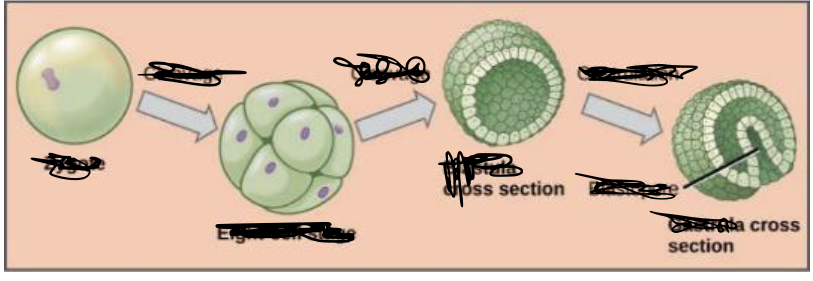
what is the product of fertilization (egg + sperm)
a zygote
after zygote forms what process occurs
cleavage
what is cleavage
a series of mitotic cell divisions
after 3 cell divisions what stage of animal development are we at
8 cell stage
what happens after 8 cell stage
cleavage again with continued division and rearrangement
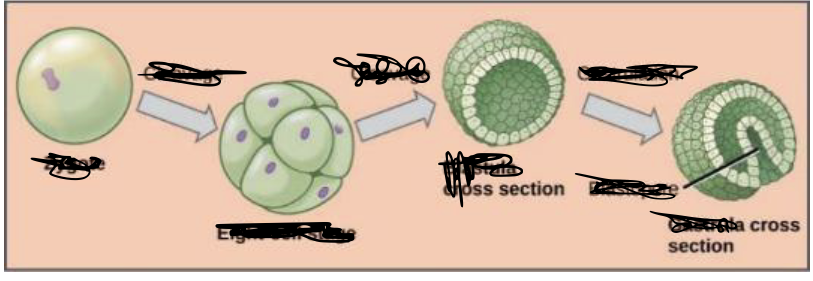
after 8 cell stage what forms
a blastula
how does a blastula form
migration of cells → forms a hollow ‘ball’
what is the internal cavity of a blastula called
a blastocoel
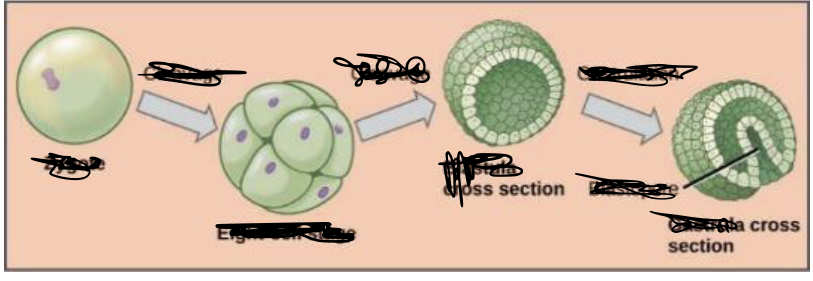
what process forms a gastrula
gastrulation
what process occurs after a blastula forms
gastrulation
what forms next after a blastula forms
a gastrula
in all animals what layers form during gastrulation
outer ectoderm and inner endoderm germ layers
in most animals what layer forms during gastrulation
a third (middle) germ layer forms, mesoderm, within remaining blastocoel
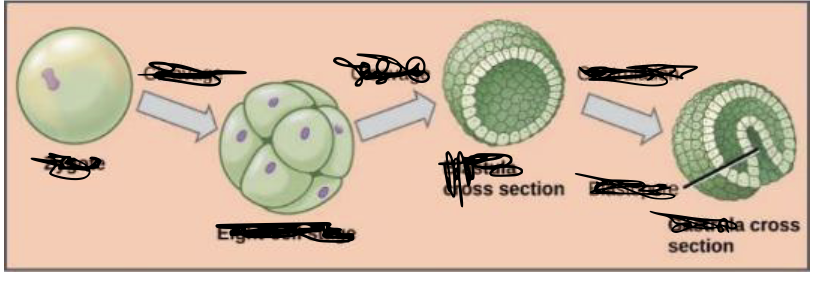
1
zygote
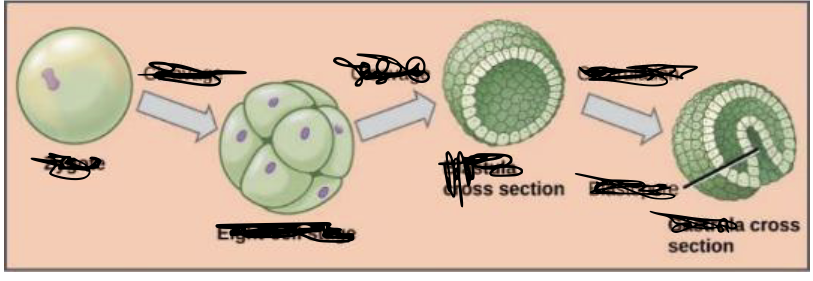
2
cleavage
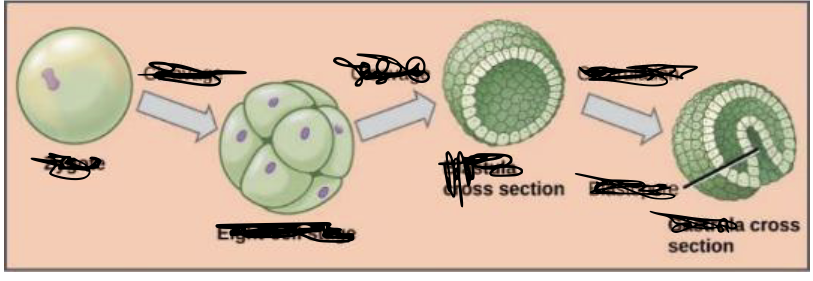
3
eight cell stage
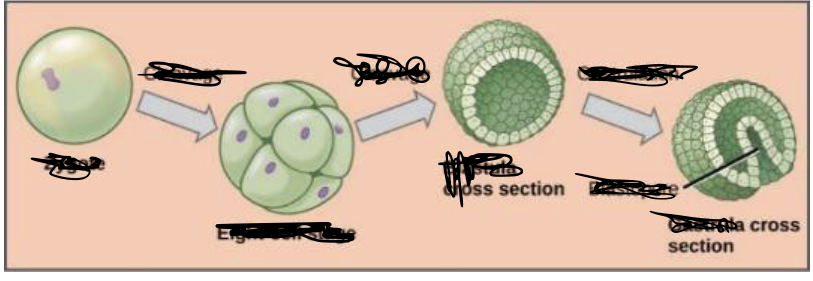
4
cleavage
5
blastula
6
gastrulation
7
blastopore
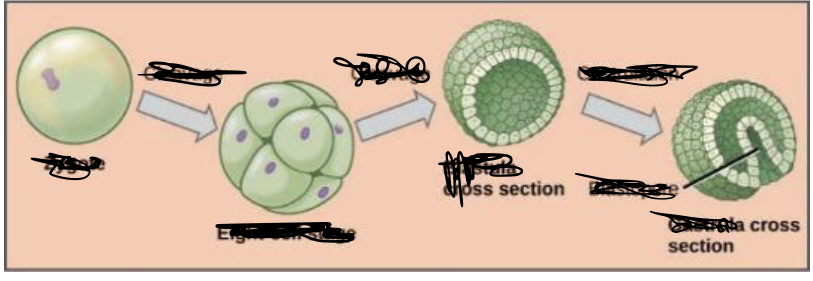
8
gastrula
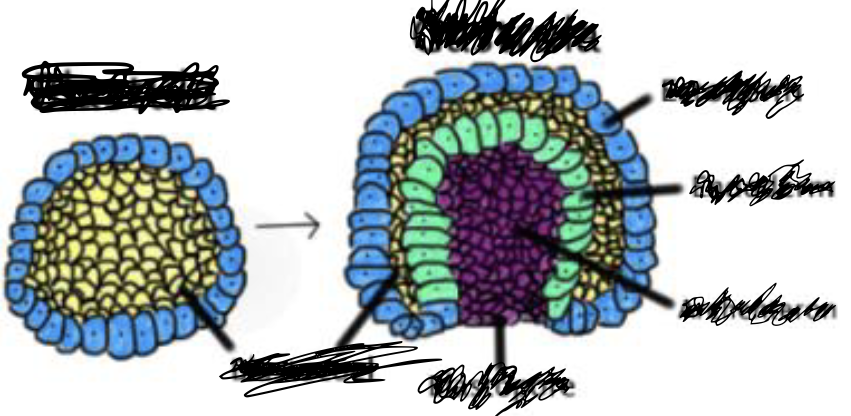
which is gastrula which is blastula
left is blastula, right is gastrula
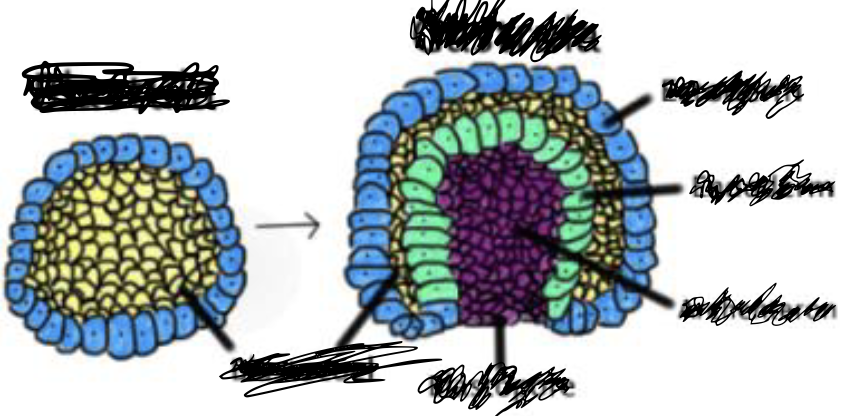
what is blue
ectoderm
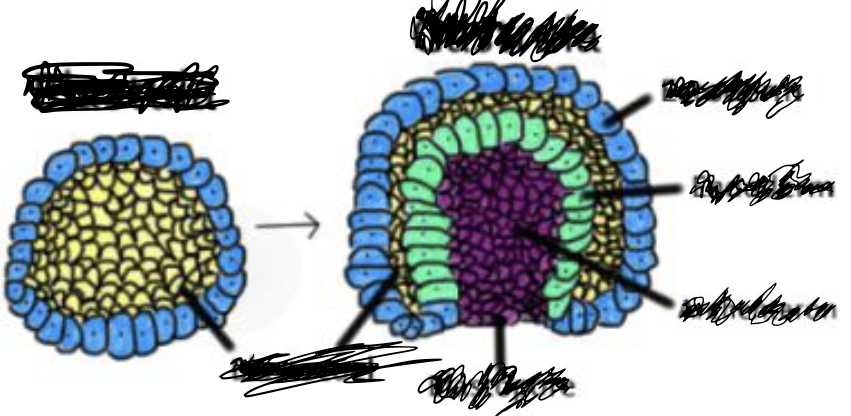
what is yellow
blastocoel
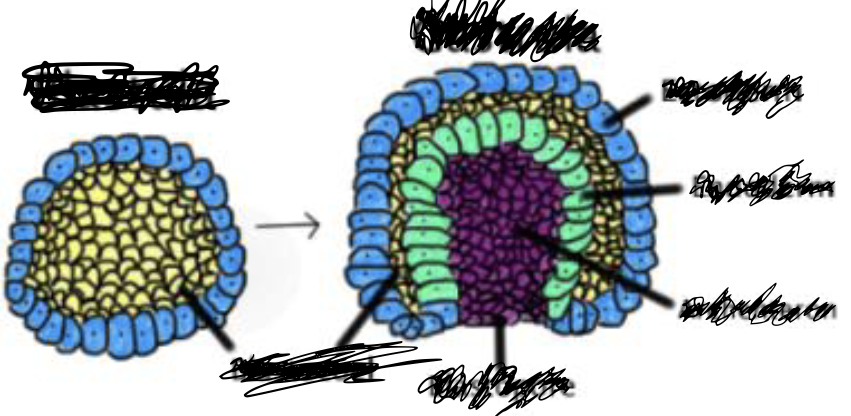
what is green
endoderm
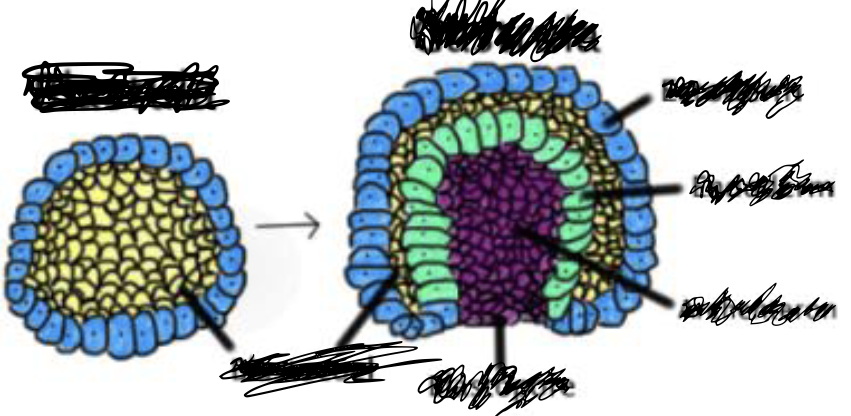
what is the opening called
a blastopore
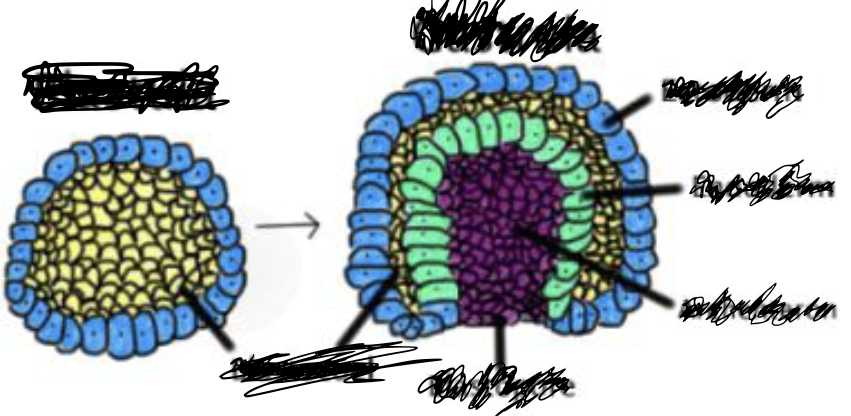
what is purple
archenteron
what are the morphological and developmental characteristics that animals are classified by
symmetry, number of tissue layers, origin or mouth and anus, body plan and cavities
what are the three types of symmetry displayed by animals
asymmetry, radial symmetry, bilateral symmetry
what animals display asymmetry
porifera (sponges)
radial symmetry is arrangement around a
centrl axis
organisms that display radial symmetry have ____ and ____ sides
oral and aboral
radial symmetry is suited for encountering environment from
any direction
radial syemtry is good for ___ lifestyle
stationary
what phylum animals display radial symmetry
cnidarians (jellyfish, sea anemone, ect.), starfish
what type of symmetry do humans display
bilateral symmetry
bilateral symmetry allows for
cephalization
what is cephalization
collection of sense organs in head
all other animals than porifera, cnidarians, star fish display what type of symmetry
bilateral
Animals are divided into two major groups…
parazoa and eumetazoa
parazoa = “__” animals
beside
eumetazoa = “__” animals
true
are humans eumetazoa or parazoa
eumetazoa
parazoa are animals that have
no true tissues or symmetry
eumetazoa are animals that have
distinct tissues and symmetry
all animals other than sponges are symmetrical and are classified as ____ due to having true tissues and being symmetrical
eumetazoa
eumetazoa can be further subdivided into
triploblasts and diploblasts
are humans triploblasts or diploblasts
triploblasts
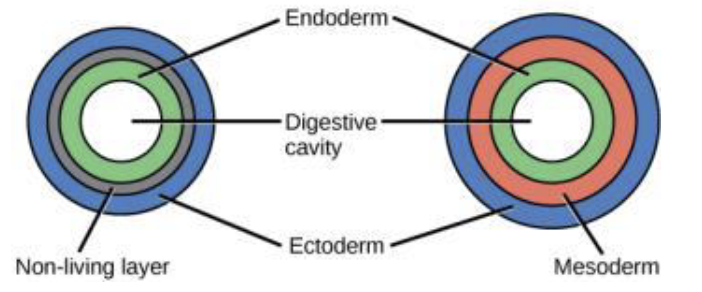
left is
diploblasts
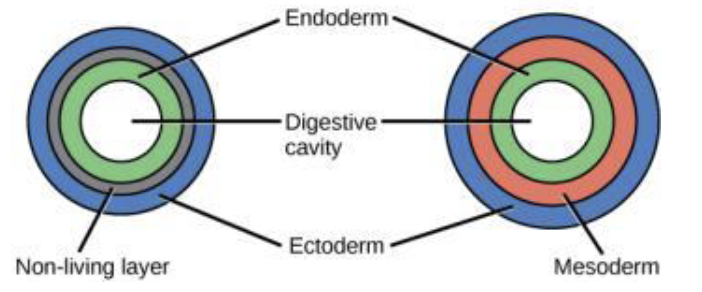
right is
triploblasts
what type of symmetry do diploblasts have
radial
diploblasts lack a
mesoderm
how many germ layers do diploblasts have and what are the names of the germ layers they possess
two, ectoderm and endoderm
what animals are diploblasts
cnidarians and ctenophores
what type of symmetry do triploblasts have
bilateral
how many germ layers do triploblasts have and what are their names
three, ectoderm, mesoderm, endoderm
what animals are triploblasts
all animals that are not diploblasts
Different germ layers are programmed to become a variety of
specialized tissues
what type of tissues does endoderm become
inner lining of most digestive tract organs,
trachea, lungs
what type of tissues does mesoderm become
all muscle, bone, cartilage, blood, most other
visceral organs
what type of tissues does ectoderm become
outer epithelium of body surface, central nervous
system
fate of blastopore in early development leads to
protostomes, deuterostomes
origin of mouth and anus in protostomes
blastopore becomes mouth, anus is second opening
origin in mouth and anus in deuterostomes
blastopore becomes anus, mouth forms from second
opening
do protostomes have stem cells
no
what does spiral cleavage – angled cleavage mean
spiral pattern of cells along embryo axis (cells don’t line up – similar to rotation in DNA double helix)
what does determinate cleavage mean
fate of cells is determined very early, no stem cells
protostomes exhibit what type of cleavage
spiral cleavage, determinate cleavage
deuterostomes exhibit what type of cleavage
radial cleavage, indeterminate cleavage
radial cleavage means cell division at
right angles
in deuterostomes fate of cells determined somewhat later in development meaning that
formation of embryonic stem cells and possibility of identical twins if embryonic cells become separated
indeterminate cleavage –
fate of cells determined somewhat later in development
which can have identical twins protostomes or deuterostomes
deuterostomes
coelom is found only in
triploblasts
what is coelom derived from
mesoderm early development
why can diploblasts not display coelom
because coelom is derived from mesoderm
where does coelom lie
between body wall and visceral organs
organs can ___ within coelom
move
when is it good in female humans that organs can move within coelom
pregnancy
coelom is ___ filled making it ____
fluid-filled, shock absorption