Lecture 21 - Speciation
 Call Kai
 Learn
 Practice Test
 Spaced Repetition
 Match
 Flashcards
 Knowt Play
1/21

There's no tags or description
Looks like no tags are added yet.
22 Terms
speciation
process by which 1 species splits into 2; the appearance of new species
species
a kind of organism
biological species concept
proposed by Ernst Mayr
group of populations whose member have potential to interbreed in nature and produce viable offspring
share common gene pool - gene flow between population
no gene flow with different species - reproductive isolation
limitations:
asexual species
extinct/fossil species
viruses/microbes
biodiversity
mutation, genetic drift, gene flow, natural selection, nonrandom mating + 4 billion years
morphological species concept
species distinguished by shape/structure - morphology
applies equally well to sexual, asexual, extinct organisms
limitation: disagreement over which features matter and how to divide
ecological species concept
species defined by ecological niche - how individuals interact with environment
works for sexual and asexual organisms, but must be extant
limitation: complicated if species can occupy diverse niches
reproductive isolation
mechanisms that prevent members of different species interbreeding and producing viable, fertile offspring
presents gene flow
recents formation of hybrids (offspring of 2 different species)
hybrids often low fitness → selection for mechanics to prevent hybridization
prezygotic barriers
operate prior to zygotę formation - prevent fertilization
5 types:
habitat isolation
temporal isolation
behavioral isolation
mechanical isolation
gametic isolation
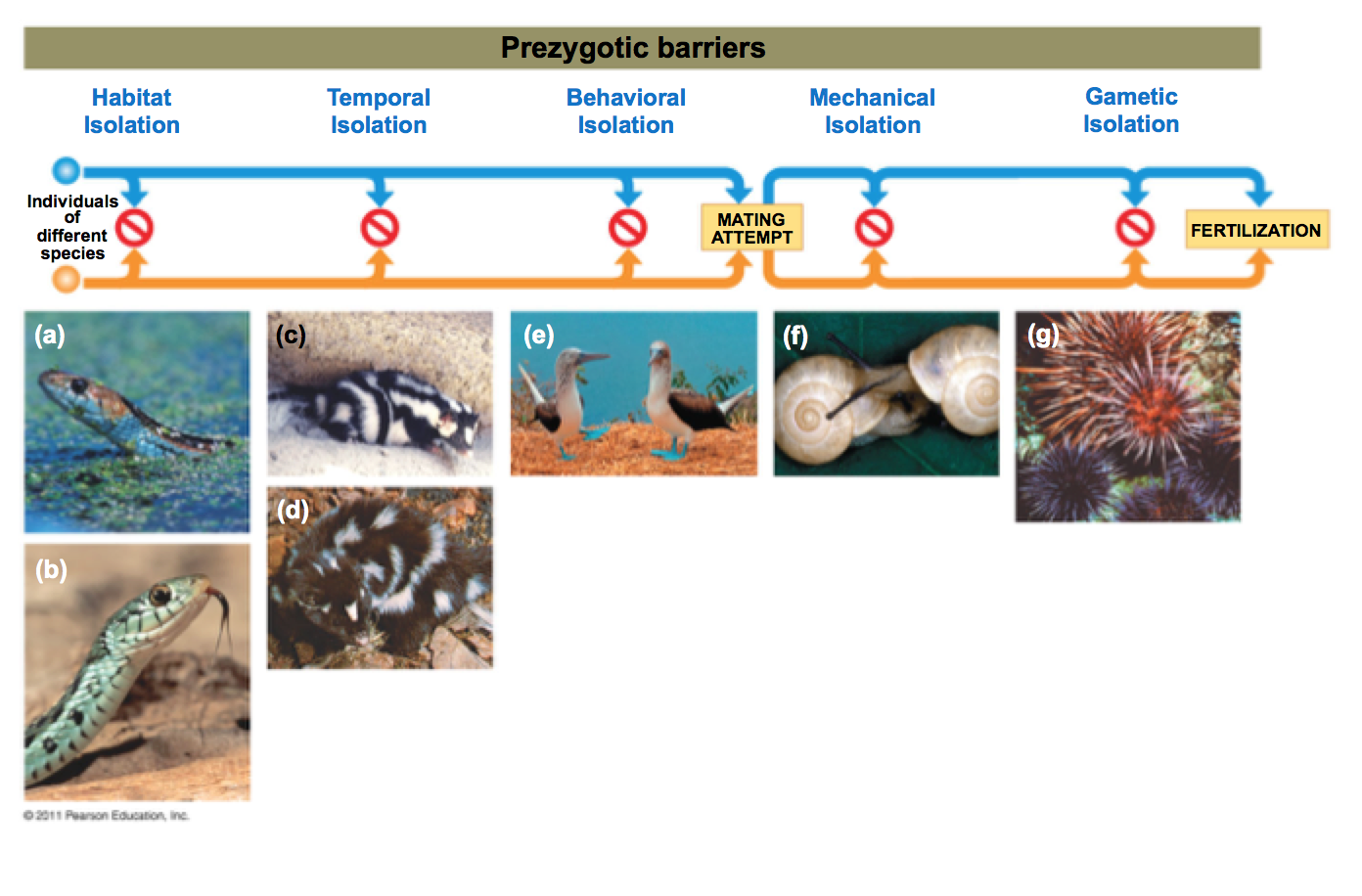
habitat isolation
overlapping geographic range, but live/breed in different areas
rarely interact, no opportunities to mate

temporal isolation
overlap spatially but breed at different times of year/season/day
behavioral isolation
species-unique behaviors enable mate recognition
mechanical isolation
mating attempted but sexual structures incompatible
gametic isolation
molecular or chemical differences between species - egg and sperm incompatible
postzygotic barriers
operates after fertilization occurs
3 types:
reduced hybrid viability
reduced hybrid ferility
hybrid breakdown
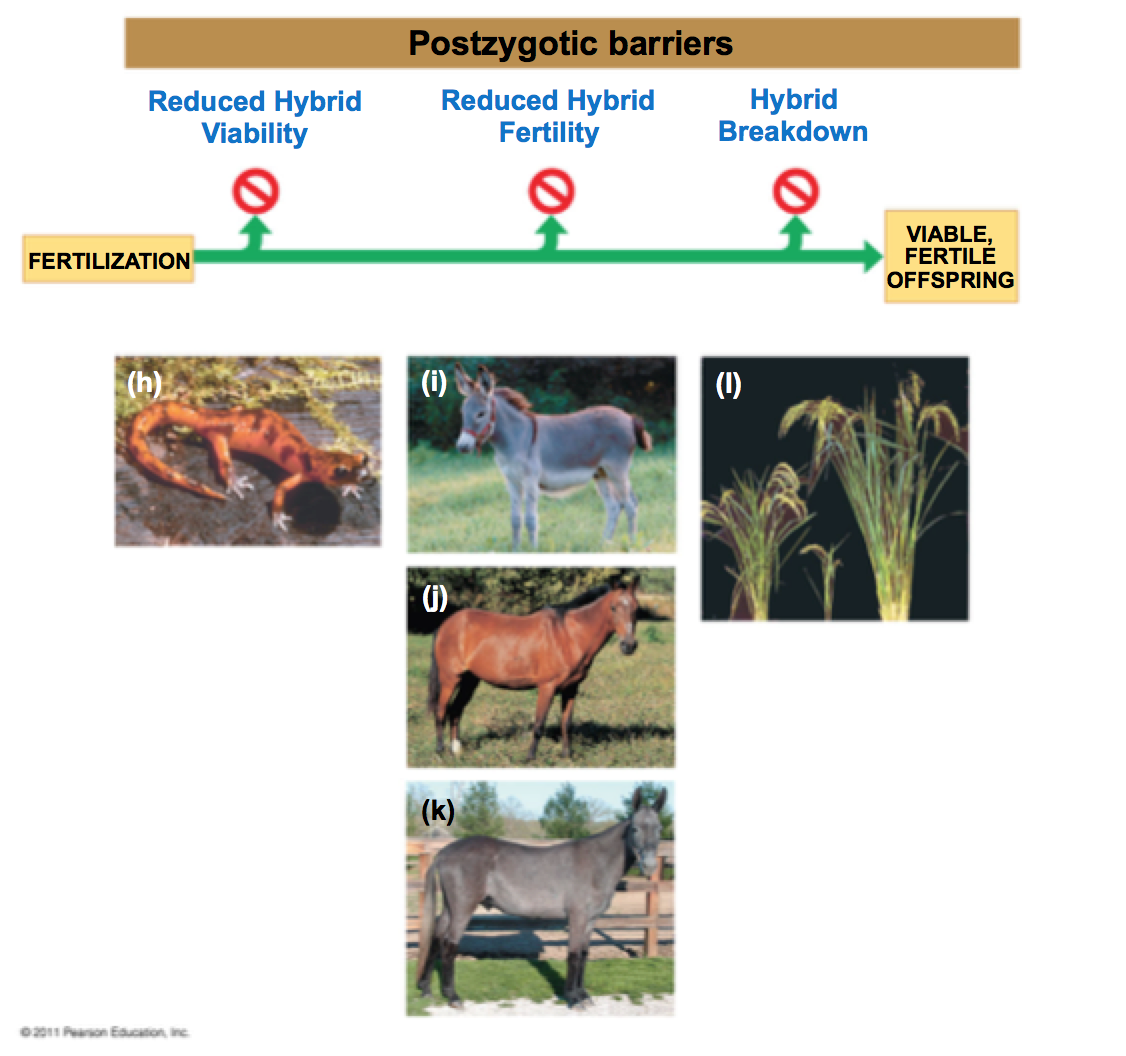
reduced hybrid viability
embryo nonviable or offspring do not survive
reduced hybrid fertility
hybrids viable, but sterile or low fertility
often due to problems during meiosis
hybrid breakdown
1st generation hybrids viable and fertile, can mate with each other or parents species
subsequent offspring infertile or nonviable
process of speciation
evolution of anew species
reproductive isolation of populations of same species → gene pools diverge
2 types:
allopatric speciation
sympatric speciation

allopatric speciation
geographic isolation → drift and/or selection → divergence
mechanisms of separation
geographic barriers - mountain range, river, land bridge, falling water level
migration - small offshoot population isolated from parent population
sympatric speciation
reproductive isolation without geographic isolation
2 mechanisms:
sexual selection
habitat differentiation
sexual selection
selection for different traits in males and females - traits promote reproductive success
can become barrier to reproduction between subpopulations
habitat differentiation
subpopulations use habitat or resource not used by rest of populations
can lead to habitat isolation