HAA01 Comparative Essay 1
 Call Kai
 Learn
 Practice Test
 Spaced Repetition
 Match
 Flashcards
 Knowt Play
1/41

There's no tags or description
Looks like no tags are added yet.
42 Terms
Temple of Apollo at Didyma Location + Date
Asia Minor (western Turkey), begun 313 BCE
Pantheon Location + Date
Rome, 118-125 CE
Church of Santa Costanza Location and Date
Rome, c. 350 BCE
Hagia Sophia Location and Date
Constantinople/Istanbul, c. 532-537 CE
Dome of the Rock Location and Date
Jerusalem, completed c. 691 CE
Oto of Metz Palatine Chapel Location and Date
Aachen, Germany, 792-805 CE
Temple of Apollo Architects
Architects: Paionios of Ephesos and Daphnis of Miletos

Temple of Apollo at Didyma

Temple of Apollo at Didyma

Pantheon

Pantheon

Church of Santa Costanza

Church of Santa Costanza

Church of Santa Costanza
Hagia Sophia Achitects
Anthemius of Tralles and Isidorus of Miletus

Hagia Sophia
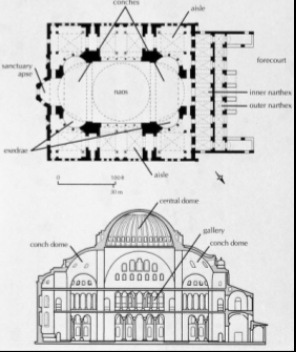
Hagia Sophia
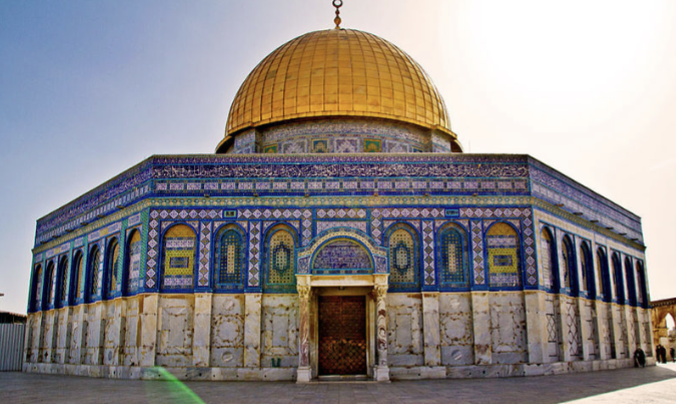
The Dome of the Rock

The Dome of the Rock

Oto of Metz Palatine Chapel
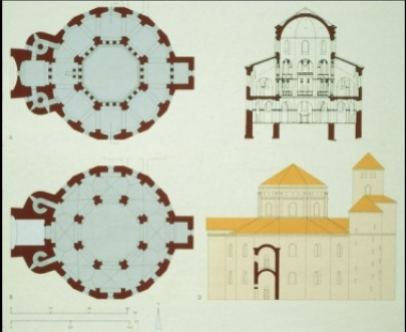
Oto of Metz Palantine Chapel
Westwork
Carolingian front entrance structure

Charlemagne
Leader during the Carolingian period, united most of Western and Central Europe and was the first recognized emperor to rule from the west after the fall of the Western Roman Empire.
Pendentives
Triangular architectural element that allows builders to place a circular or elliptical dome over a square or rectangular room
Rock in Dome of the Rock
location where Mohammed is thought to have ascended into the heavens during his night journey.
Layout of dome of the rock
Octagonal, has an inner and outer ambulatory which surround the central rock under the dome. 4 entrances in the cardinal directions
Central colonnade layout in Dome of the Rock
4 piers and 12 columns which are spolia made of marble and corinthian style.
Dome of the rock murals
floral, some verses from the qu’ran, no people or animals. Originally dome was covered in mosaic too but now it’s gold tile
Hagia Sophia Versions
Version one destroyed by fire. Version two destroyed in Nika riots. Version three dome collapsed soon after it was finished in an earthquake.
Hagia Sophia plan
Mix of central plan and basilican plan. Naos, which two conches on either side. Four exedrae extend from the corners of the conches. Aisles separated behind. Sanctuary apse located at far end from the inner and outer narthex.
Colorful tiling style
Opus sectile: a technique where pieces of marble of different colors are cut and assembled to create geometric patterns or figure
Opus sectile in Hagia Sophia floor
The Omphalion. Located under the dome, it was used to crown the Byzantine Emperors.
Famous mosaics in hagia sophia
Virgin Mary and Christ Child / Apse Mosaic (c. 867, Main Apse): The first major figural mosaic created after the end of Byzantine Iconoclasm, showing the Virgin Mary enthroned with the Christ Child.
Imperial Door Mosaic (Late 9th – Early 10th Century, Narthex): Shows Emperor Leo VI kneeling in reverence before Christ Enthroned
Vestibule Mosaic: Shows Mary, Constantine I and Justinian
Minaret addition to Hagia Sophia
Four minarets were added after the Ottoman empire took over Constantinople in 1453.
Umayyad Caliphate
Created the dome of the rock, second major Islamic caliphate and the first hereditary Islamic dynasty.
Three functions of centrally planned buildings
Mausolea, Martyria, baptisteries
Santa Costanza plan
centrally-planned circular building with a small narthex. Rotunda encircled by an ambulatory which is separated by a colonnade of 12 pairs of granite corinthian columns. The ambulatory is lower in height than the rotunda. Walls punctuated by alternating semi-circular and rectangular exedrae.
Santa Costanza mosaics
Mainly in the curved areas of the ambulatory, they depict vegetation and animal scenes as opposed to clear christian imagery. This is interesting because it is early christian art, therefore the symbols of christianity had not yet been created. Constantina’s face is in a mural surrounded by grapevine.
Pantheon dome info
Largest unsupported concrete dome, which is punctuated by an oculus. Rectangular coffers decorate the surface of the dome, making it lighter for weight-bearing purposes and for aesthetics. The weight is brought down into 8 piers, each pair has an exedra between them.
Pantheon decorative elements
Originally, there were statues of deities in each exedra. Additionally, the floors and walls are covered in multicolor marble panels which provide a sense of life. There used to be bronze rosettes in the coffers.
Oto of Metz Palatine Chapel Architect
Odo of Metz
Area inside the westwork
the tribune, where the throne room is in Palatine Chapel