Chem Bio
 Call Kai
 Learn
 Practice Test
 Spaced Repetition
 Match
 Flashcards
 Knowt Play
1/48

There's no tags or description
Looks like no tags are added yet.
49 Terms
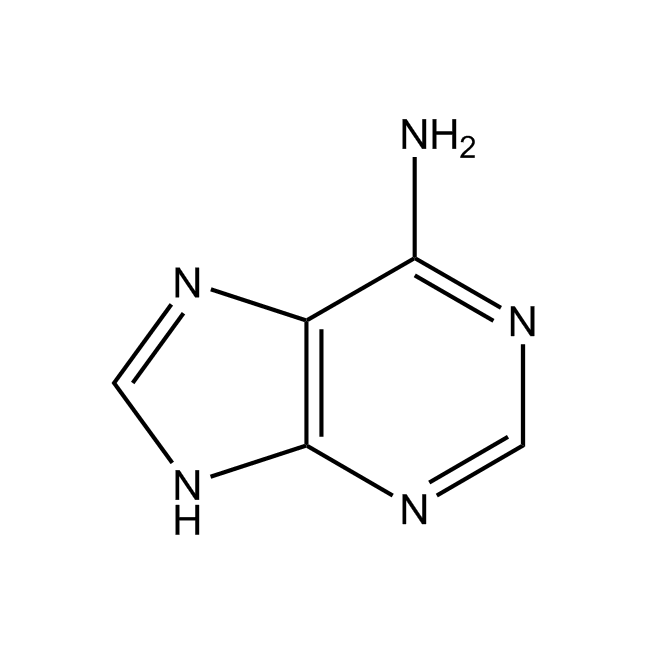
Adenine
A
Guanine
G

Thymine
T

Cytosine
C

Uracil
U

Nucleotide
Structure that contains one or more phosphate groups
Nucleoside
Base + 5 carbon Sugar
A Nucleoside RNA
Adenosine
A nucleotide RNA
Adenlyate
A Nucleotide DNA
Deoxyadenylate
A Nucleoside DNA
Deoxyadenosine
C DNA Nucleoside
Deoxycytidine
C DNA Nucleotide
Deoxycytidylate
T DNA Nucleoside
Deoxythymidine
T DNA Nucleotide
Deoxythymidylate
RNA is Base Sensitive
2’ OH on ribose
DNA is Acid Sensitive
Hydrolysis of P coordinated with Mg2+ and water
- DNA Polymerase I (DNA Pol I)
Enzyme responsible for removing RNA primers and replacing them with DNA during replication in E. coli. Has 5′→3′ polymerase, 3′→5′ proofreading exonuclease, and 5′→3′ exonuclease activities.
DNA Polymerase III (DNA Pol III)
Primary enzyme responsible for chromosomal DNA replication in E. coli. Synthesizes DNA in the 5′→3′ direction and possesses 3′→5′ proofreading exonuclease activity.
3′→5′ Exonuclease (Proofreading)
Enzymatic activity that removes incorrectly incorporated nucleotides from the 3′ end of a growing DNA strand, increasing replication fidelity.
5′→3′ Exonuclease
Enzymatic activity associated with DNA Pol I that removes nucleotides ahead of the polymerase, including RNA primers during Okazaki fragment processing.
DNA Ligase
Enzyme that seals nicks in the DNA sugar-phosphate backbone by forming phosphodiester bonds. Requires an energy source such as ATP or NAD⁺.
DNA Helicase (DnaB
ATP-dependent enzyme that unwinds double-stranded DNA at the replication fork by disrupting base-pairing interactions.
Primase
Enzyme that synthesizes short RNA primers, providing a free 3′-OH that DNA polymerase can extend.
Single-Stranded DNA-Binding Protein (SSB)
Protein that binds exposed single-stranded DNA, preventing it from reannealing or forming secondary structures.
β Sliding Clamp
Ring-shaped protein that encircles DNA and holds DNA Pol III near its template, increasing polymerase processivity.
Core (α, ε, θ)
Catalytic assembly containing the polymerization subunit (α), proofreading subunit (ε), and an accessory subunit (θ) that stabilizes ε.
Processivity
Number of nucleotides added by a polymerase before it dissociates from its DNA template.
RNA Polymerase (RNAP)
Enzyme that synthesizes RNA complementary to a DNA template in the 5′→3′ direction. Unlike DNA polymerase, it does not require a primer.
Sigma Factor (σ)
Bacterial transcription initiation factor that recognizes promoter sequences and directs RNA polymerase to appropriate transcription start sites.
Rho Factor (ρ)
ATP-dependent RNA helicase involved in rho-dependent transcription termination by promoting separation of the RNA transcript from its DNA template.
TATA-Binding Protein (TBP)
Protein that recognizes the TATA box in promoters containing that element and helps assemble the eukaryotic transcription initiation complex.
−35 Element
Bacterial promoter sequence located approximately 35 nucleotides upstream of the transcription start site. Consensus sequence: 5′-TTGACA-3′.
−10 Element (Pribnow Box)
AT-rich bacterial promoter sequence located approximately 10 nucleotides upstream of the transcription start site. Consensus sequence: 5′-TATAAT-3′.
TATA Box
AT-rich core promoter element found in some eukaryotic genes, commonly near position −30, recognized by TBP.
RNA Hairpin
RNA secondary structure formed when complementary sequences within the same RNA molecule base-pair, producing a stem and loop.
Rho Utilization Site (rut Site)
– Region of nascent RNA recognized by rho, allowing rho to bind and participate in transcription termination.
Aminoacyl-tRNA Synthetase
Enzyme that attaches the correct amino acid to its corresponding tRNA using ATP, forming a charged aminoacyl-tRNA.