Lecture 13- Rome, The Birth and Rise of an Empire
 Call Kai
 Learn
Learn Practice Test
 Spaced Repetition
 Match
Match Flashcards
 Knowt Play
1/13

There's no tags or description
Looks like no tags are added yet.
Name | Mastery | Learn | Test | Matching | Spaced | Call with Kai | Chat |
|---|
No analytics yet
Send a link to your students to track their progress
14 Terms
Etruscan Civilization
Lived mostly in hill towns, came down to mine and trade
Early were called Villanovans
8th and 3rd centuries thrived
Civita- eroded town
After medieval times, Orvieto was restored
Fully collapsed and became Roman empire in 278BC
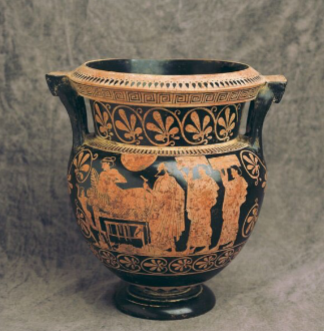
Etruscan Pottery
Greek influence, red color from soil in the area
Bucchero- clay that turns black when fired, unique to their civilization
FACTS about the Founding of Rome
Earliest settlers were Greek or had contact with Greek colonists
Roman kings rule the city until they were conquered by Etruscans in the 7th century
Romans overthrew Etruscans in 509BC, forming a republic, where people elect leaders within the government
MYTHS about the Founding of Rome
Brothers Romulus and Remus were suckled by a she-wolf
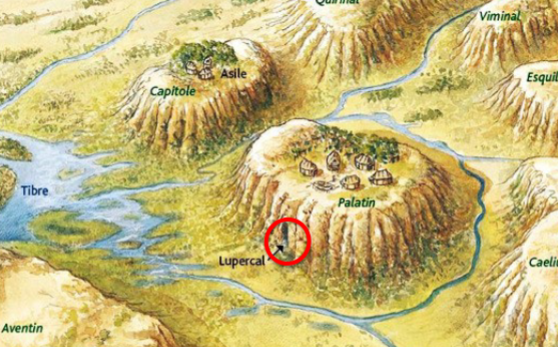
She-wolf lived in a cave called Lupercal
The Rape (Abduction of the Sabine Women) signaled the rise of Rome
Romulus and Remus
Suckled by she-wolf
Signs and statues still exist in Rome
Founded original city on the Palatine Hill (April 23, 753)
No logic to their buildings’ structures
Umbilicus Urbis Rome
“The Navel of the City of Rome”
Center of the Roman empire
No sacred purpose, just a marker

Temple of Jupiter Optimus Maximus
Follows Etruscans
Roman Templum transitioned to explate
Comitium- either side has basilica, culture becomes more political

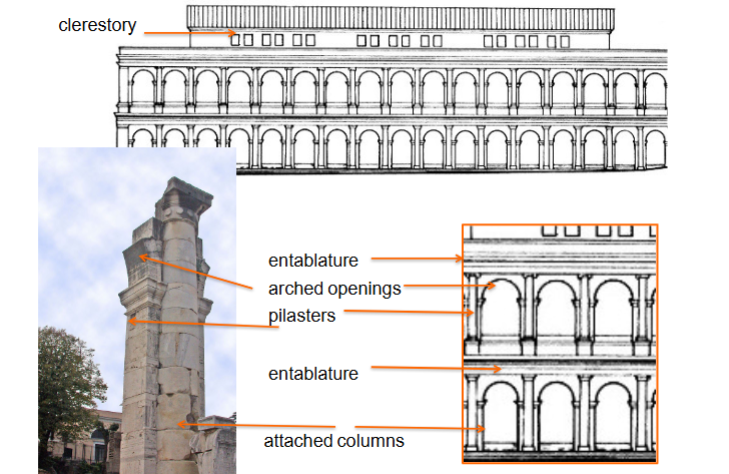
Basilica
Known in Aemilia
Very open space, not closed rooms
Columns had colonnades and entablatures
Arched openings and pilasters
All of the area was buried
Christian______, S. Maria Maggiore, Rome 440BC
Temple of the Vestal (Virgins)
Hearth fire symbolizing the perpetuity of the Roman state
Dedicated to the goddess Vesta
Made sure light never went out

Lupercal
Hills still exist mostly (Palatin, Capitole, etc.)
At the foot of the Palatine Hill
Landed on the banks of the Tiber
Ficus Ruminalis
A wild fig tree that had religious and mythological significance in ancient Rome
Stood near the Lupercal
Festival of Lupercalia
Held annually on February 15th
Men would go around in sheep’s cloth and hit women with leaves
St. Valentine’s Day comes about from this

Pomerium
Sacred precinct Via Sacra
Temple sits above
Arc is place of last retreat

Lacus Curtius
Mysterious, sacred pit
Near the Sacred Fig Tree
Cloaca Maxima
