12. Environmental influences on eating behavior
 Call Kai
 Learn
 Practice Test
 Spaced Repetition
 Match
 Flashcards
 Knowt Play
1/26

There's no tags or description
Looks like no tags are added yet.
27 Terms
Why do we need different approaches?
Changing one part of the system is not enough
Unhealthy eating is a wicked problem
No simple solution and changes at one level affect other levels
Prevention paradox
The idea that you should help the larger population that are at lower risk for a disease to stay healthy rather than only focus on the high-risk group.
Preventing the disease rather than curing it.
What can individuals do to become healthier?
Nutrition education and food literacy
Lifestyle interventions and ‘Food as Medicine’
Medication
Nutrition education for the general public (individual level)
Translating evidence-based dietary guidelines into practical information for consumers
e.g. schijf van vijf
Food literacy (individual level)
Abilities, knowledge and skills needed to interact with food system and develop healthy and sustainable eating habits
Relational: enjoying food, exploring tastes, food culture and positive relationships with food
Functional: food and nutrition knowledge, cooking skills, planning and understanding food labels
Critical: critically evaluating food information, marketinga nd wider food system
Nutrition information at point of purchase (individual level)
e.g. nutriscore
Combind lifestyle interventions (CLI) (individual level)
Teaches self-regulation skills to help with weight loss
Average weight loss of 3–4% after one to two years
• About one third of participants achieves ≥5 percent weight reduction
• Around 60% completes full 2-year programme
• Improvements in quality of life, especially among participants with
≥5 percent weight loss
Integrating food and nutrition into healthcare (individual level)
Food prescriptions and vouchers for fruit and vegetables
Medically tailored meals or groceries
Medical interventions (individual level)
Strong individual effects for losing weight (15-17% weight loss)
Ideally combined with behavioral coaching to support long-term change
Weight returns when people stop the drug
Long-term effects remain uncertain
Commercialisation of medical weight loss (individual level)
NL: some GLP-1 medicines are reimbursed for people with type 2 diabetes (BMI>30) who meet specific medical criteria
Advertising medical weight-loss programmes is allowed, but advertising prescription drugs is prohibited
Goodweight: online wieght-loss programmes with assessment and medication: 250-350 euro per month.
Impacts of medications on food industry (individual level)
Less food will be bought if 11-15% are using GLP-1 leading to them having less hunger
GLP users look for:
More protein products
Smaller portions (48%)
More selective shopping
HIgher spending (self-report)
Treatment is not prevention (individual level)
Do not address the upstream drivers of unhealthy diets
Acces, affordability and long-term use raise societal questions
Widespread use of obesity drugs could cost 1.3 billion per year
may increase health inequality: low-income groups already have higher obesity rates.
Children grow up in unhealthy environment
What can companies do (company level)
Product innovation and reformulation
healthy food availability and accessibility (e.g. nudging)
Healthier food in schools, hospitals and restaurants
Choice architecture (company level)
People do not behave rationally, but irrationally in a predictable and systematic way
What is a nudge? (company level)
Any aspect of choice architecture that predictably changes people’s behavior, without:
prohibiting certain options or
economic measures
How do we encourage healthier lunch choices?
Explain what a healhty lunch is
Repeat step 1.
Increase the price of unhealthy foods
Prohibit selling unhealthy foods such as fried snacks
Make unhealthy foods difficult to reach & put healthy options at eye level (nudge)
example of a nudge (company level)
Regular cola now in place sugar-free cola

Accessibility nudge (company level)
No effect, only effect of what was in promotion

What can the government do?
Taxes, subsidies and pricing policies
Public procurement, including school lunches
Regulation of marketing and food environments
Monitoring, accountability and system-wide coordination
Benefit of governmental interventions
Change rules and incentrives of food system (top of intervention ladder)
Shape production, pricing, availability and marketing
Influence all environments at once, not only individual settings
Taxes and subsidies (government level)
taxes on unhealthy products: increase price of sugary drinks and other unhealthy products
Subsidies for healthy foods: make fruit, vegetables and other healthy foods more affordable
What is public prcurement
When governments purchase foods
They can set nutrition standards
Improve meals in schools, hospitals and other public institutions
Include health and environmental costs in purchasing decisions
Use of contracts to influence food suppliers and markets
Challenges of regulation of food marketing, including digital media
Enforcement is mainly reactive → consumer has to complain
Is industry-led
Hardly has any sanctions (only advice to stop)
Intervention ladder
Higher population-level impact
• Benefits often strongest among lower-income groups
• They reduce exposure to unhealthy cues
• They require little effort from individuals
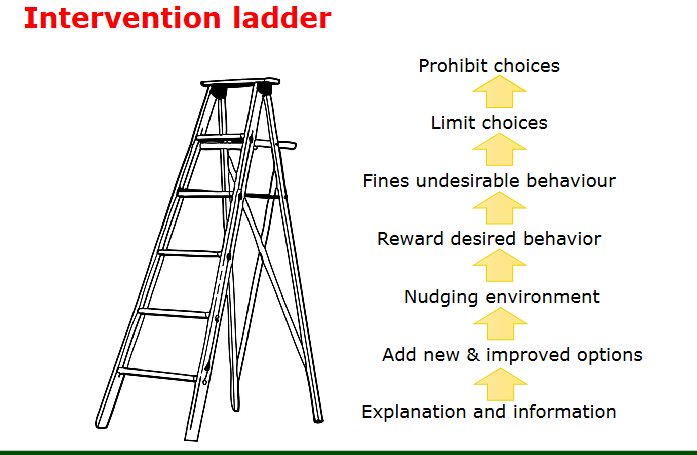
Which government interventions are most effective
The more upstream the better

System pressures and commerical incentives

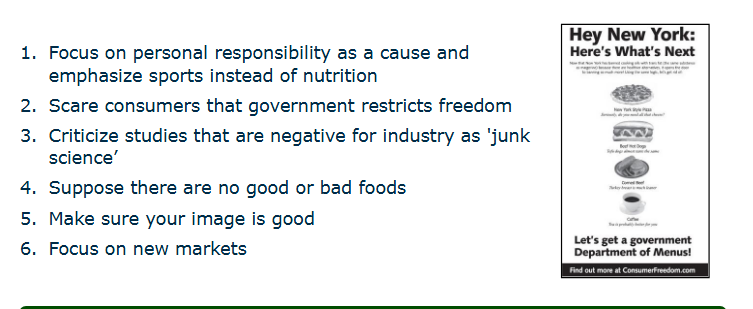
What can unhealthy food companies do with new rules about healthy eating