greece ap art history
 Call Kai
 Learn
 Practice Test
 Spaced Repetition
 Match
 Flashcards
 Knowt Play
1/28

There's no tags or description
Looks like no tags are added yet.
29 Terms
greek sculpture (in general)
depicts mythology and greek polytheistic religion
depicts perfect male athletes (bodies)
humanism
gods look like perfect humans
humans worshipping
humans doing human things
revolves around the human
art had both civic and religious function
female nudity = rare
male nudity = everywhere
mainly marble and bronze (some wood and terra cotta)
often painted
incredibly influential on future european art
greek sculpture: archaic stylistic traits/conventions
700-400 BCE
kouros
archaic smile
similarities to egyptian sculpture
marble and cast bronze
rigid and stylized
kore
symmetry
pie crust hair
painted
greek sculpture: classical stylistic traits/conventions
430-323 BCE
goden age
marble and cast bronze
contrapposto
s curve
weight shift
no more archaic smie
no longer symmetrics
no longer strictly frontal
vase paintings (amphora or krater, black or red figure)
classical contextual history
begins w end persian wars
athens rebuilt after destroyed
age of pericles
internal struggles between city-states
peloponnesian war
time of great achievements in democrac, philosophy, math/science, art, architecture, theater, etc
greek architecture: classical
post and intel temple structures
limited access to deities
exterior of temples heavily decorated w sculpture, balance, harmony, proportion and order
symmetry
3 orders of greek columns:
doric → grooved columns w no grooved based and an upper story w square sculpture (not as detailed)
ionic → columns with scrolled capitals and upper story with sculptures in friezes (detailed)
corinthian → similar to ionic but capitals carved in tiers of leaves (super detailed)
Greek Sculpture: Hellenistic stylistic traits/conventions
no longer about one perfect, ideal figure
broader range of age, physical types
showing darker side of life
extreme realism
more drama, action, motion, emotion
suffering , playfulness, flirtation, anguish, pathos, melodrama
sculpted drapery
beginnings of female nude
greeks no longer see world as perfect
Hellenistic Contextual history:
death of alexander the great
new philosophies
library of alexandria (science and scholarship)
Anavysos Kouros
~530 BCE
marble w remnants of paint
archaic
grave marker
archaic smile
pie crust hair
similar to egyptian sculpture
negative space → diff. from egyptian

kouros
an archaic greek sculpture of a male youth
(in the round, reestanding, grave markers for important ppl, life size, marble, painted)
Peplos Kore from the Acropolis
c. 530 BCE
marble
originally painted
archaic
peplos: a garment worn by women in ancient greece, usually full length and tied at the waste
not sure who she is (most likely athena)
hand missing
in the round
freestanding
archaic smile
was prob holding smthn like a bow and arrow

encaustic
a type of painting in hich color is added to hot wax to affix to the surface
kore
an archaic greek sculpture of a female youth
Niobides Krater
artist: Niobid Painter
c. 460-450 BCE
clay, red figure technique
classical greece
side a → apollo and artemis killing children of Niobide for her pride (hubris)
side b → heracles story
ground lines
in the round
depth
naturalism

Doryphoros (Spear Bearer)
artist: polykleitos
c. 450 - 440 BCE
roman copy - marble
greek og - bronze
classical perfection of greek sculpture
idealized perfection
perfect male body and face
in the round
not meant to be frontal or symmetrical
prob had spear in hand
canon to set ratio of statue’s features

Athenian Agora
c. 600 -150 bce
place rather than building
archaic-hellenistic greece
athens
agora → lower level marketplace of a greek city-state where commercial social and civic activities were conducted
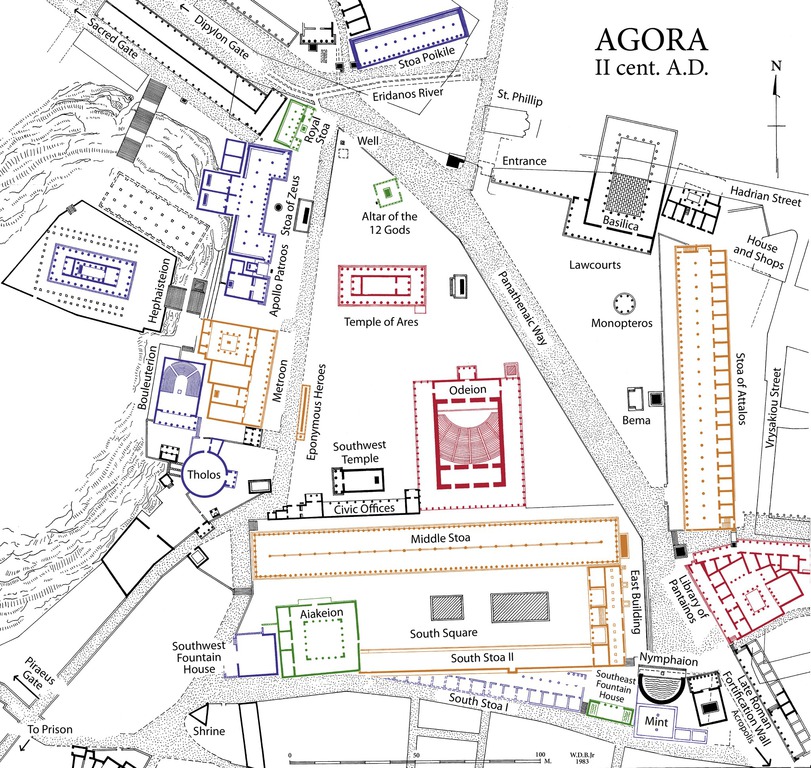
panathaneic way
ceremonial road for a procession to honor Athena during a festival
stoa
covered walkway w columns on one ide and a wall on the other
The Acropolis: parthenon
acropolis = high city
THE acropolis in athens
artists → Iktinos and Kallikrates
c. 447 - 410 BCE
marble
classical
theater of dionysus carved into side of acropolis 9into hill)
rectangular marbe temple dedicated to goddess athena
on acropolis in athens
phidias designed sculpture inside
brightly painted
optical illusions

Acropolis: Helios, Horses, and Dionysus
large life size
int he round
attached to deep shef of east pedimnt
missing center figures

Acropolis: Plaque of the Ergastines
ergastines → group of young women chosen to weave new peplos for the statue of Athena on the Acropolis
ergastines brining peplos to athena
bas relief
asymmetrical
contrapposto
part of inner frieze of parthenon
painted to make more visible

Acropolis: Nike Fastening Her Sandal
from a temple
classical
clinging drapery
sense of body - but still no nude
high relief - very deep relief
realism

Acropolis: the Temple of Athena Nike
temple commemorating victory - athena = goddess of victory
athena nike = athena’s victory
small temple

caratids
female figures used as columns
Grave Stele of Hegeso
artist: attributed to Kallimachos
c. 410 bce
marble and paint
classical greece
part of tradition of marking graves
shallow relied
2 women - not citizens, no rghts, no role outside home
inscription defined relationship to men
one servant, other is Hegeso (lady)
classical because
contrapposto
drapery
serene
realistic idealized image

genre
scene of everyday life
Winged Victory of Samothrace
c. 190 BCE
marble
heenistic
in the round
naval victory
contrapposto
living drapery
dramatic
painted

Great Altar of Zeus and Athena at Pergamon
c. 175 BCE
marbe
hellenistic
asia minor (turkey)
prussia disassembled and took
figures depicting battle between greeks and giants for cotnrol over eart
depiction of athena fighting giants
drama
motion
emotion
theatrical
twisting bodies and diagonals
exaggeration and energy
high relief
swirling
overlapping
facial exressions

gigantomachy
a mythical ancient greek war between giants and olympian gods
Seated Boxer
bronze
c. 100 bce
hellenistic
melted into mold and cooed
emotion
story
age
copper create illusion of blood
nude
