France: Notable Explorers and Merchants
 Call Kai
 Learn
Learn Practice Test
 Spaced Repetition
 Match
Match Flashcards
 Knowt Play
1/17

There's no tags or description
Looks like no tags are added yet.
Name | Mastery | Learn | Test | Matching | Spaced | Call with Kai | Chat |
|---|
No analytics yet
Send a link to your students to track their progress
18 Terms
1500s - Binot Paulmier de Gonneville (All Facts)
French Navigator
He was once blown off course in the Indian Ocean, where landed on a vast land which he was convinced was modern-day Australia (“Terra Australis”)
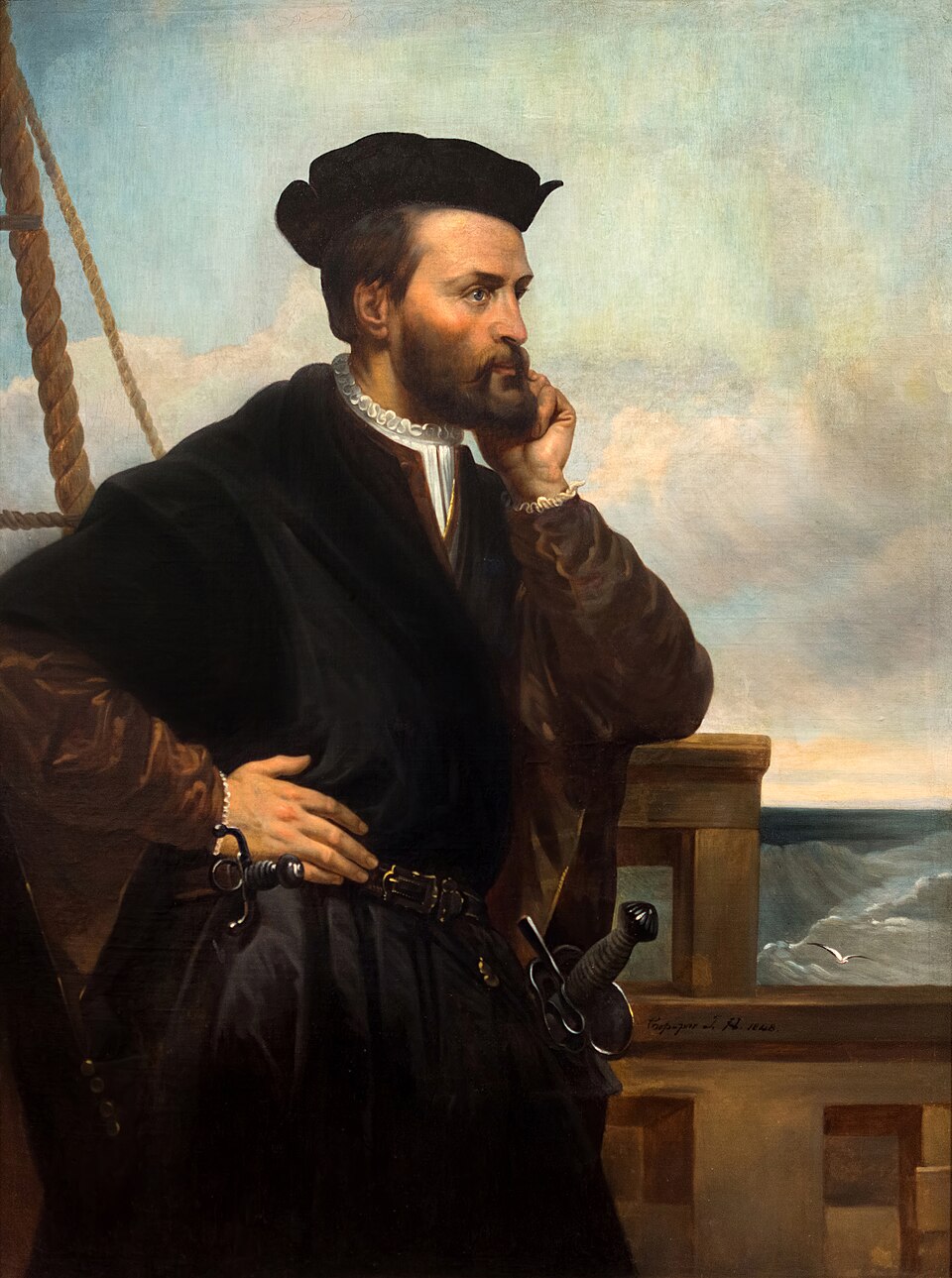
1491 - 1557 - Jacques Cartier (All Facts)
French Explorer
He was from Brittany
He is credited with discovering Canada
His voyages were commissioned by King Francis of France in the desire to find
a passage to Asia
(some) gold
On his first expedition to North America, in which he found and brought back furs to Normandy in France,
he went out on a three month journey from St. Malo on the coast of France
he had three ships, and made a circuit of the Labrador coast
he reached the estuary of the St. Lawrence River (in Canada), which he hoped would open up a huge expanse of North America
he explored off North America at
Prince Edward Island
Chaleur Bay
Gaspe Bay
he brought with him Donnaconna (an Iroquois Chief) and ten other Iroquois Chiefs
he made friendly contact with the Native Americans, bringing two of Donnaconna’s sons back home with him
On his second expedition to North America, he landed in Quebec and reached a town which he named Montreal;
he initially went because he was inspired by stories of the wealthy kingdom of Saguenay
he also went to return Donnaconna’s two sons to him
he, however, found none of the gold which he expected to find upon voyaging
instead, he and his men suffered a hard winter at Montreal where 25 of his men died of scurvy while their ships were locked in ice after having penetrated further upriver
he returned from his expedition at St. Malo on the coast of France
On his third expedition to North America, he landed near Quebec and found a permanent settlement there
he was entrusted by King Francis of France with the task of “penetrating further into the country of Canada” in order to find a new route to China
he was commissioned to found a permanent settlement after having landed near Quebec
He died at St. Malo
1520 - 1562 - Jean Ribault (All Facts)
French Navigator and Naval Officer
He left France at the head of a part of 150 French Huguenots, intending to establish a colony in Florida
He and his men left just prior to the French Wars of Religion, likely preemptively escaping religious persecution
However, the settlers quickly ran out of food and began to eat each other, and the survivors promptly returned to France
He landed on the coast of Florida and discovered a waterway which he named the river of May (modern-day St. John’s River)
He then visited the royal court of France and brought his first publication with him
He brought reinforcements to the French colony of Fort Caroline, having arrived there and them having been long overdue
When he was on the verge of attacking Pedro Menendez de Aviles’s Spanish settlement at St. Augustine, his fleet was scattered by a devastating storm, in which 200 of his men were shipwrecked, captured, and latter massacred by de Aviles and his Spanish forces
1520 - 1562 - Jean Ribault: Whole and True Discovery of Terra Florida (All Facts)
Work which was the first account of Florida published in English
1529 - 1574 - René Goulaine de Laudonnière (All Facts)
French (Huguenot) Explorer
He was Jean Ribault’s second-in-command
Founder of Fort Caroline in Florida
He landed at Matanzas inlet on the river of May (modern-day St. John’s River) with a party of 300 to set up the post
Beset by food shortages and mutinies since he first initially established the settlement, he attacked one of the villages of the Utina tribe, holding its chief to ransom hoping that the Native Americans will pay him with a supply of corn
The colony was then broken up by Pedro Menendez de Aviles of Spain
Jean Ribault then arrived at the French colony with reinforcements, having been long overdue, just in time before Menendez arrived
However, Ribault and the namesake and their French troops were massacred by Pedro Menendez de Aviles of Spain and his Spanish forces
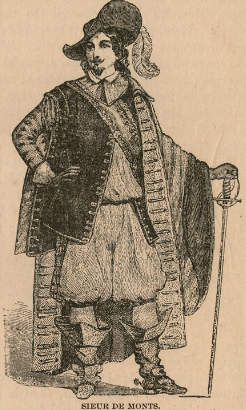
1558 - 1628 - Pierre Dugua, Sieur de Mons (All Facts)
French Explorer, Merchant, and Colonizer
He founded the first permanent French settlement in Canada in the northeast region on the St. Croix River
He was lieutenant-general of “New France” for some time
1574 - 1635 - Samuel de Champlain (All Facts)
French Explorer, Navigator, Cartographer, and Soldier
He established “New France” as a permanent French colony in North America and founded Quebec City (Quebec)
He established and set up the first French settlement at Quebec
As the province’s founder, he strengthened its French presence by persuading more French farmers to settle there
He believed that the lack of settlers made Quebec vulnerable to the English, as French colonists prefer working with the Native Americans in the fur trade rather than working the land
His ability to cooperate successfully with the Native American gave France a foothold in Quebec
He established “Port Royal” as a colony in “New France” (Canada) located in Acadia (Nova Scotia)
It was famous for having the first play staged in the New World, that being the French performance of “La Theatre de Neptune”
He and his colonists eventually returned from “Port Royal,” abandoning the settlement there
On his first voyage to “New France” (Canada), he landed there on a mission to study conditions for a possible permanent settlement there
On his second voyage to “New France” (Canada), he reached Cape Cod in search of an ideal location for French settlement in the New World
On one voyage, he set out on an intrepid voyage of exploration covering the Ottawa River, Georgian Bay, and Lake Ontario
He travelled by canoe and, while expanding geographical knowledge to a great extent, he was also plunged into the middle of an internecine Native American war, which shaped him to become a soldier
Wounded in battle with the Iroquois, he arrived to winter in Huron village
On another voyage, he sailed up the Ottawa River and explored Lake Huron and Lake Erie
On his seventh voyage, he found Lake Huron, opening up an easier route inland for French fur traders
He returned to “New France” to continue work on the fulfillment of his dream of a flourishing France in the New World
This was his first visit to Quebec since it was returned by the English after they had forced the namesake to surrender it
He died in Quebec
1613 - Samuel de Champlain: Voyages du Sieur Champlain Saintongeois (All Facts)
Work which was considered a “faithful Journal of the Observations and Discoveries of New France whilst seeking a northern route to China”
1600s - 1635 - Jean du Plessis d'Ossonville (All Facts)
French Explorer
He co-founded Guadeloupe, claiming it for France
1598 - 1642 - Jean Nicolet (All Facts)
French Explorer
He crossed Lake Michigan wearing a Chinese robe and entered what he thought was the East but instead found himself in the wilds of the northwest of the American continent; the first white man to set foot in the area
1601 - 1643 - Charles Liénard de L'Olive (All Facts)
French Explorer
He co-founded Guadeloupe, claiming it for France
1618 - 1600s - Médard des Groseilliers (All Facts)
French Explorer and Fur-Trader
Along with his brother-in-law Pierre Espirit Radisson and a team of 31 set out from Trois Rivieres on the lower St. Lawrence River to explore the southern shores of Lake Superior and the regions south and west of Lake Superior, establishing trading relations with the Native Americans in that area
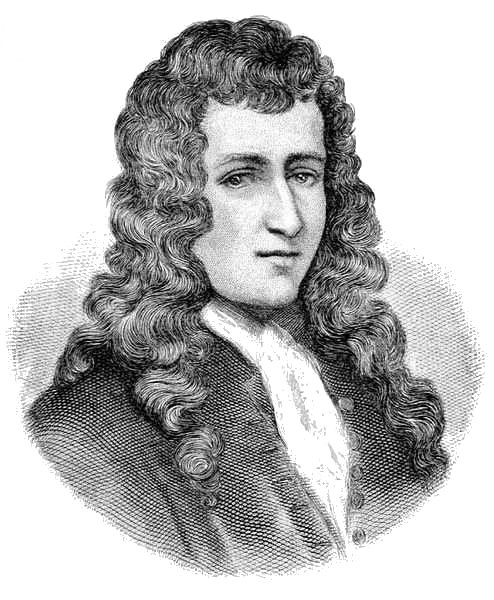
1643 - 1687 - René-Robert Cavalier, Sieur de La Salle / Robert La Salle (All Facts)
French Explorer and Fur Trader
He entered into friendly relations with the Iroquois
He explored the Midwest, probably being the first white man in the region
He was the first European to see the Niagara Falls, along with his chaplain Father Louis Hennepin
He travelled to a then-uncharted region in the northern central part of the continent (modern-day Indiana)
He helped France formally claim possession of the entire Mississippi River Valley, naming the region Louisiana in honor of his king, Louis XIV
He was able to do this after having travelled the length of the entire Mississippi River
He was murdered by his own men while searching for the mouth of the Mississippi River along the coast of the Gulf of Mexico
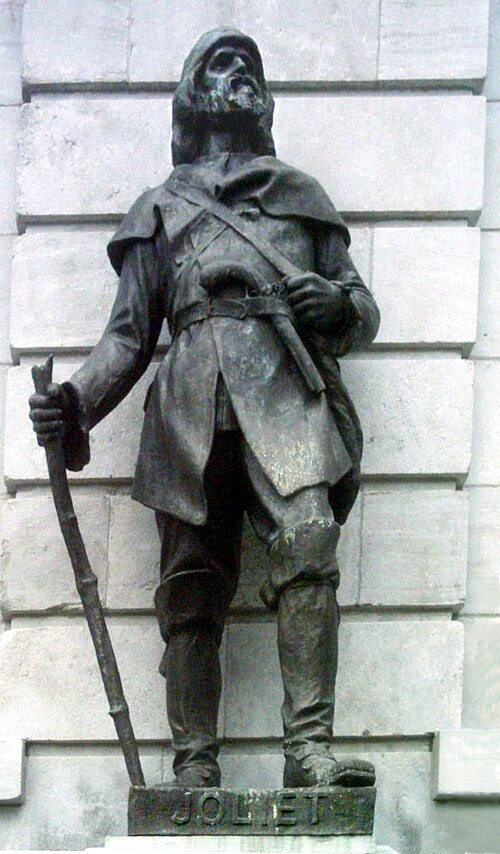
1645 - 1700 - Louis Joliet (All Facts)
French Explorer
He was the first non-Native-American to explore and map the Upper Mississippi River, along with Father Jacques Marquette
He returned to Montreal after a 2,500-mile journey exploring the basin of the Mississippi River
1634 - 1706 - Francois Martin (All Facts)
First Governor of Pondicherry in French India
He founded Pondicherry for the French East India Company
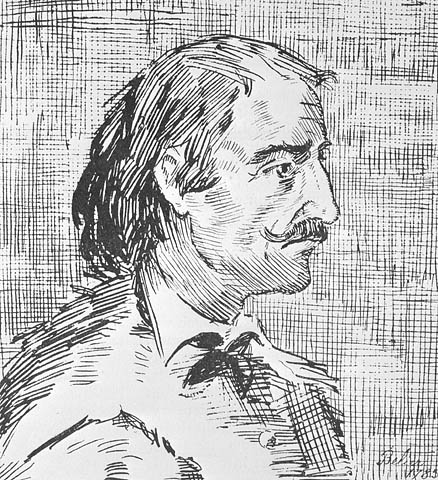
1636 - 1710 - Pierre Espirit Radisson (All Facts)
French Explorer
Along with his brother-in-law Medard des Groseilliers and a team of 31 set out from Trois Rivieres on the lower St. Lawrence River to explore the southern shores of Lake Superior and the regions south and west of Lake Superior, establishing trading relations with the Native Americans in that area
1654 - 1738 - Andre Brue (All Facts)
French Explorer and Colonizer
He was appointed director of the French Senegal Company, in which he attempted to establish trading posts in the valley of the Senegal