VBT, IFs, Properties/Structures of Solids, MOT
 Call Kai
 Learn
Learn Practice Test
 Spaced Repetition
 Match
Match Flashcards
 Knowt Play
1/64

There's no tags or description
Looks like no tags are added yet.
Name | Mastery | Learn | Test | Matching | Spaced | Call with Kai | Chat |
|---|
No analytics yet
Send a link to your students to track their progress
65 Terms
Electron Domains/Steric #
total # of e- pairs (lone + bond pairs)
Electron Domain Geometry
# of lone pairs + bond pairs
e.g. AX2E2 e- domain geometry = tetrahedral (4 pairs = steric # 4 = tetrahedral)
Molecular Geometry
only # of bond pairs
e.g. AX2E2 molecular geometry = bent
Bonding Domains
bond pairs
Non-Bonding Domains
lone pairs
Valence Bond Theory
model of bonding
bonding e- pairs are located between bonding atoms
non-bonding e-pairs are located in regions outside the bonding region
Valence bond theory only applies to what cpds?
covalent
Valence bond theory does not work well for __________ atoms.
hypervalent (e.g. SF6)
Draw the VBD for H2
solution in notebook
Draw the VBD for HF
solution in notebook
σ bond/end-to-end overlap
bond between two nuclei where bonding e- line up along the internuclear axis
Internuclear Axis
horizontal line that goes through the nucleus
To be able to form a covalent bond, the atom has to be able to _____ and __ an e-.
offer, receive
The first pair of e- to form a covalent bond is a _ bond. Therefore in covalent bonding, _ bonds are ALWAYS present.
σ, σ
Draw the VBD for F2
solution in notebook
Hybridization
e- being promoted and subshells becoming degenerate
Degenerate Subshells
subshells that are equal in E (e.g. the 5 d subshells)
There are some atoms in cpds that don’t need to hybridize (bc they already have enough valence e-’s) but do. Why is this?
to allow for larger angles between the subshells and ∴ less repulsion ∴ a more stable molecule
When hybridization occurs, it is based on the __ __.
e- domain geometry
Co-ordinate Covalent Bonding
covalent bond in which both bonding e- come from the same atom
Co-ordinate Covalent Bonding is also called
DATIVE bonding
a) Draw the VSEPR for methane, CH4
b) Draw the VBD for methane, CH4
solution in notebook
a) Draw the VBD for CH2BrI
b) Identify i) the hybridization of the central atom and ii) the bond types
solution in notebook
e-’s in hybridized orbitals always form _ bonds
σ
unhybridized e- in the remaining parts of a multiple bond form _ bonds
π
Draw the VBD for CH2CHBr
solution in notebook
Draw the VBD for CHCBr
solution in notebook
Particles Present in Ionic Crystal
ions (cations + anions)
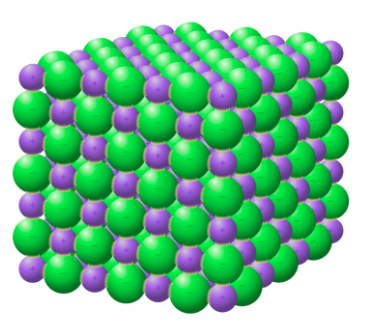
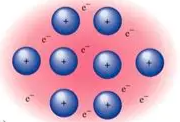
Particles Present in Metallic Crystal
cations
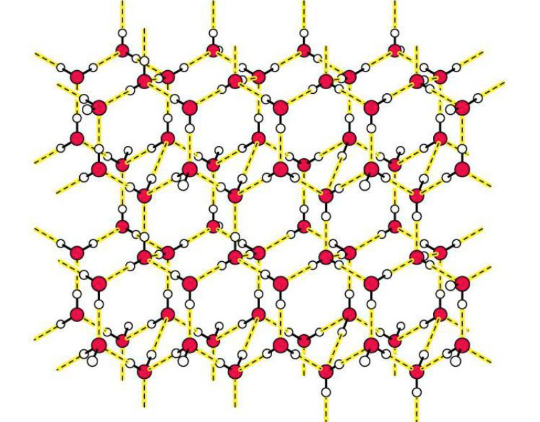
Particles Present in Molecular Crystal
molecules
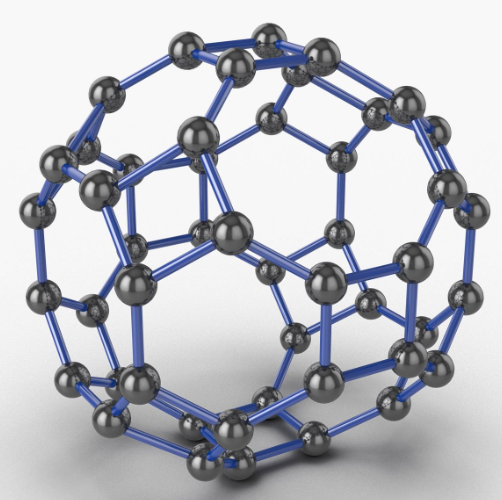
Particles Present in Covalent-Network Crystal
atoms
Type of Force/Bond Between Particles in Ionic Crystal
ionic
ions held together by electrostatic attraction
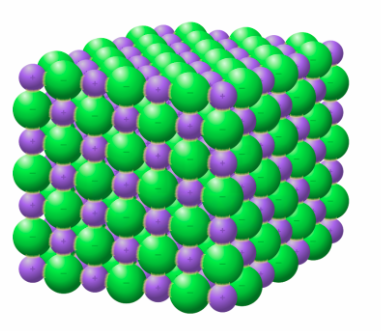
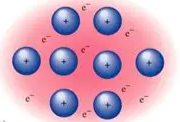
Type of Force/Bond Between Particles in Metallic Crystal
metallic
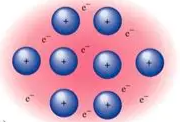
sea of e-’s acts as “glue” for the fixed, +ve nuclei
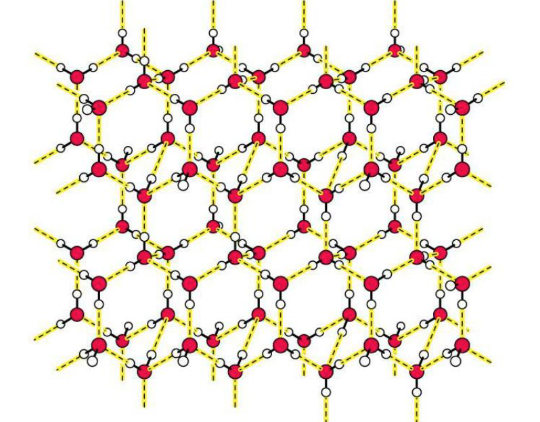
Type of Force/Bond Between Particles in Molecular Crystal
IFs
dipole-dipole, London dispersion, Hydrogen bonding
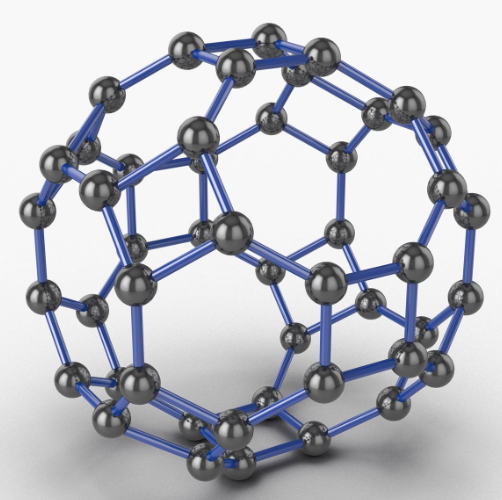
Type of Force/Bond Between Particles in Covalent-Network Crystal
covalent
covalent bonds form between atoms
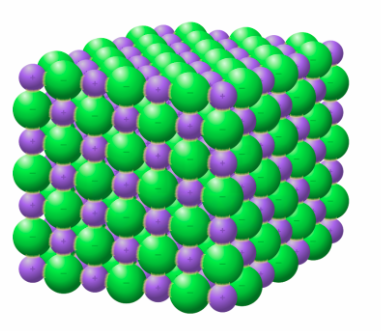
Properties of Ionic Crystals
hard
brittle
high m/bp
conductive in solution/liquid form
Properties of Metallic Crystals
soft/hard
low IE (conductive in solid/liquid form)
ductile
malleable
lustrous
Properties of Molecular Crystals
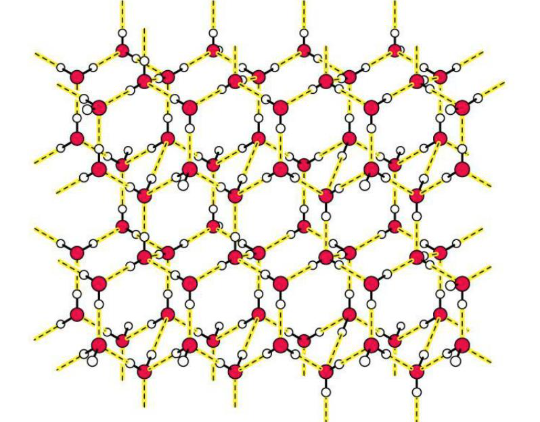
soft
low m/bp
non-conductive
Properties of Covalent-Network Crystals
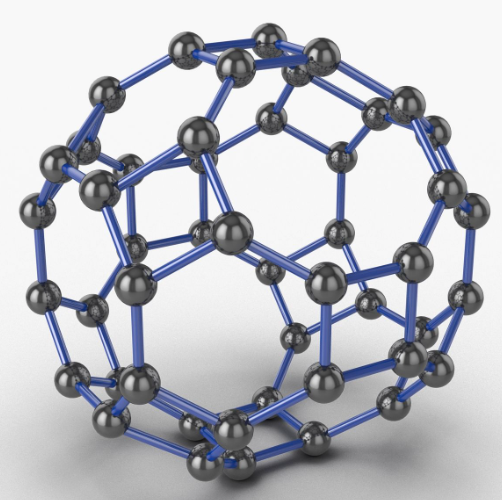
very hard
brittle (don’t bend under pressure)
high m/bp
non-conductive
insoluble
3 Van Der Waals Forces
Hydrogen bonding
dipole-dipole forces
London dispersion forces
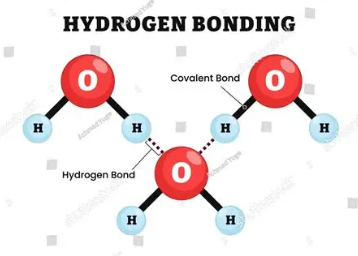
Hydrogen Bonding
occurs when H is attracted to O, F or N (have high EN → high difference in EN → stronger dipole-dipole forces)
(δ+ H of one molecule is attracted to δ- O, F or N of another molecule)
Dipole-Dipole Forces
δ+ and δ- end of two molecules are attracted to each other
only present in polar molecules
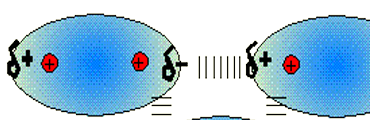
The strength of dipole-dipole forces are directly related to the ________ of the molecule, and inversely related to the ________ between the molecules.
polarity, distance
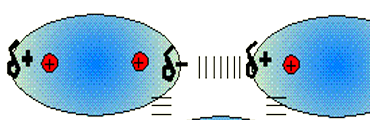
London Dispersion Forces
instantaneous dipole created as e- move around an atom
dipole creates other dipoles on other atoms
atoms attract each other
present in ALL molecules/atoms/ions
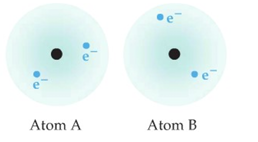
Intramolecular Forces vs Intermolecular Forces
intramolecular: forces between atoms within the same molecule/ion
intermolecular: forces between molecules/ions
Intermolecular forces are significantly _____ than covalent bonds.
weaker
All molecular forces are _____________.
electrostatic
VBT vs MOT
VBT:
uses atomic orbitals to describe e- in atoms
MOT:
uses molecular orbitals to describe e- in molecules
Atomic Orbitals vs Molecular Orbitals
a.o:
applies to single atoms
m.o:
applies to an entire molecule
Contour Representation
hybrid lobes
The total # of m.o. must be the ____ as the total # of a.o.
same
When 2 a.o. overlap, _ m.o. form.
2
What happens when two a.o. form two m.o.?
one m.o. results from constructive combination (bonding orbital)
the other m.o. results from destructive combination (anti-bonding orbital)
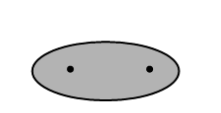
Constructive Combination
E is lower than the E of the orbitals from which it was formed (more stable)
e- density concentrated between nuclei
attraction of e- to both nuclei → lower E → bonding is favourable
Destructive Combination
E is greater than the E of the orbitals from which it was formed (less stable)
nodal region between nuclei (little e- density)
e- are repelled from bonding region → high e- density of opposite side of nuclei → higher E
bonding is unfavourable
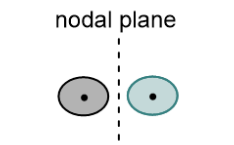
Nodal Region
region of no e- density
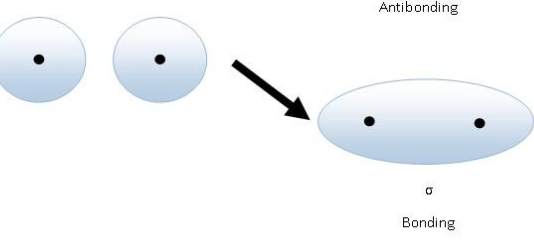
Bonding Orbital
results from constructive combination
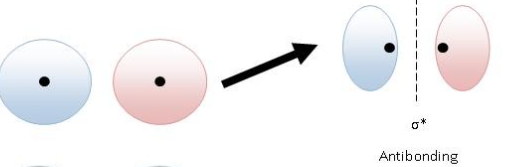
Anti-Bonding Orbital
results from destructive combination
The instability of a destructive M.O. is _______ than the stability of a constructive M.O. (the E difference is _______ in destructive M.O.)
greater
If there are 2 e- in the σ1s and 2 e- in the σ*1s orbital, is the molecule stable?
no, because even though both have the same amount of e-’s (you’d expect them to cancel out), the E difference of the destructive M.O. is greater, so the molecule is higher E (∴ unstable)
Bond Order Formula
# of bonding e- - # of anti-bonding e- / 2
Homonuclear
2 of the same (atom)
What does a bond order of 1 mean?
single bond
The ______ the bond order, the ____ stable a molecule is.
higher, more
As overlap of orbitals increases, the E of the bonding MO is _______ and the E of the anti-bonding MO is ______.
lowered, raised