BIO 109 LAB (Fungi)
 Call Kai
 Learn
Learn Practice Test
 Spaced Repetition
 Match
Match Flashcards
 Knowt Play
1/69

There's no tags or description
Looks like no tags are added yet.
Name | Mastery | Learn | Test | Matching | Spaced | Call with Kai | Chat |
|---|
No analytics yet
Send a link to your students to track their progress
70 Terms
The part of the compound light microscope that holds the slide in place is the
Stage
The 100X objective is also called the ______ objective.
Oil Immersion
T/F: You should always begin looking at a slide with the lowest power objective in place.
True
Another name for the 4X objective
scanning objective
Another name for the 10X objective
low-power objective
Another name for the 40X objective
high-power objective lens
If you have a 10X eyepiece and a 20X objective, then the total magnification would be?
200X

If you need to change the amount of light hitting your slide, it is best to adjust the
iris diaphragm
What is the most common component of bacterial cell walls?
peptidoglycans

The stain responsible for giving certain bacteria a purple color is
crystal violet.
The most important step in the Gram stain is the application of
alcohol/acetone
What shape is this?
Coccus (Round shaped)

What shape is this?
Bacillus (Rod shaped)

What shape is this?
Spirillum (spiral-shaped)

Gram positive
Thick peptidoglycan layer in their simple cell wall, stained purple by crystal violet.

Gram negative
Have more complex cell walls and less peptidoglycan.
Outer membrane on the cell wall contains lipopolysaccharides
Lose the blue/purple stain but retain the safranin and appear pink/red

Benificial Bacteria
- Bacteria in our intestines produce important vitamins.
- Prokaryotes recycle carbon and other chemical elements between organic matter and the soil and atmosphere.
- More than half of our antibiotics from the soil bacterium Streptomyces
_Symbiotic relationships (Mitochondria and chloroplast used to be prokaryotes living within a host)
Which ecological category contains the fungus-like protists?
slime molds
Paramecium, Plasmodium, and dinoflagellates all belong to the clade
Alveolates
Diatoms belong to the clade
Stramenopiles
The complex of organelles that some protists possess for penetrating into host cells is called a(n)
Apex
The Alveolate that causes malaria is
Plasmodium
Which of the following protists is known to "bloom?"
Dinoflagellates
The purpose of the contractile vacuole in Paramecium is to
regulate water balance
Amoeba use _____ to capture and ingest food
pseudopodia
T/F: Fungi are more closely related to animals than to plants.
True: they are heterotrophic and store glycogen (carbohydrates)
T/F: Red and green algae are strictly multicellular.
False:
T/F: Protists are Eukaryotes?
True:
How do Protozoa ingest food?
phagocytosis
How do slime molds obtain nutrients?
absorbing nutrients from decomposing organic materials (fungus-like)
How does a mixotroph obtain nutrients?
combining photosynthesis and heterotrophic nutrition and can use whichever energy source is available
What (1) Clade belongs to Supergroup Excavata?
*Euglenozoans*
(Euglenids- Euglena)
(Kinetoplastid- Trypanosoma)

What (3) Clades belong to Supergroup "SAR"?
Stramenopiles
Alveolates
Rhizarians
What (1) Clade belongs to supergroup Unikonta?
*Amoebozoans*
(Ameoba, Plasmodial slime mold, Cellular Slime mold)
What (2) clades belong to Supergroup Archaeplastida?
Red Algae
Green Algae
Vegetative state is called a plasmodium
Multinucleate mass
Reproduction - fruiting bodies produce spores
Amoebozoan- Plasmodial slime mold

Mulitcellular
Optimum conditions: individual ameboid cells
Sub-optimum conditions:
-cells aggregate together to form a pseudoplasmodium
- fruiting body is formed to produce spores
- released spores develop into individual ameboid cells
Amoebozoan- Cellular slime mold

*Stramenophile*
Autotrophic, silica cell wall, Pennate or centric form, Major component of phytoplankton, Diatomaceous Earth
Diatoms

*Stramenophile*
Macroscopic, autotroph, some seaweeds & kelps, Algin used as a thickening or emulsifying agent, Fucoxanthin used as a weight-loss supplement
((Blade, stipe, holdfast, float))
Brown Algae

Water mold
*Stramenophile*
Fungus-like hyphae and mycelia
May be saprophytic (absorb nutrients from decaying matter) or parasitic, can kill potato crops.
Alveolates - Dinoflagellates
Cingle-celled, Red tide "bloom", secrete toxins that kill fish, Two flagella that make them spin as they move through the water

Alveolates- Apicomplexan
(Plasmodium)
Parasitic, causes 90% of malaria in humans, Apex contains a complex of organelles specialized for penetrating host cells and tissues
Kinetoplast
Mass of mitochondrial DNA
Euglenozoans - Trypanosoma
Flagella, undulating membrane, Parasitic, heterotrophic, causes African Sleeping Sickness carried by testes fly, lives in blood of rats
Euglenozoans - Euglena
2 flagella, eye spot, contractile vacuole, chloroplast, pellicle, auto or mixotrophioc, primary producer
Stramenophiles
At some point in their life cycle, stramenopiles have a "hairy" flagellum paired with a "smooth" flagellum

Centric Vs Pennate
Diatom shape

Alveolates - Paramecium
Single-celled, heterotrophic, food vacuole, oral groove, gullet

Trichocyst
harpoon-like thread ejected as a defense mechanism or means to capture prey

Rhizarians
-Threadlike pseudopodia for feeding or locomotion
*Foraminiferans*
planktonic or benthic
calcium carbonate test (shell)
test remains form limestone deposits
reticulopodia form a dense network
*Radiolarians*
planktonic
silicon dioxide skeleton
axopodia extend radially
through pores
Amoebozoans - Amoeba proteus
Lobed pseudopodia for moving and ingesting, lack a shell, vacuole
Fungi store excess carbohydrates in the form of
glycogen.
Fungi that feed on dead material are said to be
saprophytic
The mutualistic relationship with plant roots and fungi is called
mycorrhizae
In fungi, the fusion of the cytoplasm of two cells is called
plasmogamy

Conidia are formed in
asexual reproduction

6. The mushroom is a reproductive structure called a(n)
basidiocarp

Red algae are also called
rhodophytes
8. The filamentous green algae that contain corkscrew-shaped chloroplasts are the
Spirogyra
The reproductive life cycle of land plants is called
alternation of generations
In land plants, sperm are produced by mitosis in
antheridia
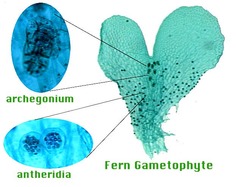
Hyphae
threadlike filament; basic structure of a fungus

mycelium
mass of connected hyphae

Fungi cell walls composed of _____, a carbohydrate
chitin
Lichens
Symbiotic

mycorrhizae
- fungus provides nutrients
and minerals
- plant provides carbohydrates

Fungi 3 important phyla:
Zygomycota (zygote fungi)
Ascomycota (cup or sac fungi)
Basidiomycota (club fungi)
Zygomycota

2 types of green Algae
Chlorophytes (uni/multicellular)
Charophytes (multicellular)
What gave rise to land plants 475 M years ago?
Charophytes (multicellular green algae)