13. Deincepheleon + cerebrum
 Call Kai
 Learn
 Practice Test
 Spaced Repetition
 Match
 Flashcards
 Knowt Play
1/19

There's no tags or description
Looks like no tags are added yet.
20 Terms
Deincephaleon
Between BS and cerebrum
4 components
thalamus
subthalamus
epithalamus
hypothalamus
Thalamus
2 paired oval shape masses
conencted by interthalamic adhesion
gray mater adhesion
superior
recives major part of sensory input
projections to cerebral cortex (CC) (excetpt smell)
helps filter sensory info
Auditory impulses
medial geniculate nucleus
take info from inner ear then bring them to primary auditory area of CC
visual impulses
Latral geneculate nucleus
Gather info from retenia from eye then takes it to primary visual area of CC

Subthalamus
Inferior to thalamus
Has both as/decending NT (nerve tratcs)
mostly white mater
subthalamic nuclei
lots of gray mater
central motor function

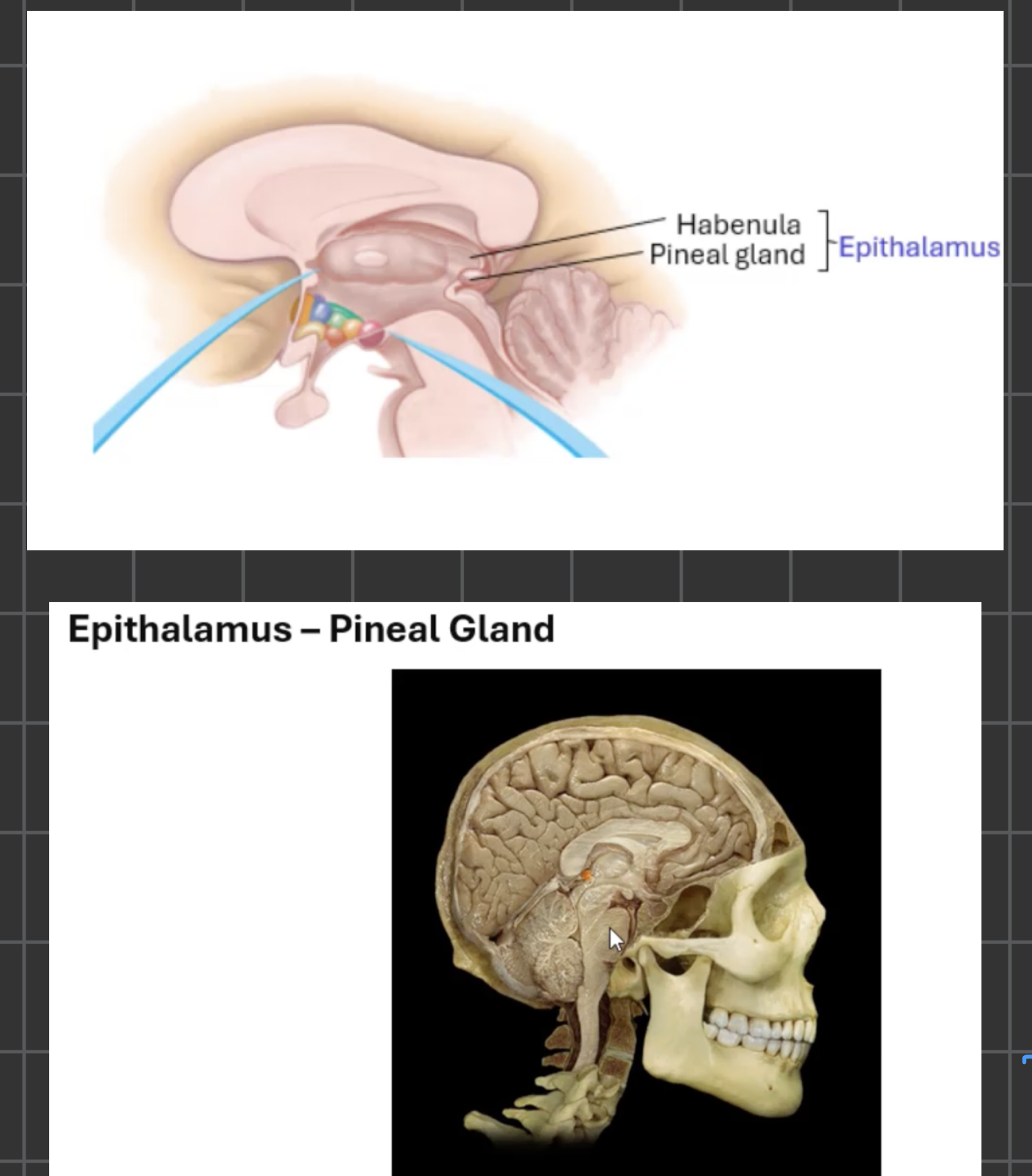
Epithalamus
Posterior + superior to thalamus
made up of 2 parts
Habenula
superior
Motivational control of behvaior
intergrative role linked to behvaiors that involve rewards
(may be linked to addiction)
Regulates emotional state, decision making, integrating sensory info, cognitive, emotional info
encodes for rewarding adverse aspects to stimuli
influence behavior
dysfunction in this region
linked to:
addiction
schizophernia
PIneal Gland
inferior
pine cone shaped
size of pea
biological clock
linked to timing + growth to development
Ex: onset of puberty
May secrete chemicals
cuase signal cascades of events
bring of physiological change during puberty
also changes later in life like menopause
secretes melatonin
promotes sleepiness
linked to sleep
when your asleep melatonin produced
helps keep you asleep
melatonin in light sensitive
when you see light melatonin drops
Hypothalmaus
anterior
inferior (most in deincephelon)
connects to pituitary gland (master gland)
connection betwen nervous/endocrine system
infundibulum
stalk inside HT (hypothalamus)
connects to PG (pituitary gland)
sercretes hormonoes to do many body functions
Ex:
metabolism
reproduction
stress response
urine production
makde of white matter + connective tissue
links between nervous/endocrine systems
Back to HT
has many clusters of nuclei
central bodyily functions
more than 12 different nucliei
important for homeostasis
in some of nuclei involved in
autonomic control on
heart rate
BP
respiration
digestion
hunger
thrist
body temp
moods
emotion
sex drive
one are of HT affected can cause another region to be affected
plays role in visceral + emotional resposnse to odors
Preoptic area
involved in thermoregulation
close to optic chisam

Cerebrum
Largest region
involved in concious processes
intellectual function
higher level
planning
reasoing
organizing thoughts
accessing/storing memory
interpreting sensory info
alicting motor responses
Cerebral cortex
Part of cerebrum
outer layer
gray matter
subparts:
gyri (gyrus ← Singular)
characteristic folds on cerebral cortex
sulci (sulcus ← singular)
shallow groves
Fissures
deeper groves

Central sulcus
Part of cerebral cortex
runs middle of brain
separates lobes
frontal
parietal
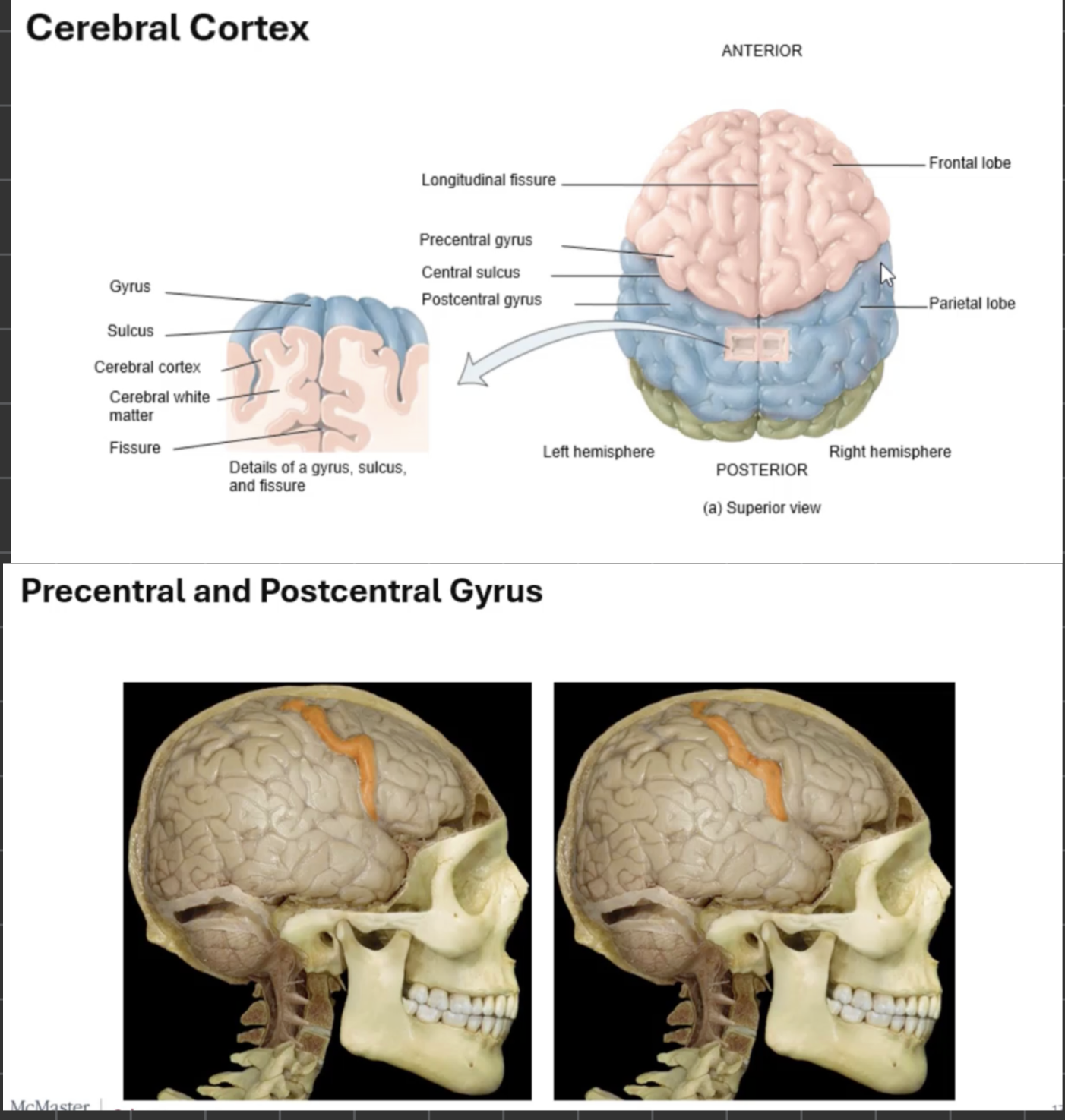
Precentral Gyrus
Anterior to central sulcus
part of cerebral cortex
locattion of primary motor cortex
gray matter
initiates majority of motor responses in body
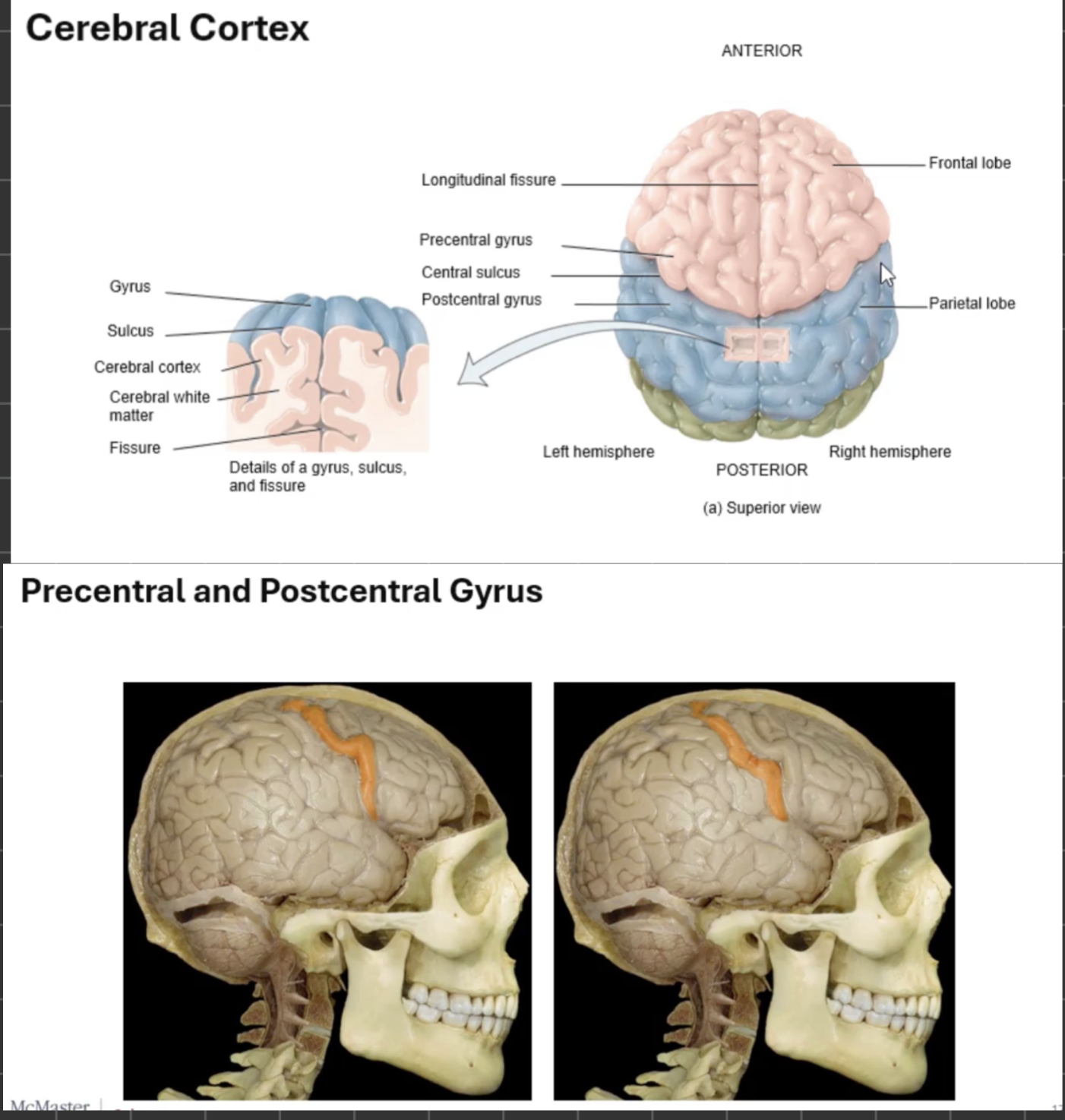
Postcentral Gyrus
Primary somatiosensory cortex (located here)
part of cerebral cortex
most of sensory info interpreited here
not include
vision
hearing
smell

Deep clusters of nuclei
gray matter
basal nuclei
involved in motor functions
Cerebral medulla
In between of deep clusters of nuclei and cerebral cortex
white matter
all mylinated axons pahways connect different gray matter regions within cerebrum
And they connect to other regions of the brain
Longitudinal Fissure
separates left/right cerebrum

Frontal lobe
function
motor function
agression + mood

Parital lobe
Sensory info site
not smell, taste, vision, hearing
Ex:
touch
pressure
moniters blood pH
Pareitoccipital sulcus
separates parital and occipital lobe

Occipital lobe
Perception of visual input
location of the visual cortex

Lateral fissue (lateral cerebral sulcus)
separates frontal + temporal lobe

Temporal lobe
Involved in sense of smell or olfactory sense
auditory interpretation
forming + accesing memories
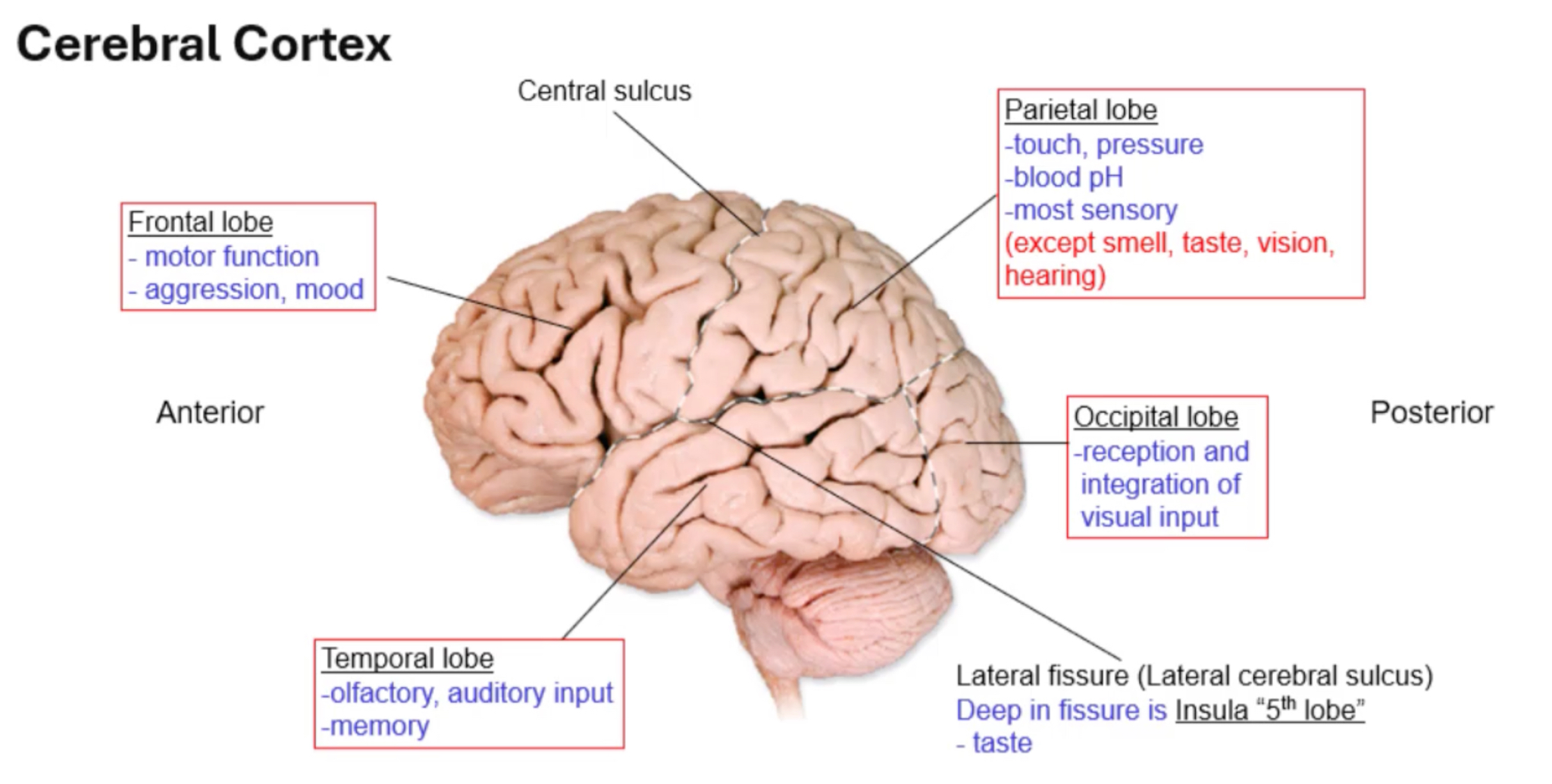
Deep inside cerebrum
5th lobe
insula
plays role in
homeostasis
selfawareness
emotion
associated with sense : taste
Cerebral medulla
NT’s connect the cortex to other areas of cortes or other parts of the CNS
white matter
3 main types of fibers/tracts found in cerebrum:
association tract
connect areas of CC within some hemisphere
Commisural tracts
connect the cerebral hemispheres
corpus callosum
Projection tracts
run between cerebrum + other parts of brain + SC
Bundles of these makes
internal capsule
