calculation of doses
 Call Kai
 Learn
 Practice Test
 Spaced Repetition
 Match
 Flashcards
 Knowt Play
1/22

There's no tags or description
Looks like no tags are added yet.
23 Terms
what is the equation for number of doses?
number of doses = total quantity ÷ size of dose
what is the equation for size of dose?
size of dose = total quantity ÷ number of doses
what is the equation for total quantity?
total quantity = number of doses * size of dose
how many milligrams each of hydrocodone bitartrate and guaifenesin will be contained in each dose of the following prescription?
Rx
hydrocodone bitartrate 0.12 g
guaifenesin 2.4 g
cherry syrup ad 120 mL
sig. teaspoonful for cough
hydrocodone bitartrate: 5 mg
guaifenesin: 100 mg
how long would the prescription last?
Rx
penicillin v tablets 500 mg
dispense XX
sig: 1 g stat and 1 g q12h
a) 10 days
b) 5 days
c) 2.5 days
d) none of the above
b) 5 days
how much ammonium chloride does the patient take every day? does this fall in the right range?
Rx
ammonium chloride 8 g
water qs ad 120 mL
sig: 1 tsp t.i.d.
“The recommended dose is one gram three times a day for up to 6 days to maintain the pH of the urine.”
Patient takes approximately 1 g of ammonium chloride per day.
The recommended daily amount is 3 g per day.
Therefore, the prescribed dose is below the recommended amount.
usual dose
amount that produces the desired effect in the majority of patients
usual dose range
range of dosage that is safe and effective in the population group
are all drugs based on age, weight, body surface area, and nutritional and functional status?
no, only for certain drugs
individualized dosage
neonates, elderly, liver or kidney disease patients, critically ill, and patients on chemotherapy
narrow therapeutic index drugs
needs monitoring and individualized dosage
pediatric patients
neonate (birth to 1 m), infant (1 m to 1 yr), early childhood (1 to 5 yr), late childhood (5 to 13 yr), adolescence (13 to 17 yr); premature if <37 weeks’ gestation
factors in dosing: age, weight, biologic function, stage of development; renal function develops over the first 2 yrs of life
doses should be age appropriate and based on weight or BSA; eigh patients at admittance
use pediatric formulations rather than those for adults
calculations should be double checked by a second health professional
calibrated oral syringes should be used to measure/administer oral liquids
geriatric patients
age related physiologic functions peak before 30 years with gradual linear decline
reduced kidney function results in reduced drug elimination; dosage adjustment is required
therapy is initiated with a lower than usual adult dose and adjusted based on the response
dose is determined based on weight, BSA, health/disease status and pharmacokinetic factors
common concerns: multidrug therapy, drug interactions, adverse effects, and adherence to complex regimens
the adult dose of a drug is 500mg every eight hours. for an elderly patient with impaired renal function, the dose is reduced to 250mg every 6 hours. calculate the reduction in the daily dose, in milligrams.
500mg
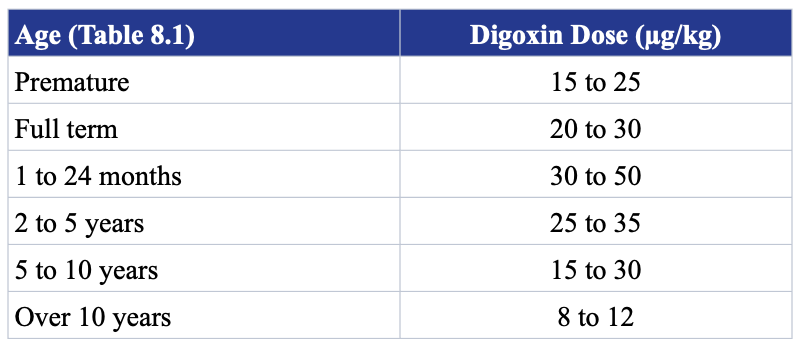
calculate the dosage range of digoxin for a 20 month old infant weighing 6.8 kg.
204-340 µg
what is the equation to calculate the drug dosage based on body weight?
patient’s dose (mg) = patient’s weight (kg) * drug dose (mg/kg)
the usual initial dose of chlorambucil is 150 µg/kg of body weight. how many milligrams should be administered to a person weighing 154 lb?
10.5mg
drug dosage based on BSA
widely used for cancer patients and pediatric patients; average adult BSA = 1.73 m²
patient dose = patient’s BSA (m²) ÷ 1.73 m²) * adult dose (mg)
BSA may be obtained from a table, a nomogram, or the Mostellar formula:
BSA (m²) = √[Height (cm) * Weight (kg) ÷ 3600]
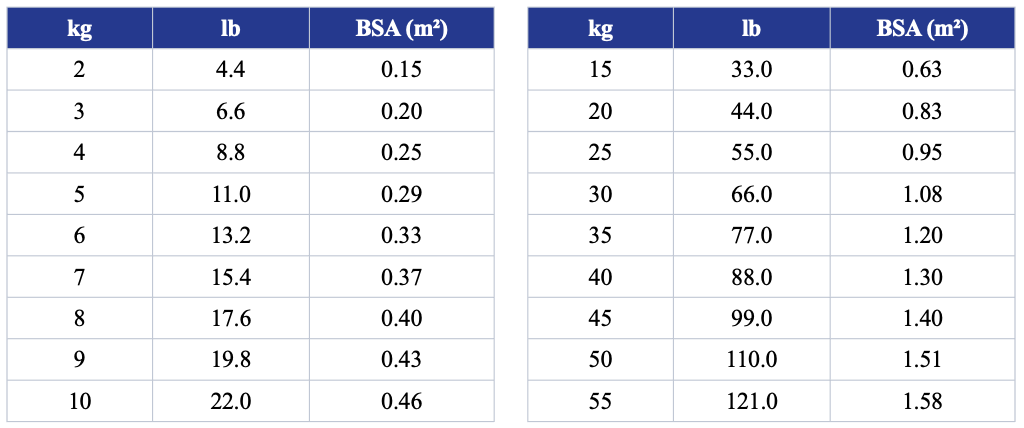
if the adult dose of a drug is 100 mg, calculate the dose for a child with a BSA of 0.83 m².
48mg
nomograms for determining BSA
a standard nomogram uses both weight and height
draw a straight line connecting the person’s height and weight; the point of intersection is the BSA in m²
if the adult dose of a drug is 75mg, what would be the dose for a child weighing 40lb and measuring 32 in. in height?
27.7mg
if the dose of the drug if 5 mg/m², what would be the dose for a patient measuring 165 cm in height and weighing 65 kg?
8.65mg