PDD midterm
 Call Kai
 Learn
 Practice Test
 Spaced Repetition
 Match
 Flashcards
 Knowt Play
1/296

There's no tags or description
Looks like no tags are added yet.
297 Terms
PDD 1 - Intro to PDD module
.
excipient
pharmaceutical ingredients in a dosage form other than the active ingredient
excipients contribute to what features of the drug
solubility - solvents, surfactants
palatability - sweetners
stability - antimicrobials, antioxidants
others - diluents, fillers, binders, lubricants, disintegrating agents

understand this
idea is that we can use diluents to get accurate dosing (forfentanyl) if our scale has a ± 0.1 mg error

understand this
use tween to help with solubility - forms micells that help deliver the docetaxel to the bodt bc it is hydrophobic
ethanol acts as a solubilizer but also stops the tween 80 from foaming up
saline helps with preventing the cells from bursting/shriveling up
tween can cause an allergic reaction - use cortico before to suppress immune system, dilute it down, and do a slow infusion
non-PVC bag because tween can dissolve it - toxic
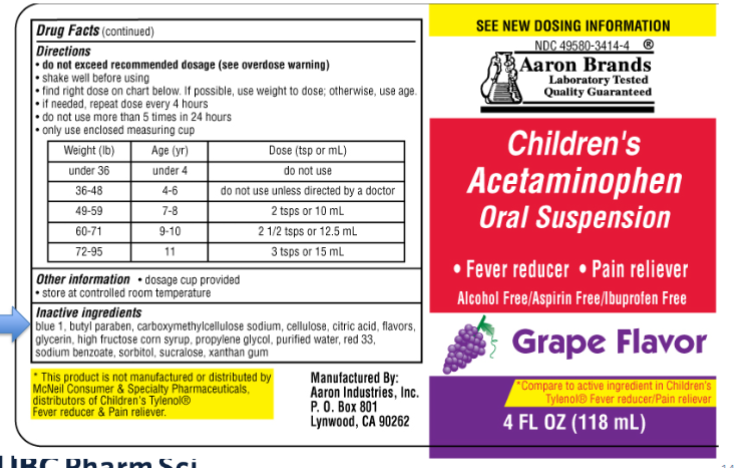
lots of falvors and sweeteners to help with palatability
children will not take medicine that tastes really bad, so having these excipients are crucial for adherence

cough suppressant
avoid drowsy medications
use a sustained release formulation
use liquid medication
make sure medication is flavored/has palatability excipients

C

B

C
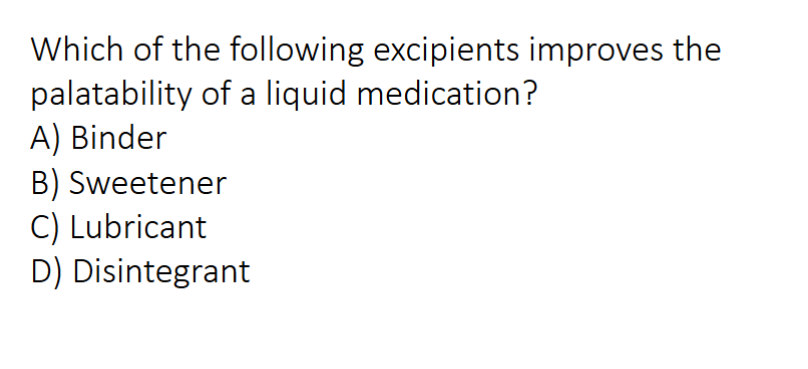
B

C
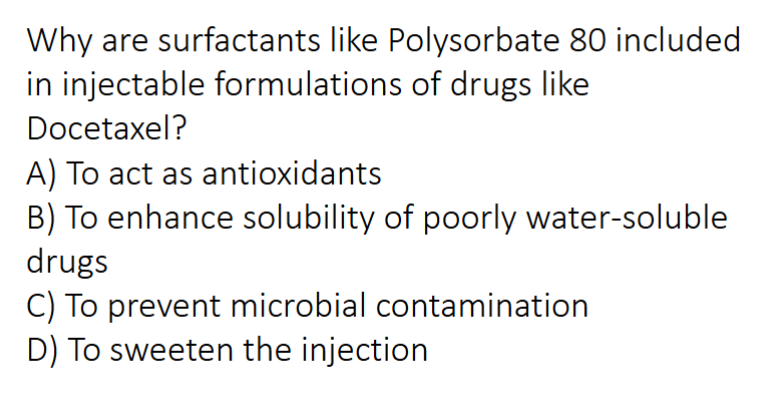
B
PDD 2 - Solutions
.
solutions
homogenous mixture of one or more solutes dissolved in solvent
solubility
max amount of solute that can dissolve in a solvent at a given temp and pressure
what are factors that solubility depends on
temp
pH of solution
particle size
natue of solute and solvent - polarity and salt form
presence of co-solvents or surfactants
what solvents to avoid for kids, for diabetic patients
kids - alcohol
diabetic - sugar containing syrups
parenteral solution features
predominantly water based solutions
formulations could contain non-aq vehicles such as vegetable oils and polyethylene glycol for drugs that are water insoluble or unstable in water
parenteral administration
admin of drugs by injection or infusion, bypassing the GI tract
parenteral admin requires
sterile, pyrogen free, and particulate free solutions

parenteral admin used for _____ and ______ delivery
systemic and localized
risks and benefits of parenteral routes - table also includes effect
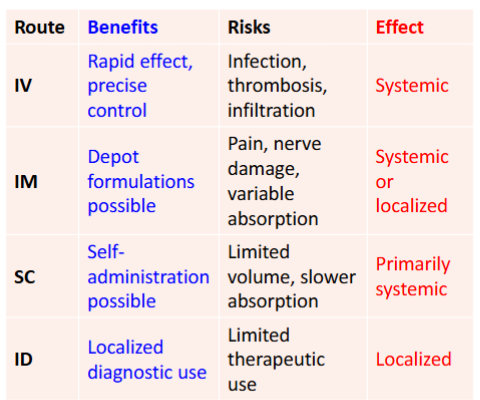

.
sterilization methods for parenterals
steam sterilization (autoclave)
dry heat sterilization (good for meds with instability in water)
filtration (for heat sensitive meds, 0.22um)
gas sterilization (ethylene oxide for DEVICES)
radiation sterilization (corss links, for DISPOSABLES)
isotonicity - why important
critical for parenteral product safety - avoid hemolysis and tissue damage
solutions with what osmolarity are considered isotonic
275-300 mOsm/L
osmolarity
concentration of osmotically active compunds per liter of solution
parenteral products must be:
undetectable of pyrogen
endotoxin levels within acceptable limits
parenteral reqs - undetectable fo pyrogen

parenteral reqs - endotoxin levels within acceptable limits


buffer
isotonic solution
pH adjustment
water as injection vehicle
advantages and disadvantages of parenteral administration

classifications of non-parenteral solutions (list form least to most alc)
syrups
elixirs
tinctures
spirits
aromatic waters
syrups - type sof sln, ex, advantages, alc %

elixirs - type of sln, ex, advantages, alc %

tinctures - type of sln, ex, advantages, alc %

spirits - type of sln, ex, advantages, alc %

aromatic waters - type of sln, ex, advantages, alc %

what % does alc start acting as a preservative
12-15% at least (so ~tinctures)
advantages and diadvantages of solution formulas
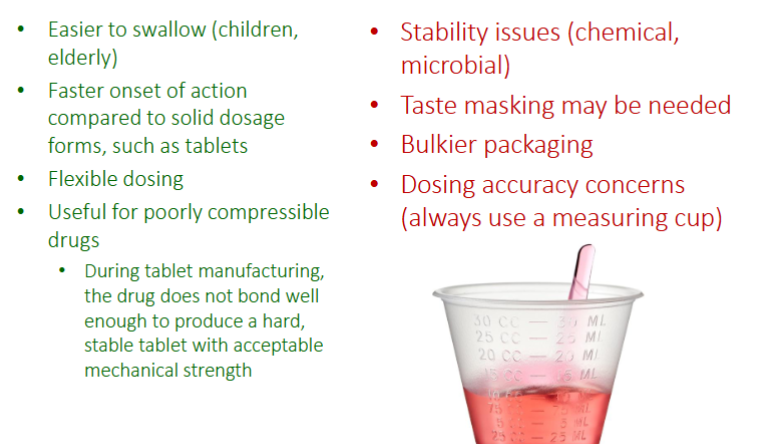
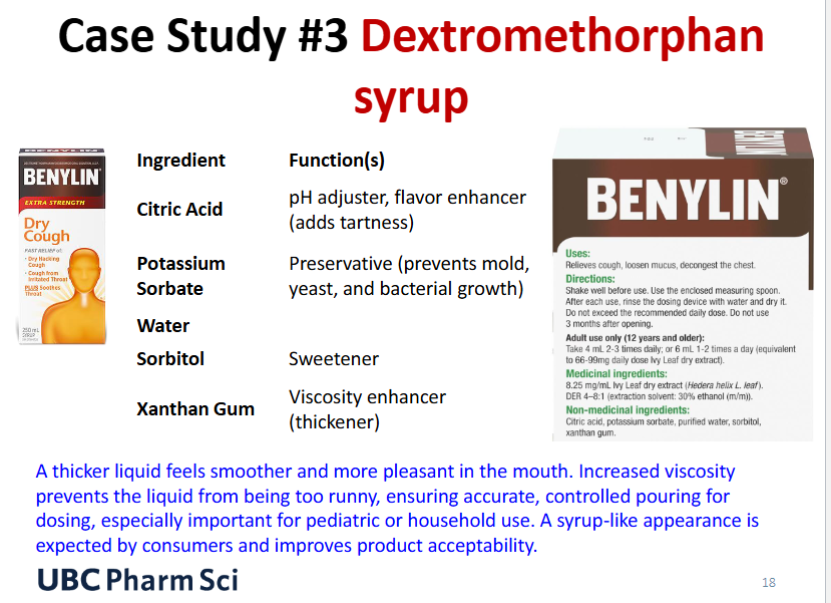
know what wach thing does without looking at the functions column dummy
.


what type of non-parenteral class is this
tincture - alc is 47%

what class is this
spirit - alc = 84%

what class
aromatic water - no alc, all oils
special solutions - def, importance, include what
non-oral, localized or sytemic drug delivery methods
improtant for targeted therapy and patients unable to use oral forms
includes ophthalmic, nasal, and inhalation products
ophthalmic drug delievry - req and formulation, local/systemic effect, what for, examples

nasal drug delivery - formulation, local/systemic effect, examples, onset

inhalation drug delivery - def, local/systemic effect, examples, includes what

non pharm ingredients used in special solutions
preservatives
buffers to maintain pH
viscosity enhancers for prolonged contact
solubilizing agents or stabilizers
propellants for aerosol delivery
preservative we have to know that is used in special solutions
benzalkonium chloride
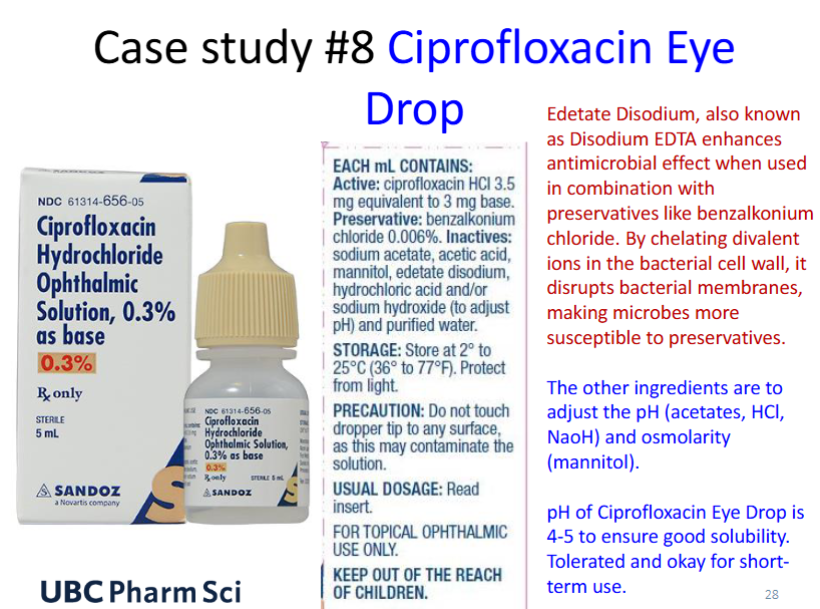
preservative - BC
sodium acetate, acetic acid - buffer
mannitol - isotonic solution
EDTA - enhances antimicrobial effect of BC
HCl/NaOH - pH adjustment
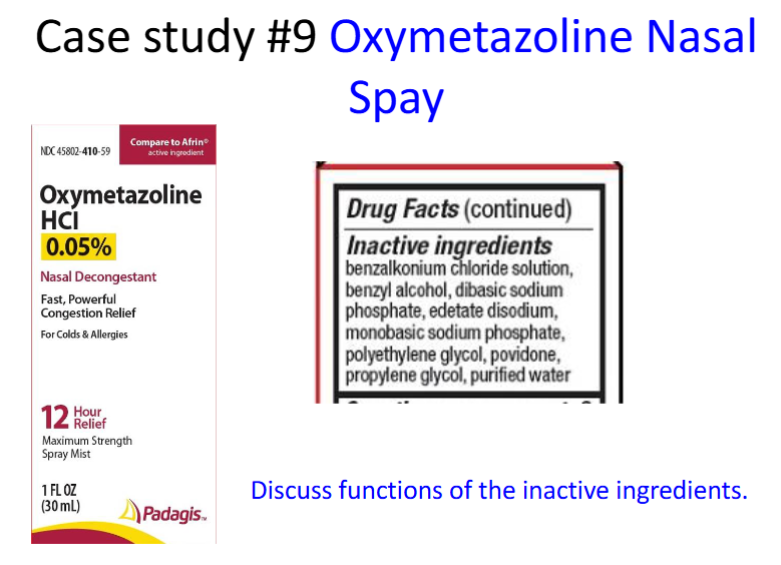
preservative - BC
benzyl alc - preservative
dibasic Na phosphate - buffer
EDTA - enhance BC
monobasic Na phosphate - buffer
polyethylene/prpylene glycol - thickening agents

propellent
preservative
increases solubility of the (weak acid) drug
advanatges and disadvantages of special slns vs oral delivery

proper admin of special solution techniques

misuse and abuse potential - special slns


B

B
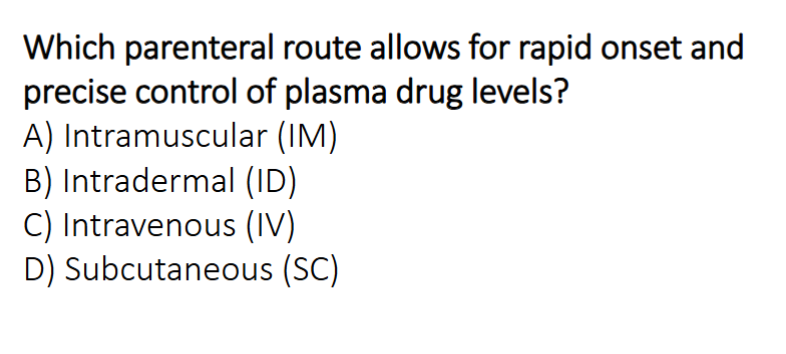
C

B
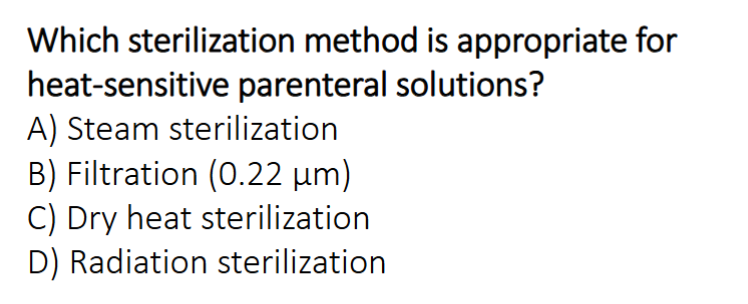
B
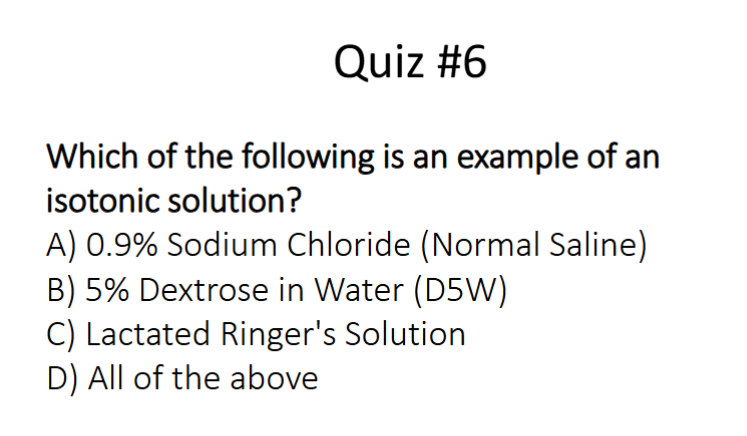
D

C
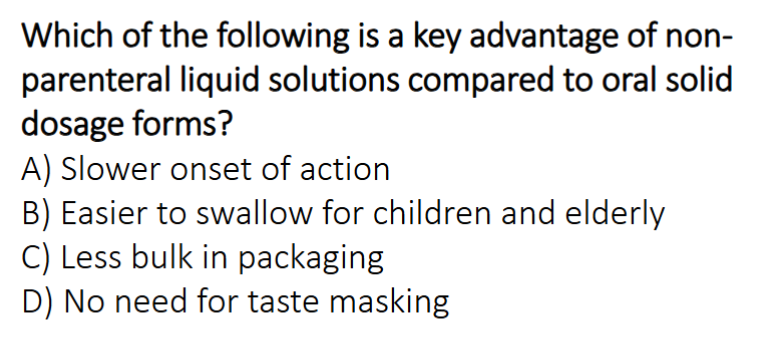
D????

C???
C

B

B

B

B
PDD 3 - Dispersions
.
types of dispersions
suspensions
emulsions
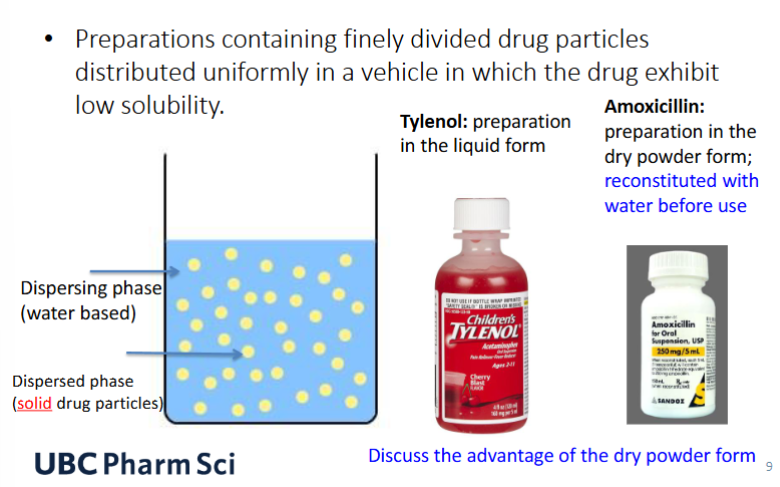
suspension parts
dispersing phase/external phase/continuous phase - water based
dispersed phase/internal phase/discontinuous phase - solid drug particles

emulsion (O/W) parts
dispersing phase/external phase/continuous phase - water based
dispersed phase/internal phase/discontinuous phase - liquid oil phase
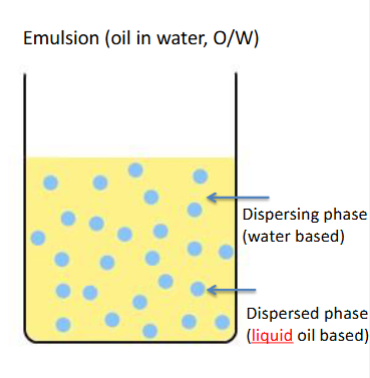
suspensions and emulsions belong to what type of dispersions
coarse dispersions, bigger particle size than fine dispersions
fine dispersions include
gels - smaller particle size than suspension and emulsion

hydrogel semi transparent due to smaller particle size
coarse dispersions are opaque/murky due to larger particles
.
clinical concerns for dispersions
needs to be homogenous for accurate dosing - concerns of becoming unhomogenous with time
solid particles in suspensions tend to settle to bottom due to increased density
O/W emulsions may separate over time (oil floats)
recommend to patients to mix well or shake well before use to ensure accurate dosing to ensure accurate and consistent dosing
suspensions
preparations containing finely divided drug particles distributed uniformly ina vehicle in which drug exhibits low solubility
advantages of suspensions
increased stability compared to solutions
ease of swallowing compared to solid dosage forms
flexibility in administration of a range of doses
improved palatability compared to solutions
how to admin suspensions
calibrated cup
oral syringe
dropper
calibrated spoon
teaspoon
flexibility in dosing but this means you must be accurate in the amount you give to pt to administer the dose appropriately

1 tsp = __ ml
~5 mL
best dosage form for low solubility drugs
suspension
forms of suspensions
preparation in liquid form - tylenol
preparation in dry powder form - reconstitute with water before use
advantage/disadvantage of dru powder suspension form
advantage
longer shelf life (no hydrolysis)/more stable → good for drugs that are very sensitive to moisture
shipping and handling is easier → less bulky packaging which results in lower shipping and dist costs
disadvantage = he didnt say but probs errors in reconstitution and shorter shelf life once in liquid vehicle
solution vs suspension stability - why is there a diff
solution
drug in molecular form
drug randomly degraded by hydrolysis
degradation happens right away
suspension
drug in particle form
degradtion - has insoluble drug particle + dissolved drug particles
particles are mostly sfae with hydrolysis due to low contact with water
dissolved gets degraded first then they release more dissolved (equilibrium) that then gets degraded
bc of this eq and multistep, get longer shelf life
t_90 is longer!

erythromycin
can be made to two diff salts
HCl is more soluble! bc the estolate salt ihas a long fatty chain
which should be used for suspension
estolate due to the lower solubility - want the suspension to have insoluble drug particles!
better taste and stability with less solubility
why does suspension have better palatablility than solution
less dissolved drug/drug in molecular form [] in suspension compared to solution (solution has less solid /particle, more solubilized form) - so this will result in less interaction with taste receptors and less sense of taste for the suspension
only solubilized form interacts with taste buds to cause bitterness!
stokes law
measures the rate of sedimentation of particles in a suspension
sedimentation can make a compact cake that cannot be reversed with shaking
no need to memorize eq but need to know how to use it
higher dx/dt = faster sedimentation = less time to form compact cake!

to increase stability (think stokes law)
reduce difference in density for particle and medium
decrease particle size (diameter)
increase viscosity of medium
carboxymethylcellulose
methylcellulose
microcrystalline cellulose
xanthum gum
smth else i didnt see
celluoses!
viscosity and particle size considerations for suspension stability
need to increase to reduce sedimentation rate
BUT canot be too high to prevent easy pouring and redispersion of the suspension + too thick = difficult to swallow
decrease particle size to decrease sedimentation rate
BUT should avoid reducing particle size too much because fine particles have a tendency to form a compact cake upon settling to bottom of a container

cake
small size of aggregates
makes it very difficult to redisperse the particles into solution
flocculation
large particles
settle quickly but form a very loose structure so easy to redisperse into relatively homogenous state
what do flocculating agents do
form bridges between particles
want to increase size of solid particles
but also want to form a very loose structure between the solid particles so they can be redispersed easily
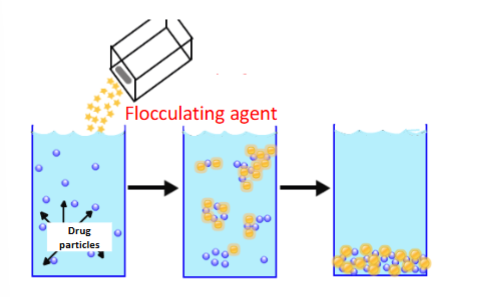
examples of flocculants
clays - bentonite
electrolytes
pH adj - reduce drug sol

API = Al(OH)2 (to neutralize stomach acid)
sugar for palatability + to thicken
syrup for palatability + thickening agent
glycerin = wetting agent + sweetner + vicosity enhancer
methylparaben = preservative/antimicrobial
propylparaben = same as methylparaben
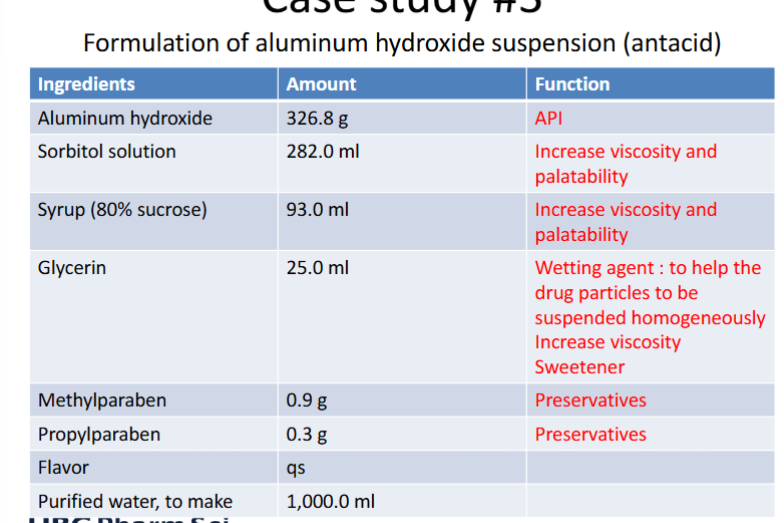
what is a wetting agent + what is the point of adding it
if you just straight up add powder to water, most of the time will just float on top - because air coats the solid and prevents it from getting wet
if add wetting agent to a solid powder, will reduce the air between water and powder, so powder is easier to wet and dissolve
once shake
without wetting agent - large particle containing a lot of air
with wetting agent - more likely to get more homogenous particle
gives you more homogenous dist of particle = more consistent dosing
wetting agents tend to have some surface acting agent like a surfactant

coloring
preservative + antimicrobials
thickening agent
thickening agent
pH adjustment + flavor (more flavor in this case)
flavors for palatability
wetting agent + sweetener + thickening agent
thickening agent + sweetener
propylene glycol (similar to glycerin) = wetting/thickening agent NOT a sweetner
water and color
preservative
sweetner
sweetener
thickening agent

C