IB Bio Unit 3 Study guide
 Call Kai
 Learn
 Practice Test
 Spaced Repetition
 Match
 Flashcards
 Knowt Play
1/48

There's no tags or description
Looks like no tags are added yet.
49 Terms
What part of the above molecule is hydrophobic? What does hydrophobic mean?
tails/water fearing or repelling
What part of the above molecule is hydrophilic? What does hydrophilic mean?
head/ water loving.
What does amphipathic mean? How does it apply to phospholipids?
having both a hydrophobic and hydrophilic end. Phospholipids have a hydrophilic head and hydrophobic tail.
What is an integral protein?
protein integrated into the membrane.

What is the role of cholesterol in the cell membrane?
keeps the membrane fluid and flexible.
What is diffusion?
the transport of the molecules through the phospholipid bilayer for high to low concentration.
What is simple diffusion?
the use of passive transport without the need for protein channels.
What is facilitated diffusion?
when protein channels are needed to transport bigger molecules.
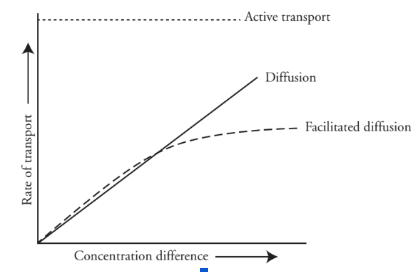
What is osmosis? Do molecules move from high to low concentration or low to high concentration?
the transportation of water molecules across the membrane and it goes from high to low concentration.
What happens to a cell in a hypotonic solution? What does hypotonic mean?
it swells, hypotonic means that the cell has a higher concentration of water inside the cell.
What happens to a cell in an isotonic solution? What does isotonic mean?
it stays the same, isotonic means that both the inside and outside of the cell are equal.
What is the formula for water potential? How does calculating water potential differ from osmosis?
it differs from osmosis because of the potential energy of water and not movement.

How does water move in terms of water potential? Does it move from high water potential to low or vice versa?
water moves from a high to low concentration.

What is tertiary structure in proteins? What types of bonds/interactions are present?
The way the polypeptide chain coils and turns to form a complex molecular shape.
disulfide bridges, H-bond, ionic bonds, hydrophobic interactions.