FMI
 Call Kai
 Learn
 Practice Test
 Spaced Repetition
 Match
 Flashcards
 Knowt Play
1/146

There's no tags or description
Looks like no tags are added yet.
147 Terms
Real Asset
An entity that produces a flow of goods and services
Land, plant and machinery, new inventions, intangibles (Goodwill, reputation brand)
Financial Asset
A contract giving its owner a claim to future payments
Insurance, derivatives, bonds and stocks, bank deposits and loans, and currency
Direct finance
Borrowers borrow directly from lenders in the market
Indirect finance
Funds flow through a financial intermediary, who borrows from savers and relends to borrowers
The structure of direct financial markets
Type of security
Debt vs Equity
Issuance market
Primary vs secondary
Maturity
Money market (short-term) vs capital market (Long term)
Transacting party
Exchange traded vs OTC
Why would one use an intermediary?
Solves problems that make direct finance costly or risky:
Transaction costs
Pooling many small savers into large loans
Info asymmetry
Screening and monitoring borrowers
Risk sharing
Diversification
Present value
Future streams of cash flows discounted to todays value

Yield to Maturity
The interest rate that equates the price of the security to the present value of future cash flows
If P=PV, then i=YTM
2 assumptions we make when it comes to YTM
That the person holds the bond to maturity
That any returns are reinvested at the same rate
What are the two basic debt instruments
Loans
Bonds
Types of bounds (Interest payments)
Zero coupon/ discount bond
Coupon bond
Types of bonds (Principal repayments)
Amortizing bond
Repays the principal and interest gradually, the principal therefore declines overtime and so does the interest
Bullet bond
Pays periodic interest, but the entire principal is paid at maturity
Non called provision
When a bond cannot be paid back until a certain time period has passed, if it is paid then interest for the period must be compensated
Zero coupon bond
A bond that does not give any coupons and only returns the face value at the end, sells below the face value to attract investors
1 year vs n year maturity for a zero coupon bond

Coupon Bonds
Fixed payment at specific dates and the principal at the end
Price of a zero coupon bond

Price of a coupon bond
If P < FV, the bond is discounted
If P>FV, the bond is sold at a premium

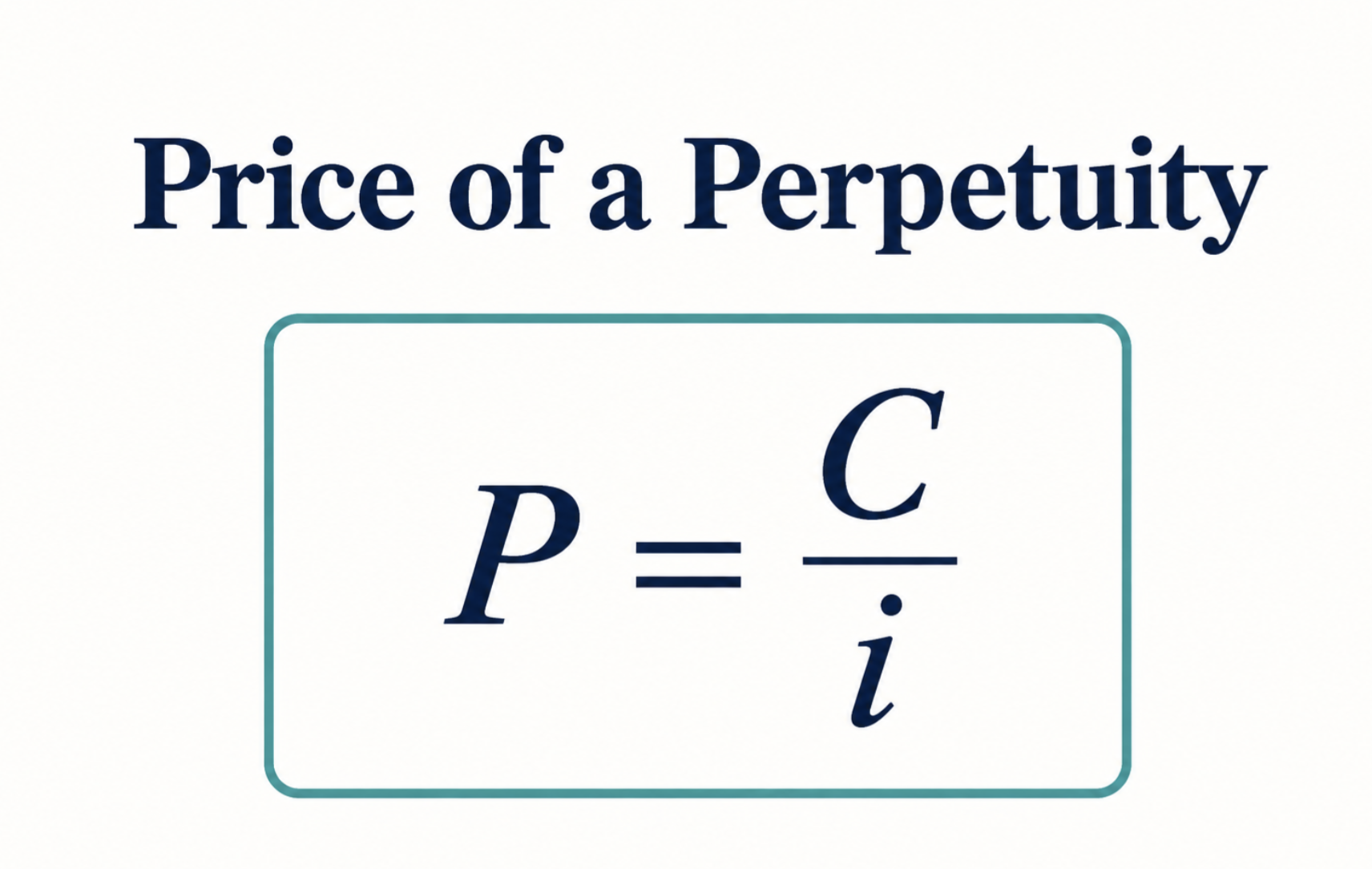
Perpetuity definiton and price equation
A series of coupon payments that you receive forever with no maturity
Curent yield
Useful to estimate the YTM for long term bonds with price near par

Coupon Rate

Economically, what implies the price of a bond
The YTM implies the price as it is seen as the “fair return”
Senior bonds
Get paid first
Lower default risk
Lower yield required
Higher price
Junior bonds
Paid after
Higher default risk
Higher required yield
Lower price
Real interest rate
Nominal interest rate adjusted for expected inflation, can also be called the ex ante real intrest rate
What happens if there is a low real interest rate
Borrowing increases and lending decreases
Rate of return
Equal to the current yield plus capital gain yield

Interest rate risk
Bonds may be sold before maturity, but we do not know what the interest rate is going to be in the future, however, this does not apply if you hold a bond to maturity
Reinvestment risk
Coupon payments should be reinvested, the risk comes from having to reinvest that cash into something with a lower interest rate
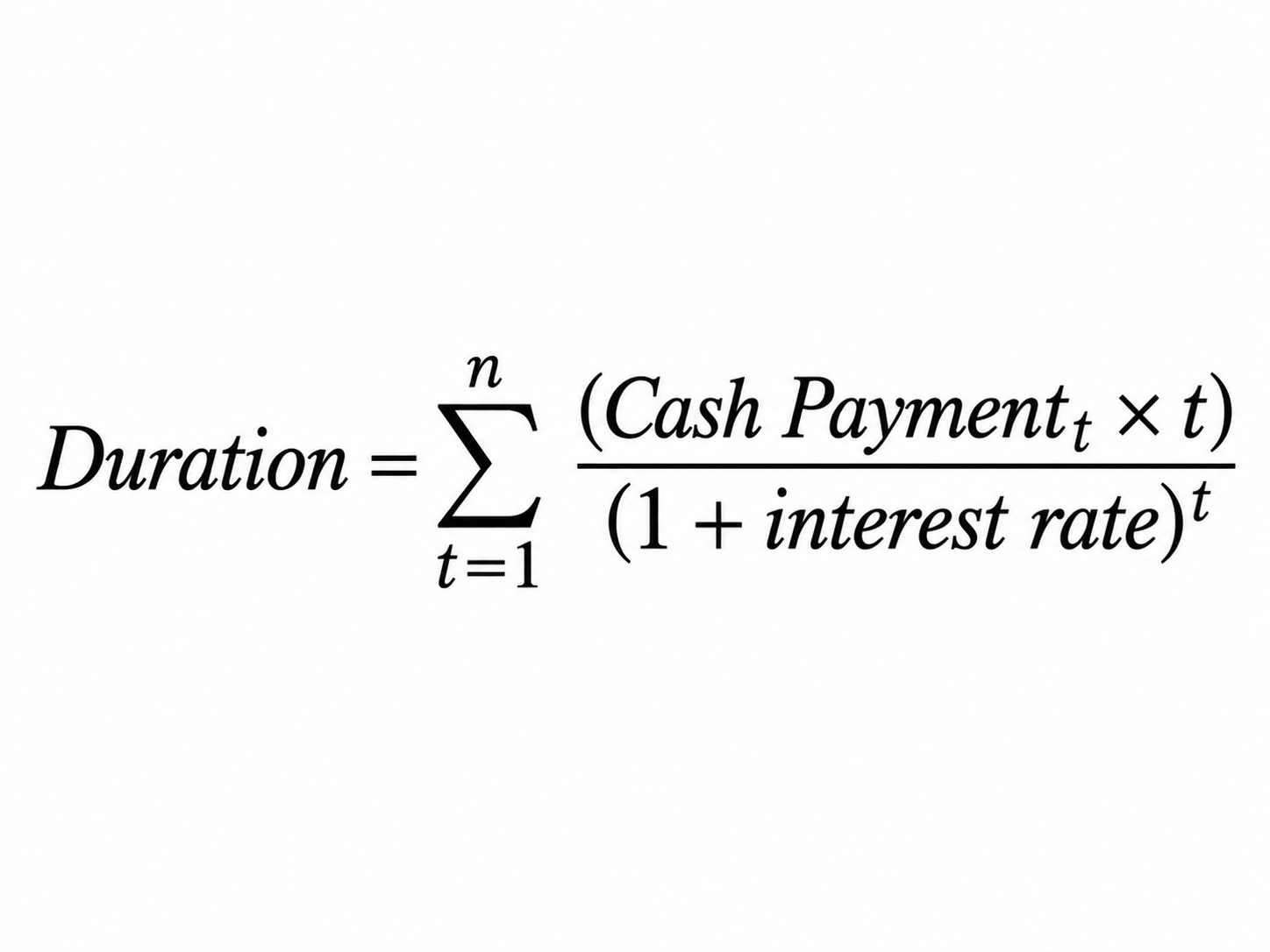
Duration
The weighted average of the maturities of cash payments. For a coupon bond, it is always less than the maturity.
Duration Formula
Duration increases if
Yield to maturity decreases
Coupon rate decreases
Maturity increases
Approximating price change to calculate interest rate risk

Duration of a portfolio
Duration is additive, and so we can add and weigh the individual securities
What are the four determinants of interest rates
Wealth: Total resources owned by an individual
Expected Return: Return expected on one asset relative to all assets
Risk: The uncertainty relative to all other assets
Liquidity: Ease and speed at which an asset can be turned into cash
Impact of wealth on the demand for financial assets
Wealth has a positive effect on the demand for financial assets
The effect of expected return on the demand for financial assets
As expected return increases, demand increases
But there is a risk trade off: Assets with high expected return carry high risk and some buyers pay prefer lower expected return if it means less risk
The effect of risk on the demand for financial assets
Risk: The standard deviation of an assets return across all states of the world
We assume risk aversion: Less risk means higher demand
The effect of liquidity on the demand for financial assets
Liquidity: The ease and speed at which an asset can be turned into cash
An increase in liquidity means an increase in demand as we’ve got more buyers selling and trading
Deriving the demand curve for a one year discount bond
i= (F-P)/P
The demand curve is downward sloping, as price decreases the quantity demanded increases
Deriving the supply curve
The supply curve is upwards sloping
More bonds are offered if the expected return is lower (If the cost for the issuer is lower)
If price is higher, quantity is higher
Movements along supply/ demand curves vs shifts of the curves
Movements along the curve ca happen due to price or quantity change
Any other change leads to a shift in the curves themselves
Shifts in demand
If wealth increases, the demand curve shifts right
If interest rate increases, the demand curve shifts left
If risk increases, the demand curve shifts left
If inflation increases, the demand curve shifts left
If liquidity increases, the demand curve shifts right
Shifts in supply
If the profitability of an investment increases, supply shifts right
If expected inflation increases, supply shifts right
If the government deficity increases, supply shifts right
A deficit implies refinancing which means that there are more bonds issued, so price decreases and interest rate increases
The fisher effect
Increase in inflation decreases demand and increases supply
Both effects push price down and so interest goes up (Real rate needs to be kept the same)
But quantity effect is ambiguous
National income and wealth increasing
Demand increases and so does supply because the profitability of an investment increases, price and rate change are ambiguous, they depend on whether demand or supply shifted more
Negative interest rates
Safety, especially for large amounts of money
Makes sense when inflation is low and other opportunities are scarce
The money market
Where money is invested in contracts with a term of less than on year and so it is highly equal to cash.
Companies label it on their balance sheets as “Cash, cash equivalents, and marketable securities”
What are two main positive characteristics of the money market?
Low risk
High cash
What are three important characteristics of the money market?
Low default risk
Less than one year in maturity
The majority actually mature in less than 120 days, and some even overnight
It is important to remember that original maturity is not the same as residual maturity: a 3 year bond with two months left is not the same intrument
Sold in large denominations
What is the purpose of the money market for lenders/ buyers?
Warehouse surplus funds for short periods
Preference for liquidity over return
Governments, banks, and corporations
What is the purpose of the money market for borrowers/ sellers?
Low cost for temporary funds
Cash management: Timing inflows and outflows
Banks, money market mutual funds, insurance companies, pension funds, and corporations
How can investing in the money market help cash management?
Makes sure a company has cash available for when paymnets are due, without leaving too much money sitting idle.
An organisation can borrow short term if payments are due before cash comes in and it can lend/ invest short term if it has extra cash it won’t need for a while.
What are the six main money market instruments?
Treasury bills
Federal funds
REPOs
CDs
CP
Eurodollars
What are treasury bills?
Bils issued by the US government with 4,13,26, and 52 week maturities, made available to 26 banks. They are discount bounds and provide one of the most liquid markets.
How do treasury bill auctions work?
The primary dealers list how many and what kind of bills are made available
Competitive bidders bid on quantity and price, ordered from highest price (lowest yield)
Non competitive bidders only provide a bid on amount, the treasury automatically accepts all of them
All accepted bids are offered the bill at the lowest accepted price
What are two important rate conventions we can useto meaure the yield of a t bill?
The discount rate: (F-P)/F x 360/n, measures yield against face value
The investment yield: (F-P)/P x 365/n, measures yield against what you actually invested and is almost always higher than the discount rate
What are federal funds?
An interbank market
Short term funds are loaned and borrowed between financial institutions, usually overnight
Monetary policy is implemented on this market (“The targeted fed funds rate”)
What are repurchase agreements?
Essentially a short term collateralized loan
An financial instrument is sold and repurchased at a later date
For example, I sell my t bills for x and agree to repurchase them at a Y>X, if i default then the lender can use these t bills as collateral
The REPO rate
(Y-X)/ X
The haircut
The difference between the market price of the colateral and the amount lent
(P-X)
What are negotiable certificates of deposits?
Bank issued deposits that specificy interest and maturity
It is a term deposit and so it cannot be withdrawn before maturity
Often large, from 100,000 to 10 million
Traded in large volumes, second only to tbills
What are commercial papers?
Unsecured promissory notes issued by corporations
Maturity of less than 270 days
Sold at a discount basis
Sold directly with no secondary market
Only the largest most trusted corporations can issue this
Increased in the early 1980s as a result of the rising cost of bank loans and banks avoiding concentration
What are Eurodollars?
US dollar deposits held in foreign banks, used to borrow or lend dollars
Short term, interbank, and overnight
An alternative source of short term funding for banks
LIBOR
London interbank offer rate
A trimmed average excluding extreme values of all bank responses taken at what rate they would pay to be able to borrow from a bank with no collateral prior to 11am
That average is taken and is the LIBOR quote for the day, quoted in many different currencies and maturities
The libor fixing scandal of 2012
Bank colluded to fix LIBOR to profit on interest rate swaps
Only 18 banks decided LIBOR so a collusion affected the average
By 2022, the LIBOR was replaces with SOFR and SONIA
But EURIBOR remained, but went a reform under the European money market institute to take into account transations, market data, and expert judgement
Interest rate swaps
Betting that a rate like LIBOR will fall relative to some fixed rate, so if you can influence the LIBOR, its an easy bet to win
For example, swapping with a bank so that you pay them a fixed interest rate, and they pay you the floating rate, if the floating rate rises you gain and if it falls you lose, but in all cases your paymnet to the bank is fixed
SOFR and SONIA
Secured overnight financing rate and sterling overnight index average: Both based on actual transactions rather than estimated bank quotas
Bankers acceptance
A promise from a bank to pay a specified amount at a future date, often used when a buyer and seller are trading goods
That promise can actually even be sold to another investor at a discount for cash sooner
Capital Market
Bond Market
Stock Market
Primary issuers of securities
Governments: Debt only
Corporations: Debt and equity
What is the choice between debt and equity called?
Capital structure, issuing bonds is purely financial
Largest buyers of bonds
Households through banks, mutual money market funds, pension funds, etc.
What are the four main types of bonds?
Government bonds
Municipal bonds
Agency bonds
Corporate bonds
Treasury notes and bonds
Us government bonds that are considered risk free assets, t bills are even more risk free (Not for all governments though)
Consists of (From highest to lowest share)
T notes: 2-10 years maturity
T bills: Under one year maturity
T bonds: Up to 30 years and over 10
TIPS and other: Treasury inflation protected securities and miscellan
Municipal Bonds
Issued by local, county, or state governments
Two types
Revenue bonds: Backed by the cashflow of a particular project
General obligation bonds: No specific project
Trade below US government bond yields because they are interest free
However, recently have been trading near the same yield because od credit risk and past liquidity stress
Converting the rates between a regular bond and a municipal bond
Municipal bond rate= yield of another bond x (1-MTR)
MTR= Marginal tax rate
Agency debt
Issued by GSEs (Us government sponsored enterprises)
Bascially, private companies listed on the NYSE that are permitted to use “Government securities”
Fanny Mae and Freddie Mac: They then by mortages from banks and sell insurance on them, there is an implicit gurantee that the US government will not let them default
Corporate Bonds
Only large corporations have access to the bond market
Default risk is higher than for a treasury bond
Risk is assessed by credit rating agencies
What are the three main characteristics of corporate bonds?
Restrictive covenants: Bond holders place limits on what companys can do, may limit dividends, new debt issuance, merger, etc.
Call provisioons: Issuer can force the bond holder to sell the bond back at par or slighlty above par, a yield on a callable bond is higher than on a non callable one
Conversion Option: Debt that may be converted into equity at the holder’s option, economically equivalent to buing a bond and a stock option and so the required yield is lower than for a non convertible bond
Three biggest credit rating agencies
Fitch
Moody’s
S & P
Investment grade
AAA to BBB (Stronger ability to repay, with different risk levels)
BB down to C, D (Speculative/ Junk or Default)
Seniority between stock and bondholders and different types of bondholders
In the case of default, bondholders are senior to stockholders.
Senior bondholders are paid first before Junior or subordinated ones (Still senior to stockholders)
Secured bondholders: Those who have collateral backing their bond, come before everyone else
Bond pricing using semi annual coupons, why does it make a difference
It make a difference because of compounding, so you get paid more!

Why are stocks considered much riskier than bonds?
Dividends don’t follow a fixed schedule or amount the way coupons do
Stock prices are more volatile
No maturity date
Two different types of stock
Common stock
Preferred stock
Common stock
Gives the right to vote
Dividend is discrentionary
Default type of stock
Preferred stock
Pays a fixed dividend like a bond
No voting right unless dividends have gone unpaid
Higher seniority than common stock holders
The trade off between stocks and bonds
Stocks: Higher control rights, uncertain cash flow
Bonds: Low control rights, ccertain cash flow
Difference in taxation between stocks and bonds
Interest paid on bonds is tax deductible
Dividends paid on stock are not tax deductible
Equity funding is more costly than debt funding
Authorized shares
Maximum number of shares the company can ever issue
Can be changed but needs a shareholder vote
Outstanding shares
The number of shares a company has actually issued
Restricted shares
Shares that cannot be bought or sold by the public. They are usually given to employees or insiders as part of a salary or bonus, it is the only stock that exists in a private company
Float
The shares freely bought and sold by the public without restriction
Market cap
Price per share x the number of outstanding shares
Primary market
New securities sold to initial buyers
For stocks, investment banks arrange the sale of new securities
Secondary Market
Securities that were previously issued are bought and sold among investors
Can happen through organized or over the counter exchange
How organized exchange works
Floor traders or brokers representing clients bring orders to the exchange
Each trading post has a specialist or market maker acting as an auctioneer, matching buyers and sellers
Usually brokers trade with other brokes, only 10% trade with exchange specialists
Market orders
Executed immediately at the market price
Limit order
Buy or sell a stock only at a specific price or better