Cell structure chapter 7
 Call Kai
 Learn
 Practice Test
 Spaced Repetition
 Match
 Flashcards
 Knowt Play
1/25

There's no tags or description
Looks like no tags are added yet.
26 Terms
Organelles
Specialized internal structures that carry out specific functions within a cell.

Cell membrane
A selectively permeable lipid bilayer that surrounds the cell and regulates what enters and exits.
Nucleus
The cellular control center that houses genetic material (DNA) and coordinates cell activities.
Nucleolus
A dense region inside the nucleus responsible for producing and assembling ribosomes.
Cytoplasm
The fluid and cellular contents occupying the region between the cell membrane and the nuclear envelope.
Cytoskeleton
A network of microfilaments and microtubules that maintains cell shape and assists internal transport.
Ribosomes
Small particles found in the cytoplasm or bound to membranes that assemble proteins.
Rough Endoplasmic Reticulum
A membrane system studded with ribosomes that assists in synthesizing and transporting proteins.
Smooth Endoplasmic Reticulum
A membrane network lacking ribosomes that synthesizes lipids and carbohydrates.
Golgi apparatus
A stack of flattened membranes that modifies, packages, and routes proteins to their destinations.
Lysosomes
Small enzyme-filled vesicles that digest worn-out cell parts, debris, and foreign material.
Mitochondria
Power-generating organelles that perform cellular respiration to produce high-energy compounds.
Chloroplasts
Plant organelles that capture solar energy to produce food molecules through photosynthesis.
Cell wall
A rigid outer structure surrounding plant cells that provides structural support and protection.
Vacuoles
Membrane-bound storage cavities that hold water, nutrients, and waste products, prominent in plants.
Cell theory
The principle that all living things consist of cells, cells are life's basic units, and new cells arise from existing cells.
Prokaryote
A single-celled organism that lacks a nucleus and membrane-bound organelles.
Eukaryote
An organism whose cells possess a membrane-enclosed nucleus and specialized internal organelles.
Diffusion
The passive movement of solute particles from a region of higher concentration to lower concentration.
Osmosis
The passive movement of water across a selectively permeable membrane toward higher solute concentration.
Facilitated diffusion
The transport of substances across a membrane through specialized channel proteins without energy expenditure.
Active transport
The movement of substances across a membrane against a concentration gradient, requiring cellular energy.

Endocytosis
an active cellular transport process in which a cell takes in materials from its outside environment by engulfing them with its plasma membrane
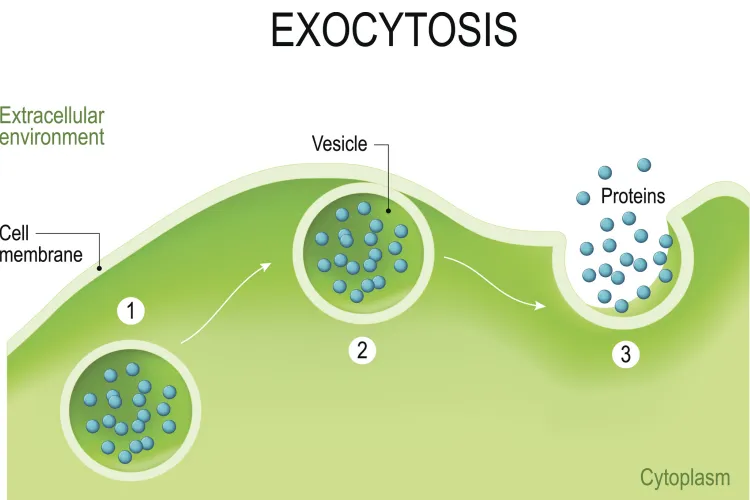
Exocytosis
an active transport process where a cell moves large molecules, proteins, or waste products from its interior to the outside environment through the fusion of vesicles with the plasma membrane.
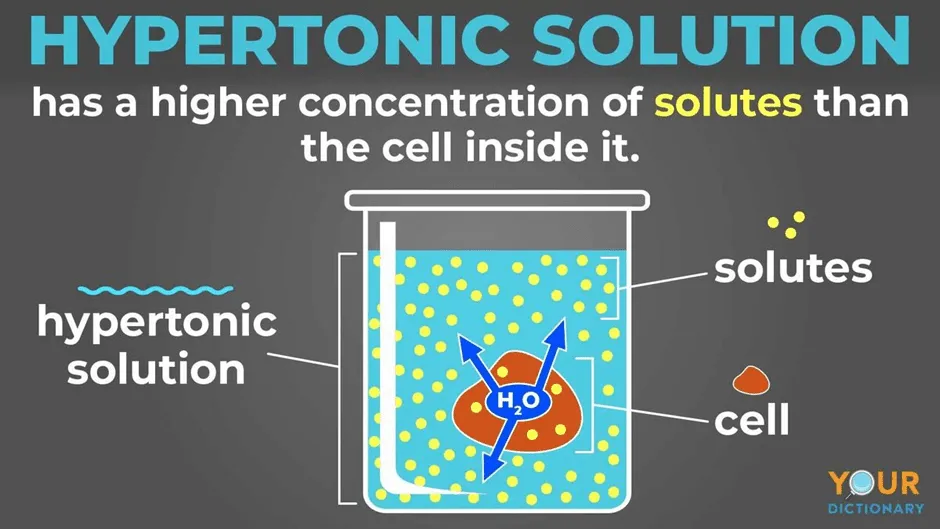
Hypertonic solution
An external environment with a higher solute concentration than the cytoplasm, causing cell water loss.

Hypotonic solution
An external environment with a lower solute concentration than the cytoplasm, causing cell swelling.