NPB 110A midterm 3
 Call Kai
 Learn
 Practice Test
 Spaced Repetition
 Match
 Flashcards
 Knowt Play
1/158

There's no tags or description
Looks like no tags are added yet.
159 Terms
two major control systems in the human body
nervous and endocrine
what does the nervous system use as its signaling molecule
neurotransmitters
what does the endocrine system use as its signaling molecule
hormones
does the nervous system have a low or high affinity between ligand and receptor
low
does the endocrine system have a low or high affinity between ligand and receptor
high
what type of signals does the nervous system send out (two key words)
rapid and short-acting
what type of signals does the endocrine system send out (two key words)
slower and long-lasting
does the endocrine system use direct or indirect connections and via which delivery method
indirect via bloodsteam
does the nervous system use direct or indirect connections and via which delivery method
direct via synapses
what are the important stuff that the endocrine system is responsible for
homeostasis (insulin), growth and development, reproduction (testosterone and progesterone), and metabolism (thyroid hormone)
hormones defintion
chemicals released by one cell that travel through blood to reach a target cell far away
where are hormones released from
endocrine glands
goiter
enlargement of thyroid gland via a lack of iodine, under active thyroid, and hyperthyroidism
three types of hormones
amines, steroids, and peptides

amines (hormones) structure and examples
tyrosine based signaling molecules, examples are NTs and T3 ad T4

steroids (hormones) structure and examples
signals made from cholesterol, examples are cortisol and testosterone
peptides (hormones) structure and examples
short protein signalers that are hydrophilic; examples are insulin, glucagon, GH, and agiotensin
Cytoskeleton
A network of fibers that holds the cell together, helps the cell to keep its shape, and aids in movement
Composed of: Microtubules, Microfilaments, Intermediate Filaments
Microfilaments
Long, thin fibers that function in the movement, muscle contraction and support of the cell
Composed of Actin
Actin
thin filaments, helical polymers (just 2 layers), in microvilli, can bind GTP
Have Polarity:
barbed end (thicker side): + end
other end (thin side): - end
Microtubules
A hollow rod composed of tubulin proteins that make up part of the cytoskeleton in all eukaryotic cells and is found in cilia and flagella.
Have polarity:
+ end towards nucleus
- end toward microvilli
Intermediate Filaments
A component of the cytoskeleton that includes all filaments intermediate in size between microtubules and microfilaments.
Rope like and can intersect.
Important for structure, inside nuclear lamina of cells
actin dynamics
actin subunits hit each other and begin to form a rod like structure. Continue growing until steady state: actin coming off=actin coming on (length doesn't change)
Arp 2/3 complex
nucleates assembly of actin subunits (skips adding phase) to form a web associated at the minus end
bacteria can highjack this system for movement
Dynamic instability of microtubules
GTP promotes monemer tubulin elongation, so when GTP is present growth is promoted
Over time however GTP will hydrolize to GDP and GDP promotes disassembly
Microtubular motor proteins
Kinesin: move toward + end
Dyneins: move toward - end
microfilament motor proteins
myosin
uses ATP to move
move at different speeds bc different types
why do we need motor proteins to move cargo?
diffusion is slow and unorganized, organelles need to be in specific places (location matters)
Example of motor movement
melanosome movement in pigment cells
decrease cAMP- pigment moves in (smaller)
increase cAMP- pigment moves out (larger)
Lysosome's moved by what?
dynein
Mitochondria moved by what?
both dynein and kinesin
synapse/synaptic cleft
The narrow gap that separates the presynaptic neuron from the postsynaptic cell.
where are peptides synthesized at (and how are they encoded for)
ER and encoded by genes that have ER signal peptides
how are peptides released
via exocytosis
peptides can travel freely in blood (true or false)
true
are peptides hydrophilic or hydrophobic
hydrophilic
are steroids hydrophilic or hydrophobic
hydrophobic
do peptides lead to fast or slow responses to change and how
fast via changes in activity of existing proteins (like phosphorylation)
do steroids lead to fast or slow responses to change and how
slow via affecting gene expression that then makes new proteins
what are the two main characters of the neural and endocrine system
hypothalamus and pituitary
what are the three main functions of the hypothalamus
receives a large number of inputs that leads to afferent pathways, integrate signals from different environments to make a endocrine response, and directly contorl the pituitary which leads to a efferent pathway
what is the main function of the pituitary gland
secretes 8 well characterized hormones into the bloodstream controlling an array of physiological functions
how many posterior pituitary hormones are there
two
how many anterior pituitary hormones are there
six
skeletal muscle structure
Muscle -> muscle fibre bundle -> muscle cells/fibers -> myofibrils -> myofilaments (actin & myosin)
skeletal muscle development
myoblast -> 1º fibre -> 2º fibre -> mature fibre
Tendons
Connect muscle to bone for a smooth transition
myoibrils
bundles of contractile elements composed of a population of sarcomeres
thin filaments- actin
thick filaments- myosin
Sarcomere
Contractile unit of muscle
Which parts of the sarcomere shorten during contraction?
sarcomere as a whole
H zone-just myosin
I band- between 2 myosins, all actin
Which parts of the sarcomere stay the same length during contraction?
A band, whole myosin
what happens during muscle contraction?
myosin heads form cross-bridges with the actin filaments in plus direction
thin filaments
mainly actin, but also troponin (T, C, I) and tropomyosin
addition of calcium to thin filaments
troponin C binds with calcium to remove inhibitory tropomyosin. Allows for myosin heads to bind to actin for contraction
sarcoplasmic reticulum
Organelle of the muscle fiber that stores calcium.
calcium release regulation
1. calcium channels open to release acetyl CoA neurotransmitter
-acetyl CoA binds to receptors in muscle cell
2. binding allows for the opening of K and Na channels to depolarize the membrane
3. creates an action potential that travels through T tubule
- results in positive part inside cell
4. DHP on T-tubule opens which opens Ryr receptor on sarcoplasmic reticulum
5. calcium floods in to allow for binding of actin and myosin --> muscle contraction
Steps needed for muscle contraction
1. Calcium
-binding of troponin C to bind actin to myosin
2. Myosin Binding
-binding to actin allows for Z-lines to get closer
3. ATP binding
-allows for myosin to release
myosin power stroke
1. when calcium shows up, myosin grabs actin (Pi released)- crossbridge
2. power stroke, moves head (ADP released)
3. Rigor (low energy form)
4. unbinding of actin and myosin (ATP required)
5.cocking back of myosin head (high energy form)
Calcium reuptake
via SERCA on sarcoplasmic reticulum
uses ATP
what is the main function of hypothalamus
site of neural integration
what is the main function of the pituitary gland
provides hormonal output to body
what is the purpose of hypothalamic neurons
secretes the two posterior pituitary hormones
what is the purpose of hypothalamic hormone
stimulates or inhibits release of the six anterior pituitary hormone
trophic hormones
act as a growth factor and/or mitogen on their farget tissue
tropic hormone
regulate hormone secretion from their target tissue
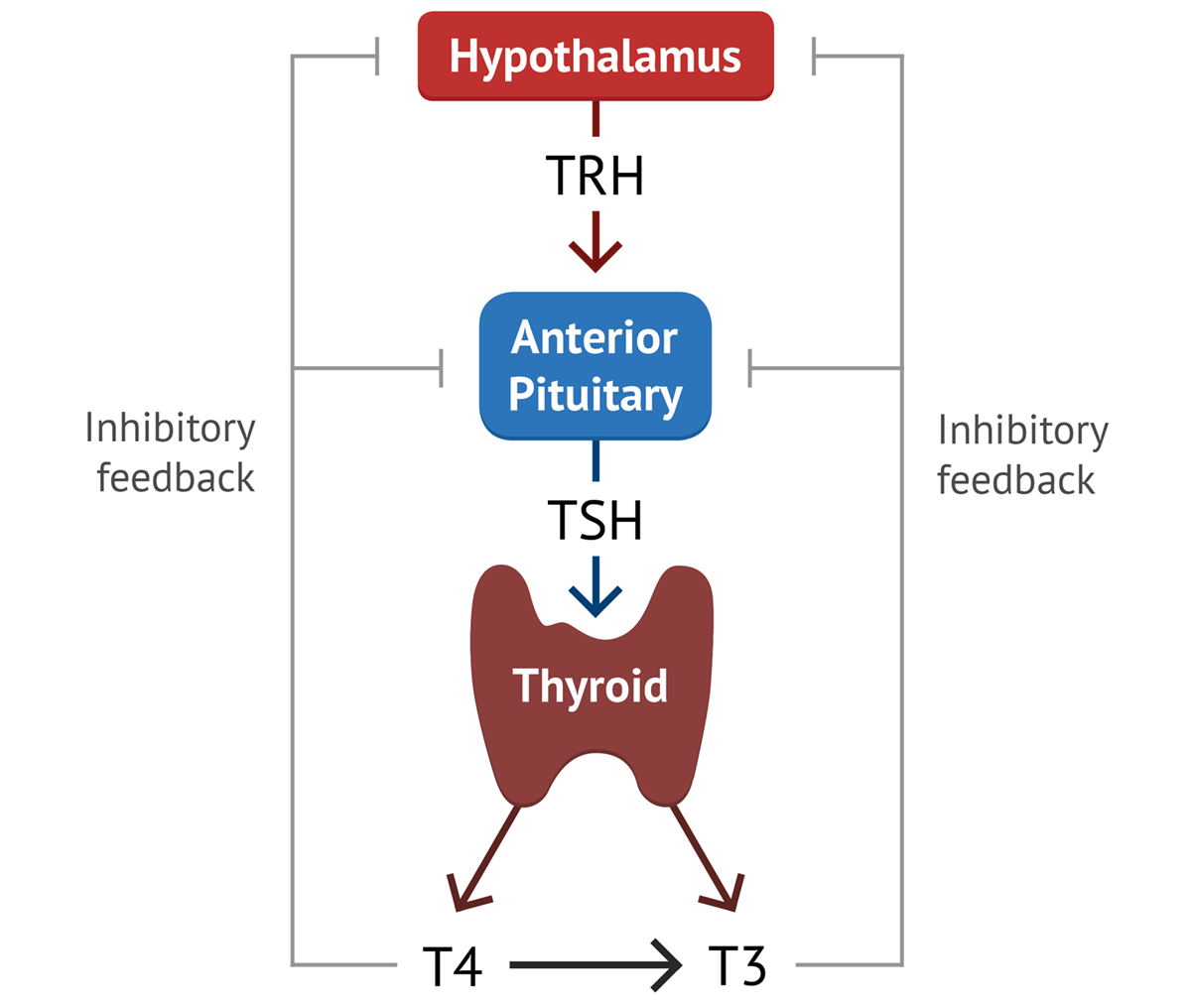
describe the process that leads to the secretion of TSH
first the TRH is released that then activates the anterior pituitary to then release TSH and then it goes to the thyroid gland that then results in growth
neurosecretory cells
neurons that translate electrical nerve signals into hormonal messages
hypothalamus
brain region controlling the pituitary gland
receives inputs and integrates signals for response
pituitary gland
The endocrine system's most influential gland. Under the influence of the hypothalamus, the pituitary regulates growth and controls other endocrine glands.
secretes hormones into blood
posterior pituitary
makes no hormones, storage site; neurotransmitter's release the hormone
anterior pituitary
makes lots of hormones, travels through a tiny blood vessel
Endocrine control
first order loop (1 hormone used-posterior pituitary)
second order loop (2 hormones used- anterior pit)
third order loop ( 3 hormones used)
direct (no neural input)
tropic hormones
hormones that stimulate other glands to release their hormones and grow
Thyroid hormones (T3 and T4)
Iodine-containing hormones that control the body's metabolic rate
Effects of thyroid hormone
primary determinant of metabolic rate (regulate body temperature); permissive for GH, epinephrine, norepinephrine
Graves disease
an autoimmune disorder that is caused by hyperthyroidism and is characterized by goiter
central nervous system
brain and spinal cord
peripheral nervous system
the sensory and motor neurons that connect the CNS to the rest of the body
somatic nervous system
the division of the peripheral nervous system that controls the body's skeletal muscles
autonomic nervous system
the part of the peripheral nervous system that controls the glands and the muscles of the internal organs (such as the heart). have no control
parasympathetic nervous system
rest and digest
sympathetic nervous system
fight or flight
Neurotransmission in autonomic pathways
paracrine signalling using norepinephrine
SNS stimulates adrenal medulla to release epinephrine
epinephrine & norepinephrine can activate the same receptors
fight or flight response effects
pupil dilation
increase heart rate
decrease digestion
release of fuel molecule from liver into blood
endocrine system and stress
activates adrenal cortex
releases cortisol
increases blood glucose levels, blood fat, amino acid levels
nervous system and stress
activates adrenal medulla
makes adrenaline (epinephrine and norepinephrine)
Cushing's syndrome
hypersecretion of cortisol
skeletal muscle and insulin
stimulates glucose uptake (doesn't need insulin)
diabetes
hyperglycemia
defects in insulin secretion or action
Diagnosing Diabetes
normal level: 100
fasting blood glucose of 126
oral glucose tolerance test of 200 @ 2hrs
random level of 200
type 1 diabetes
diabetes in which there is no beta cell production of insulin--the patient is dependent on insulin for survival
type 2 diabetes
progressive disorder in which body cells become less responsive to insulin
still have beta cells, just working really hard
Insulin
A protein hormone synthesized in the pancreas that regulates blood sugar levels by facilitating the uptake of glucose into tissues
beta cells: insulin secretion
alpha cells: glucagon secretion
delta cells: inhibitory
GLUT4 transporter
"Doorway" for glucose found in muscle cells and fat cells that opens after insulin binds to the insulin receptor
effects of insulin- carbohydrates
1. enhances glucose uptake via GLUT4
2. increases liver and skeletal muscle glycogenesis (store glycogen)
3. inhibits liver glycogenolysis (stop breaking down gluc)
4. inhibits gluconeogenesis (stop making new gluc)
increase insulin=decrease glucose in blood
effects of insulin- fat
increase insulin=decrease fatty acids in blood
effects of insulin- protein
increase insulin=decrease amino acids in blood
risk factors for type 2 diabetes
Obesity
Sedentary lifestyle and inactivity
Family history
Race (African American and Hispanic)
Age
History of gestational diabetes
insulin resistance
the inability of the cells to respond to insulin
leads to decrease uptake of glucose in muscle, deregulation of glycolysis but liver wont stop making new glucose
describe the ACTH release pathway
first the hypothalamus secretes the CRH that then activates the anterior pituitary to release ACTH and then it goes the adrenal cortex that then leads to the secretion of cortisol