angiosperms (flower structures, background info, and fruits)
 Call Kai
 Learn
Learn Practice Test
 Spaced Repetition
 Match
Match Flashcards
 Knowt Play
1/40

Earn XP
Description and Tags
botany dr kohnen
Name | Mastery | Learn | Test | Matching | Spaced | Call with Kai | Chat |
|---|
No analytics yet
Send a link to your students to track their progress
41 Terms
angiosperms
thought to have arisen from gymnosperms where gymnosperm microsporophylls bearing sporangia became stamens, and megasporophylls became carpels in flower plants
some carpels resemble young leaves that have failed to open
Magnoliophyta
single angiosperm division
flower
reproductive structure with specialized shoot with highly modified leaves that bears sporangia
pedicel

receptacle

sepal
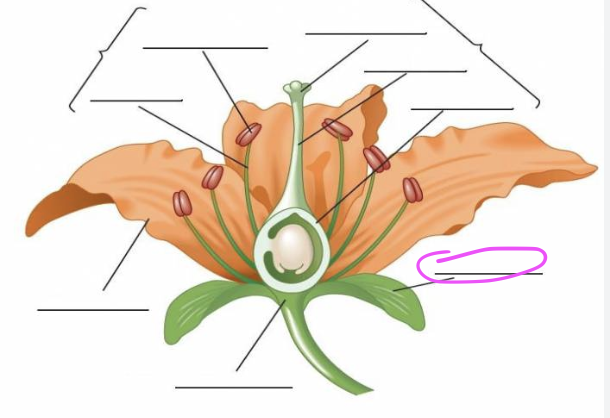
style

ovary
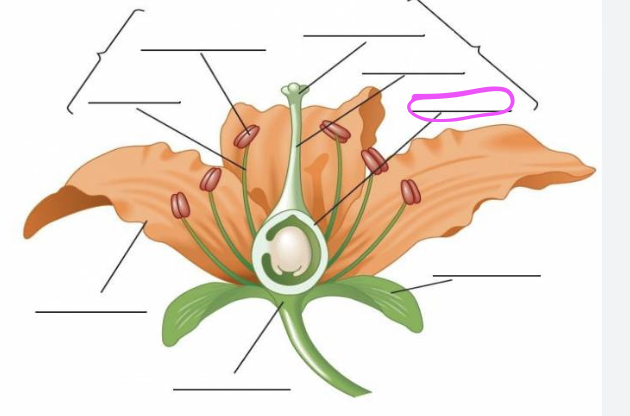
ovule
megasporangium

stigma

petal

corolla
fused petals
calyx
fused sepals
anther
group of sporangia

stamen
male

carpel
female

filament

bisexual
both male and female reproductive parts “perfect”
unisexual
only one sex present
staminate
male flower
carpelate
female flower
monoecious
both male and female in same individual
dioecious
separate sexes (ex. humans)
ovary egg reproduction
divides by meiosis to produce haploid (4) megaspores. 3 die and the one left divides by mitosis 3x without cytokinesis = 8 nuclei
flower fertilization
pollen grain (with 2 sperm cells) lands on stigma, enters and grows into synergid and destroys it
1 sperm + 1 egg —> 2n zygote
other sperm and 2 polar nuclei become 3n endosperm, the nutritive tissue
double fertilization!!
anther sperm reproduction
microsporangia contains multiple mother cells which divide through mitosis to produce pollen grains with 2 sperm cells
self pollination
when egg and sperm come from same plant
allows for little genetic variation, but is advantageous when pollinators are lacking or plant is isolated
cross pollination
when egg and sperm come from different plants
allows for new genetic combinations that may be advantageous
mechanisms that increase chance of cross pollination
stamens and carpels mature at different times
genetic incompatibility barriers
maintaining dioecious populations
angiosperm seed
sporophyte embryo (2n), endosperm (3n), and seed coat from mature sporophyte - mother plant (2n)
fruit
matured ovary with 3 distinct layers: exocarp, mesocarp, and endocarp
exocarp
outermost layer of a fruit
mesocarp
flesh of a fruit
endocarp
innermost layer of a fruit
pericarp
collective entirety of a fruit wall
berry
exocarp, mesocarp, and endocarp are soft
ex. tomatoes and grapes
pome
similar to berry except endocarp is papery or leathery
ex. apples
drupe
similar to berry except endocarp is hard
ex. stone fruits; cherries
hesperidium
has leathery exocarp
ex. citrus
achene
dry indehiscent fruit with thin and papery wall; single seeded
ex. sunflower
samara
dry indehiscent fruit with wall shaped like wing; single seeded
ex. maple